
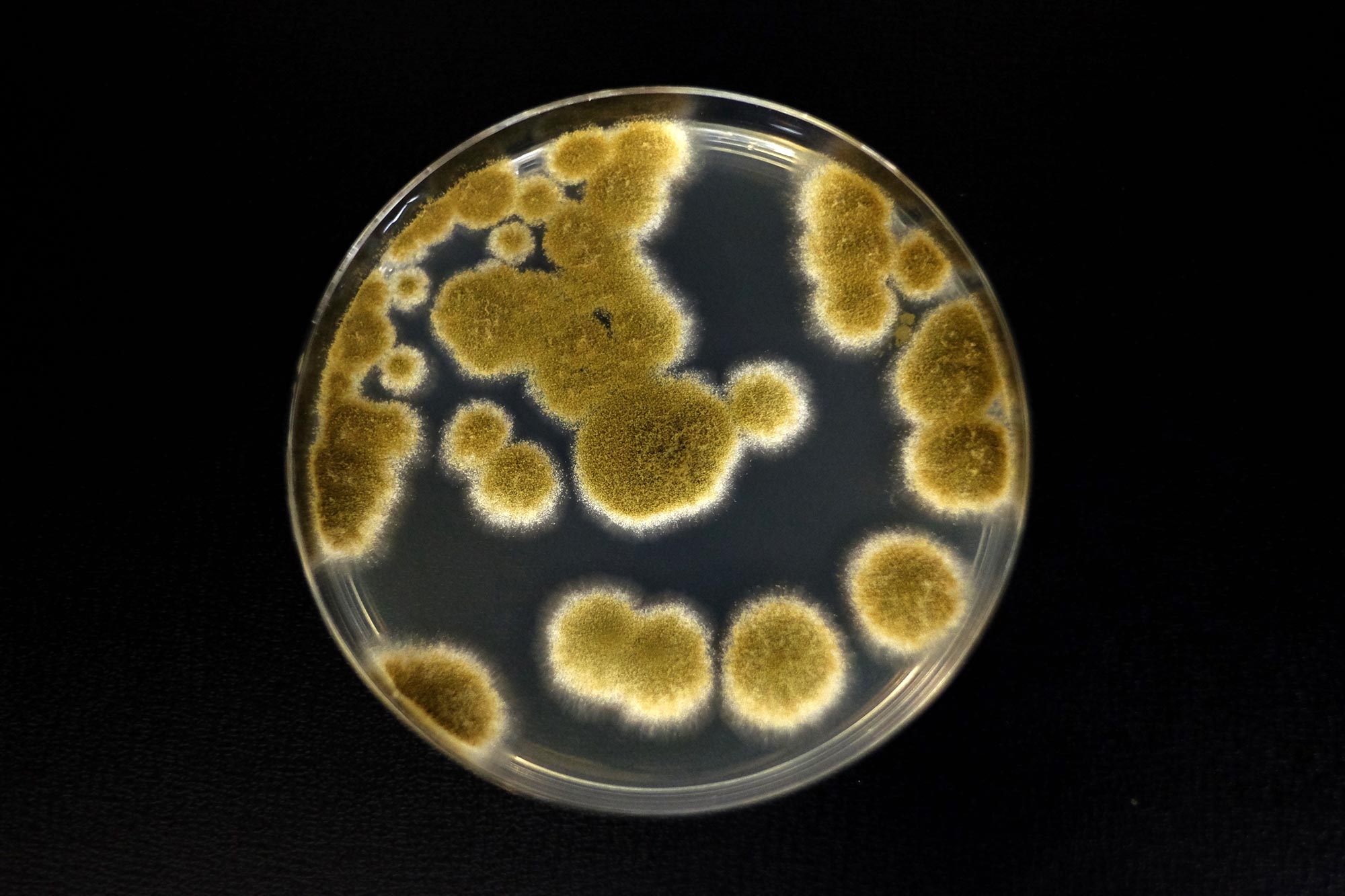
Some Earth-based microbes may be tougher than expected, raising new questions about survival beyond our planet.
Scientists have long viewed fungi as tough survivors, but new research suggests some may be capable of enduring an even more extreme test: the journey from Earth to Mars.
In a study published in Applied and Environmental Microbiology, researchers examined fungal microbes collected from NASA cleanrooms, the ultra-controlled spaces where spacecraft are built and tested. These facilities are designed to eliminate contamination, yet certain microbes persist. When scientists exposed these survivors to simulated conditions of space travel and the Martian surface, spores from the fungus Aspergillus calidoustus survived.
Fungal Survival in Extreme Conditions
“This does not mean contamination of Mars is likely, but it helps us better quantify potential microbial survival risks,” said microbiologist and study leader Kasthuri Venkateswaran, Ph.D. He is a former Senior Scientist in the Biotechnology and Planetary Protection Group (BPP) of NASA’s Jet Propulsion Laboratory. The group implements NASA policies on various missions for avoiding extraterrestrial cross-contamination with Earth’s microbes, and vice versa. “Microorganisms can possess extraordinary resilience to environmental stresses.”
Unlike bacteria, fungi are less commonly studied in planetary protection research. Yet they may pose unique challenges. Fungal spores are naturally designed to withstand drying, radiation, and nutrient scarcity, traits that mirror conditions encountered during spaceflight.
This study provides some of the first evidence that complex cells, known as eukaryotes, could potentially persist across all mission phases, from cleanroom assembly to operations on another planet.
Why Cleanrooms Are Not Completely Clean
NASA cleanrooms are among the most stringently controlled environments on Earth. Air is constantly filtered, surfaces are sterilized, and personnel follow strict protocols to limit contamination. Even so, certain microbes adapt to these conditions. Over time, they can evolve tolerance to disinfectants, low moisture, and limited nutrients.
That makes them particularly important for planetary protection efforts, which aim to prevent Earth life from reaching other worlds and interfering with the search for extraterrestrial biology. If a microbe can survive a cleanroom, it may already be pre-adapted to the stresses of space.
Testing Survival on the Road to Mars
To explore this possibility, the research team analyzed 27 fungal strains collected during the Mars 2020 mission, which successfully delivered the Perseverance rover to Mars. They also included two additional microbes known for their resistance to radiation.
The fungal spores were subjected to a series of simulations designed to mimic key stages of a Mars mission. These included extreme cold, intense ultraviolet and ionizing radiation, low atmospheric pressure, and exposure to Martian regolith (the loose, dusty rock material on its surface). These conditions reflect not only the Martian environment but also the vacuum and radiation encountered during the months-long journey through space.
Among all the samples, A. calidoustus stood out. Its spores survived nearly every test. Only the combined stress of very low temperatures and high radiation levels proved lethal. “Microbial survival is not determined by a single environmental stress but rather by combinations of stress tolerance mechanisms,” Venkateswaran said.
Implications for Mars Missions
The findings suggest that A. calidoustus could potentially survive rigorous spacecraft cleaning processes, travel aboard a mission, and remain viable on robotic systems operating on Mars. This work builds on earlier studies that have detected bacteria and fungi on spacecraft-related surfaces even after decontamination.
“Together, these investigations help refine NASA’s planetary protection strategies and microbial risk assessment approaches for current and future space exploration missions,” Venkateswaran said.
Reference: “Survival of NASA-cleanroom microbial isolates under simulated space and Martian conditions” by Atul M. Chander, David J. Burr, Severin Wipf, Ruben Nitsche, Gretchen Fujimura, Wayne Schubert, Nitin K. Singh, Justin J. Bell, Alexander Brandl, Michael M. Weil, Andreas Elsaesser and Kasthuri Venkateswaran, 20 April 2026, Applied and Environmental Microbiology.
DOI: 10.1128/aem.02065-25
Never miss a breakthrough: Join the SciTechDaily newsletter.
Follow us on Google and Google News.