
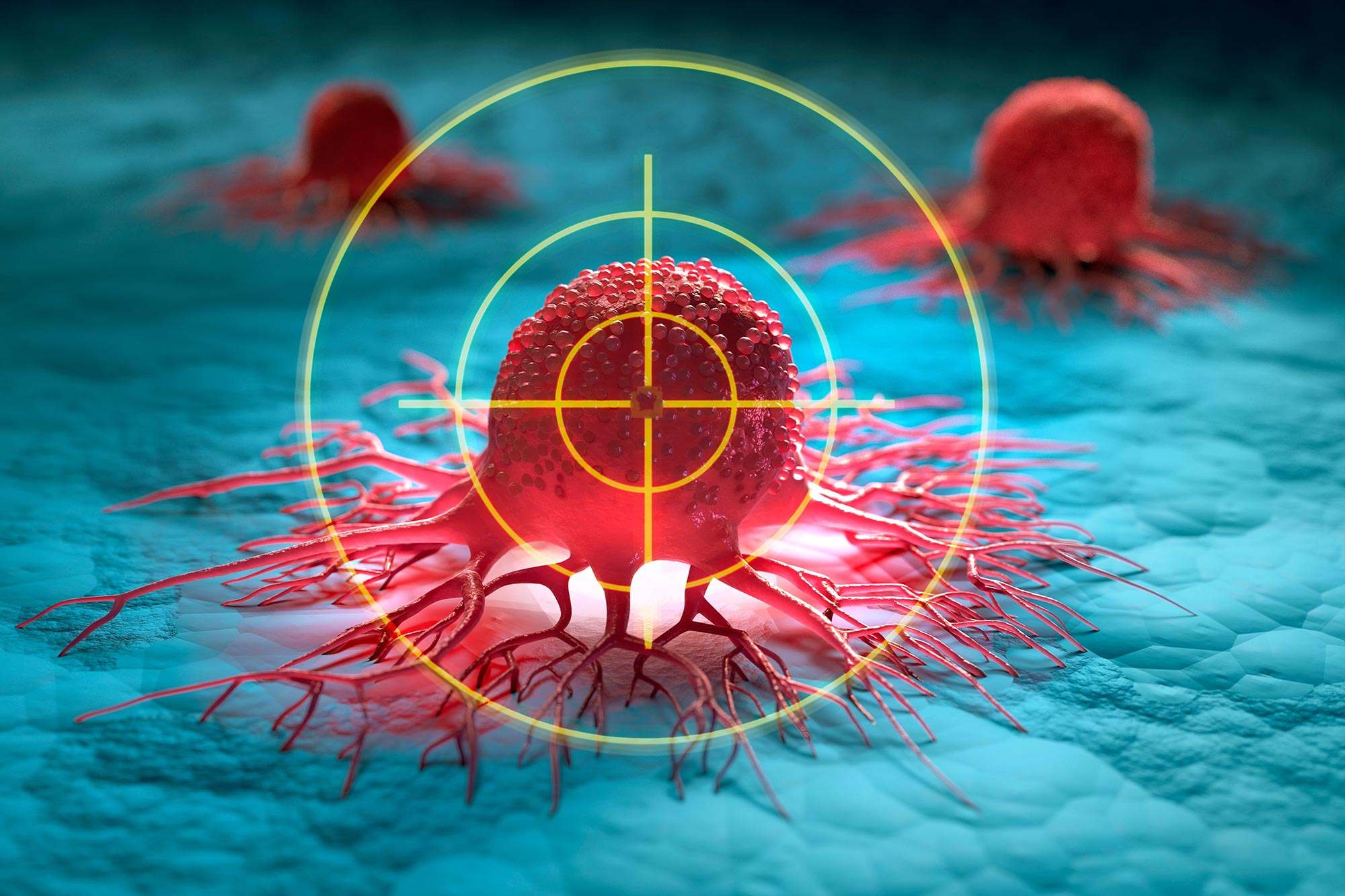
Scientists turned bacteria into tumor-hunting drug factories—hinting at a bold new way to fight cancer.
Millions of people worldwide are diagnosed with cancer each year, yet treating the disease remains challenging due to its complexity. New research published today (March 17) in the open-access journal PLOS Biology by Tianyu Jiang at Shandong University in Qingdao, China, and colleagues points to a potential new approach. The team found that Escherichia coli Nissle 1917 (EcN) can be engineered to carry anticancer compounds and target tumors in mice.
Turning Probiotics Into Drug Factories
Bacteria naturally live in and interact with the human body, influencing both health and disease. Scientists are now exploring whether these microbes can be redesigned to fight cancer, although their effectiveness as therapies has not yet been proven.
To investigate this idea, researchers modified the probiotic strain Escherichia coli Nissle 1917 (EcN) so it could produce Romidepsin (FK228), an FDA-approved anticancer drug. Using advanced genetic and genomic engineering methods, they created a version of the bacteria capable of generating this drug on its own. The team then tested the approach in mice implanted with breast cancer tumors and treated them with the engineered bacteria.
Tumor-Targeted Drug Delivery in Mice
Results showed that EcN was able to accumulate inside tumors and release Romidepsin FK228 in both lab experiments and living animals under different conditions. This behavior allowed the bacteria to function as a targeted therapy, delivering the drug directly where it was needed.
However, the research is still at an early stage. The treatment has not yet been tested in humans, and additional studies will be required to evaluate safety, including any potential side effects and ways to remove the bacteria from the body after treatment. These factors could influence how useful engineered EcN ultimately becomes as a cancer therapy.
A Dual-Action Cancer Therapy Approach
According to the authors, “The probiotic strain Escherichia coli Nissle 1917 (EcN), a potential member of tumor-targeting bacteria, shows great promise for cancer treatment. By leveraging engineered EcN, we can design a bacteria-assisted, tumor-targeted therapy for the biosynthesis and targeted delivery of small-molecule anticancer agents. Our mouse-model study establishes a solid foundation for engineering bacteria which are capable of producing small-molecule anticancer drugs and engaged in bacteria-assisted tumor-targeted therapy, paving the way for future advancements in this field.”
The authors add, “Escherichia coli Nissle 1917’s tumor colonization synergizes with Romidepsin’s anticancer activity to form a dual-action cancer therapy.”
Reference: “Engineered romidepsin biosynthetic pathways in Escherichia coli Nissle 1917 improve the efficacy of bacteria-mediated cancer therapy” by Chenghao Ma, Geng Li, Tao Sun, Ximi Tang, Tong Qiu, Jingwen Song, Hailong Wang, Youming Zhang and Tianyu Jiang, 17 March 2026, PLOS Biology.
DOI: 10.1371/journal.pbio.3003657
This study was supported by the National Natural Science Foundation of China (32201245 to T.J., 32122049 to Y.Z., 32161133013 to Y.Z.), the Fundamental Research Funds of Shandong University (2023QNTD001 to H.W.), the Future Plan for Young Scholars of Shandong University (T.J.), the Fund for Distinguished Young Scholars of SDU (H.W.), the Natural Science Foundation of Shandong Province (ZR2022JQ11 to H.W.), the SKLMT Frontiers and Challenges Project (SKLMTFCP-2023-05 to Y.Z.), the Shenzhen Science and Technology Program (ZDSYS20220303153551001 to Y.Z.), the 111 Project (B16030), and the Intestinal Microbiology Research Fund of the Institute of Microbiology Technology (Project NO. cdwswjj-2025-02 to T.J.). The funders had no role in study design, data collection and analysis, decision to publish, or preparation of the manuscript.
Never miss a breakthrough: Join the SciTechDaily newsletter.
Follow us on Google and Google News.