

New research reveals that lithium-rich brines have a chemistry dominated by boron, fundamentally different from typical saline waters.
A new study published in Science Advances reveals a surprising twist: much of the world’s lithium is found in salty waters with a chemistry unlike that of other natural saline waters, such as the ocean. This discovery could reshape the future of lithium mining and improve how we manage wastewater from extraction processes.
Lithium plays a vital role in powering the renewable energy revolution. About 40 percent of the global supply comes from massive salt flats, known as salars, located high in the Andes Mountains of South America and across the Tibetan Plateau in Asia. In these remote, arid landscapes, lithium is not mined from rock, but instead is dissolved in underground pools of highly salty water known as brine, hidden just beneath the crust of sparkling salt deposits.
“We discovered that the pH of brines in these regions is almost entirely driven by boron, unlike seawater and other common saline waters. This is a totally different geochemical landscape, like studying an extraterrestrial planet,” said Avner Vengosh, distinguished professor of environmental quality and Chair of the Division of Earth and Climate Sciences at Duke University’s Nicholas School of the Environment, who oversaw the research.
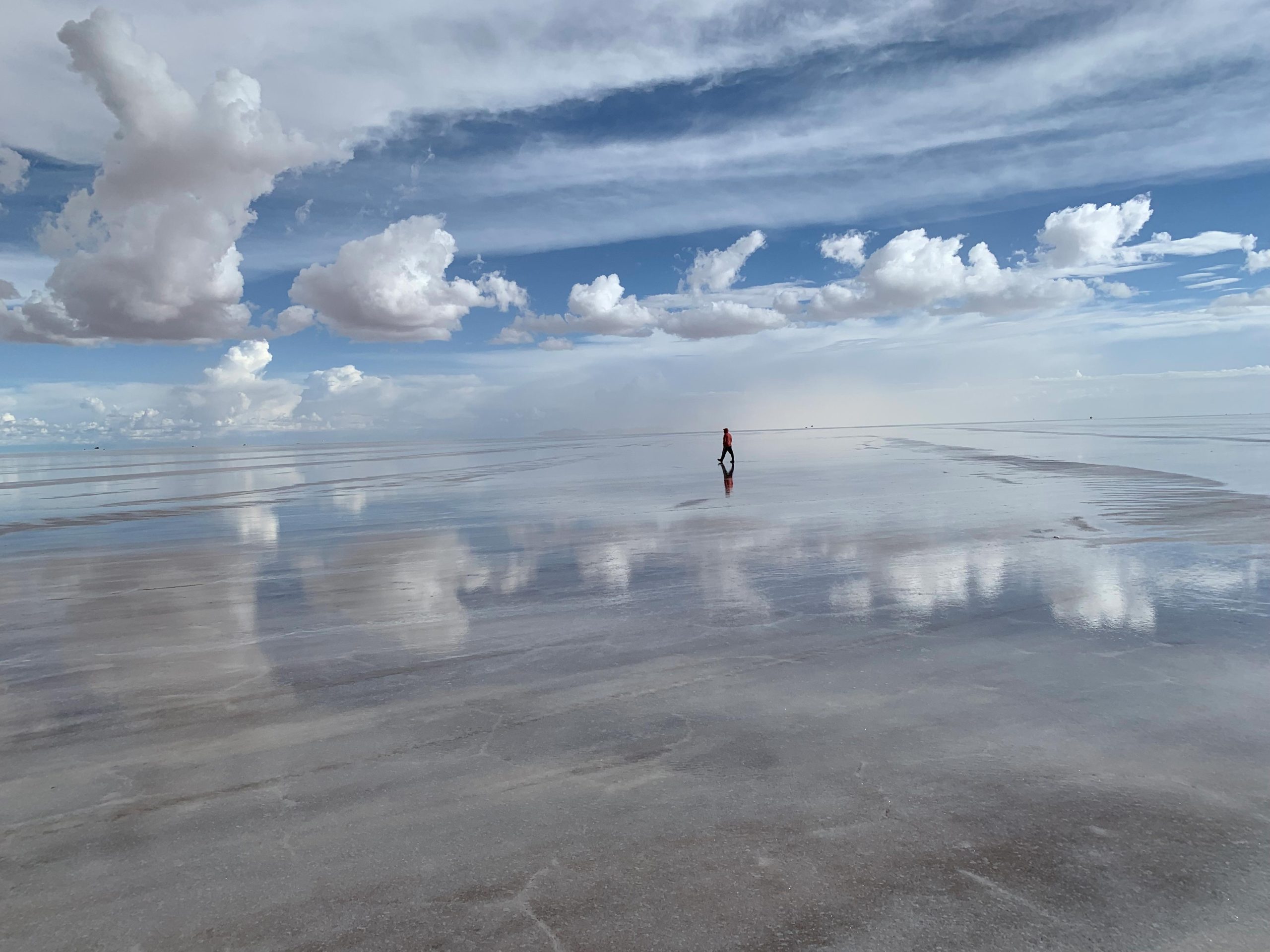
A solution’s pH is a measure of how acidic or alkaline it is. In most natural waters, chemical reactions involving a molecule called carbonate primarily govern a solution’s ability to control changes in pH — a measure known as alkalinity. But the Duke team uncovered a dramatically different scenario at the Salar de Uyuni, a giant salt pan situated on a Bolivian plateau, where the world’s largest known lithium brine deposit exists underground.
Insights from the Salar de Uyuni
The researchers analyzed the pH and chemistry of brines and salts associated with a pilot mining operation at the Salar de Uyuni. Mining lithium from salt pans traditionally involves pumping natural brine from underground into a series of shallow, above-ground ponds. Liquid evaporates from successive ponds, leaving behind increasingly concentrated brine containing lithium and boron, plus undesirable salts. Lithium is eventually extracted at a processing facility.
The team found that pH levels in natural brine samples from the salar hovered around neutral. By contrast, brine samples from evaporation ponds were highly acidic. Computer modeling showed that high concentrations of boron were the primary drivers of pH in both cases.
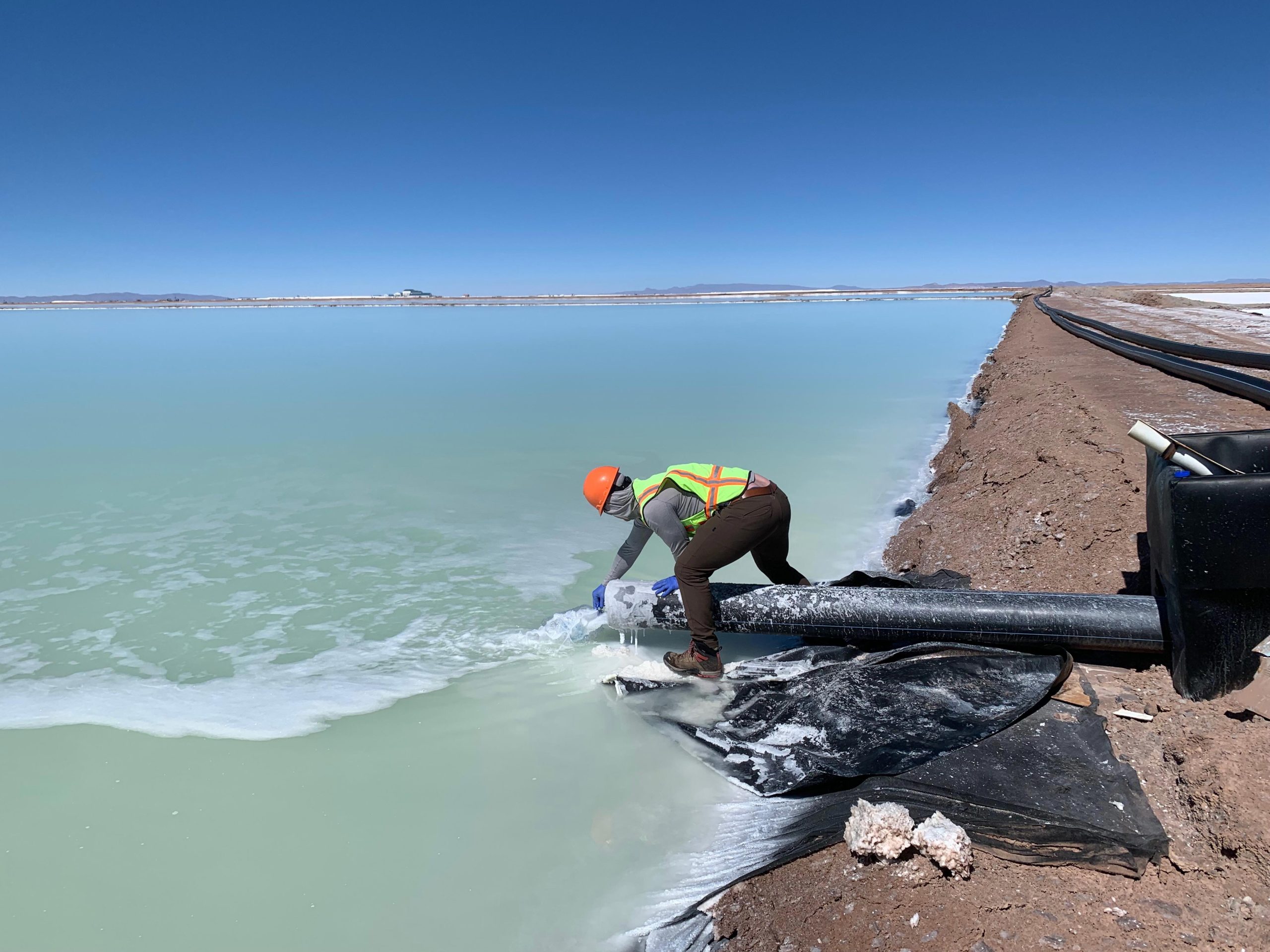
Specifically, the natural brines contain high levels of boron in different forms — including the molecule boric acid and compounds called borates — whose relative distribution controls pH. Evaporation in the ponds increases the overall concentration of boron and triggers the breakdown of boric acid, generating hydrogen ions that reduce the pH.
“Through a chain of geochemical reactions, the carbonate alkalinity is diminished in the brine from the Salar de Uyuni, while boron alkalinity becomes predominant,” said lead author Gordon Williams, a Ph.D. student in the Vengosh Lab.
“The integration of the chemical analysis with geochemical modeling helped us to quantify the different molecular structures of boron that contribute to alkalinity in these lithium brines,” added Paz Nativ, a postdoctoral researcher in the Vengosh Lab.
Global Implications for Lithium Mining
To corroborate their findings, the team gathered data on more than 300 analyses of lithium-rich brine from various salt pans, including in Chile, Argentina, and Bolivia — collectively known as the Lithium Triangle — and the Tibetan Plateau. Modeling showed that boron exerted the most influence on alkalinity, and therefore pH, in most of those brines as well.
“In addition to the new data we generated, we compiled a geochemical database of lithium brines from around the world and consistently found that boron is often the predominant component in brine alkalinity and controls brine pH, reinforcing the results from the Salar de Uyuni in Bolivia,” Williams explained.
The research is the first to demonstrate the role of boron in controlling the chemical changes that occur during lithium brine evaporation in salt pans, according to the researchers. The findings could inform future lithium mining technologies as operators explore ways to more efficiently extract lithium and safely manage wastewater, they added.
Reference: “The role of boron in controlling the pH of lithium brines” by Gordon D. Z. Williams, Paz Nativ and Avner Vengosh, 23 May 2025, Science Advances.
DOI: 10.1126/sciadv.adw3268
This study was supported by the Duke University Climate Research Innovation Seed Program (CRISP), the Duke University Josiah Charles Trent Memorial Foundation Endowment Fund, and the Duke University Graduate School Dissertation Research Travel Award.
Never miss a breakthrough: Join the SciTechDaily newsletter.
Follow us on Google and Google News.
1 Comment
“The research is the first to demonstrate the role of boron in controlling the chemical changes that occur during lithium brine evaporation in salt pans, …”
Renowned Stanford geochemist Konrad Krauskopf details the secondary-role that borates play in buffering sea water pH in his textbook, decades ago. Inasmuch as borax mining has a long history in California, I would be surprised if he hadn’t studied this.