
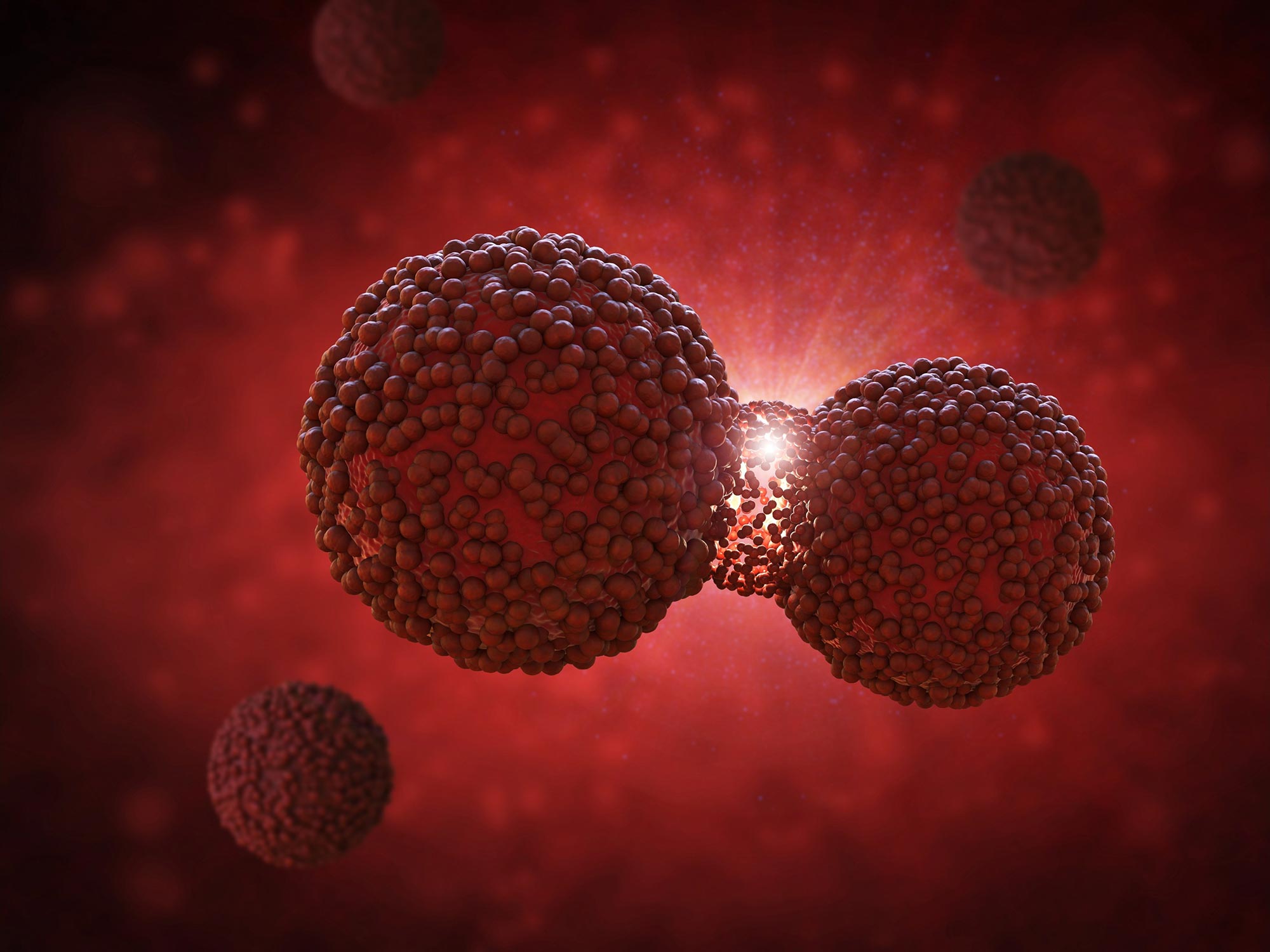
Scientists identified early genetic mutations in healthy women’s breast cells that may lead to breast cancer, particularly in high-risk individuals, using cutting-edge single-cell sequencing.
Researchers from the University of British Columbia (UBC), BC Cancer, Harvard Medical School, and Memorial Sloan Kettering Cancer Center (MSK) have identified potential early genetic roots of breast cancer: cancer-like mutations found in the cells of healthy women.
In a new study, the international collaborators analyzed the genomes of more than 48,000 individual breast cells from women without cancer, using novel techniques for decoding the genes of single cells. While the vast majority of cells appeared normal, nearly all of the women harboured a small number of breast cells—about 3 per cent—that carried genetic alterations commonly associated with cancer.
The findings, published in Nature Genetics, suggest that these rare genetic anomalies may represent some of the earliest steps in a series of events that could culminate in breast cancer development.
Silent Genetic Mutations and Their Implications
“It’s striking to see cancer-like mutations happening silently and at low levels in the cells of perfectly healthy women,” said lead senior author Dr. Samuel Aparicio, a professor of pathology and laboratory medicine at UBC’s faculty of medicine, distinguished scientist at BC Cancer, and Canada Research Chair in Molecular Oncology. “While harmless on their own, these changes could be the basic building blocks of breast cancer. With further research into how these mutations arise and accumulate, we could potentially develop new and lifesaving preventive strategies, therapeutic approaches, and routes for early detection.”
The mutations, known as copy number alterations, involve the duplication or loss of large segments of DNA. In most cases, the body’s natural DNA repair mechanisms correct these changes. However, if the body fails to detect these changes or to initiate repair, the mutations could accumulate and over time lead to cancer.
For the study, the researchers sought to understand the prevalence of copy number alterations in normal tissue. They examined tens of thousands of breast cells from 28 women using an advanced single cell gene sequencing technology developed by researchers from UBC and BC Cancer, known as DLP+.
While genetic alterations were detected at very low levels in most of the women studied, they were only detected in the luminal cells that line the lobules and ducts where milk flows through the breast, and not in the related contractile cells.
“Since luminal cells are believed to be the cells of origin of all of the major types of breast cancer, the fact that these genetic alterations specifically accumulate in luminal cells provides additional support for the hypothesis that these alterations may prime or predispose these cells to cancer development,” said co-senior author Dr. Joan Brugge, professor of cell biology at Harvard Medical School. “This study is an important step on our collective quest as scientists to understand the earliest events in breast cancer development. These insights can inform our efforts to design new, more effective prevention and monitoring strategies for those at high risk for cancer.”
High-Risk Individuals and Extreme Mutations
The majority of mutated cells contained only one or two copy number alterations, and it’s known that it takes multiple mutations to form a cancer. However, in some women carrying high-risk genetic variants of BRCA1 and BRCA2, the researchers observed a few “extreme” examples of cells harboring six or more of these large genetic changes.
These extreme cells may represent a step further down the line in the cancer development process, suggesting a potential progression pathway from normal cells to cancer-like cells in high-risk individuals.
“To study this phenomenon, we used a method originally developed to study genome instability in cancer, providing a comprehensive view of copy number alterations at the single-cell level,” says Dr. Sohrab Shah, the Nicholls-Biondi Chair in Computational Oncology and Chief of Computational Oncology at MSK. “Our computational approaches further allowed us to identify and analyze these rare events that are not visible with standard sequencing assays.”
The researchers say the study raises important new questions about the nature of breast cancer development, including how mutations accumulate and over what timescale, and why the mutations only occur in luminal cells. It also suggests that examining copy number alterations in other organs could reveal how other forms of cancer develop and progress, and the risk-factors underlying them.
“Answering these questions could help further our understanding of cancer risk and how to better detect and manage cancer in people at high risk,” says Dr. Aparicio.
The study’s first authors include Vinci Au, who led the single cell genome sequencing in the Aparicio Lab, Dr. Michael Oliphant, who led the cell isolation in the Brugge Lab, and Dr. Marc Williams, who led the computational genome analysis in the Shah Lab.
Reference: “Luminal breast epithelial cells of BRCA1 or BRCA2 mutation carriers and noncarriers harbor common breast cancer copy number alterations” by Marc J. Williams, Michael U. J. Oliphant, Vinci Au, Cathy Liu, Caroline Baril, Ciara O’Flanagan, Daniel Lai, Sean Beatty, Michael Van Vliet, Jacky CH Yiu, Lauren O’Connor, Walter L. Goh, Alicia Pollaci, Adam C. Weiner, Diljot Grewal, Andrew McPherson, Klarisa Norton, McKenna Moore, Vikas Prabhakar, Shailesh Agarwal, Judy E. Garber, Deborah A. Dillon, Sohrab P. Shah, Joan S. Brugge and Samuel Aparicio, 20 November 2024, Nature Genetics.
DOI: 10.1038/s41588-024-01988-0
The study was supported by the Gray Foundation, the US National Cancer Institute, the BC Cancer Foundation, and the Halvorsen Center for Computational Oncology.
Never miss a breakthrough: Join the SciTechDaily newsletter.
Follow us on Google and Google News.
1 Comment
I am a breast cancer researcher and author. This study is really about their genome sequencing technology. Detecting early signs of genetic mutation in cells shows what we have known for a long time — the immune system is always fighting mutations and developing cancer cells. The assumption in this study is that a healthy breast never develops these mutations, and if it does it means cancer is developing. No mention of the immune system’s role in preventing all this.
Of course, the immune system cannot work well in breasts that are constricted by tight bras, which interfere with the lymphatic system. Lymphatic impairment is known to cause cancer. But the US breast cancer industry has been ignoring the effect of bras on breast cancer incidence, despite numerous studies showing this is more significant than the link between smoking and lung cancer. They ignore the immune system, and focus instead on early genetic detection of mutations that they say may lead to cancer someday. Of course, if women wear bras that interfere with immune function, this is more likely. See my article How Bras Cause Lymphstasis and Breast Cancer. https://www.academia.edu/36287546/HOW_BRAS_CAUSE_LYMPH_STASIS_AND_BREAST_CANCER