
Close Menu
    Facebook X (Twitter) Instagram
    SciTechDaily
    • Biology
    • Chemistry
    • Earth
    • Health
    • Physics
    • Science
    • Space
    • Technology
    Facebook X (Twitter) Pinterest YouTube RSS
    SciTechDaily
    Home»Biology»Scientists Unveil Breakthrough Biosensor for Rare Earth Metal Detection
    Biology

    Scientists Unveil Breakthrough Biosensor for Rare Earth Metal Detection

    By Queensland University of TechnologyFebruary 7, 2025No Comments3 Mins Read
    Facebook Twitter Pinterest Telegram LinkedIn WhatsApp Email Reddit
    Share
    Facebook Twitter LinkedIn Pinterest Telegram Email Reddit
    Groundbreaking Biosensor for Rare Earth Element Detection
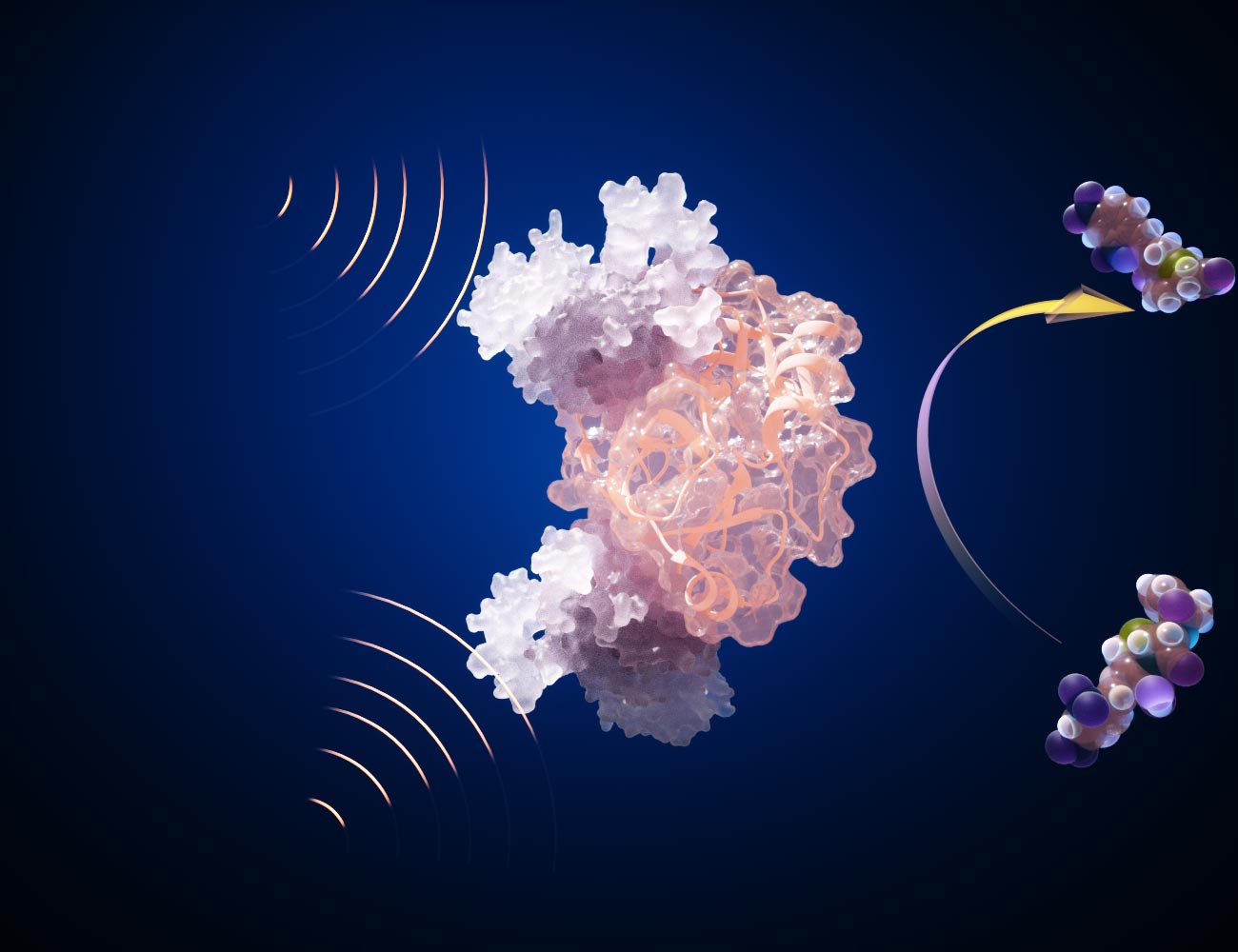
    QUT researchers have developed a biosensor that detects rare earth elements using a hybrid protein that acts as a molecular switch. Credit: QUT

    QUT researchers created a biosensor using engineered proteins to detect and extract rare earth elements, offering a potential solution to growing demand and environmental challenges.

    QUT synthetic biologists have developed a prototype for an innovative biosensor capable of detecting rare earth elements, with the potential for modification to suit various other applications.

    Lanthanides (Lns) are essential elements used in electronics, electric motors, and batteries. However, current extraction methods are costly, environmentally damaging, and unable to meet the growing demand.

    Professor Kirill Alexandrov and his colleagues from the QUT Centre of Agriculture and Bioeconomy and the ARC Centre of Excellence in Synthetic Biology engineered proteins to create molecular nanomachines that generate easily detectable signals when they selectively bind to Lns.

    Along with Professor Alexandrov, the international research team involved QUT researchers Dr. Zhong Guo, Patricia Walden, and Dr. Zhenling Cui, in collaboration with researchers from CSIRO Advanced Engineering Biology Future Science Platform and Clarkson University (USA).

    Breakthrough: A Hybrid Protein “Switch”

    Publishing their findings in Angewandte Chemie International, the team describes engineering a hybrid protein, or “chimera,” by combining a lanthanide-binding protein, LanM, with an antibiotic-degrading enzyme called beta-lactamase.

    This hybrid acts like a “switch” that becomes active only when lanthanides are present. It can be used to detect and quantify Lns in liquids, producing a visible color change or an electrical signal.

    Impressively, bacteria modified with these chimeras were able to survive in the presence of antibiotics that otherwise would kill them —but only when lanthanides were present. This highlights how precisely the proteins respond to these rare metals.

    “This work opens up exciting possibilities for using biology to detect and recover rare earth metals,” Professor Alexandrov said.

    “The prototype can also be modified for various biotechnological applications, including construction of living organisms capable of detecting and extracting valuable metals.”

    Future Developments and Industry Applications

    The research team now plans to work on increasing the specificity of the molecular switch to better differentiate between closely related rare earth elements. It also explores the possibility of developing switches for other critical elements. The team is in active discussions with potential industry partners who are interested in this technology.

    “We also want to explore using the tool to engineer microbes that can directly extract rare earth minerals from ocean water,” Professor Alexandrov said.

    “This is probably one of the best-performing switches made and has given us a lot of insight into the mechanics of protein switches.”

    Reference: “Lanthanide-Controlled Protein Switches: Development and In Vitro and In Vivo Applications” by Zhong Guo, Oleh Smutok, Chantal Ronacher, Raquel Aguiar Rocha, Patricia Walden, Sergey Mureev, Zhenling Cui, Evgeny Katz, Colin Scott and Kirill Alexandrov, 24 January 2025, Angewandte Chemie International Edition.
    DOI: 10.1002/anie.202411584

    Never miss a breakthrough: Join the SciTechDaily newsletter.
    Follow us on Google and Google News.

    Biosensor Chemical Biology Environment Queensland University of Technology Rare Earth Minerals Synthetic Biology
    Share. Facebook Twitter Pinterest LinkedIn Email Reddit

    Related Articles

    Bioengineers Create “Smart Cells” That Detect and Fight Disease in Real-Time

    Solid-State Breakthrough: The Future of Storing Biological Materials

    Superoxide Reacts With Manganese to Aid in Environmental Cleanup

    First Direct Observation of an Under-Ice Algal Bloom in the Arctic

    Evolution Shapes Ecology of Dammed Connecticut Lakes

    Using DNA and Bacteriophages as Rewritable Memory Storage

    Increased Number of Plant Species Responding to Global Warming

    Ecologists Document Changes in Fragile Land-Sea Ecological Chain

    After 20 Years, Russian Drill Nears 14-Million-Year-Old Lake Vostok

    Leave A Reply Cancel Reply

    • Facebook
    • Twitter
    • Pinterest
    • YouTube

    Don't Miss a Discovery

    Subscribe for the Latest in Science & Tech!

    Trending News

    New Pill Lowers Stubborn Blood Pressure and Protects the Kidneys

    Humans May Have Hidden Regenerative Powers, New Study Suggests

    Scientists Just Solved the Mystery of Why Crabs Walk Sideways

    Doctors Are Surprised by What This Vaccine Is Doing to the Heart

    This Popular Supplement May Boost Your Brain, Not Just Your Muscles

    Scientists Say This Simple Supplement May Actually Reverse Heart Disease

    Warming Oceans Could Trigger a Dangerous Methane Surge

    This Simple Movement Could Be Secretly Cleaning Your Brain

    Follow SciTechDaily
    • Facebook
    • Twitter
    • YouTube
    • Pinterest
    • Newsletter
    • RSS
    SciTech News
    • Biology News
    • Chemistry News
    • Earth News
    • Health News
    • Physics News
    • Science News
    • Space News
    • Technology News
    Recent Posts
    • Researchers Discover Efficient New Way To Split Hydrogen From Water for Energy
    • This Korean Skincare Ingredient Could Help Fight Deadly Superbugs
    • Giant Squid Detected off Western Australia in Stunning Deep-Sea Discovery
    • Popular Sugar-Free Sweetener Linked to Liver Disease, Study Warns
    • Why Weight Loss Isn’t Enough for Everyone at Risk of Diabetes
    Copyright © 1998 - 2026 SciTechDaily. All Rights Reserved.
    • Science News
    • About
    • Contact
    • Editorial Board
    • Privacy Policy
    • Terms of Use

    Type above and press Enter to search. Press Esc to cancel.