
Close Menu
    Facebook X (Twitter) Instagram
    SciTechDaily
    • Biology
    • Chemistry
    • Earth
    • Health
    • Physics
    • Science
    • Space
    • Technology
    Facebook X (Twitter) Pinterest YouTube RSS
    SciTechDaily
    Home»Space»SDO Views Coronal Hole in Our Sun
    Space

    SDO Views Coronal Hole in Our Sun

    By Karen C. Fox and Steele Hill, NASA's Goddard Space Flight CenterMay 26, 20161 Comment2 Mins Read
    Facebook Twitter Pinterest Telegram LinkedIn WhatsApp Email Reddit
    Share
    Facebook Twitter LinkedIn Pinterest Telegram Email Reddit
    SDO Peers Into Huge Coronal Hole
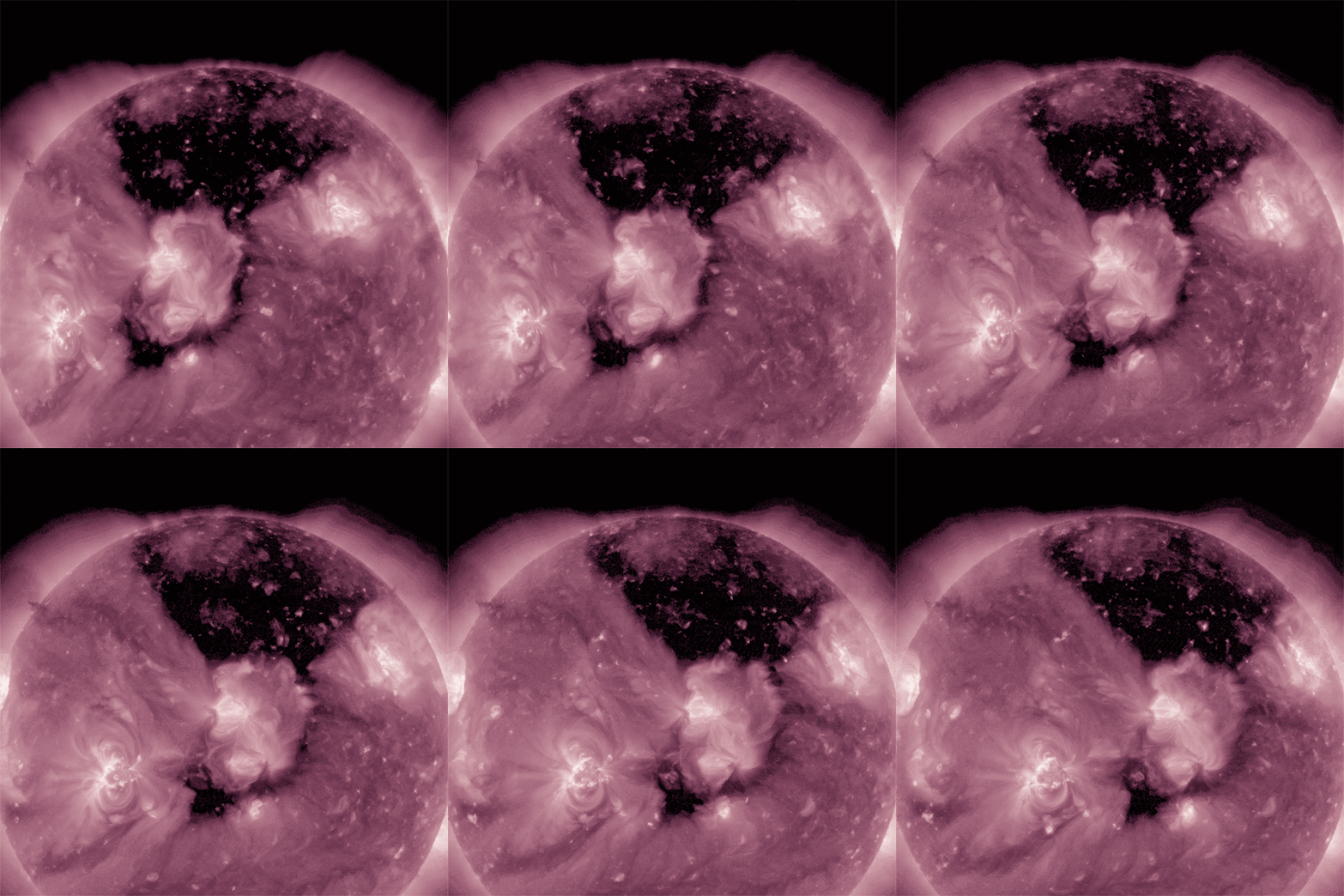
    This image shows a giant dark area on the Sun’s upper half, known as a coronal hole.

    This new image from NASA’s Solar Dynamics Observatory shows a coronal hole in our sun.

    This imagery of the sun captured by NASA’s Solar Dynamics Observatory from May 17-19, 2016, shows a giant dark area on the star’s upper half, known as a coronal hole. Coronal holes are low-density regions of the sun’s atmosphere, known as the corona. Because they contain little solar material, they have lower temperatures and thus appear much darker than their surroundings. Coronal holes are visible in certain types of extreme ultraviolet light, which is typically invisible to our eyes, but is colorized here in purple for easy viewing.

    These coronal holes are important to understanding the space environment around Earth through which our technology and astronauts travel. Coronal holes are the source of a high-speed wind of solar particles that streams off the sun some three times faster than the slower wind elsewhere. While it’s unclear what causes coronal holes, they correlate to areas on the sun where magnetic fields soar up and away, without looping back down to the surface, as they do elsewhere.

    Never miss a breakthrough: Join the SciTechDaily newsletter.
    Follow us on Google and Google News.

    Astronomy Cosmology NASA Solar Dynamics Observatory Sun
    Share. Facebook Twitter Pinterest LinkedIn Email Reddit

    Related Articles

    Solar Fury Erupts: Sun Rings In the New Year With X1.8 Flare

    X1.8 Flare Unleashed: NASA Captures Powerful Solar Eruption

    Sun Unleashes Monumental X9.0 Solar Flare – Most Intense in 7 Years – Captured by NASA Observatory

    Monster X7.1 Solar Flare Unleashed: Intense Blast Captured by NASA’s Solar Dynamics Observatory

    Sun Ignites: Unleashing a Powerful X4.5 Solar Flare

    New Technique Provides Near Real-Time Mapping of the Sun’s Interior

    NASA’s SDO Reveals Images of X4.9-Class Solar Flare

    NASA’s Solar Dynamics Observatory Views Two New Solar Flares

    Sun’s Magnetic Field Weaker Than a Normal Fridge Magnet

    1 Comment

    1. Jody on May 26, 2016 11:36 am

      That is very misleading the sun changes constantly and that big hole was a long time ago

      Reply
    Leave A Reply Cancel Reply

    • Facebook
    • Twitter
    • Pinterest
    • YouTube

    Don't Miss a Discovery

    Subscribe for the Latest in Science & Tech!

    Trending News

    Researchers Warn Widely Prescribed Blood Pressure Drugs Could Be Harming Diabetic Kidneys

    James Webb Spots Something Strange Between Day and Night on an Alien Planet

    How Ancient People Moved a 6-Ton Stone 700 Kilometers to Stonehenge

    The Unexpected Gut Health Risk of Cutting Out Sugar

    Popular Weight-Loss Drugs Like Ozempic Linked to Lower Breast Cancer Risk

    AI Learned the Rules of the Universe and That Became a Problem

    Scientists Found a Hidden Brain Signal That Predicts Social Behavior

    Even GPT-5 Failed This Human Attention Test

    Follow SciTechDaily
    • Facebook
    • Twitter
    • YouTube
    • Pinterest
    • Newsletter
    • RSS
    SciTech News
    • Biology News
    • Chemistry News
    • Earth News
    • Health News
    • Physics News
    • Science News
    • Space News
    • Technology News
    Recent Posts
    • Women’s Brains May Be More Vulnerable to Dementia Risk Factors Than Scientists Realized
    • Scientists Say We’ve Been Wrong About the Aging Brain
    • More Weight Loss, Fewer Fractures? New Study Points to Semaglutide
    • These Tiny Birds Became Giants on Remote Scottish Islands
    • A Fatal Deer Disease May Be Spreading in Ways No One Expected
    Copyright © 1998 - 2026 SciTechDaily. All Rights Reserved.
    • Science News
    • About
    • Contact
    • Editorial Board
    • Privacy Policy
    • Terms of Use

    Type above and press Enter to search. Press Esc to cancel.