
Close Menu
    Facebook X (Twitter) Instagram
    SciTechDaily
    • Biology
    • Chemistry
    • Earth
    • Health
    • Physics
    • Science
    • Space
    • Technology
    Facebook X (Twitter) Pinterest YouTube RSS
    SciTechDaily
    Home»Space»Searching for Life on Earth-Like Planets May Be a Mistake, Need to Consider Superhabitable Planets
    Space

    Searching for Life on Earth-Like Planets May Be a Mistake, Need to Consider Superhabitable Planets

    By Matt Terry, McMaster UniversityFebruary 3, 20141 Comment3 Mins Read
    Facebook Twitter Pinterest Telegram LinkedIn WhatsApp Email Reddit
    Share
    Facebook Twitter LinkedIn Pinterest Telegram Email Reddit
    Searching for Life on Superhabitable Planets
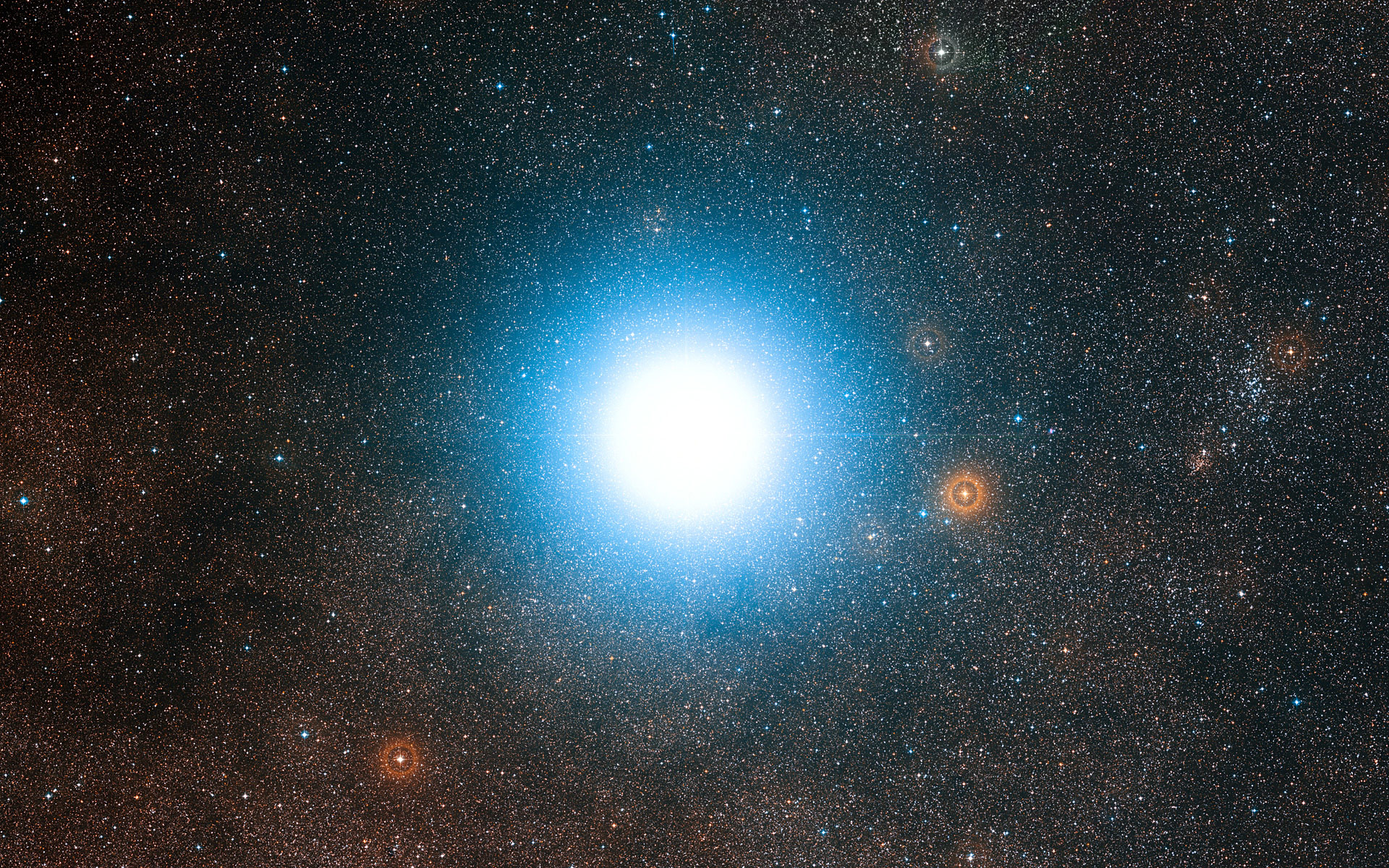
    Alpha Centauri, the closest star system to the Solar System. Astrophysicist René Heller of McMaster’s Origins Institute says our planet may not be the most ideal place for life and scientists need to consider non-Earth-like, so-called “superhabitable” planets. Credit: ESO

    A newly published study states that searching for life on Earth-like planets may be a mistake and details why scientists need to consider non-Earth-like “superhabitable” planets.

    Scientists have long focused their search for extraterrestrial life on Earth-like planets – but that may be a mistake, according to a McMaster researcher.

    Astrophysicist René Heller of McMaster’s Origins Institute says our planet may not be the most ideal place for life and scientists need to consider non-Earth-like, so-called “superhabitable” planets.

    These planets would probably be two or three times more massive and much less mountainous than Earth. They would probably be older, too.

    “The Earth just scrapes the inner edge of the solar system’s habitable zone – the area in which temperatures allow Earth-like planets to have liquid surface water,” says Heller. “So from this perspective, Earth is only marginally habitable. That led us to ask: could there be more hospitable environments for life on terrestrial planets?”

    Heller and co-author John Armstrong of Weber State University describe superhabitable planets in a paper published in the journal Astrobiology early in January.

    In it, they outline some of the characteristics such planets might have. They include many, shallower bodies of water (rather than a few large oceans), a more reliable global “thermostat” that impedes ice ages, and a magnetic shield, to protect the planet from cosmic radiation.

    Heller says the theory means astronomers should be aiming their telescopes at planets that have so far not garnered much attention in the search for extraterrestrial life.

    “We propose a shift in focus,” he says. “We want to prioritize future searches for inhabited planets. We’re saying ‘Don’t just focus on the most Earth-like planets if you really want to find life.’”

    But is the discussion about which planets to look at even worth having? How likely are we ever to find life on another planet?

    “Statistically speaking, I would say it’s very unlikely that there is nothing out there,” says Heller. “For the first time in history, we have the ability – both technical and intellectual – to find and classify potentially inhabited planets. It’s just a matter of how we spend our observation time.”

    Heller expects the paper to serve as a launching point for a debate about superhabitability. He says it may take some time for the scientific community to come around to the theory.

    “When you follow a certain pattern for decades, it can be hard to change your mind.”

    Reference: “Superhabitable Worlds” by René Heller and John Armstrong, 16 Jan 2014, Astrobiology.
    DOI: 10.1089/ast.2013.1088
    arXiv:1401.2392


    Never miss a breakthrough: Join the SciTechDaily newsletter.
    Follow us on Google and Google News.

    Astrobiology Astronomy Astrophysics McMaster University Popular Weber State University
    Share. Facebook Twitter Pinterest LinkedIn Email Reddit

    Related Articles

    Scientists Say This Hellish “Day-Night” Planet May Support Life

    “Project Hail Mary” – These 45 Exoplanets Could Be Home to Alien Life, Scientists Say

    Webb Detects a Possible Ingredient of Life on Distant Exoplanet – Scientists Urge Caution

    Why This New “Super-Earth” Has Scientists So Excited About Alien Life

    “They’re out There” – Exoplanet Axis Study Boosts Hopes of Complex Life

    Astronomers Discover Complex Organic Molecules in Infant Star System

    New Exomoon Detection Technique Could Find Solar System-Like Moons

    Early Chemistry of a Star’s Protoplanetary Disc Shapes Life-Friendly Atmospheres

    Astronomers Obtain Precise Measurements of the Two Kepler-16 Stars

    1 Comment

    1. ANDREW C STEWART on February 19, 2020 8:07 am

      Name Andrew C Stewart. I have some space artwork for your Astronomy website, if you are interested in my images please contact me.

      Reply
    Leave A Reply Cancel Reply

    • Facebook
    • Twitter
    • Pinterest
    • YouTube

    Don't Miss a Discovery

    Subscribe for the Latest in Science & Tech!

    Trending News

    Monster Storms on Jupiter Unleash Lightning Beyond Anything on Earth

    Scientists Create “Liquid Gears” That Spin Without Touching

    The Simple Habit That Could Help Prevent Cancer

    Millions Take These IBS Drugs, But a New Study Finds Serious Risks

    Scientists Unlock Hidden Secrets of 2,300-Year-Old Mummies Using Cutting-Edge CT Scanner

    Bread Might Be Making You Gain Weight Even Without Eating More Calories

    Scientists Discover Massive Magma Reservoir Beneath Tuscany

    Europe’s Most Active Volcano Just Got Stranger – Here’s Why Scientists Are Rethinking It

    Follow SciTechDaily
    • Facebook
    • Twitter
    • YouTube
    • Pinterest
    • Newsletter
    • RSS
    SciTech News
    • Biology News
    • Chemistry News
    • Earth News
    • Health News
    • Physics News
    • Science News
    • Space News
    • Technology News
    Recent Posts
    • New Brain Discovery Challenges Long-Held Theory of Teenage Brain Development
    • Sharks Are Overheating as Warming Oceans Push Them to the Edge
    • Scientists Discover Plants “Scream” – We Just Couldn’t Hear Them Until Now
    • 25-Year Study Uncovers Hidden Paths and Early Warning Signs of Blood Cancer
    • Not Just Snoring – New Research Reveals Sleep Apnea May Be Damaging Your Muscles
    Copyright © 1998 - 2026 SciTechDaily. All Rights Reserved.
    • Science News
    • About
    • Contact
    • Editorial Board
    • Privacy Policy
    • Terms of Use

    Type above and press Enter to search. Press Esc to cancel.