
A fierce fire, potentially related to the Carthaginian army’s movement across the Pyrenees to battle the Romans, erupted so swiftly that people were unable to rescue their livestock or possessions.
A ruined building nestled in the Pyrenees tells a tale of tragedy for its former inhabitants—a devastating fire that razed the settlement, consuming everything, including a hidden gold earring. Archaeologists excavating Building G at the strategically significant Iron Age site of Tossal de Baltarga have uncovered evidence of a life disrupted by violence, possibly revealing a forgotten chapter in the war between Carthage and Rome.
“The destruction was dated around the end of the third century BCE, the moment where the Pyrenees were involved in the Second Punic War and the passage of Hannibal’s troops,” said Dr. Oriol Olesti Vila of the Autonomous University of Barcelona, lead author of the article in Frontiers in Environmental Archaeology. “It is likely that the violent destruction of the site was connected to this war. The general fire points to anthropic destruction, intentional and very effective — not only Building G, but all the buildings of the site, were destroyed. In Building D we found a complete dog, burned…”
Buried treasure
Tossal de Baltarga was a hillfort of the Cerretani community, who had a major settlement at nearby Castellot de Bolvir. It seems to have lacked defensive walls, but commanded an excellent view over the river and critical travel routes. Its sudden destruction preserved organic remains, which allowed archaeologists to paint a detailed picture of the life that its occupants lived until it was set alight.
“These valleys were an important territory economically and strategically,” said Olesti Vila. “We know that Hannibal passed the Pyrenees fighting against the local tribes, likely the Cerretani. Not many archaeological remains of this expedition are preserved. Tossal de Baltarga is likely one of the best examples.”
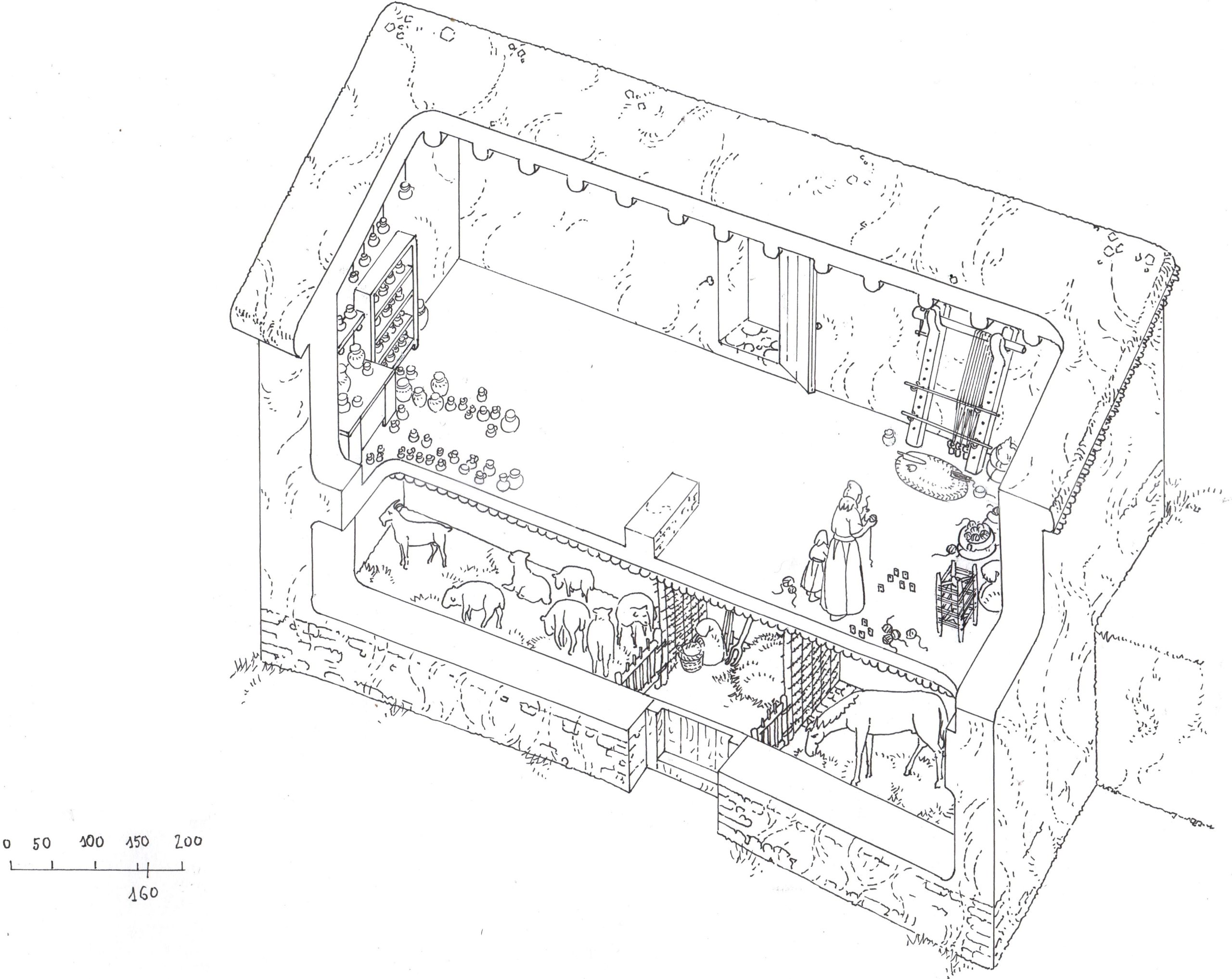
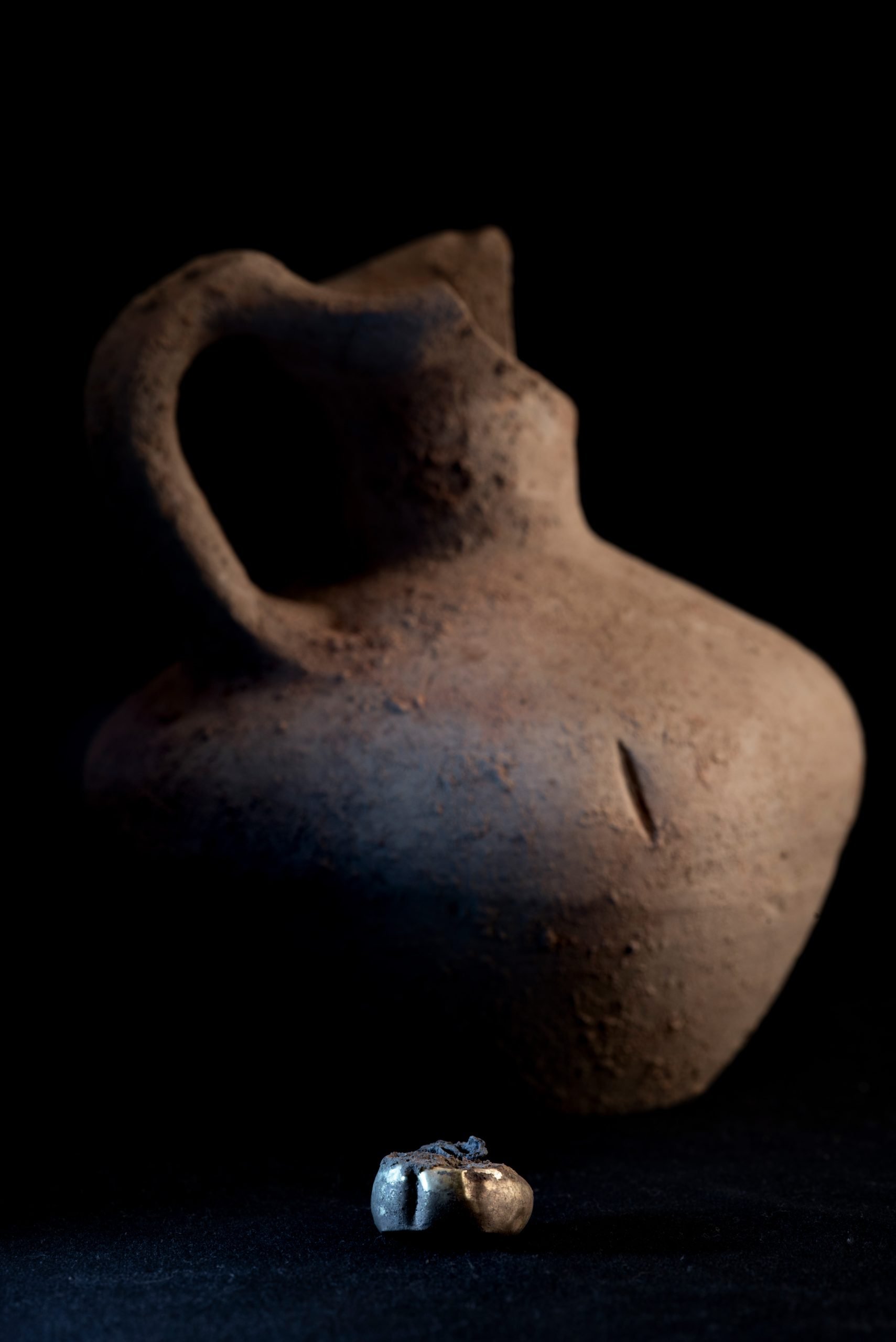
Building G had two floors. The fire burned so fiercely that the roof, support beams, and the wooden upper floor fell in, but some of the valuables survived the fall: the archaeologists found an iron pickaxe and the gold earring, concealed in a little pot.
This upper floor seems to have been divided into spaces for cooking and textile production. Numerous spindle whorls and loom weights were found, which could have been used to spin and weave wool from the sheep and goats that lived on the lower floor. Archaeologists also found edible grains like oats and barley, and some cooking vessels, with residues that showed the people who used Building G had been drinking milk and eating pork stews.
A Memory of Conflict
While no human remains were found in Building G, six animals did not escape. The four sheep, goat, and horse — which may have been ridden by the owners of Building G; it was old enough and a metal horse bit was found — were penned up in their wooden enclosures with their feed. They could even have been trapped by a closed door, which would explain the burned wood found at the entrance. This penning might have been a departure from usual practices, caused by the fear of conflict: isotope analysis indicates some sheep had previously grazed in lowland pastures, possibly by arrangement with other communities.
“These mountain communities were not closed in the highlands, but connected with neighboring areas, exchanging products and, likely, cultural backgrounds,” said Olesti Vila. “The complex economy indicates an Iron Age society adapted to their environment and taking advantage of their resources in the highlands. But it also shows their contact with other communities.”
“Our reconstruction implies a sudden destruction, with no time to open the door of the stall and save the animals,” added Olesti Vila. “This could be just an unexpected local fire. But the presence of a hidden gold earring indicates the anticipation by the local people of some kind of threat, likely the arrival of an enemy. Also, the keeping of such a high number of animals in a little stall suggests the anticipation of a danger.”
Archaeologists don’t know what became of the people who were living at Tossal de Baltarga, but it was eventually reoccupied, and garrisoned by the Romans. Some part of the community likely survived the conflagration. Perhaps remembering the burning of Building G and its neighbors, these later occupants of Tossal de Baltarga constructed defenses — including an impressive watchtower.
Reference: “The exploitation of mountain natural resources during the Iron Age in the Eastern Pyrenees: the case study of production unit G at Tossal de Baltarga (Bellver de Cerdanya, Lleida, Spain)” by Oriol Olesti, Jordi Morera, Joan Oller, Jose M. Carrasco, Lídia Colominas, Marta Portillo, Anna Berrocal, Oriol Lopez-Bultó, Laura Obea, Nadia Tarifa, Paula Tárraga, Joaquim Sisa-López de Pablo and Chiara Messana, 21 March 2024, Frontiers in Environmental Archaeology.
DOI: 10.3389/fearc.2024.1347394
Never miss a breakthrough: Join the SciTechDaily newsletter.
Follow us on Google and Google News.
1 Comment
♥ 🌊 ➕ silver threads golden needles cannot mend contemporary Levantine sacre heart ♥ of mine.. merci Beaucoups for sharing 🏆 🔹 💕