
Close Menu
    Facebook X (Twitter) Instagram
    SciTechDaily
    • Biology
    • Chemistry
    • Earth
    • Health
    • Physics
    • Science
    • Space
    • Technology
    Facebook X (Twitter) Pinterest YouTube RSS
    SciTechDaily
    Home»Biology»See How Scientists Use Glowing Embryos to Explore the Beginnings of Life
    Biology

    See How Scientists Use Glowing Embryos to Explore the Beginnings of Life

    By University of QueenslandJuly 20, 2024No Comments3 Mins Read
    Facebook Twitter Pinterest Telegram LinkedIn WhatsApp Email Reddit
    Share
    Facebook Twitter LinkedIn Pinterest Telegram Email Reddit
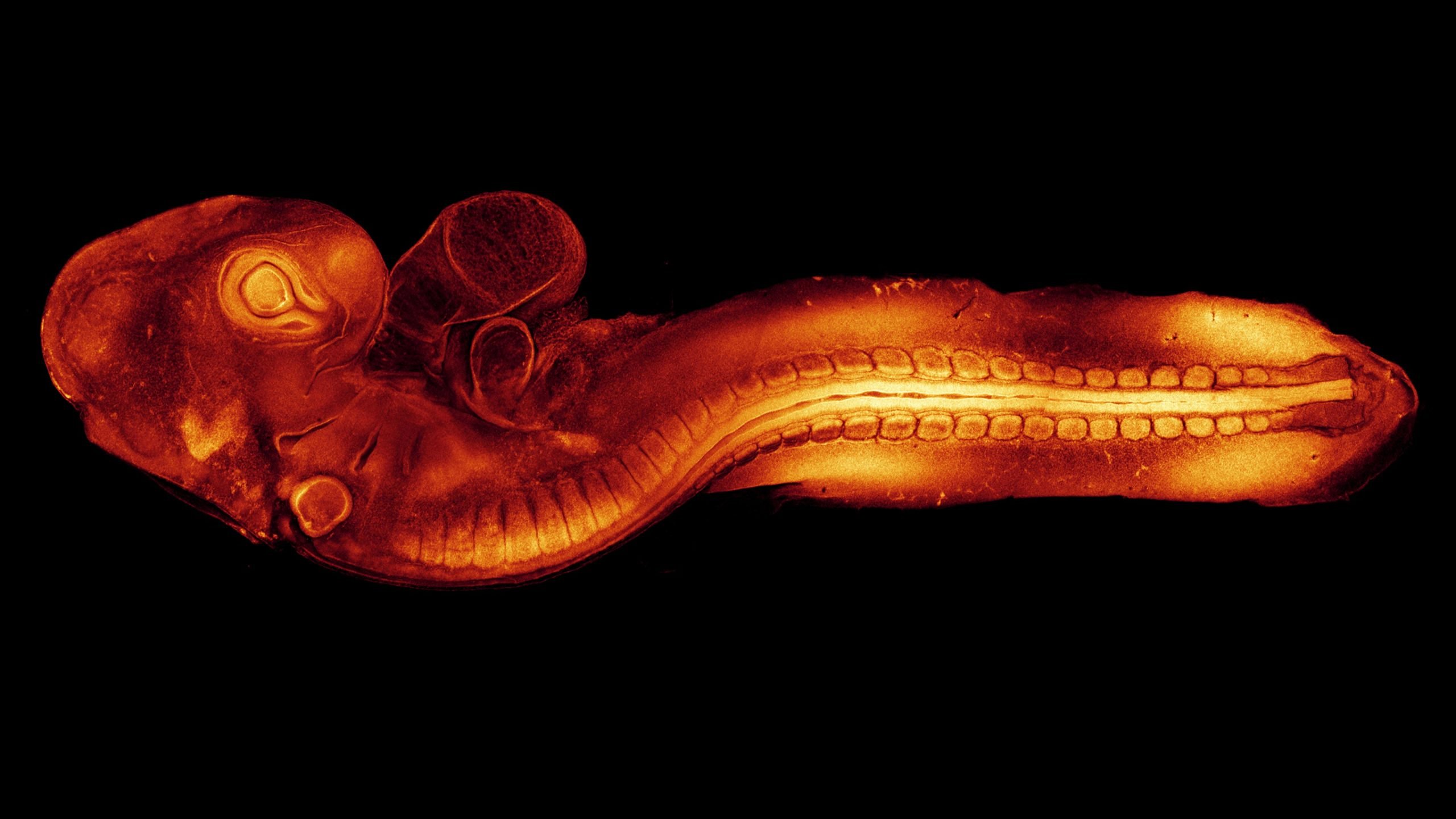
    Glowing Quail Embryo
    Researchers have seen how cells move and attach to each other during the early development of a quail embryo. Credit: University of Queensland

    University of Queensland researchers used real-time imaging on quail embryos to study heart and neural development, providing potential breakthroughs in understanding congenital defects.

    Researchers at The University of Queensland have for the first time captured images and video in real time of early embryonic development to understand more about congenital birth defects.

    Dr. Melanie White and Dr. Yanina Alvarez from UQ’s Institute for Molecular Bioscience used quail eggs to understand how cells begin to form tissues such as the heart, brain, and spinal cord.

    Dr. White said congenital birth defects affect 3 percent of Australian babies with heart defects the most common and neural tube defects second.
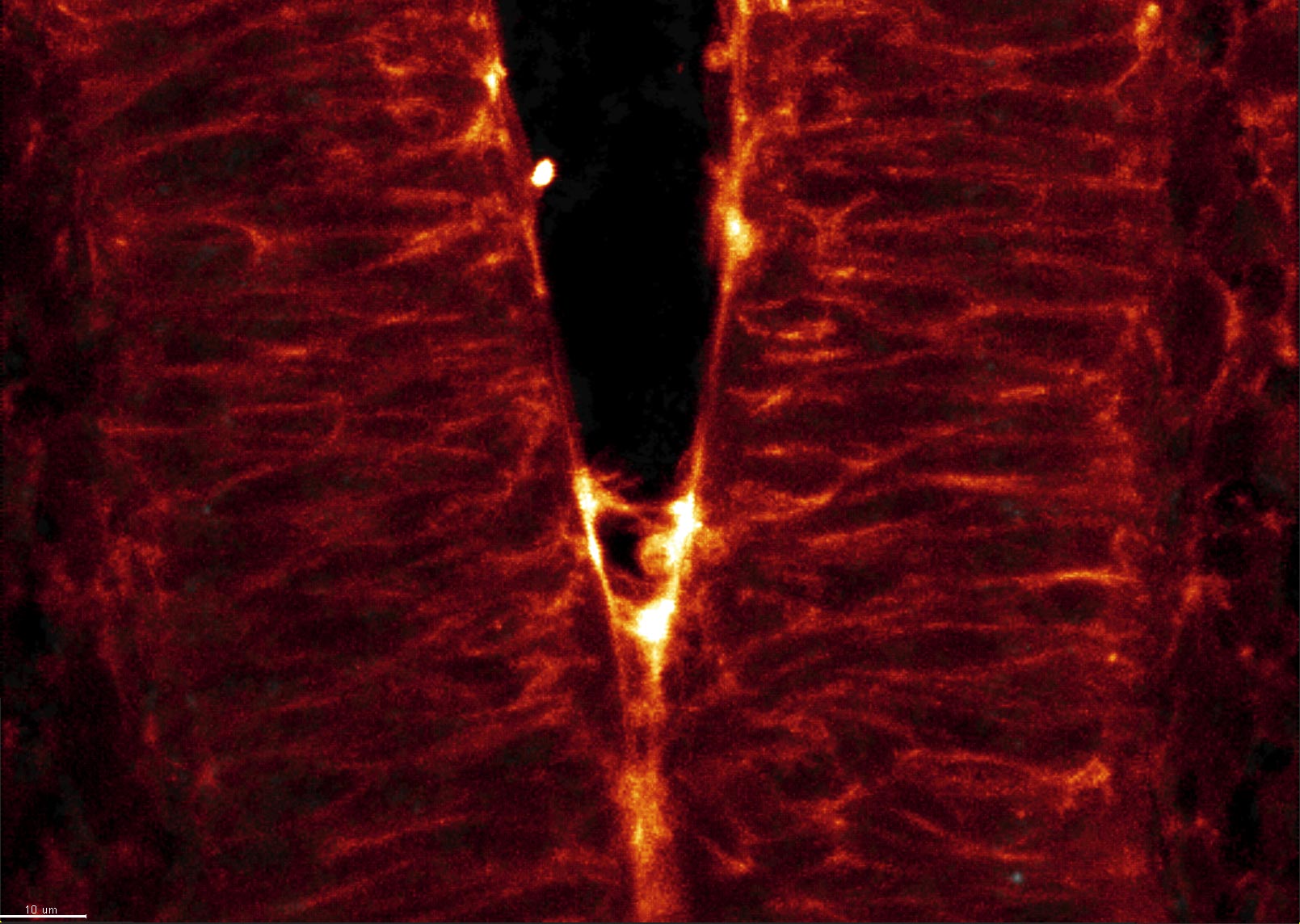
    Bilateral Cell Protrusions
    Bilateral cell protrusions contacting during neural tube closure. Credit: University of Queensland

    “Because quails grow in an egg, they’re very accessible for imaging and their early development is very similar to a human at the time the embryo implants in the uterus,” Dr. White said.

    “For the first time, we have seen high-resolution, real-time imaging of important early developmental processes.

    “Until now, most of our knowledge of post-implantation development came from studies on static slides, at fixed points in time.”

    Studying Cellular Dynamics With Fluorescent Proteins

    The IMB researchers have generated quails with a fluorescent protein to reveal the structure, called the actin cytoskeleton, which gives cells shape and facilitates movement.

    “When cells migrate during early development, they stick out protrusions called lamellipodia and filopodia-like arms that reach out and grab onto surfaces allowing the cells to crawl, or reach other cells to bring them closer together,” Dr. White said.
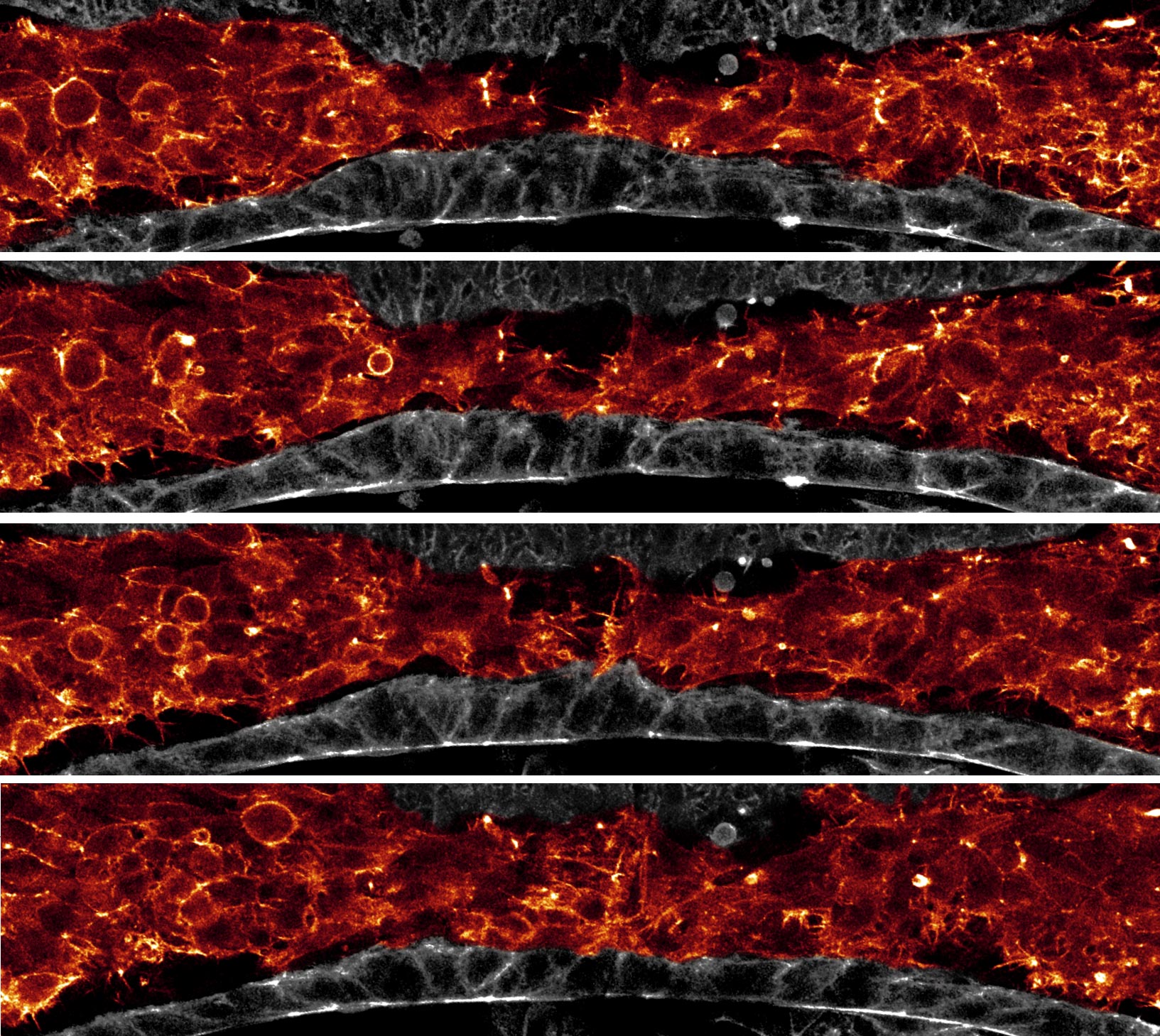
    Heart Filopodia Timeseries
    Heart filopodia timeseries. Credit: University of Queensland

    Visualizing Heart and Neural Development

    “We were able to image the filopodia from heart stem cells deep inside the embryo as they first made contact by sticking out protrusions and gripping to their surroundings and each other to form the early heart.

    “It’s the first time anyone has captured the cell’s actin cytoskeleton facilitating this contact in live imaging.”

    The researchers also imaged the open edges of the neural tube and it being ‘zipped up’ to begin to form the brain and spinal cord.

    “We saw how the cells reached across the open neural tube with their protrusions to contact the opposite side — the more protrusions the cells formed, the faster the tube zipped up,” Dr White said.

    Potential Implications for Congenital Defect Research

    “If this process goes awry or is disrupted and the tube doesn’t close properly during the fourth week of human development, the embryo will have brain and spinal cord defects.

    “Our aim is to find proteins or genes that can be targeted in the future or used for screening for congenital birth defects.

    Melanie White
    Dr. Melanie White UQ. Credit: University of Queensland

    “We are very excited at the possibilities that this new quail model now offers to study development in real-time.”

    Reference: “A Lifeact-EGFP quail for studying actin dynamics in vivo” by Yanina D. Alvarez, Marise van der Spuy, Jian Xiong Wang, Ivar Noordstra, Siew Zhuan Tan, Murron Carroll, Alpha S. Yap, Olivier Serralbo and Melanie D. White, 24 June 2024, Journal of Cell Biology.
    DOI: 10.1083/jcb.202404066

    The research was published in the Journal of Cell Biology by a team that included Marise van der Spuy and Jian Xiong Wang from UQ’s Institute for Molecular Bioscience.

    Never miss a breakthrough: Join the SciTechDaily newsletter.
    Follow us on Google and Google News.

    Developmental Biology Embryo Popular University of Queensland
    Share. Facebook Twitter Pinterest LinkedIn Email Reddit

    Related Articles

    Textbooks Challenged: Scientists Discover New Mechanism of Cell Division

    Hitting Pause on Life: Researchers Discover How to Delay Human Embryo Growth

    Fish Reveal Caffeine and Other Common Drugs May Alter Human Facial Development

    Scientists Grow “Synthetic” Embryo With Brain and Beating Heart – Without Eggs or Sperm

    Scientists Grow “Synthetic” Mouse Embryo – With Brain and Beating Heart – From Stem Cells

    Map of Life Will Need to Be Redrawn and Textbooks Updated After Highly Surprising Discovery on Christmas Island

    Complexity of Squid Brains Approach That of Dogs

    A Natural Example of a Functioning Gear Mechanism Discovered in an Insect

    Mitochondrial Transfer Technology Could Reduce Risk of Childhood Disease

    Leave A Reply Cancel Reply

    • Facebook
    • Twitter
    • Pinterest
    • YouTube

    Don't Miss a Discovery

    Subscribe for the Latest in Science & Tech!

    Trending News

    Monster Storms on Jupiter Unleash Lightning Beyond Anything on Earth

    Scientists Create “Liquid Gears” That Spin Without Touching

    The Simple Habit That Could Help Prevent Cancer

    Millions Take These IBS Drugs, But a New Study Finds Serious Risks

    Scientists Unlock Hidden Secrets of 2,300-Year-Old Mummies Using Cutting-Edge CT Scanner

    Bread Might Be Making You Gain Weight Even Without Eating More Calories

    Scientists Discover Massive Magma Reservoir Beneath Tuscany

    Europe’s Most Active Volcano Just Got Stranger – Here’s Why Scientists Are Rethinking It

    Follow SciTechDaily
    • Facebook
    • Twitter
    • YouTube
    • Pinterest
    • Newsletter
    • RSS
    SciTech News
    • Biology News
    • Chemistry News
    • Earth News
    • Health News
    • Physics News
    • Science News
    • Space News
    • Technology News
    Recent Posts
    • Scientists Discover a New Meteor Shower From a Mysterious Crumbling Asteroid
    • This Simple Fruit Wash Could Make Produce Safer and Last Days Longer
    • These Tiny Robots 50x Smaller Than a Hair Can Hunt and Move Bacteria
    • Simple Blood Test May Predict Alzheimer’s Years Before Brain Scans Show Signs
    • Scientists Say Adding This Unusual Seafood to Your Diet Could Reverse Signs of Aging
    Copyright © 1998 - 2026 SciTechDaily. All Rights Reserved.
    • Science News
    • About
    • Contact
    • Editorial Board
    • Privacy Policy
    • Terms of Use

    Type above and press Enter to search. Press Esc to cancel.