
Scientists have tested new bite-resistant wetsuits against powerful shark bites, finding they can significantly reduce life-threatening injuries.
- Bite-resistant wetsuits are emerging as an important new safety option. Instead of preventing shark encounters entirely, they are designed to reduce the severity of injuries such as cuts, punctures, tissue damage, and blood loss.
- The overall approach to shark-bite prevention is moving away from lethal methods and toward non-lethal solutions. Protective technologies like electric deterrents and specially designed wetsuits are gaining attention as ways to lower the risk of serious injuries and improve survival chances.
Bite-Resistant Wetsuits Enter the Shark Safety Toolkit
Shark researchers in Australia have evaluated four different bite-resistant fabrics to see how well they can limit blood loss and injuries.
According to Flinders University’s Southern Shark Ecology Group, these new wetsuits are not a perfect shield since internal and crushing injuries can still occur. However, they can now be considered an additional option in the set of strategies designed to reduce the risk and severity of shark-bite incidents.
Although attacks on humans are rare, they can have serious consequences for coastal communities, particularly in places that depend on ocean tourism and water recreation. Such events often lead to pressure for stronger safety measures for swimmers, surfers, and divers.
Governments have typically emphasized broad, area-based protection. Recent research, however, points to a growing shift toward personal safety solutions, including deterrents and protective gear such as bite-resistant wetsuits.
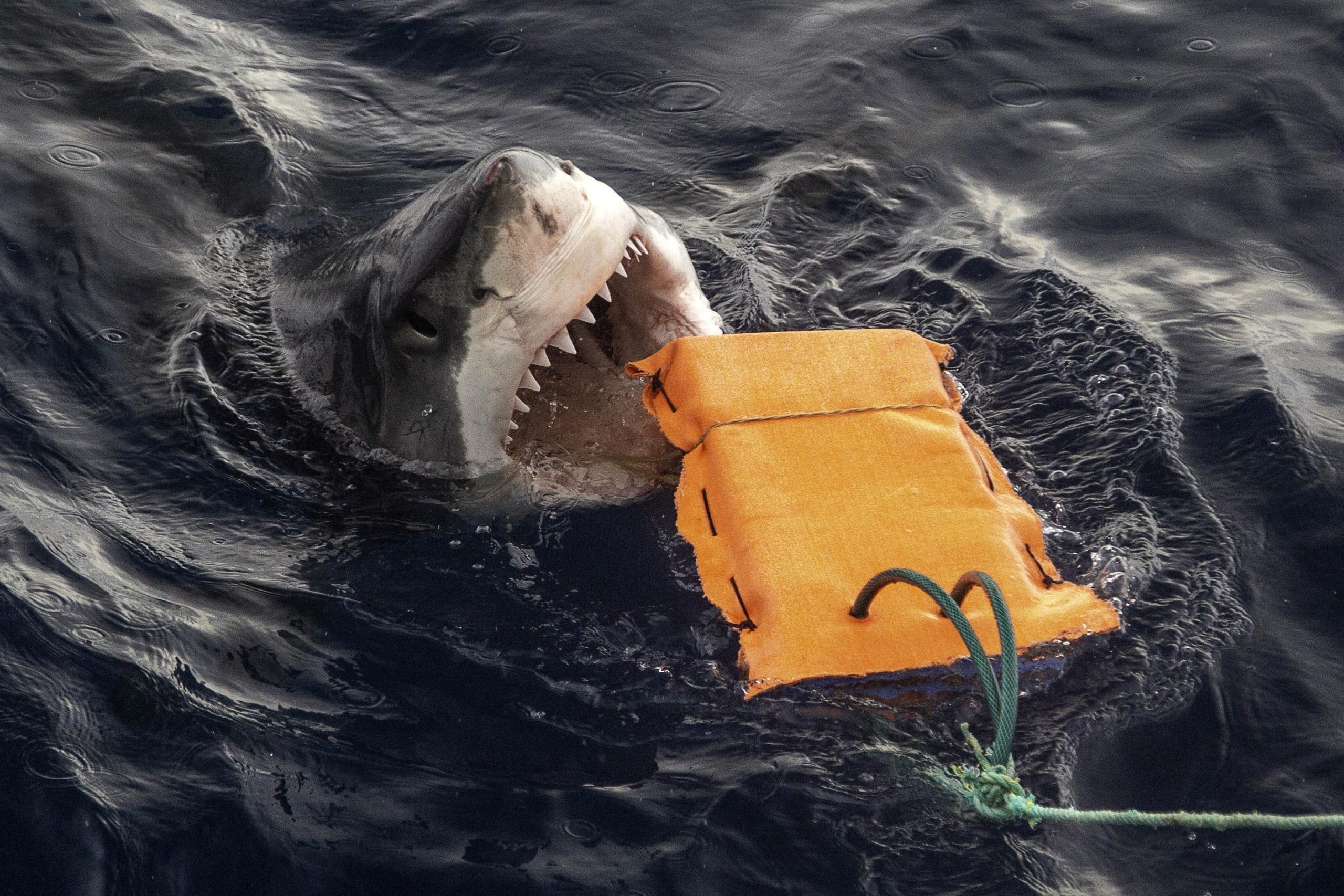
A shark takes a bite at one of the materials used in the research. Credit: Flinders University
Testing New High-Tech Materials
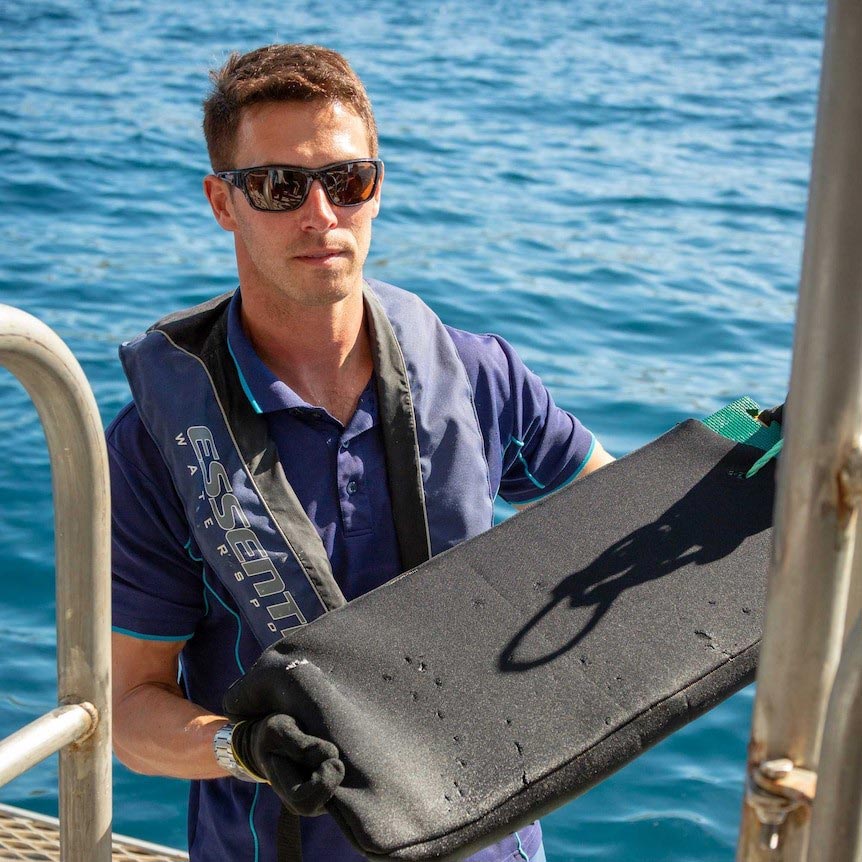
The project, supported by the NSW Department of Primary Industries and Regional Development Shark Management Program, examined four specialized wetsuit materials (Aqua Armour, Shark Stop, ActionTX-S and Brewster material) to determine how well they could withstand the bite force of white and tiger sharks.
Older chainmail-style suits offered reliable protection but were far too heavy and restrictive for most water activities. The latest designs use ultra-high molecular weight polyethylene, the same tough yet lightweight fiber often found in sailing ropes. This gives the wetsuits a combination of strength and flexibility, making them far more practical for surfers and divers.
Shark Bite Experiments and Injury Severity
Dr. Tom Clarke, Professor Charlie Huveneers, and experts from New South Wales Department of Primary Industries and Regional Development assessed each material’s potential in reducing injuries from white and tiger sharks by quantifying the amount of bite damage across four categories of increasing severity (ranging from ‘superficial’ to ‘critical’) and comparing it to damage on standard neoprene.
“While there were small differences between the four tested materials, they all reduced the amount of substantial and critical damage, which would typically be associated with severe haemorrhaging and tissue or limb loss,” says Dr. Clarke, from the College of Science and Engineering at Flinders University.
White and Tiger Sharks Under the Spotlight
White and tiger sharks are responsible for the most unprovoked bites and are two of the top three species with the highest rate of fatal bites. Interactions between humans and sharks continue to rise in frequency globally, with expanding coastal populations and rising popularity of marine activities.
“Our study showed that bite-resistant materials incorporated into wetsuits can reduce damage from large white and tiger sharks (>3 m) compared to standard neoprene wetsuit, even from moderate and severe bites.”
“While these suits don’t eliminate all the risk (e.g., internal injuries may still occur), our results indicate that they can reduce blood loss and trauma from major lacerations and punctures, potentially saving lives,” says Prof. Huveneers, from the College of Science and Engineering at Flinders University.
Saving Lives With Smarter Wetsuits
“Our findings will allow for informed decisions to be made about the use of bite-resistant wetsuit materials for occupational activities, as well as enabling the public to make appropriate decisions about the suitability of using these products.”
Reference: “Effectiveness of bite-resistant materials to reduce injuries from white shark (Carcharodon carcharias) and tiger shark (Galeocerdo cuvier) bites” by Thomas M. Clarke, Paul A. Butcher, Marcel Green, James Whitelaw, Lauren Meyer and Charlie Huveneers, 25 September 2025, Wildlife Research.
DOI: 10.1071/WR25019
Never miss a breakthrough: Join the SciTechDaily newsletter.
Follow us on Google and Google News.
3 Comments
Also, if you refrain from swimming where there are great whites, it could save lives as well. And it’s cheaper.
Years ago National Geographic did an article on a Red Sea fish which caused sharks to gag. It was thought that the chemical could be used in the lining of wetsuits to obtain the same effect. I hoped this article would be a follow up. It is good to have stronger material but I guess they haven’t figured out a way to stabilize the gag chemical.
More information on this gag chemical would be great