
Close Menu
    Facebook X (Twitter) Instagram
    SciTechDaily
    • Biology
    • Chemistry
    • Earth
    • Health
    • Physics
    • Science
    • Space
    • Technology
    Facebook X (Twitter) Pinterest YouTube RSS
    SciTechDaily
    Home»Earth»Shedding New Light on Earth’s Deepest Mechanisms Using Diamonds
    Earth

    Shedding New Light on Earth’s Deepest Mechanisms Using Diamonds

    By University of AlbertaOctober 1, 2020No Comments3 Mins Read
    Facebook Twitter Pinterest Telegram LinkedIn WhatsApp Email Reddit
    Share
    Facebook Twitter LinkedIn Pinterest Telegram Email Reddit
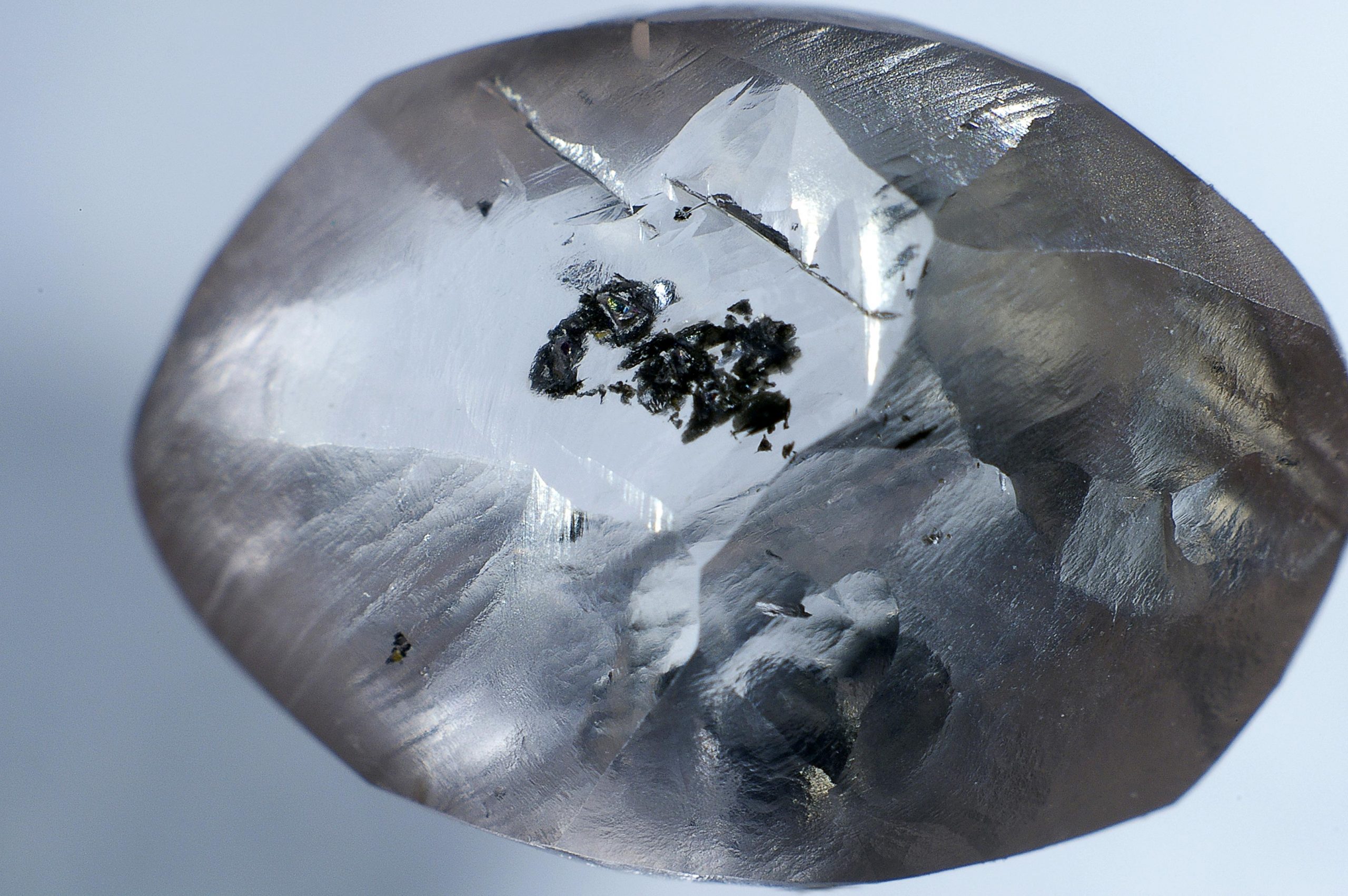
    Diamond From Kankan Guinea
    Diamonds from Kankan, Guinea, were analyzed in this study The imperfections inside the diamond are small inclusions of a mineral called ferropericlase, which is from the lower mantle. Credit: Anetta Banas

    Uncovering New Understanding of Earth’s Carbon Cycle

    University of Alberta Ph.D. student authors paper shedding new light on Earth’s deepest mechanisms using information from diamonds.

    A new study led by a University of Alberta Ph.D. student—and published in Nature—is examining the Earth’s carbon cycle in new depth, using diamonds as breadcrumbs of insight into some of Earth’s deepest geologic mechanisms.

    “Geologists have recently come to the realization that some of the largest, most valuable diamonds are from the deepest portions of our planet,” said Margo Regier, PhD student in the Department of Earth and Atmospheric Sciences under the supervision of Graham Pearson and Thomas Stachel. “While we are not yet certain why diamonds can grow to larger sizes at these depths, we propose a model where these ‘superdeep’ diamonds crystallize from carbon-rich magmas, which may be critical for them to grow to their large sizes.”

    Beyond their beauty and industrial applications, diamonds provide unique windows into the deep Earth, allowing scientists to examine the transport of carbon through the mantle.

    “The vast majority of Earth’s carbon is actually stored in its silicate mantle, not in the atmosphere,” Regier explained. “If we are to fully understand Earth’s whole carbon cycle then we need to understand this vast reservoir of carbon deep underground.”

    The study revealed that the carbon-rich oceanic crust that sinks into the deep mantle releases most of its carbon before it gets to the deepest portion of the mantle. This means that most carbon is recycled back to the surface and only small amounts of carbon will be stored in the deep mantle—with significant implications for how scientists understand the Earth’s carbon cycle. The mechanism is important to understand for a number of reasons, as Regier explained.

    “The movement of carbon between the surface and mantle affects Earth’s climate, the composition of its atmosphere, and the production of magma from volcanoes,” said Regier. “We do not yet understand if this carbon cycle has changed over time, nor do we know how much carbon is stored in the deepest parts of our planet. If we want to understand why our planet has evolved into its habitable state it is today and how the surfaces and atmospheres of other planets may be shaped by their interior processes, we need to better understand these variables.”

    Reference: “The lithospheric-to-lower-mantle carbon cycle recorded in superdeep diamonds” by M. E. Regier, D. G. Pearson, T. Stachel, R. W. Luth, R. A. Stern and J. W. Harris, 9 September 2020, Nature.
    DOI: 10.1038/s41586-020-2676-z

    The study was made possible through a collaboration between researchers at the University of Alberta and the University of Glasgow, including Dr. Jeff Harris, who collected the diamond samples used in the study. Support through federal funding from the Natural Sciences and Engineering Research Council of Canada (NSERC), via the Diamond Exploration and Research Training School at the University of Alberta was also integral in enabling this research.

    Never miss a breakthrough: Join the SciTechDaily newsletter.
    Follow us on Google and Google News.

    Diamonds Geology University of Alberta
    Share. Facebook Twitter Pinterest LinkedIn Email Reddit

    Related Articles

    From Waste Pile to Diamond Discovery: How a Humble Piece of Rock Solved a Long-Standing Diamond Mystery

    An Underground Ocean? Scientists Discover Water Deep Within Earth

    A Billion-Plus Years of Deep-Earth History Hidden Within African Diamonds

    Diamonds That Formed Deep in the Earth’s Mantle Contain Evidence of Deep-Earth Recycling Processes

    Natural Nanodiamonds in Oceanic Rocks – Formed Through Low Pressure and Temperature Geological Processes

    Climate Models Challenged: Ancient Rocks Show Earth Had High Oxygen Levels 2 Billion Years Ago

    Primordial Fingerprints of Earth’s Original Building Blocks Discovered in Diamond-Bearing Rocks

    Scientists Reveal Diamond Cache Deep in Earth’s Interior

    Diamonds Are Like the Earth’s Champagne Corks

    Leave A Reply Cancel Reply

    • Facebook
    • Twitter
    • Pinterest
    • YouTube

    Don't Miss a Discovery

    Subscribe for the Latest in Science & Tech!

    Trending News

    Popular Sugar-Free Sweetener Linked to Liver Disease, Study Warns

    What Is Hantavirus? The Deadly Disease Raising Alarm Worldwide

    Scientists Just Discovered How the Universe Builds Monster Black Holes

    Scientists Unveil New Treatment Strategy That Could Outsmart Cancer

    A Simple Vitamin May Hold the Key to Treating Rare Genetic Diseases

    Scientists Think the Real Fountain of Youth May Be Hiding in Your Gut

    Ravens Don’t Follow Wolves, They Predict Them

    This Common Knee Surgery May Be Doing More Harm Than Good

    Follow SciTechDaily
    • Facebook
    • Twitter
    • YouTube
    • Pinterest
    • Newsletter
    • RSS
    SciTech News
    • Biology News
    • Chemistry News
    • Earth News
    • Health News
    • Physics News
    • Science News
    • Space News
    • Technology News
    Recent Posts
    • Why Are So Many New Fathers Dying? Scientists Say the U.S. Has a Dangerous Blind Spot
    • Scientists Identify Simple Supplement That Greatly Reduces Alzheimer’s Damage
    • You May Have a Dangerous Type of Cholesterol Even if Your Tests Look Normal
    • Study Reveals Dangerous Flaw in AI Symptom Checkers
    • New MRI Breakthrough Captures Stunningly Clear Images of the Eye and Brain
    Copyright © 1998 - 2026 SciTechDaily. All Rights Reserved.
    • Science News
    • About
    • Contact
    • Editorial Board
    • Privacy Policy
    • Terms of Use

    Type above and press Enter to search. Press Esc to cancel.