
Amazonian rock art newly discovered by researchers provides further proof the rainforest’s earliest inhabitants lived alongside now-extinct giant Ice Age animals.
The thousands of pictures are among the oldest depictions of people interacting with the huge creatures, including mastodons. Usually the only clues about their appearance are skeletal remains.
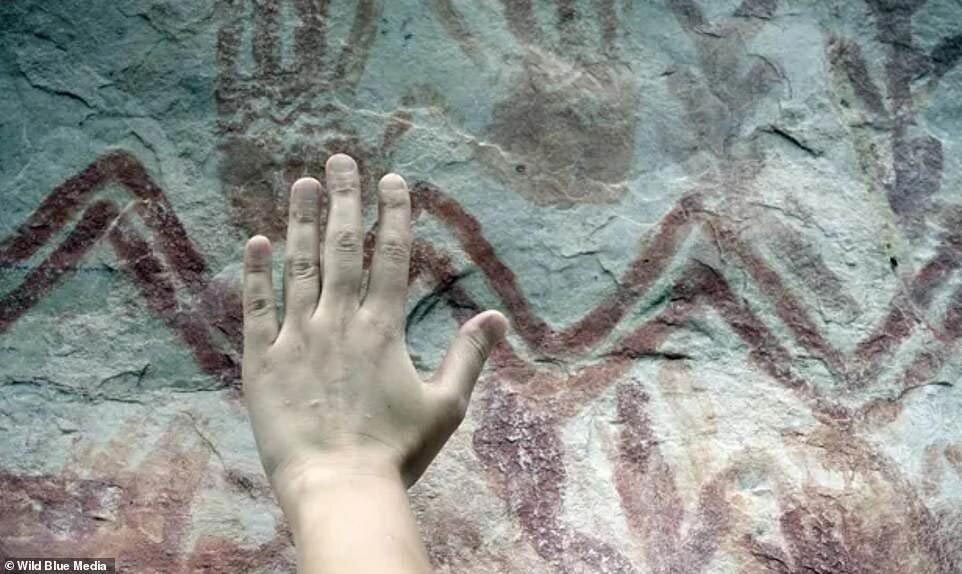
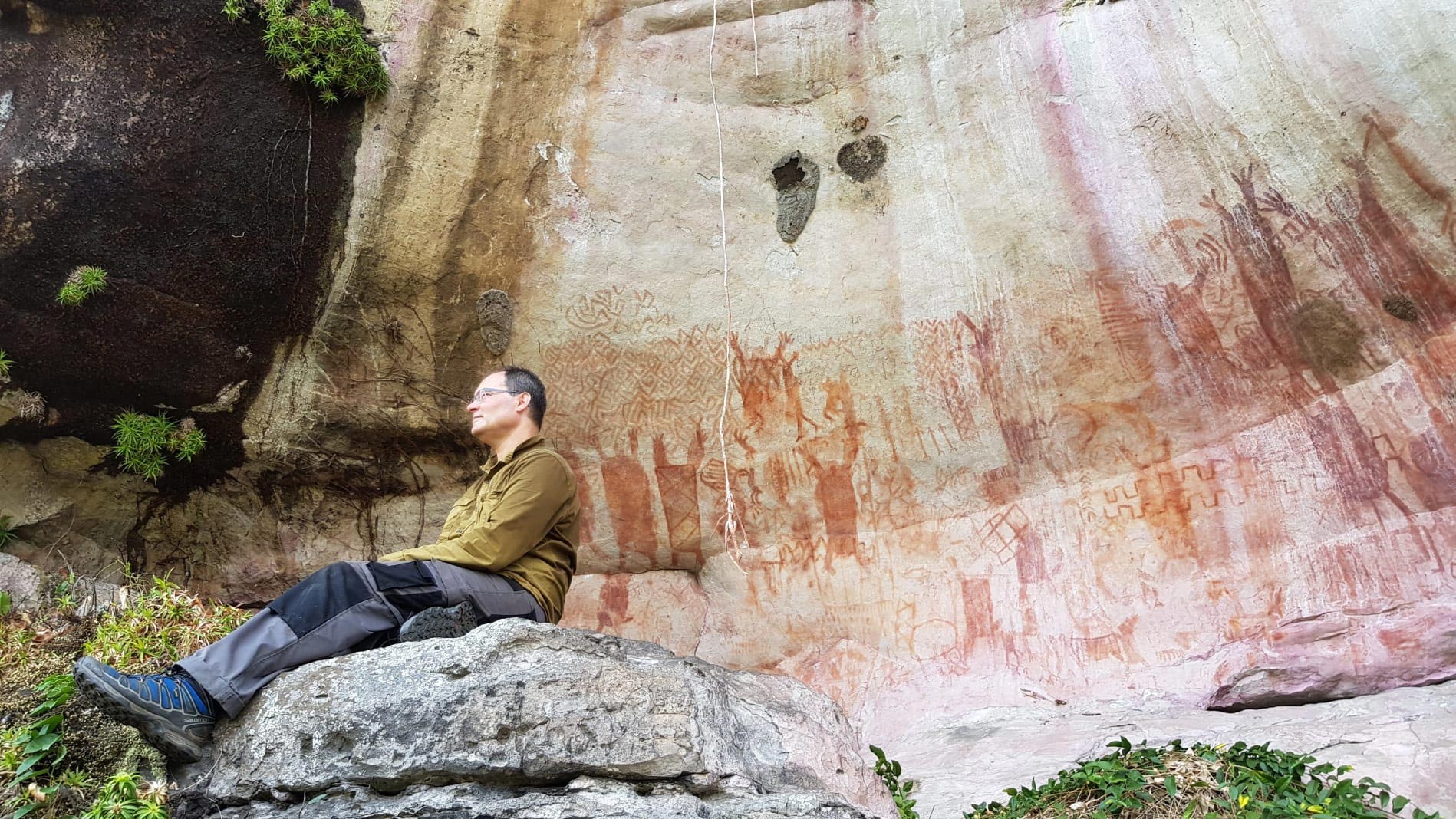
This is one of the largest collections of rock art found in South America. The recorded drawings, likely first made around 12,600 and 11,800 years ago, are on three rock shelters on hills in the Colombian Amazon. The paintings, identified during landscape surveys, also depict geometric shapes, human figures, and handprints, as well as hunting scenes and people interacting with plants, trees, and savannah animals. The vibrant red pictures were produced over a period of hundreds, or possibly thousands, of years. Some are so high and inaccessible, special ladders crafted from forest resources would have been needed and they would have been obscured from view for anyone visiting the rock shelter.
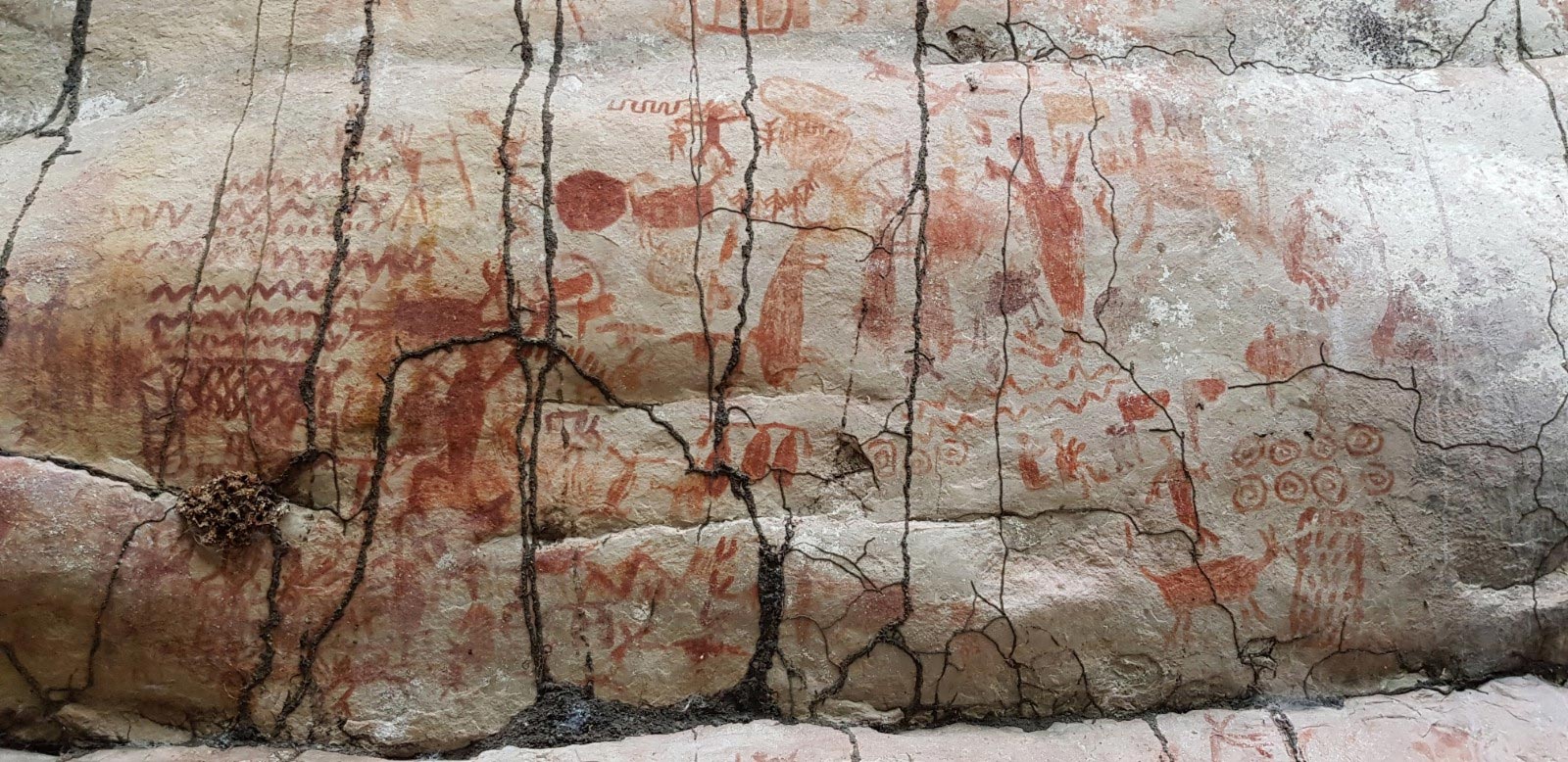
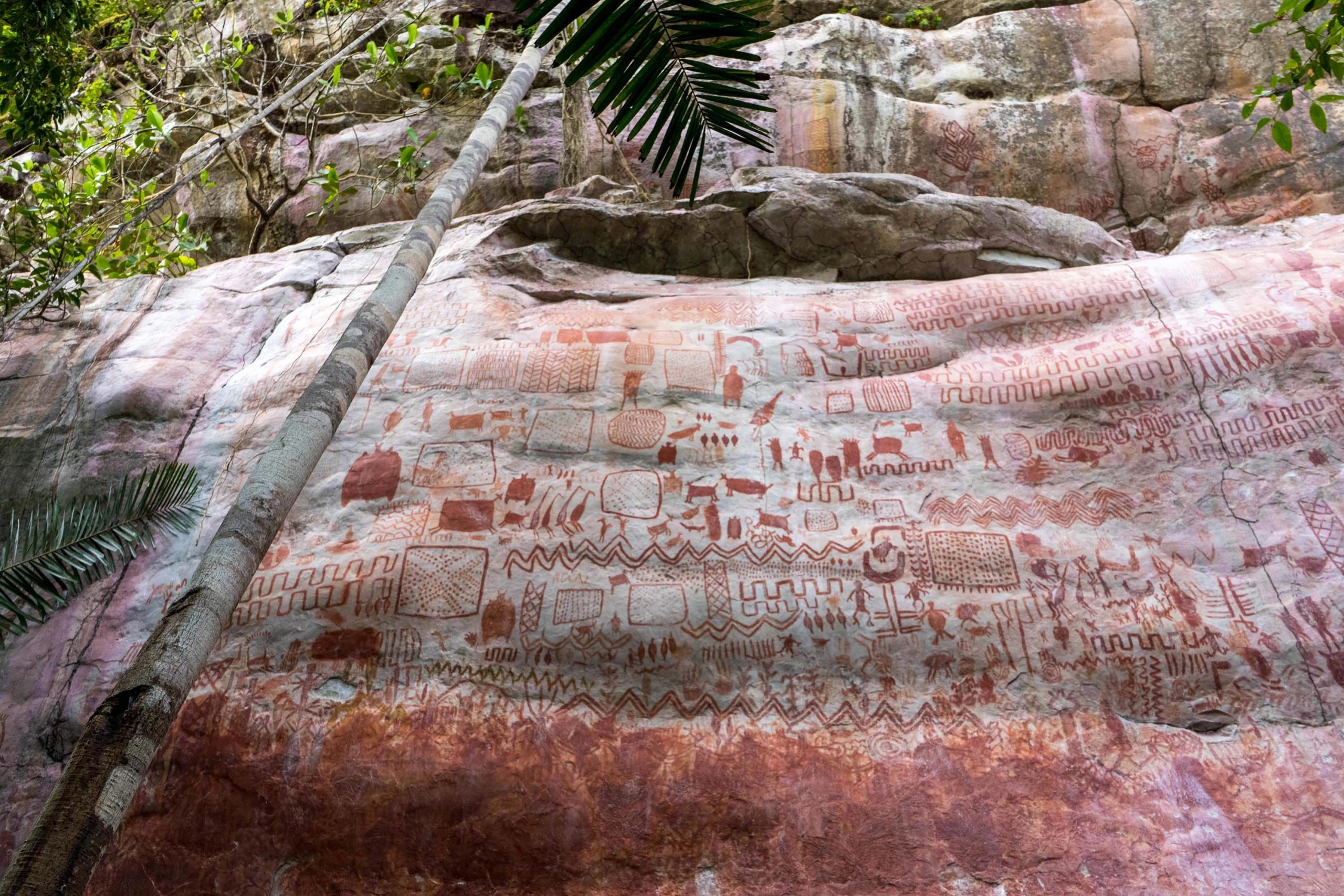
There are drawings of deer, tapirs, alligators, bats, monkeys, turtles, serpents, and porcupines, as well as what appears to be Ice Age megafauna. These now extinct animals are depicted in rock art in Central Brazil, but experts believe these drawings are more realistic. There are depictions of creatures resembling a giant sloth, mastodon, camelids, horses, and three-toe ungulates with trunks. These native animals all became extinct, probably because of a combination of climate change, the loss of their habitat, and hunting by humans.
The excavations, in the deep soil around the shelters, have revealed one of the earliest secure dates for the occupation of the Columbian Amazon and clues about people’s diet at this time, as well as the remains of small tools and scraped ochre used to extract pigments to make the paintings.
Communities who lived in the area at the time the drawings were made were hunter-gatherers who fished in the nearby river. Bones and plant remains found during the excavations show they ate palm and tree fruits, piranha, alligators, snakes, frogs, rodents such as paca and capybara, and armadillos.
The discovery was made by researchers on the ERC project LASTJOURNEY, who are working to discover when people settled in Amazonia, and the impact their farming and hunting had on the biodiversity of the region. It features in a new Channel 4 (UK) series, Jungle Mystery: Lost Kingdoms of the Amazon. The findings are also outlined in an article in the journal Quaternary International.
The paintings, on specially prepared rock walls of the Serranía La Lindosa, on the northern edge of the Colombian Amazon, is further evidence of the impact early human communities had on the Amazon’s biodiversity and their adaption to climate change. At the time the drawings were made temperatures were rising, starting the transformation of the area from a mosaic landscape of patchy savannahs, thorny scrub, gallery forests, and tropical forest with montane elements into the broadleaf tropical Amazon forest of today.
The rock shelters are far from modern settlements and trails, but were known to some local communities, who helped researchers explore them.
The research has been made possible following the 2016 peace treaty between the FARC and the Colombian Government.
The research was carried out by Gaspar Morcote-Ríos, from the Universidad Nacional de Colombia, Francisco Javier Aceituno, from the Universidad de Antioquia, José Iriarte and Mark Robinson from the University of Exeter, and Jeison L. Chaparro-Cárdenas from the Universidad Nacional de Colombia.
Dr. Robinson said: “These really are incredible images, produced by the earliest people to live in western Amazonia. They moved into the region at a time of extreme climate change, which was leading to changes in vegetation and the make-up of the forest. The Amazon was still transforming into the tropical forest we recognize today.
“The paintings give a vivid and exciting glimpse into the lives of these communities. It is unbelievable to us today to think they lived among, and hunted, giant herbivores, some of which were the size of a small car.”
The rock shelters are exposed to the elements, meaning other paintings in the Amazon discovered by experts have been damaged and the pictures are unclear. Communities exfoliated, or peeled, the rock using fire to create smooth surfaces for their art.
These new discoveries are in shelters more protected through overhanging rock, or the wind and rain blowing in a different direction.
Professor Iriarte said: “These rock paintings are spectacular evidence of how humans reconstructed the land, and how they hunted, farmed and fished. It is likely art was a powerful part of culture and a way for people to connect socially. The pictures show how people would have lived amongst giant, now extinct, animals, which they hunted.”
Experts carried out the excavations in 2017 and 2018. The largest set of paintings was found at Cerro Azul, where there is a total of 12 panels and thousands of individual pictographs depicting humans, animals, plants, handprints, and geometric shapes. Paintings at Cerro Montoya and Limoncillos were more faded.
The discovery features in a new series on the Amazon, coming to Channel 4 in the UK in the first week of December – Jungle Mystery: Lost Kingdoms of The Amazon. Fronted by Ella Al Shamahi, the series explores lost civilizations and uncovers never-before-hidden ancient settlements and rock art.
Never miss a breakthrough: Join the SciTechDaily newsletter.
Follow us on Google and Google News.
1 Comment
Very interesting.
I wonder when Scientists will discover proof of the existence of Gaints (Not the professional Football team!) but a larger version of the Humans, who reportedly existed in ” Mythology” and tales from many civilizations acoss the world embedded in our memories! Maybe they were similar to the “Asteroid B” by a space ship which landed on it landed on and is bringing back samples. All Hollow and Fluffy inside !
Also over the last century our height has been steadily increasing as a species. We may all be heading towards “Gainthood” !
I do suspect that the planet may find it difficult to feed 10 billion taller and well food Humans in a few years ! Now if the CNO Netrinos from a neighbouring sun acts as a Growth Harmone and we become Species of Gaints , we my find it difficult to feed the next generation. Thank God for Midgets and Dwarfs!
Capturing the images of these Amazonian Artiists in Digital form and enhancing , cleaning it up to make it sharper should be very much possile with todays technology!
Suggest that we as a species figure out how to systemacilly reimagine imagination itself ! May lead to great insights for the next generation and policy decisions aligned with Science .
WE are all mortal and the sooner we realize the better for all humanity.