
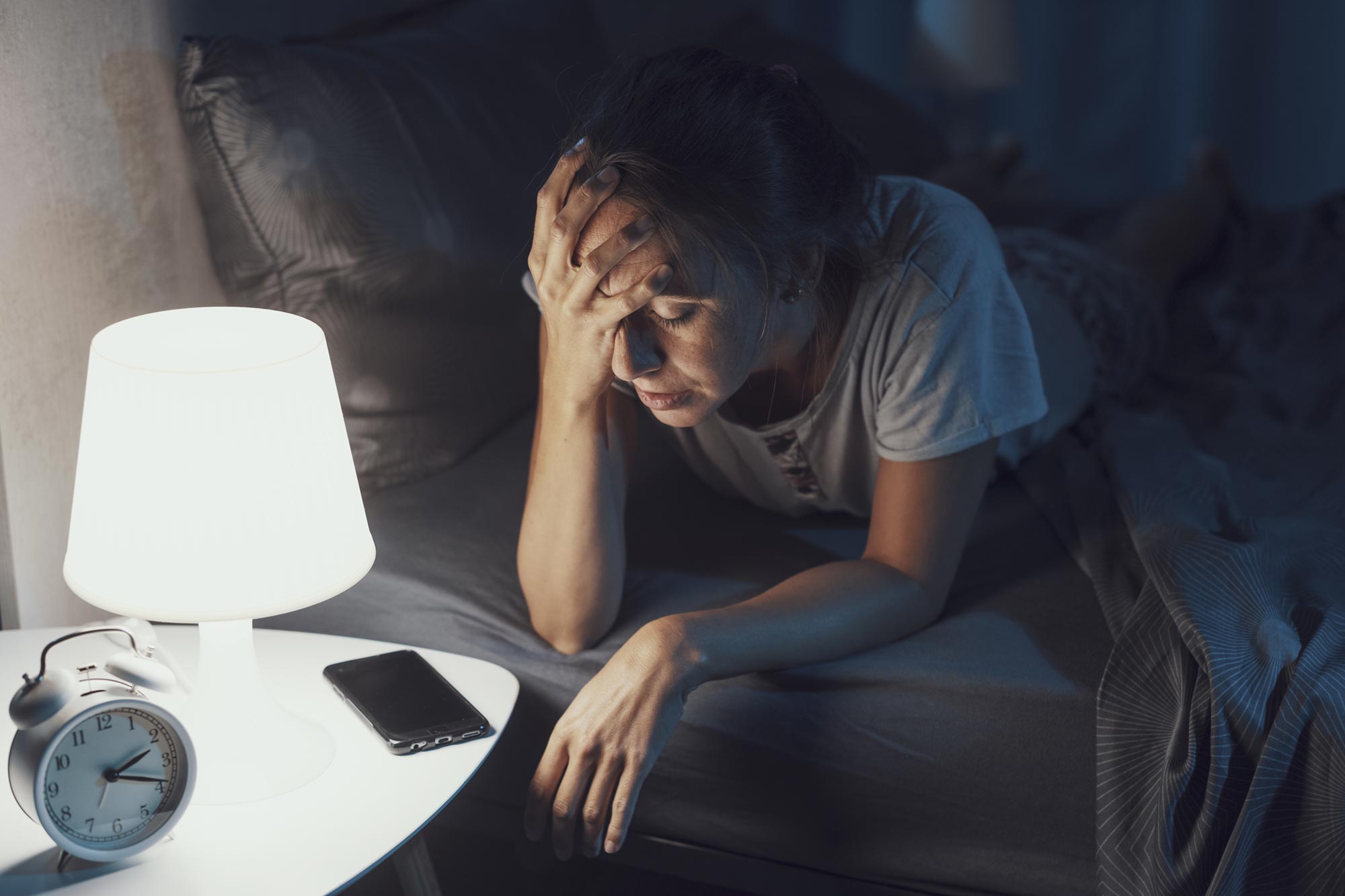
OHSU researchers found that getting at least seven hours of sleep each night can improve how you feel and help you live longer.
A full night of sleep may be far more important than many people realize. New research from Oregon Health & Science University indicates that regularly falling short on sleep may be linked to a shorter lifespan.
The findings were recently published in the journal SLEEP Advances.
To explore this connection, researchers analyzed a large national database to identify patterns between sleep habits and longevity. They examined average life expectancy at the county level and compared it with detailed survey data collected by the Centers for Disease Control and Prevention from 2019 through 2025.
When the team evaluated different lifestyle behaviors that influence life expectancy, sleep emerged as a particularly strong factor. Its association was stronger than that of diet, physical activity, or social isolation, and was surpassed only by smoking.
Sleep Outpaces Other Lifestyle Factors
“I didn’t expect it to be so strongly correlated to life expectancy,” said senior author Andrew McHill, Ph.D., associate professor in the OHSU School of Nursing, the OHSU School of Medicine, and OHSU’s Oregon Institute of Occupational Health Sciences. “We’ve always thought sleep is important, but this research really drives that point home: People really should strive to get seven to nine hours of sleep if at all possible.”
The study was carried out largely by graduate students working in the Sleep, Chronobiology, and Health Laboratory within the OHSU School of Nursing.
A Striking Association Across States and Years
For years, researchers have recognized that getting enough sleep supports many aspects of good health. Even so, McHill and his colleagues said they did not anticipate how strongly sleep would be linked to life expectancy. In their analysis, a lack of adequate sleep proved to be a more powerful predictor of lifespan than either diet or exercise.
“It’s intuitive and makes a lot of sense, but it was still striking to see it materialize so strongly in all of these models,” McHill said. “I’m a sleep physiologist who understands the health benefits of sleep, but the strength of the association between sleep sufficiency and life expectancy was remarkable to me.”
Although previous research has shown broadly that lack of adequate sleep leads to higher mortality risk, the new research is the first to reveal year-to-year correlations between sleep and life expectancy for every U.S. state.
Defining Sufficient Sleep
For the purpose of modeling, the CDC defined sufficient sleep as at least seven hours a night, which is recommended by the American Academy of Sleep Medicine and the Sleep Research Society.
Researchers found clear correlations in each year and in most U.S. states between sleep and life expectancy.
The statistical analysis did not delve into reasons why inadequate sleep appears to shorten life expectancy, but McHill noted that sleep influences cardiovascular health, the immune system, and brain function.
Rethinking Sleep as a Health Priority
“This research shows that we need to prioritize sleep at least as much as we do to what we eat or how we exercise,” he said. “Sometimes, we think of sleep as something we can set aside and maybe put off until later or on the weekend.
“Getting a good night’s sleep will improve how you feel but also how long you live.”
Reference: “Sleep insufficiency and life expectancy at the state-county level in the united states, 2019-2025” by Kathryn E McAuliffe, Madeline R Wary, Gemma V Pleas, Kiziah E S Pugmire, Courtney Lysiak, Nathan F Dieckmann, Brooke M Shafer and Andrew W McHill, 8 December 2025, SLEEP Advances.
DOI: 10.1093/sleepadvances/zpaf090
The research was supported by the National Heart, Lung, and Blood Institute of the National Institutes of Health, under Award numbers R01HL156948, R01HL169317 and T32HL083808; the OHSU School of Nursing; and by the Oregon Institute of Occupational Health Sciences by way of funding from the Division of Consumer and Business Services of the state of Oregon (ORS 656.630).
Never miss a breakthrough: Join the SciTechDaily newsletter.
Follow us on Google and Google News.
3 Comments
Perhaps cause and effect are reversed here, and folks with heart, immune, brain issues, not to mention liver, kidney etc., are unable to sleep due to their underlying conditions. Not sleeping may be a symptom of health issues, and not necessarily a cause.
EXACTLT what I was thinking. I do everything I can to get more sleep but due to pain and other bizarre issues like my nose closing up for no reason or feeling starving at night and having to get up to eat, or having to get up to pee. I’m lucky if I get 5 hours of sleep at night.
Your health often dictates your sleep pattern, not necessarily the other way around.
This research doesn’t really identify which is cause and which is effect.