
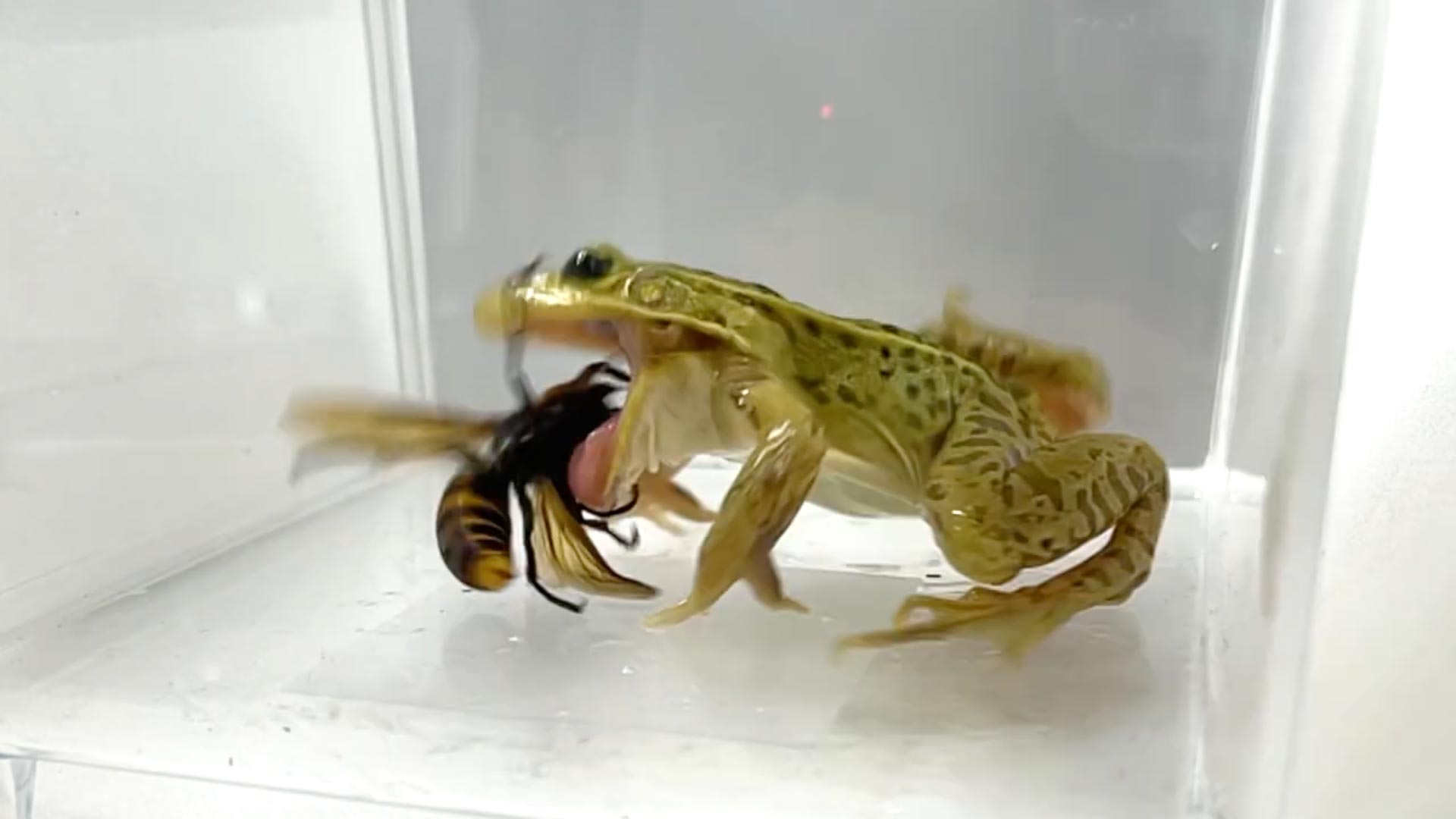
Researchers have found that pond frogs can withstand repeated stings from hornets, including the powerful Asian giant hornet, while actively hunting and eating them.
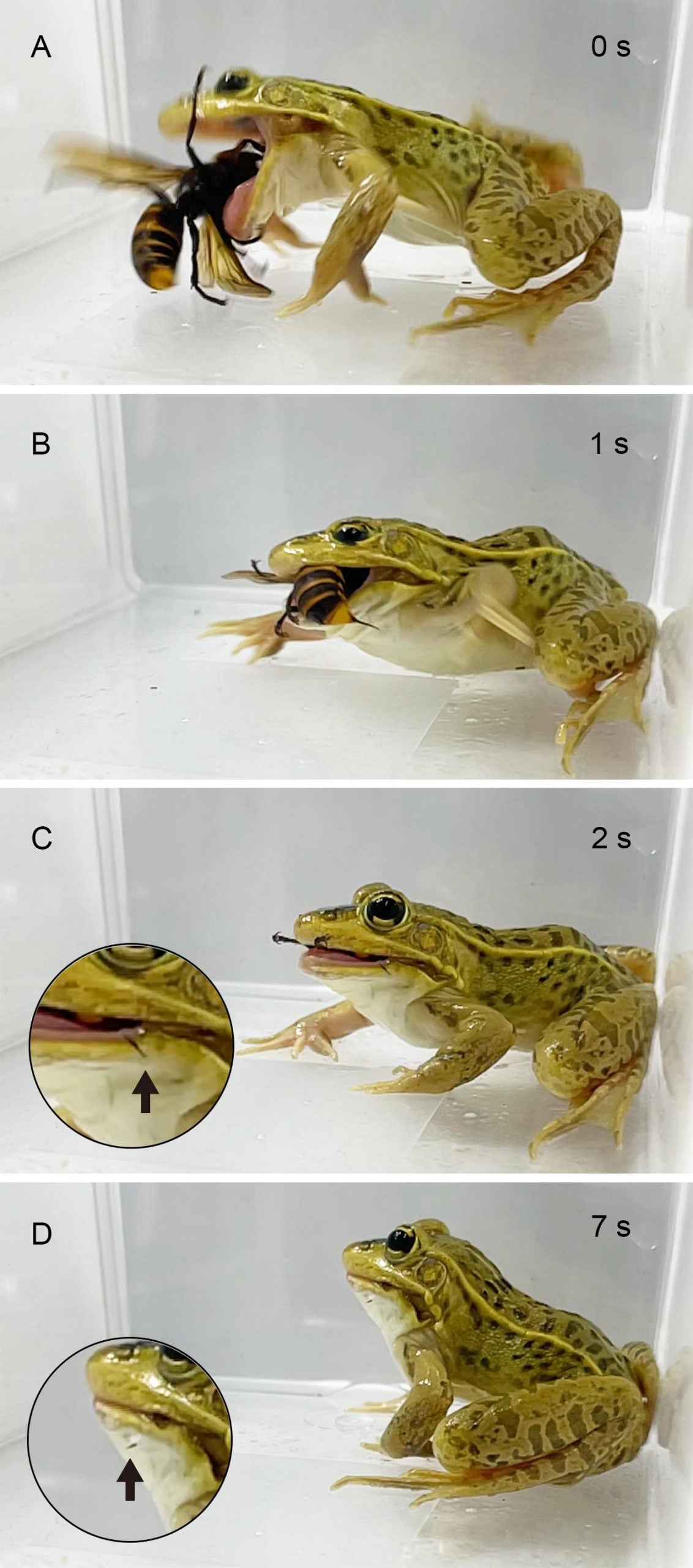
In controlled experiments, most frogs successfully attacked and consumed the hornets even after being stung in sensitive areas like the mouth and eyes. Their resilience far exceeds that of similarly sized mammals, which can die from a single sting.
Animals That Dare to Hunt Hornets
Most people find a hornet’s stinger frightening enough from a safe distance, yet several predators, including certain birds, spiders, and frogs, regularly target adult hornets. A sting from these insects can unleash intense pain along with tissue damage and serious complications such as the destruction of red blood cells and cardiac dysfunction, any of which can be fatal. Scientists have long wondered whether hornet-eating animals can actually endure the venom or simply manage to avoid being stung during the attack.
As Kobe University ecologist Shinji Sugiura explains, “Although stomach-content studies had shown that pond frogs sometimes eat hornets, no experimental work had ever examined how this occurs.”
Testing Frogs Against Venomous Hornets
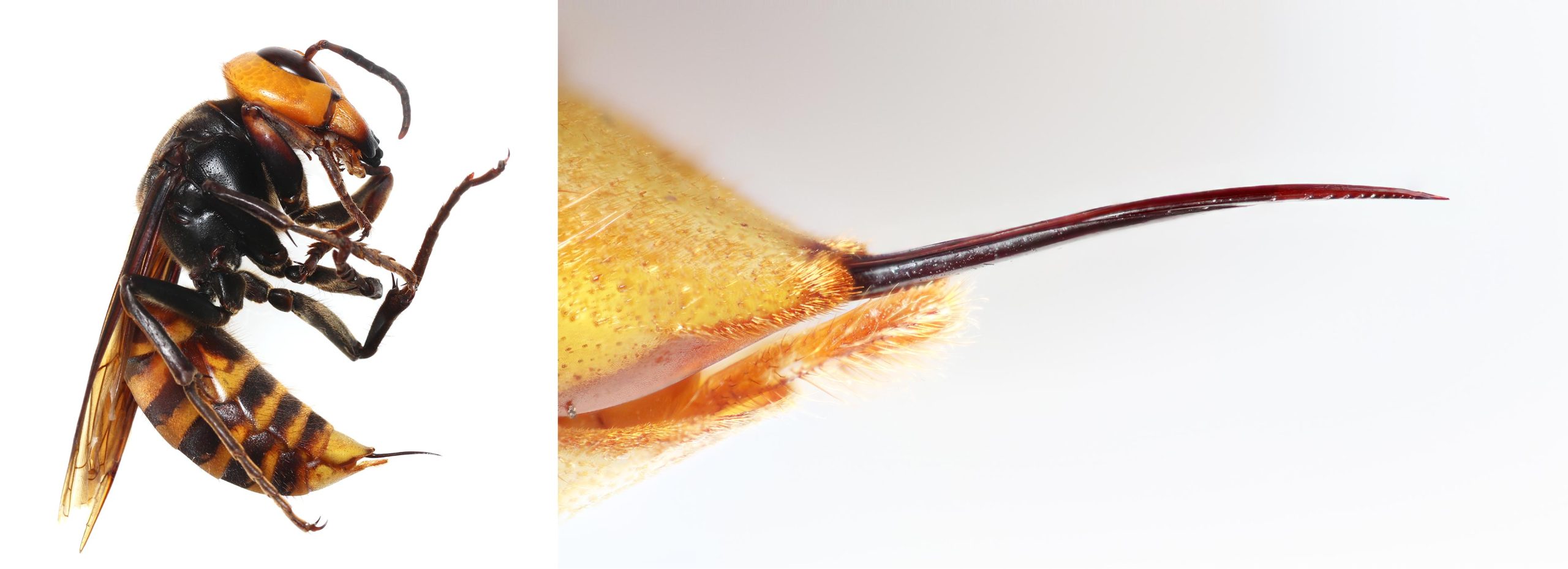
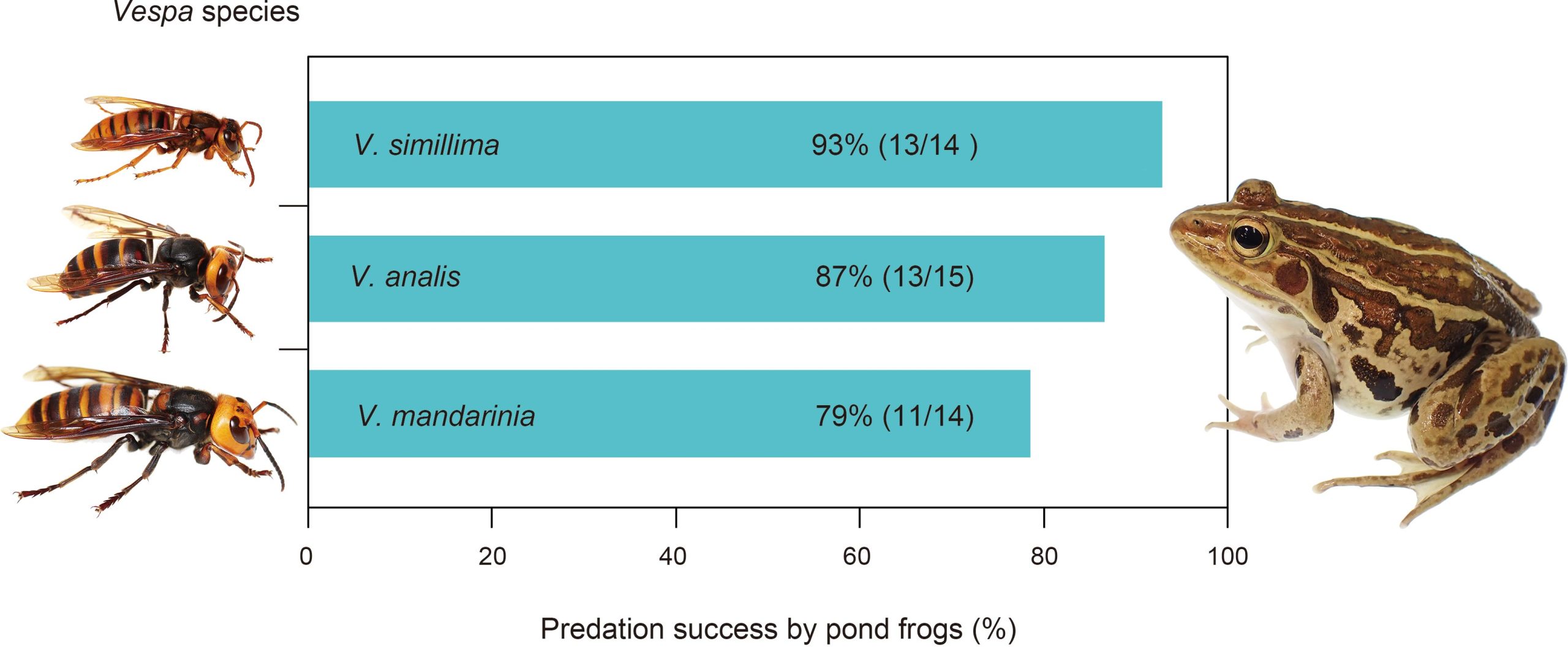
To explore whether pond frogs evade or tolerate stings, Sugiura carried out controlled experiments in which individual adult frogs were offered workers from three hornet species: Vespa simillima, V. analis, and V. mandarinia. Each frog participated in only one trial and was paired with prey of an appropriate size. Larger frogs were intentionally matched with Asian giant hornet (V. mandarinia) workers, widely known as the murder hornet.
Frogs Attack and Consume Hornets Despite Stings
In findings published in the journal Ecosphere, Sugiura reports that the frogs did not hesitate to confront hornet workers. They launched direct attacks on all three species, and most ultimately consumed their prey. The success rates were high, with 93 percent, 87 percent, and 79 percent of frogs consuming V. simillima, V. analis, and the murder hornet V. mandarinia, respectively. Many frogs were stung in the mouth or even in the eyes during the encounters.
According to Sugiura, “While a mouse of similar size can die from a single sting, the frogs showed no noticeable harm even after being stung repeatedly. This extraordinary level of resistance to powerful venom makes the discovery both unique and exciting.”
What Pain and Lethality Reveal About Venom
Earlier research has shown that the intensity of pain from an insect sting does not always match its ability to cause severe or lethal effects. Some bees, wasps, and ants can inflict extremely painful but non-lethal stings, while others deliver venom that is highly toxic but not especially painful. This pattern suggests that the frogs in Sugiura’s study may have evolved a form of double resilience, enabling them to handle both the pain and the toxic components of hornet venom while still capturing and eating hornet workers.
New Questions About How Frogs Resist Venom
Sugiura notes that the discovery raises major questions about how these amphibians protect themselves.
“This raises an important question for future work,” he adds, “namely whether pond frogs have physiological mechanisms such as physical barriers or proteins that block the pain and toxicity of hornet venom, or whether hornet toxins have simply not evolved to be effective in amphibians, which rarely attack hornet colonies.”
Because of this unusual resistance, pond frogs may become important model organisms for studying venom tolerance and pain resistance in vertebrates in the years ahead.
Reference: “Pond frog as a predator of hornet workers: High tolerance to venomous stings” by Shinji Sugiura, 3 December 2025, Ecosphere.
DOI: 10.1002/ecs2.70457
This research was funded by the Japan Society for the Promotion of Science KAKENHI (grants JP23K18027 and JP24K02099).
Never miss a breakthrough: Join the SciTechDaily newsletter.
Follow us on Google and Google News.
6 Comments
This is a sad study. It reminds me of children cruelly pulling the wings or legs off of insects to see that happens. But those are children, and these are adults getting paid to torture frogs with stinging hornets, which they rarely attack in nature. Seeing how they deal with the pain and venom is cruel, unnecessary, but lots of fun for psychopaths who have no empathy for animals. Of course, they want to kill more frogs to see what’s happening physiologically when they are stung. We need to stop funding these cruel animal studies, and stop publishing them. Animal research needs to stop. See my article, The Psychopathy of Animal Researchers. https://www.academia.edu/38646799/The_Psychopathology_of_Animal_Researchers_Vivisectors_
A bit of animal abuse never hurt nobody, eh?
Except for the animals…
Science is science. It involves study of scientific things. Science respects scientific facts. Science has no feelings about your feelings. Or animals’ feelings. Science also doesn’t care about your politics.
Bob, science may be science. But there is good and evil science, humane and inhumane science. Science is actually a political activity, funded and practiced within a social context. Psychopathic science should be stopped for many reasons.
Oh Bob, so naive. Of course science cares about politics. Politics being the publics choice on how to spend money for the greater good absolutely influences science.
Maybe..Just Maybe… A follow up study is justified to see what effects it has on humans when they lick frogs known to have eaten V. Mandarinia within the time interval from the actual meal, to when it is digested and a potential byproducts are secreted into the frog’s skin?