
Close Menu
    Facebook X (Twitter) Instagram
    SciTechDaily
    • Biology
    • Chemistry
    • Earth
    • Health
    • Physics
    • Science
    • Space
    • Technology
    Facebook X (Twitter) Pinterest YouTube RSS
    SciTechDaily
    Home»Biology»Fang’tastic: They May Not Be Snakes, but These Amphibians Have a Venomous Bite
    Biology

    Fang’tastic: They May Not Be Snakes, but These Amphibians Have a Venomous Bite

    By Utah State UniversityJuly 4, 2020No Comments4 Mins Read
    Facebook Twitter Pinterest Telegram LinkedIn WhatsApp Email Reddit
    Share
    Facebook Twitter LinkedIn Pinterest Telegram Email Reddit
    Oral Glands Close Up
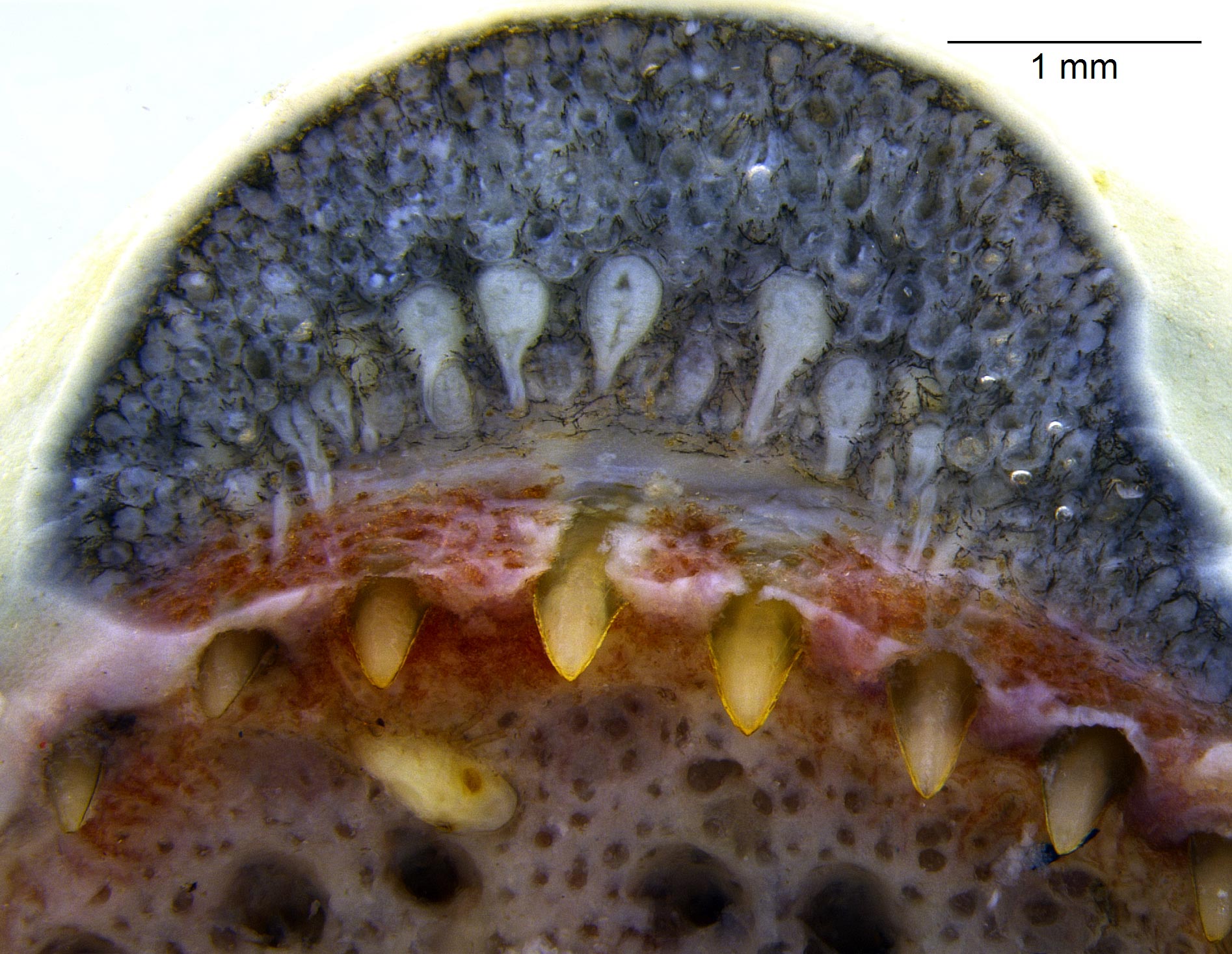
    A magnified image of the mouth of a ringed caecilian, Siphonops annulatus, reveals snake-like dental glands. Researchers from Brazil’s Butantan Institute and Utah State University say the glands could indicate an early evolutionary design of oral venom organs. Credit: Butantan Institute, Brazil

    Utah State University and Butantan Institute scientists publish evolutionary findings in iScience.

    Utah State University biologist Edmund ‘Butch’ Brodie, Jr. and colleagues from São Paulo’s Butantan Institute report the first known evidence of oral venom glands in amphibians. Their research, supported by the Brazilian National Council for Scientific and Technological Development, appears in the July 3, 2020, issue of iScience.

    “We think of amphibians — frogs, toads and the like — as basically harmless,” says Brodie, emeritus professor in USU’s Department of Biology. “We know a number of amphibians store nasty, poisonous secretions in their skin to deter predators. But to learn at least one can inflict injury from its mouth is extraordinary.”
    Ringed Caecilian Siphonops annulatus
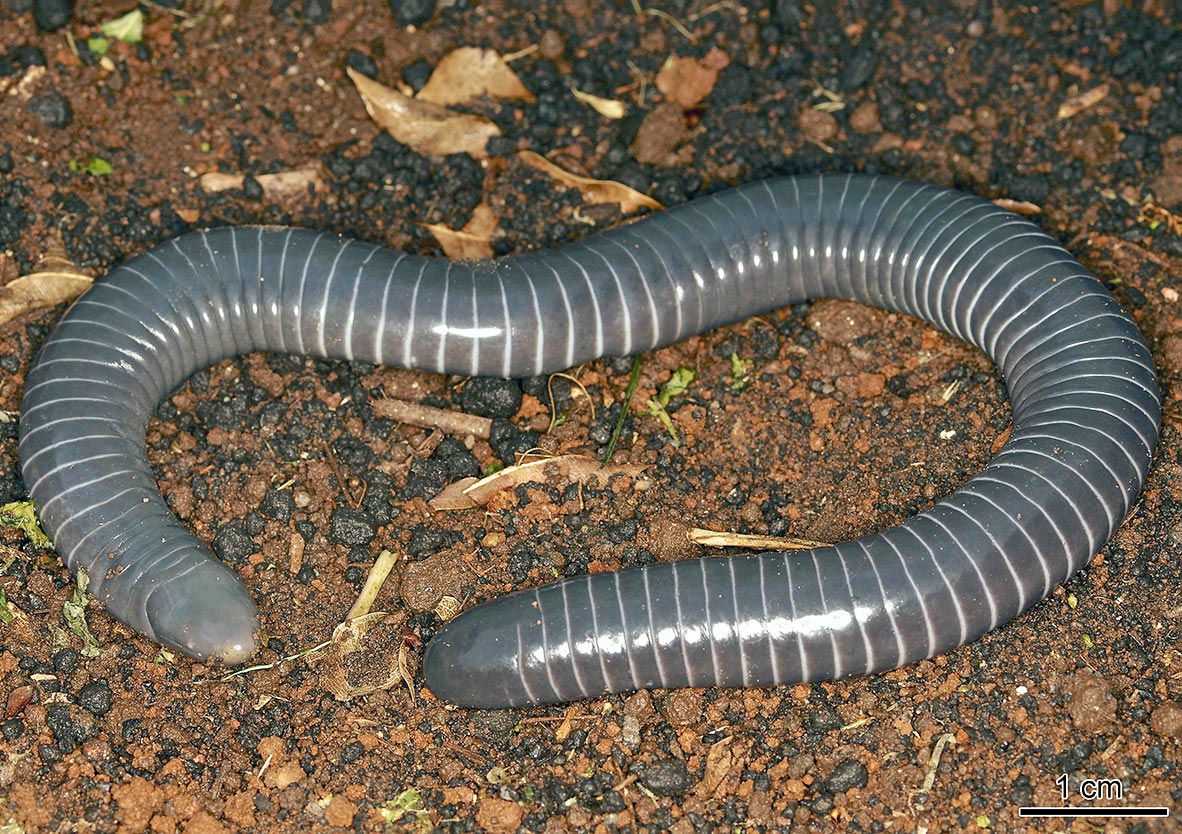
    A ringed caecilian, Siphonops annulatus. Neither snakes nor worms, caecilians are serpent-like amphibians related to frogs and salamanders. Researchers from Brazil’s Butantan Institute and Utah State University report the creatures have venomous dental glands — the first known discovery of the snake-like glands in amphibians. Credit: Carlos Jared, Butantan Institute

    Brodie and his colleagues discovered the oral glands in a family of caecilians, serpent-like creatures related to frogs and salamanders. Neither snakes nor worms, caecilians are found in tropical climates of Africa, Asian and the Americas. Some are aquatic and some, like the ringed caecilian (Siphonops annulatus) studied by Brodie’s team, live in burrows of their own making.

    In 2018, the team reported the species secreted substances from skin glands at both ends of its snake-like body. Concentrated at the head and extending the length of the body, the creature emits a mucous-like lubricant that enables it to quickly dive underground to escape predators. At the tail, caecilians have glands armed with a toxin, which acts as a last line of chemical defense, blocking a hastily burrowed tunnel from hungry hunters.

    “What we didn’t know is these caecilians have tiny fluid-filled glands in the upper and lower jaw, with long ducts that open at the base of each of their spoon-shaped teeth,” Brodie says.
    Amphibian Scientists
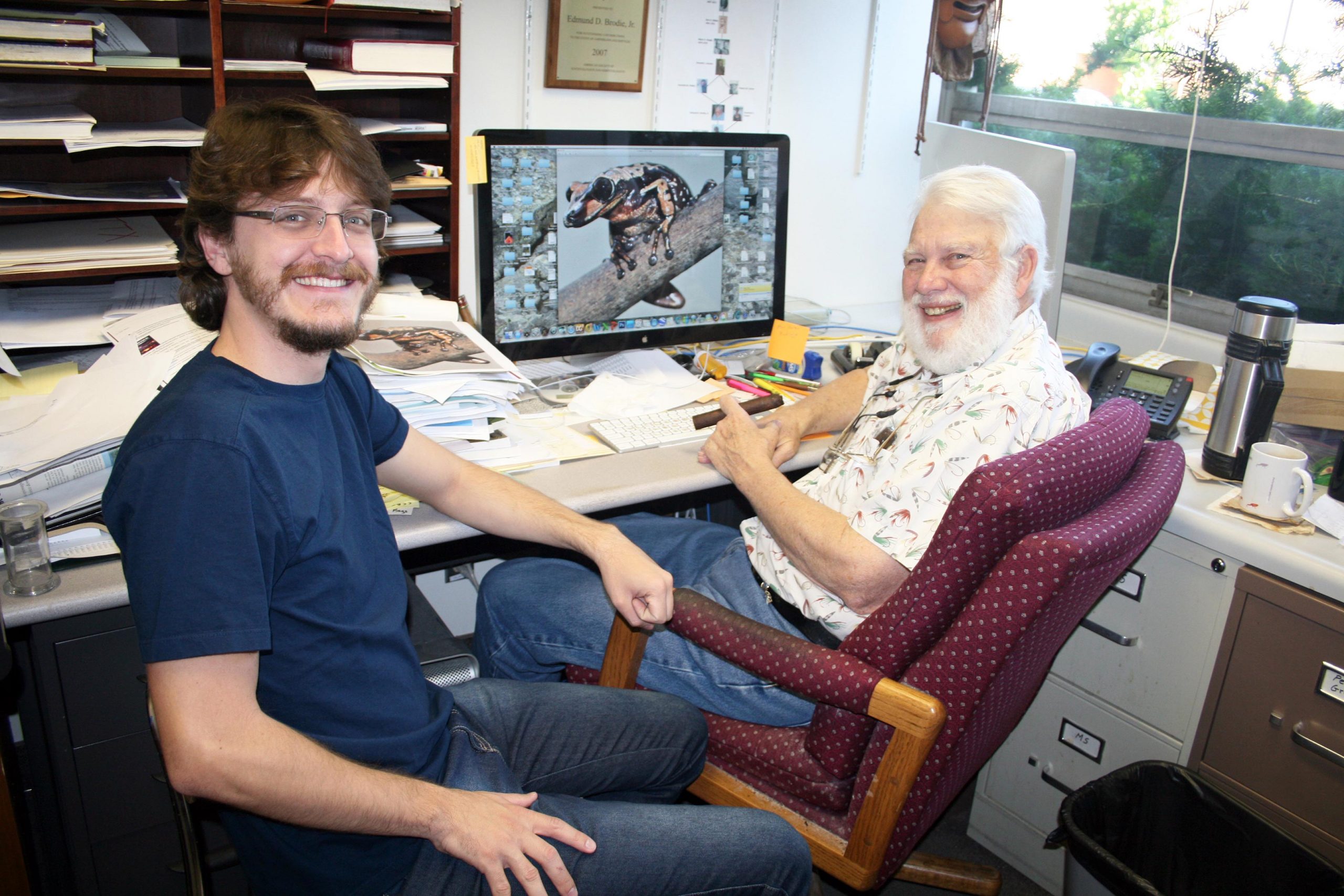
    Researcher Pedro Luiz Mailho-Fontana of Brazil’s Butantan Insitute, left, and biologist Edmund “Butch” Brodie, Jr. of Utah State University, USA, at USU’s Logan, Utah campus. Credit: M. Muffoletto

    His research colleague Pedro Luiz Mailho-Fontana, who studied with Brodie as a visiting graduate student at USU’s Logan campus in 2015, noticed the never-before-described oral glands. Using embryonic analysis, Mailho-Fontana, first author of the paper, discovered the glands — called “dental glands” — originated from a different tissue than the slime and poison glands found in the caecilian’s skin.

    “The poisonous skin glands form from the epidermis, but these oral glands develop from the dental tissue, and this is the same developmental origin we find in the venom glands of reptiles,” he says.

    The researchers surmise caecilians, equipped with no limbs and only a mouth for hunting, activate their oral glands when they bite down on prey, including worms, termites, frogs, and lizards.

    The team doesn’t yet know the biochemical composition of the fluid held in the oral glands.

    “If we can verify the secretions are toxic, these glands could indicate an early evolutionary design of oral venom organs,” Brodie says. “They may have evolved in caecilians earlier than in snakes.”

    For more on this discovery, read Snake-Like Venom Glands Discovered Along the Teeth of Amphibians.

    Reference: “Morphological Evidence for an Oral Venom System in Caecilian Amphibians” by Pedro Luiz Mailho-Fontana, Marta Maria Antoniazzi, Cesar Alexandre, Daniel Carvalho Pimenta, Juliana Mozer Sciani, Edmund D. Brodie Jr. and Carlos Jared, 3 July 2020, iScience.
    DOI: 10.1016/j.isci.2020.101234

    Never miss a breakthrough: Join the SciTechDaily newsletter.
    Follow us on Google and Google News.

    Amphibians Evolution Popular Utah State University
    Share. Facebook Twitter Pinterest LinkedIn Email Reddit

    Related Articles

    Comprehensive New Amphibian Family Tree Revises Frog Evolution Timeline

    Strange “Skin-Feeding” Behavior in Caecilians Discovered To Help Inoculate Their Young

    Evolutionary Fuel: How an Ancient Chromosomal Inversion Could Foster Survival

    Snake-Like Venom Glands Discovered Along the Teeth of Amphibians

    Marine Worm Thrives on Steady Diet of Deadly Poisons

    Relationships of Male Dolphins from Shark Bay Determined by Slow Swimming

    Poisonous Dendrobatidae Frogs are Aposematic Organisms and Critically Endangered

    New Frog Species Discovered Living in New York and New Jersey

    MSU Researchers Show How New Viruses Evolve Through Mutations

    Leave A Reply Cancel Reply

    • Facebook
    • Twitter
    • Pinterest
    • YouTube

    Don't Miss a Discovery

    Subscribe for the Latest in Science & Tech!

    Trending News

    The Universe Is Expanding Too Fast and Scientists Can’t Explain Why

    “Like Liquid Metal”: Scientists Create Strange Shape-Shifting Material

    Early Warning Signals of Esophageal Cancer May Be Hiding in Plain Sight

    Common Blood Pressure Drug Shows Surprising Power Against Deadly Antibiotic-Resistant Superbug

    Scientists Uncover Dangerous Connection Between Serotonin and Heart Valve Disease

    Scientists Discover a “Protector” Protein That Could Help Reverse Hair Loss

    Bone-Strengthening Discovery Could Reverse Osteoporosis

    Scientists Uncover Hidden Trigger Behind Stem Cell Aging

    Follow SciTechDaily
    • Facebook
    • Twitter
    • YouTube
    • Pinterest
    • Newsletter
    • RSS
    SciTech News
    • Biology News
    • Chemistry News
    • Earth News
    • Health News
    • Physics News
    • Science News
    • Space News
    • Technology News
    Recent Posts
    • Scientists Overcome Major Quantum Bottleneck, Potentially Transforming Teleportation and Computing
    • Quantum Physics’ Strangest Problem May Hold the Key to Time Itself
    • Scientists Create “Liquid Gears” That Spin Without Touching
    • The Simple Habit That Could Help Prevent Cancer
    • Forgotten Medicinal Plant Shows Promise in Fighting Dangerous Superbugs
    Copyright © 1998 - 2026 SciTechDaily. All Rights Reserved.
    • Science News
    • About
    • Contact
    • Editorial Board
    • Privacy Policy
    • Terms of Use

    Type above and press Enter to search. Press Esc to cancel.