
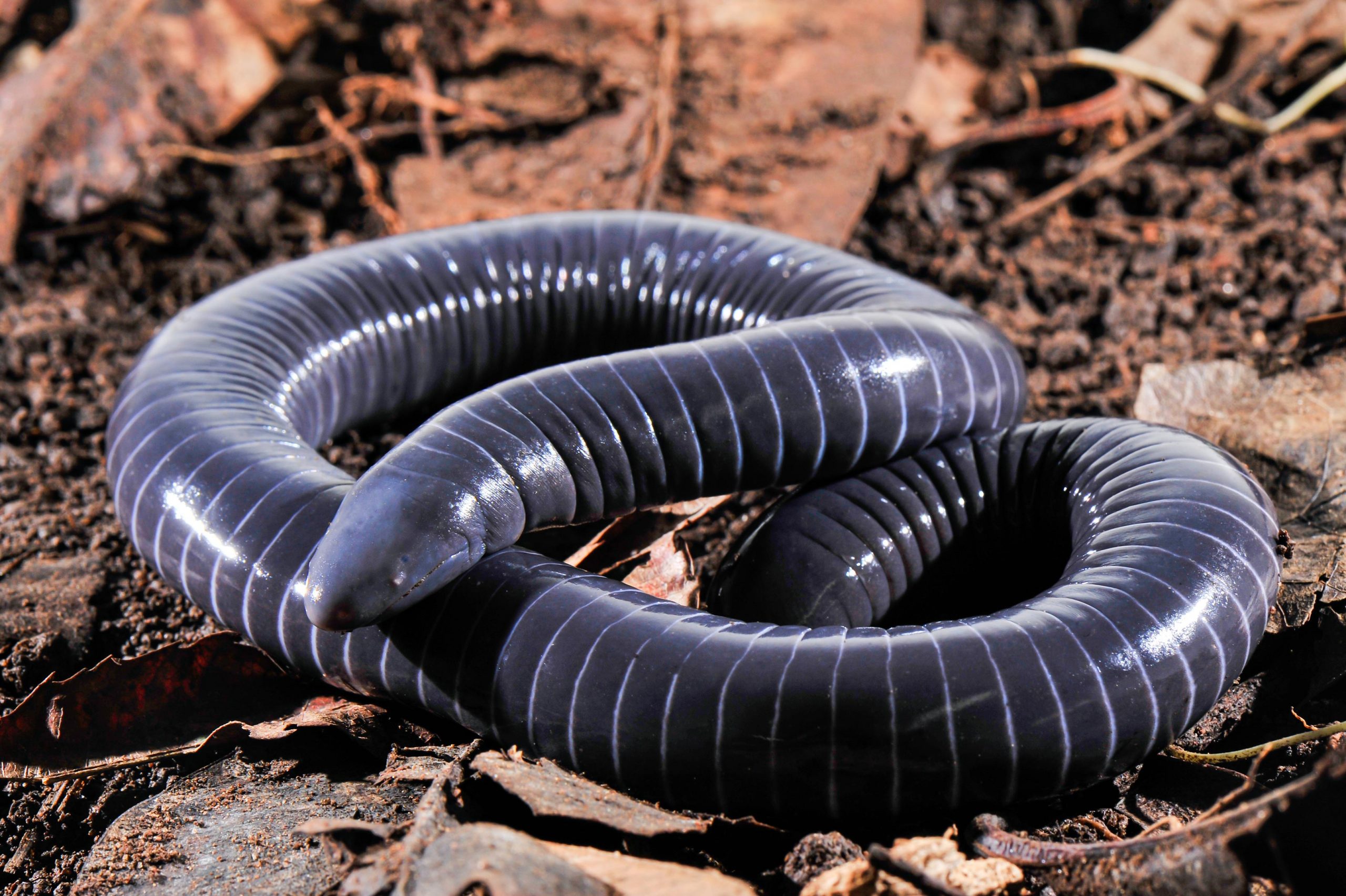
Brazilian researchers discover that caecilians, limbless amphibians resembling worms or snakes that emerged some 150 million years before the latter, can probably inject venom into their prey while biting.
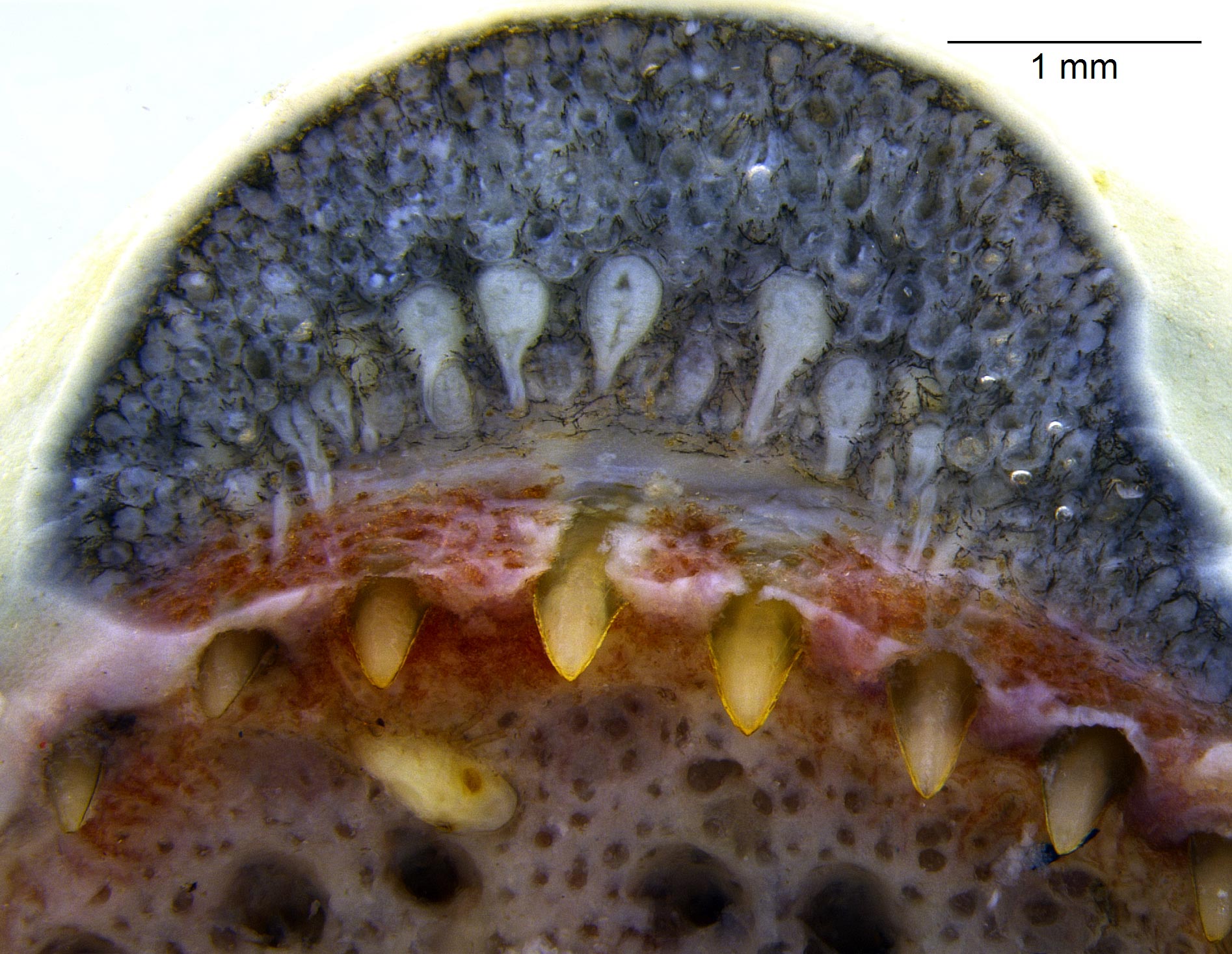
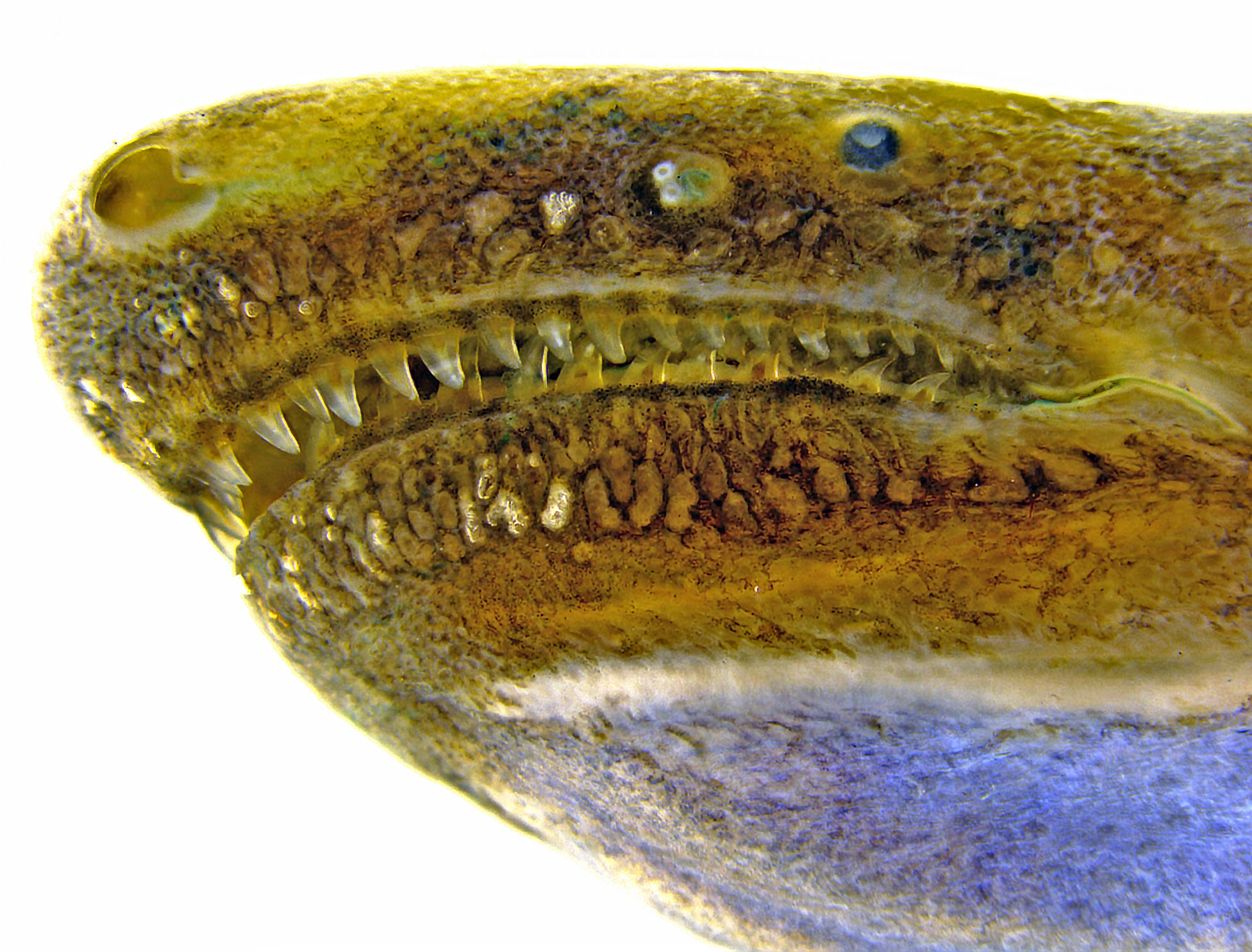
A group led by researchers at Butantan Institute in Brazil and supported by FAPESP has described for the first time the presence of venom glands in the mouth of an amphibian. The legless animal is a caecilian and lives underground. It has tooth-related glands that, when compressed during biting, release a secretion into its prey – earthworms, insect larvae, small amphibians and snakes, and even rodent pups. A paper reporting the study is published in iScience.
“We were analyzing the mucus glands in the skin of the animal’s head, which it uses to burrow down into the soil, when we discovered these structures. They’re located at the base of the teeth and develop out of the dental lamina, the tissue that typically gives rise to teeth, as is the case with snakes’ venom glands,” said Pedro Luiz Mailho-Fontana, first author of the paper and a postdoctoral intern at Butantan Institute with a scholarship from FAPESP.
An article by the same group published in 2018 in Scientific Reports showed that in addition to mucus glands in the skin all over the body caecilians have many poison glands in the skin of the tail as a passive defense against predators. This system, which is also found in frogs, toads, and salamanders, poisons predators when they bite caecilians.
In the new report the researchers show that caecilians can be venomous, and indeed are the first amphibians to have an active defense system. Biologists apply the term venomous to organisms that bite or sting to inject their toxins, such as snakes, spiders, and scorpions, whereas poisonous refers to organisms that deliver toxins when touched or eaten.
In these caecilians, the secretion released by the glands also serves to lubricate a prey so that it is easier to swallow.
“Snakes have pouches to accumulate venom, which they inject through fangs when the pouches are squeezed by muscles. In rattlesnakes and pit vipers, for example, the teeth are hollow like hypodermic needles. In caecilians, gland compression during biting releases the venom, which penetrates the puncture wound. The same goes for lizards like the Komodo dragon and Gila monster,” said Carlos Jared, a researcher at Butantan Institute and principal investigator for the study.
The study was part of the FAPESP-funded project “Unraveling parental care in caecilians: nutritional and toxinological implications in Siphonops annulatus.”
In a paper published in Nature in 2006, the researchers were the first to show that offspring of the caecilian species Boulengerula taitanus feed solely on the mother’s skin in the first two months of their lives. In 2008 the group described the same behavior for Siphonops annulatus in a paper published in Biology Letters.
Except for a group that lives in aquatic environments, caecilians spend their entire lives in burrows or underground tunnels. As a result, they have very small eyes, which sense light but do not form images. They are also the only vertebrates that have tentacles. In caecilians, these are near the eyes and act as feelers equipped with chemical sensors that test the environment for sensory data.
Characterization of venom
The researchers’ biochemical analysis showed that the secretion released from the animal’s mouth while it is biting contains phospholipase A2, an enzyme commonly found in the venom of bees, wasps, and snakes. They found the enzyme to be more active in caecilians than in rattlesnakes. However, this trait is not sufficient to prove they are more venomous than snakes.
The group will now conduct tests using molecular biology techniques to characterize caecilians’ dental gland secretion more precisely and confirm that it is venomous. In the future they may test any proteins they find in order to explore possible biotechnological applications such as drug development.
Four species were analyzed in the study. In Typhlonectes compressicauda, the only one that lives in aquatic environments, the glands were found only in the lower jaw. The researchers believe it may have lost the upper-jaw glands during the evolutionary process (as did some water snakes) since the water in the environment naturally lubricates prey. The mandibular glands were retained, probably for venom.
Most of the 214 known species of caecilians live underground in the humid forests of South America, India, and Africa. Owing to their subterranean habits, biologists rarely have a chance to find out more about these animals.
More than new data about caecilians, the study offers important information regarding the evolution of amphibians and reptiles. “For snakes and caecilians, the head is the only tool for exploring the environment, fighting, eating, and killing. This may have fueled evolutionary pressure for these limbless animals to develop venom,” said Marta Maria Antoniazzi, also a researcher at Butantan Institute and a co-author of the study.
More on this discovery:
- Snake-Like Venom Glands Discovered Along the Teeth of Amphibians
- Fang’tastic: They May Not Be Snakes, but These Amphibians Have a Venomous Bite
Reference: “Morphological Evidence for an Oral Venom System in Caecilian Amphibians” by Pedro Luiz Mailho-Fontana, Marta Maria Antoniazzi, Cesar Alexandre, Daniel Carvalho Pimenta, Juliana Mozer Sciani, Edmund D. Brodie Jr. and Carlos Jared, 3 July 2020, iScience.
DOI: 10.1016/j.isci.2020.101234
Never miss a breakthrough: Join the SciTechDaily newsletter.
Follow us on Google and Google News.