
Close Menu
    Facebook X (Twitter) Instagram
    SciTechDaily
    • Biology
    • Chemistry
    • Earth
    • Health
    • Physics
    • Science
    • Space
    • Technology
    Facebook X (Twitter) Pinterest YouTube RSS
    SciTechDaily
    Home»Earth»“Smoking Mountain” – An Outburst From Popocatépetl Volcano in Mexico
    Earth

    “Smoking Mountain” – An Outburst From Popocatépetl Volcano in Mexico

    By Kasha Patel, NASA Earth ObservatoryJanuary 7, 2021No Comments2 Mins Read
    Facebook Twitter Pinterest Telegram LinkedIn WhatsApp Email Reddit
    Share
    Facebook Twitter LinkedIn Pinterest Telegram Email Reddit
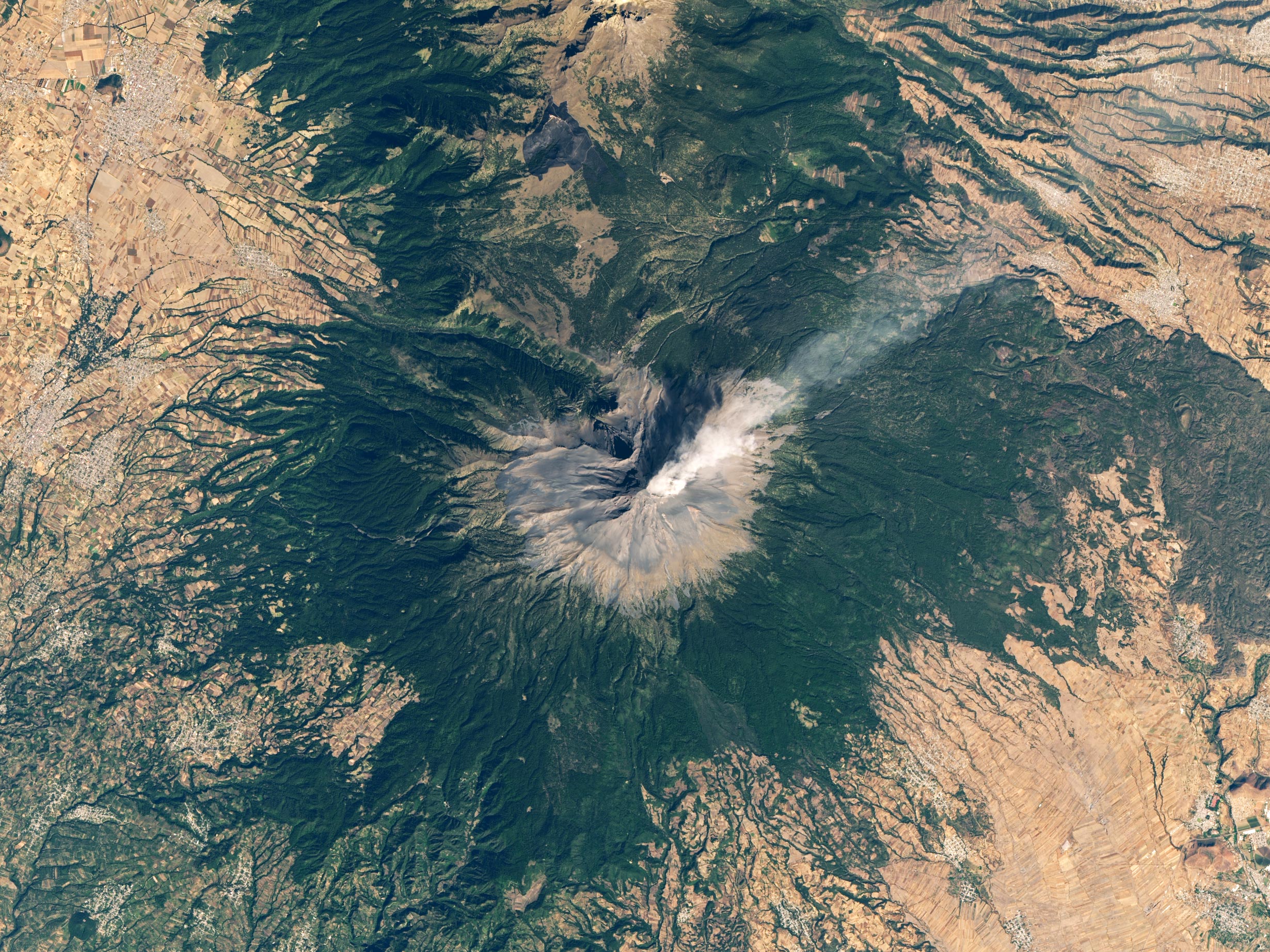
    Popocatépetl Volcano
    January 2, 2021, Landsat 8 captured this image of a plume rising from Popocatépetl volcano.

    Mexico’s Popocatépetl volcano continues its low-level eruptive activity, recently sending ash plumes 21,000 feet high and prompting safety alerts for nearby regions.

    Popocatépetl volcano—the name is Aztec for “smoking mountain” — is one of Mexico’s most active volcanoes. The glacier-clad stratovolcano has been erupting since January 2005, with daily low-intensity emissions of gas, steam, and ash.

    On January 2, 2021, the Operational Land Imager (OLI) on Landsat 8 captured this image of a plume rising from Popocatépetl (nicknamed El Popo).

    On January 6, the Washington Volcanic Ash Advisory Center (VAAC) reported a volcanic ash plume that rose to around 6,400 meters (21,000 feet) above the volcano. Mexico’s National Center for Prevention of Disasters (CENAPRED), which continuously monitors Popo, warned people not to approach the volcano or its crater due to falling ash and rock fragments. Some ashfall was blown downwind to the city of Puebla, located about 45 kilometers (30 miles) away from the volcano.

    At 5,426 meters (17,802 feet) above sea level, Popocatépetl is the second tallest volcano in Mexico (after Citlaltépetl). It is comprised of alternating layers of volcanic ash, lava, and rocks from earlier eruptions. The volcano is located around 70 kilometers (40 miles) southeast of Mexico City and more than 20 million people live close enough to be affected by a major eruption. However, most of the eruptions in the past 600 years have been relatively mild.

    NASA Earth Observatory image by Lauren Dauphin, using Landsat data from the U.S. Geological Survey.

    Never miss a breakthrough: Join the SciTechDaily newsletter.
    Follow us on Google and Google News.

    NASA NASA Earth Observatory Popular Volcano
    Share. Facebook Twitter Pinterest LinkedIn Email Reddit

    Related Articles

    Sharkcano! – NASA Satellite Catches Submarine Eruption of Kavachi Volcano

    Massive Tonga Volcano Plume Reached the Mesosphere – 36 Miles Into the Atmosphere

    Island Obliterated: Dramatic Changes at Hunga Tonga-Hunga Ha’apai

    Hunga Tonga Island Obliterated – NASA Satellites Capture Massive Blast

    A Wolf Awakens in the Galápagos Islands at Night

    Mount Michael, Volcano Track or Plume? 1,000-Meter-Tall Active Stratovolcano Puts On a Show

    Volcanic Eruption Continues at La Palma – Effects Being Felt From Above and Below

    Young Volcanic Island Nishinoshima Belches Ash and Lava As It Grows in the Pacific

    Unusual “Volcano Track” Clouds Investigated

    Leave A Reply Cancel Reply

    • Facebook
    • Twitter
    • Pinterest
    • YouTube

    Don't Miss a Discovery

    Subscribe for the Latest in Science & Tech!

    Trending News

    Scientists Discover 132-Million-Year-Old Dinosaur Tracks on South Africa’s Coast

    Scientists Uncover the Secret Ingredient Behind the Spark That May Have Started Life on Earth

    Physicists Observe Matter in Two Places at Once in Mind-Bending Quantum Experiment

    Stanford Scientists Discover Hidden Brain Circuit That Fuels Chronic Pain

    New Study Reveals Why Ozempic Works Better for Some People Than Others

    Climate Change Is Altering a Key Greenhouse Gas in a Way Scientists Didn’t Expect

    New Study Suggests Gravitational Waves May Have Created Dark Matter

    Scientists Discover Why the Brain Gets Stuck in Schizophrenia

    Follow SciTechDaily
    • Facebook
    • Twitter
    • YouTube
    • Pinterest
    • Newsletter
    • RSS
    SciTech News
    • Biology News
    • Chemistry News
    • Earth News
    • Health News
    • Physics News
    • Science News
    • Space News
    • Technology News
    Recent Posts
    • 320 Light-Years Away, a Planet Confirms a Fundamental Cosmic Assumption
    • Astronomers Solve Decades-Long Mystery About Saturn’s Spin – “Something Strange Was Happening”
    • Scientists Uncover Strange New State of Matter Inside Uranus and Neptune
    • The Crown Jewel of Dentistry? Breakthrough Tech Could Transform Tooth Repair
    • The Surprising Non-Medical Factor That Determines Cancer Survival
    Copyright © 1998 - 2026 SciTechDaily. All Rights Reserved.
    • Science News
    • About
    • Contact
    • Editorial Board
    • Privacy Policy
    • Terms of Use

    Type above and press Enter to search. Press Esc to cancel.