
Close Menu
    Facebook X (Twitter) Instagram
    SciTechDaily
    • Biology
    • Chemistry
    • Earth
    • Health
    • Physics
    • Science
    • Space
    • Technology
    Facebook X (Twitter) Pinterest YouTube RSS
    SciTechDaily
    Home»Space»Solar Sizzler: NASA’s Parker Solar Probe Zips by Sun at 394,736 MPH
    Space

    Solar Sizzler: NASA’s Parker Solar Probe Zips by Sun at 394,736 MPH

    By Michael Buckley, Johns Hopkins Applied Physics LaboratoryApril 9, 2024No Comments2 Mins Read
    Facebook Twitter Pinterest Telegram LinkedIn WhatsApp Email Reddit
    Share
    Facebook Twitter LinkedIn Pinterest Telegram Email Reddit
    Parker Solar Probe Close to Sun
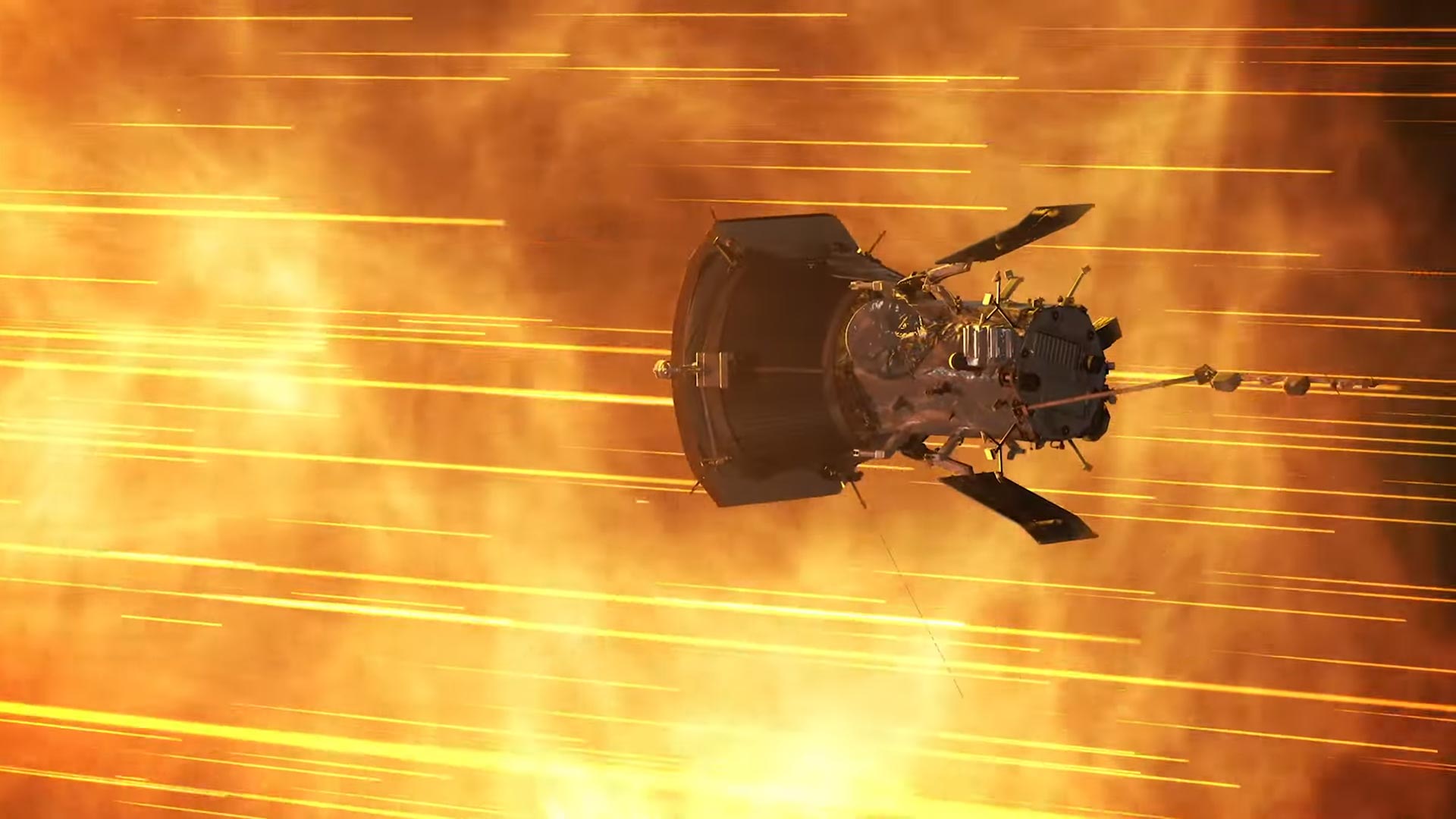
    NASA’s Parker Solar Probe achieved a significant milestone by matching its distance record, coming 4.51 million miles close to the Sun during its 19th approach. The spacecraft, which confirmed its good health post-encounter, is on track for a record-breaking close approach on December 24, following a final gravity assist from Venus. Credit: NASA GSFC/CIL/Brian Monroe

    NASA’s Parker Solar Probe continues its record-setting journey, gearing up for an even closer encounter with the Sun later this year.

    NASA’s Parker Solar Probe completed its 19th close approach to the Sun on March 30, matching its own distance record by coming about 4.51 million miles (7.26 million kilometers) from the solar surface.

    The close approach (known as perihelion) occurred at 2:21 UTC (10:21 EDT), March 29, with Parker Solar Probe moving 394,736 miles per hour (635,266 kilometers per hour) around the Sun – again equaling its own record. The spacecraft checked in on April 2 with mission operators at the Johns Hopkins Applied Physics Laboratory in Laurel, Maryland, where the spacecraft was also designed and built, with a beacon tone indicating it was in good health and all systems were operating normally.


    Parker Solar Probe’s 19th orbit included a perihelion that brought the spacecraft within 4.51 million miles of the Sun. Animation tracing the path of Parker Solar Probe along its 19th orbit. Locations of the planets are approximate; spacecraft speed along the traced path is not to scale. Credit: NASA/Johns Hopkins APL/Steve Gribben

    The milestone also marked the midway point in the mission’s 19th solar encounter, which began on March 25 and continued through April 4.

    Parker is still on track to make its closest approach on December 24. At that point, with its orbit shaped by the mission’s final Venus gravity assist-flyby on November 6, the spacecraft will zoom just 3.8 million miles from the solar surface, moving about 430,000 miles per hour.

    Never miss a breakthrough: Join the SciTechDaily newsletter.
    Follow us on Google and Google News.

    Johns Hopkins Johns Hopkins APL NASA Parker Solar Probe Sun
    Share. Facebook Twitter Pinterest LinkedIn Email Reddit

    Related Articles

    NASA’s Spacecraft That Touched the Sun Just Won Aerospace’s Biggest Prize

    NASA’s Parker Solar Probe: The Fastest Human-Made Object Just “Touched” the Sun and Shattered Records

    NASA’s Parker Solar Probe Survives Fiery Sun Flyby at 430,000 MPH

    Parker Solar Probe: For the First Time in History, a Spacecraft Has Touched the Sun

    NASA’s Parker Solar Probe Touches the Sun for the First Time – Bringing New Discoveries

    NASA’s Parker Solar Probe Completes a Record-Setting Swing by the Sun

    Celestial Geometry Posed a Special Opportunity During Parker Solar Probe’s 7th Solar Encounter

    NASA’s Parker Solar Probe Teams Up With Observatories Around Solar System

    5 Astonishing New Discoveries From NASA’s Parker Solar Probe [Video]

    Leave A Reply Cancel Reply

    • Facebook
    • Twitter
    • Pinterest
    • YouTube

    Don't Miss a Discovery

    Subscribe for the Latest in Science & Tech!

    Trending News

    Study Finds Natural Dairy Trans Fats Behave Very Differently From Industrial Fats

    Your Voice May Reveal How Fast Your Brain Is Aging

    These Fingernail-Sized Animals Are Moving Astonishing Amounts of California Beach Sand

    NASA’s Perseverance Rover Finds Mars Had a Far More Complicated Water History Than Expected

    Why Do Muscles Weaken With Age? Scientists May Have Found an Important Missing Piece

    Cancer’s “Obesity Paradox” May Have a Surprising Explanation

    Engineers Have Created the World’s First Floating Titanium

    More Than 1 in 3 Adults Had High Blood Pressure – Most Didn’t Know It

    Follow SciTechDaily
    • Facebook
    • Twitter
    • YouTube
    • Pinterest
    • Newsletter
    • RSS
    SciTech News
    • Biology News
    • Chemistry News
    • Earth News
    • Health News
    • Physics News
    • Science News
    • Space News
    • Technology News
    Recent Posts
    • 2 Billion-Year-Old Rocks Reveal How Life Helped Stabilize Earth’s Atmosphere
    • Switzerland’s Glaciers Lost More Than 5% of Their Ice in Just One Year
    • Scientists Decode a 12,000-Year-Old Mystery Hidden in Ancient Spear Points
    • Researchers Reverse Autism-Related Behaviors in Mice by Targeting Brain Blood Vessels
    • Scientists Tested This Tropical Fruit for Diabetes – and Found an Unexpected Blood Pressure Effect
    Copyright © 1998 - 2026 SciTechDaily. All Rights Reserved.
    • Science News
    • About
    • Contact
    • Editorial Board
    • Privacy Policy
    • Terms of Use

    Type above and press Enter to search. Press Esc to cancel.