
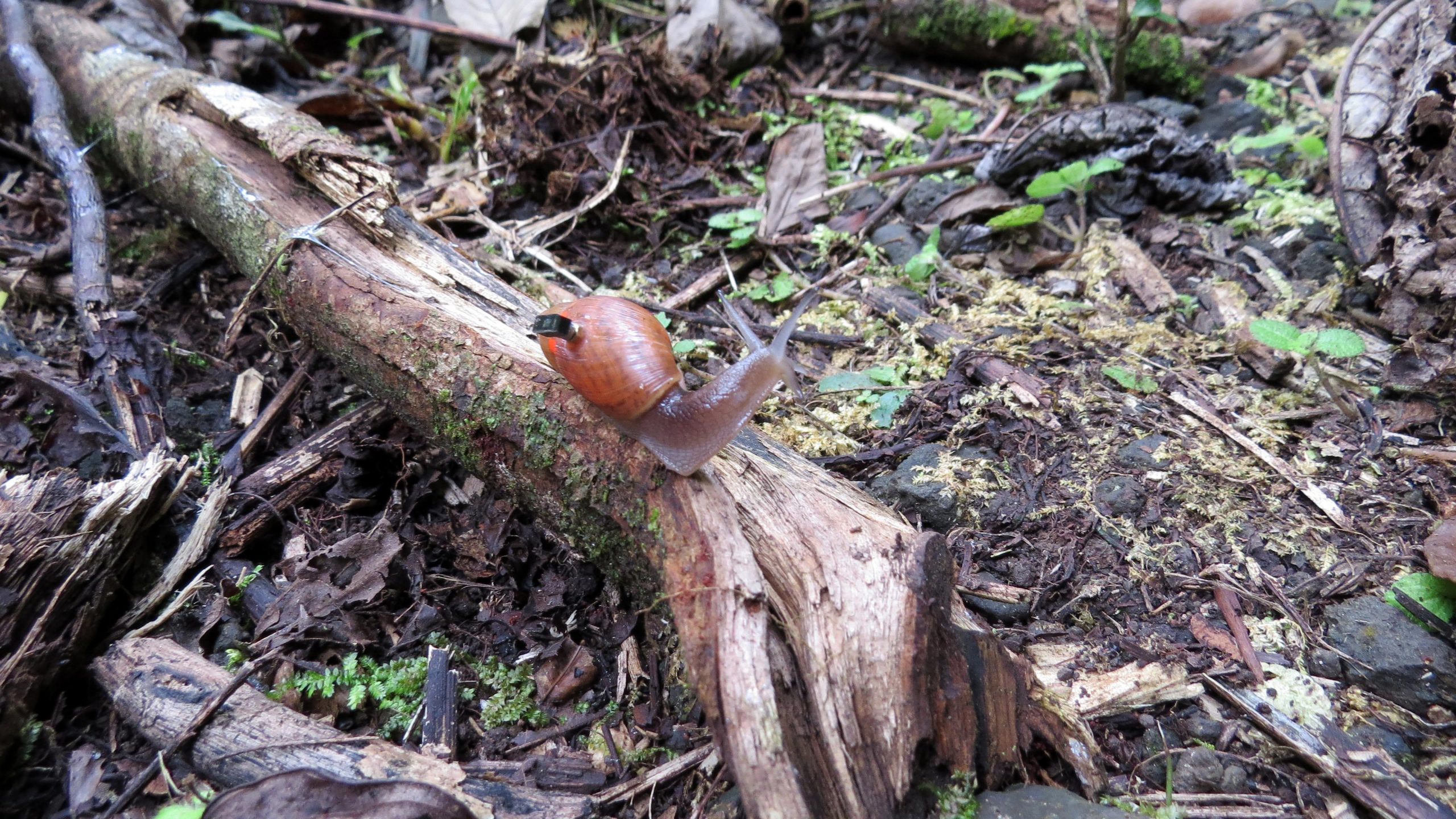
Study yields new insights into the survival of a native snail important to Tahitian culture and ecology and to biologists studying evolution.
More than 50 species of tree snail in the South Pacific Society Islands were wiped out following the introduction of an alien predatory snail in the 1970s, but the white-shelled Partula hyalina survived.
Now, thanks to a collaboration between University of Michigan biologists and engineers with the world’s smallest computer, scientists understand why: P. hyalina can tolerate more sunlight than its predator, so it was able to persist in sunlit forest edge habitats.
“We were able to get data that nobody had been able to obtain,” said David Blaauw, the Kensall D. Wise Collegiate Professor of Electrical Engineering and Computer Science. “And that’s because we had a tiny computing system that was small enough to stick on a snail.”
The Michigan Micro Mote (M3), considered the world’s smallest complete computer, was announced in 2014 by a team Blaauw co-led. This was its first field application.

“The sensing computers are helping us understand how to protect endemic species on islands,” said Cindy Bick, who received a Ph.D. in ecology and evolutionary biology from U-M in 2018. “If we are able to map and protect these habitats through appropriate conservation measures, we can figure out ways to ensure the survival of the species.”
P. hyalina is important culturally for Polynesians because of its unique color, making it attractive for use in shell leis and jewelry. Tree snails also play a vital role in island forest ecosystems, as the dominant group of native grazers.
How Society Island Snails Were Wiped Out
The giant African land snail was introduced to the Society Islands, including Tahiti, to cultivate as a food source, but it became a major pest. To control its population, agricultural scientists introduced the rosy wolf snail in 1974. But unfortunately, most of the 61 known species of native Society Islands tree snails were easy prey for the rosy wolf. P. hyalina is one of only five survivors in the wild. Called the “Darwin finches of the snail world” for their island-bound diversity, the loss of so many Partula species is a blow to biologists studying evolution.
“The endemic tree snails had never encountered a predator like the alien rosy wolf snail before it’s deliberate introduction. It can climb trees and very quickly drove most of the valley populations to local extinction,” said Diarmaid Ó Foighil, professor of ecology and evolutionary biology and curator of the U-M Museum of Zoology.
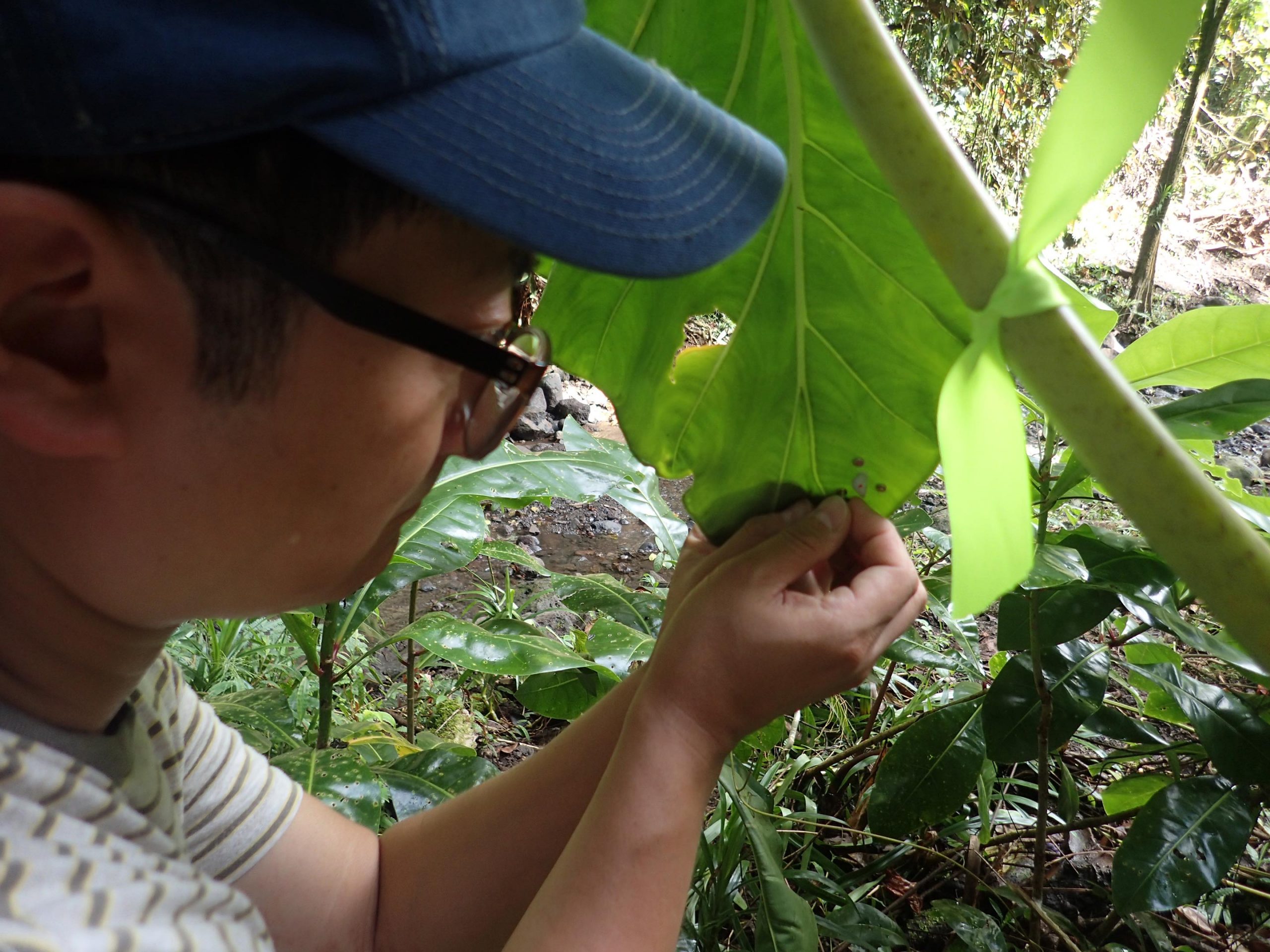
In 2015, Ó Foighil and Bick hypothesized that P. hyalina‘s distinctive white shell might give it an important advantage in forest edge habitats, by reflecting rather than absorbing light radiation levels that would be deadly to its darker-shelled predator. To test their idea, they needed to be able to track the light exposure levels P. hyalina and rosy wolf snails experienced in a typical day.
Field Work in Tahiti Shows P. hyalina Can Take 10x More Light
Bick and Ó Foighil wanted to attach light sensors to the snails, but a system made using commercially available chips would have been too big. Bick found news of a smart sensor system that was just 2x5x2 mm, and the developers were at her own institution. But could it be altered to sense light?
“It was important to understand what the biologists were thinking and what they needed,” said Inhee Lee, an assistant professor of electrical and computer engineering at the University of Pittsburgh who received a Ph.D. from U-M electrical and computer engineering in 2014. Lee adapted the M3 for the study.
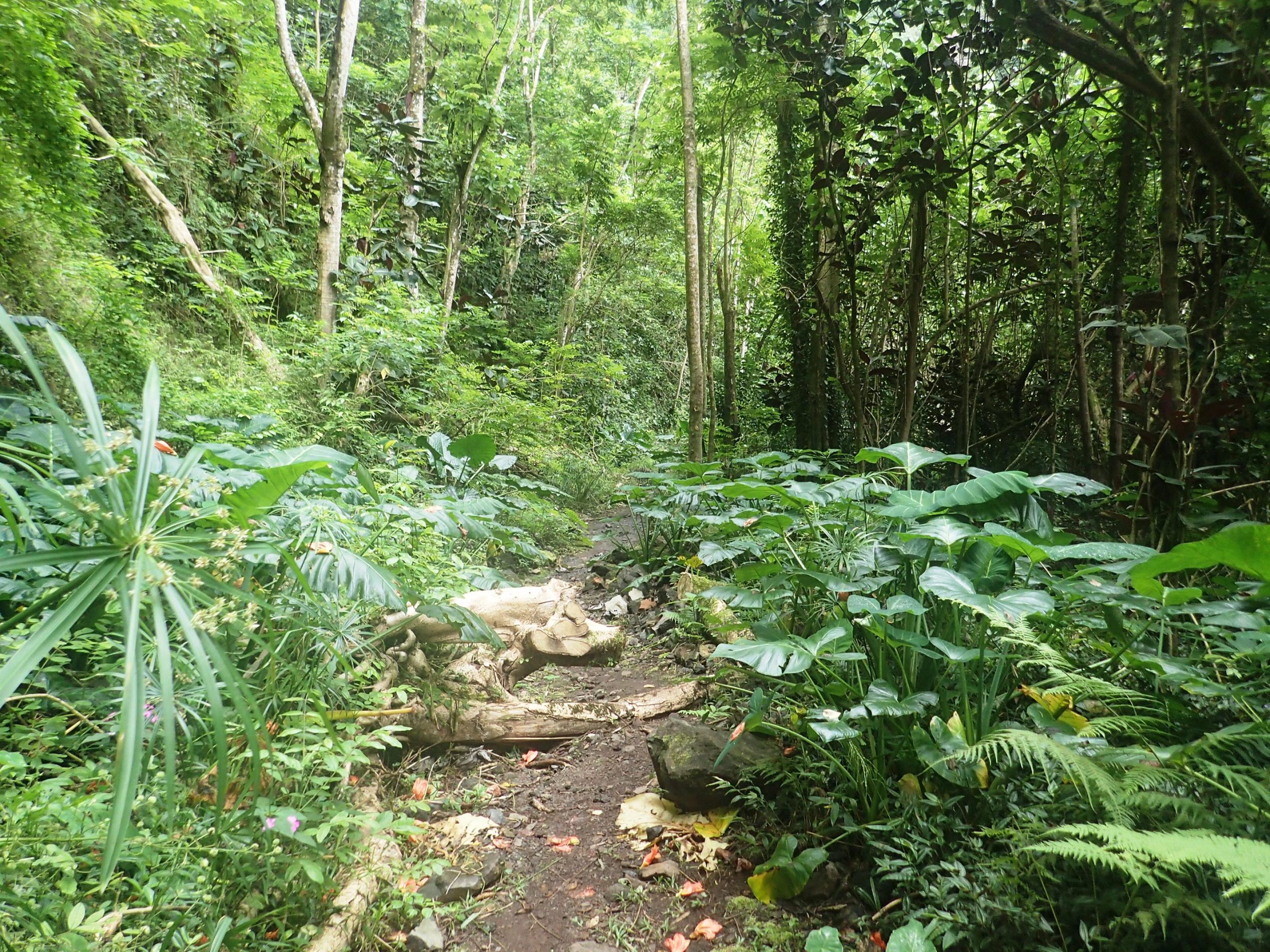
The first step was to figure out how to measure the light intensity of the snails’ habitats. At the time, the team had just added an energy harvester to the M3 system to recharge the battery using tiny solar cells. Lee realized he could measure the light level continuously by measuring the speed at which the battery was charging.
After testing enabled by local Michigan snails, 50 M3s made it to Tahiti in 2017. Bick and Lee joined forces with Trevor Coote, a well-known conservation field biologist and specialist on the French Polynesian snails.
The team glued the sensors directly to the rosy wolf snails, but P. hyalina is a protected species and required an indirect approach. They are nocturnal, typically sleeping during the day while attached underneath leaves. Using magnets, the team placed M3s both on the tops and undersides of leaves harboring the resting P. hyalina. At the end of each day, Lee wirelessly downloaded the data from each of the M3s.
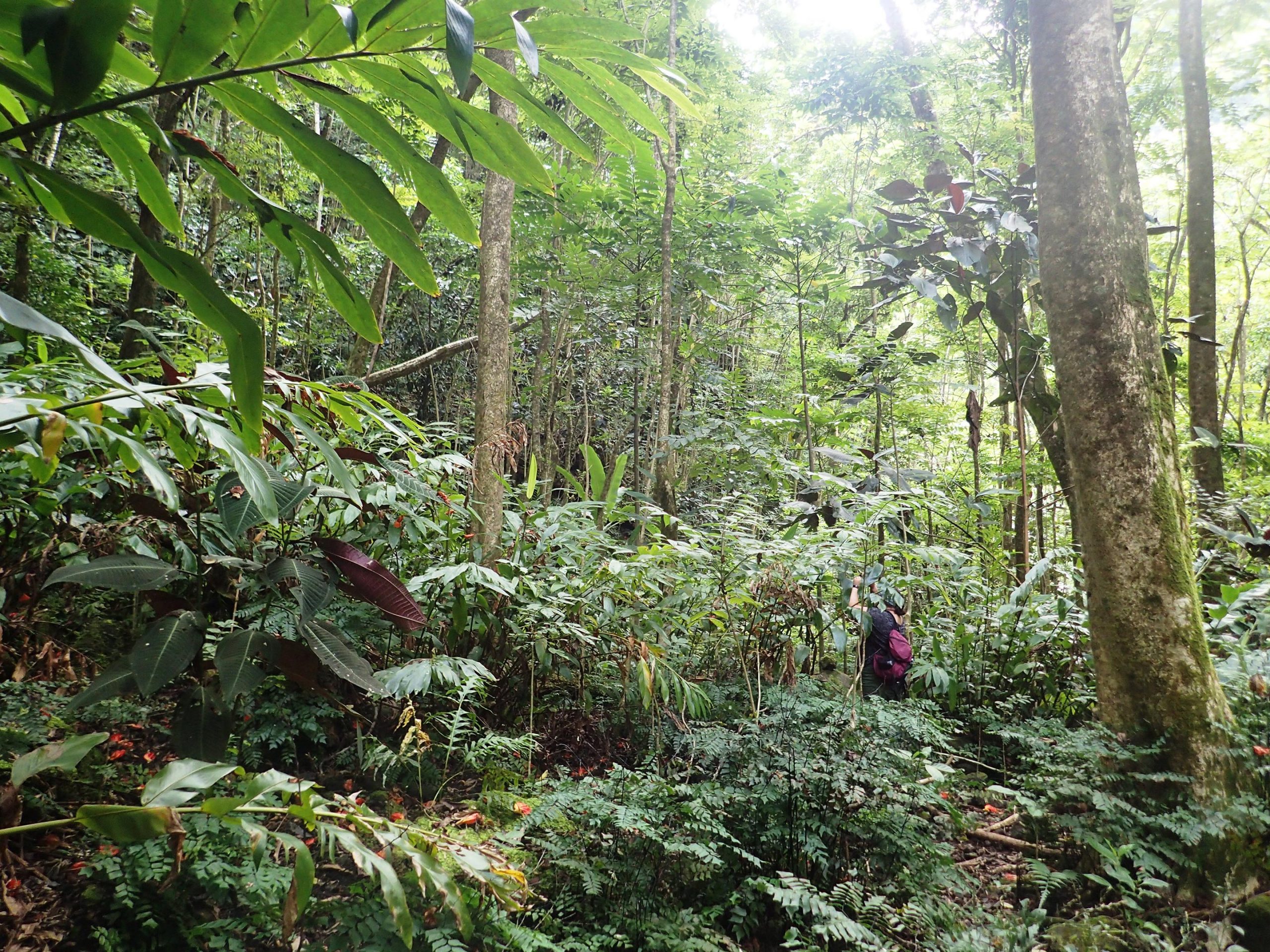
During the noon hour, the P. hyalina habitat received on average 10 times more sunlight than the rosy wolf snails. The researchers suspect that the rosy wolf doesn’t venture far enough into the forest edge to catch P. hyalina, even under cover of darkness, because they wouldn’t be able to escape to shade before the sun became too hot.
“The M3 really opens up the window of what we can do with invertebrate behavioral ecology and we’re just at the foothills of those possibilities,” Ó Foighil said.
Reference: “Millimeter-sized smart sensors reveal that a solar refuge protects tree snail Partula hyalina from extirpation” by Cindy S. Bick, Inhee Lee, Trevor Coote, Amanda E. Haponski, David Blaauw and Diarmaid Ó Foighil, 15 June 2021, Communications Biology.
DOI: 10.1038/s42003-021-02124-y
This project has already facilitated a subsequent collaboration between engineering and ecology and evolutionary biology tracking monarch butterflies.
The article in the journal Communications Biology is titled, “Millimeter-sized smart sensors reveal that a solar refuge protects tree snail Partula hyalina from extirpation.”
The project was supported by U-M’s MCubed program, created to stimulate and support innovative research among interdisciplinary teams. Additional funding was provided by the Department of Ecology and Evolutionary Biology and by National Science Foundation and Arm Ltd. funding to the Blaauw lab.
Never miss a breakthrough: Join the SciTechDaily newsletter.
Follow us on Google and Google News.