

A University of Kansas study shows diverse crop planting enhances yield by reducing soil pathogen effectiveness, challenging traditional monoculture practices and providing insights applicable to home gardening.
A study published in the journal Nature Communications based on field and greenhouse experiments at the University of Kansas shows how a boost in agricultural yield comes from planting diverse crops rather than just one plant species: Soil pathogens harmful to plants have a harder time thriving.
“It’s commonly observed that diverse plant communities can be more productive and stable over time,” said corresponding author James Bever, senior scientist with the Kansas Biological Survey & Center for Ecological Research and Foundation Distinguished Professor of Ecology & Evolutionary Biology at KU. “Range lands with numerous species can show increased productivity. But the reason for this has been a bit of a mystery.”
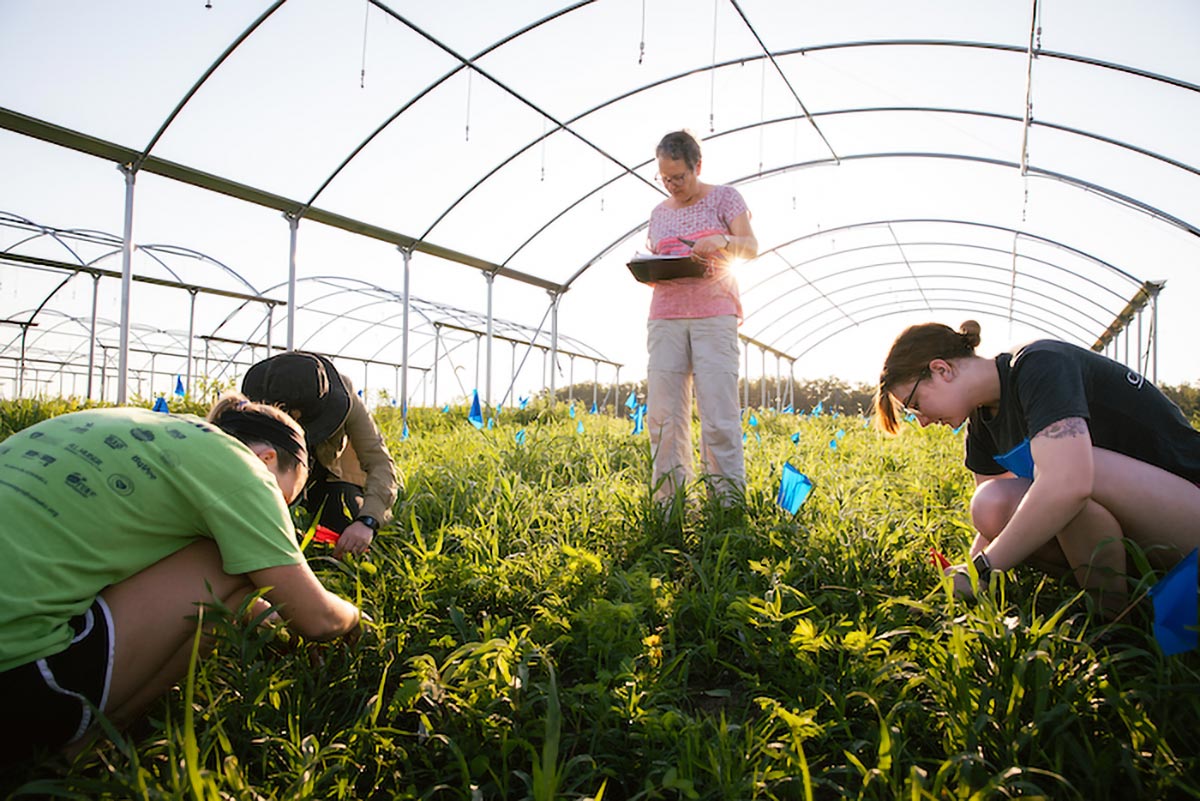
Mechanisms Behind Plant Diversity Benefits
While crop rotation and other farming and gardening practices long have reflected the benefits of a mix of plants, the new research puts hard data to one important mechanism underpinning the observation: the numbers of microorganisms in the soil that eat plants.
“Diverse agricultural communities have the potential to keep pathogens at bay, resulting in greater yields,” Bever said. “What we show is that a major driver is the specialization of pathogens, particularly those specific to different plant species. These pathogens suppress yields in low-diversity communities. A significant advantage of rangeland diversity is that less biomass is consumed by pathogens, allowing more biomass for other uses, such as cattle. The same process is crucial for agricultural production.”
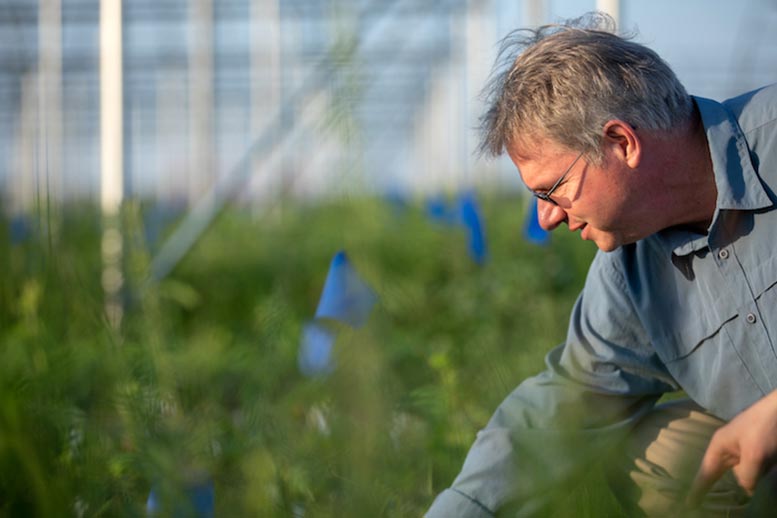
Methodology and Collaborative Efforts
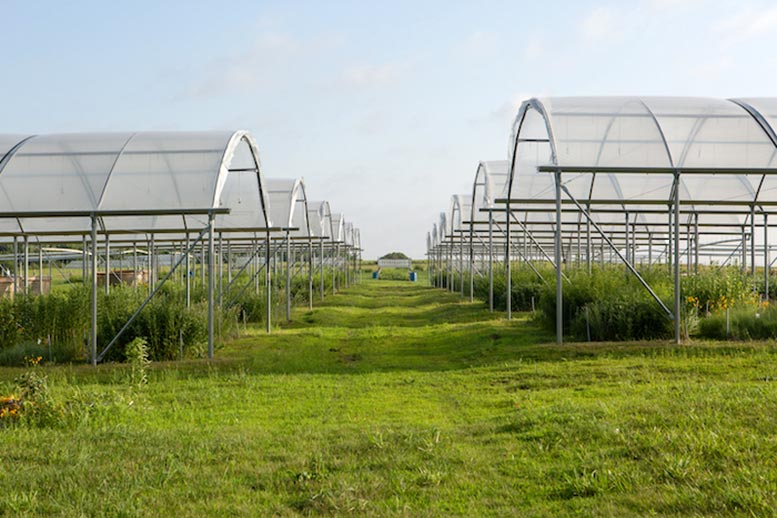
The new data was developed at the University of Kansas using field experiments at the KU Field Station, along with greenhouse assays and feedback modeling using computers. This project was supported by large collaborative grants to KU from the National Science Foundation and the U.S. Department of Agriculture.
Findings on Soil-Pathogen Microbiome
“We conducted an experiment manipulating the number of plants in a plot and varying precipitation levels — we had from one up to six species in a plot,” Bever said. “Then, we evaluated the composition of the soil-pathogen microbiome. What we found is that the variation in pathogen composition in monocultures significantly predicted the yield when combined. When there are distinct pathogen communities, mixing them leads to a greater release of pathogens from your neighbors. The worst scenario is when a neighboring crop has the same pathogens. In that case, you’re experiencing double density — your crop pathogens and those from your neighbor crop.”
At KU, Bever’s collaborators included associate specialist Peggy Schultz as well as Haley Burrill and Laura Podzikowski, both of whom earned doctorates at KU and now are postdoctoral researchers at the University of Oregon and KU, respectively. Lead author Guangzhou Wang worked at KU as a postdoctoral researcher and now is affiliated with China Agricultural University in Beijing, where he worked on the investigation there with co-authors Fusuo Zhang and Junling Zhang. They were joined by co-author Maarten Eppinga of the University of Zurich, Switzerland.
Critique of Monoculture Practices
According to Bever, the research argues against the industrial-agricultural practice of planting a single food crop over many acres of land, often referred to as “monoculture.”
“Regarding monoculture practices, the philosophy of promoting plant diversity seems to counter prevailing practices,” he said. “Monoculture — planting vast areas with a single crop — is driven by technological reasons rather than biological ones. Practical aspects of planting and harvesting have motivated this approach. Traditional Native American agriculture and practices in the tropics involve polycultures with multiple species. In China, there’s a movement towards mechanized polyculture production, challenging the predominant monoculture model in the United States. It’s essential to view monoculture as a cost-benefit model with increased inputs and explore alternative methods like crop rotation to manage pathogens over time.”
Application for Home Gardeners
Bever said mixing plants in various plots would be beneficial to home gardeners and others who cultivate plants.
“When you’re gardening, you’re not relying on mechanical planting and mechanical harvesting,” he said. “It’s definitely to your advantage to mix your crops — to plant them in heterogeneous mixes in the plot. For convenience, we might plant alternating rows of different crops. That’s going to do a better job of controlling pathogens than if you just had many rows of the same crop next to each other.
“If you had four plots in your backyard that were discrete, you wouldn’t want to put all tomatoes in one and all squash in another, and a third with herbs — you’d want to mix them in. You’ll reduce pathogens by doing that. It’s what our data shows.”
Biodiversity’s Impact on Pathogens
Finally, Bever said his team’s findings that show biodiversity prohibits pathogen growth isn’t as clear-cut outside the plant kingdom. In fact, the idea is contentious in animal systems like Lyme disease.
“Our clear result in the plant world contrasts with the complexity of this literature in the animal world,” he said. “In the context of recent attention on pathogens, such as with COVID, the study of pathogens in ecology has been controversial. The impact of diversity on pathogen impacts, whether it increases or decreases, has been debated.
“Our findings for plants indicate the bigger concern is the reduction of pathogen spread with increased diversity, rather than an increase. In our study, pathogens, including soil-dwelling ones, were examined. Similar patterns were observed with foliar pathogens, as detailed in an upcoming paper. The controversy arises from differences between how pathogens affect the animal kingdom versus plants.”
Reference: “Dilution of specialist pathogens drives productivity benefits from diversity in plant mixtures” by Guangzhou Wang, Haley M. Burrill, Laura Y. Podzikowski, Maarten B. Eppinga, Fusuo Zhang, Junling Zhang, Peggy A. Schultz and James D. Bever, 18 December 2023, Nature Communications.
DOI: 10.1038/s41467-023-44253-4
Never miss a breakthrough: Join the SciTechDaily newsletter.
Follow us on Google and Google News.