
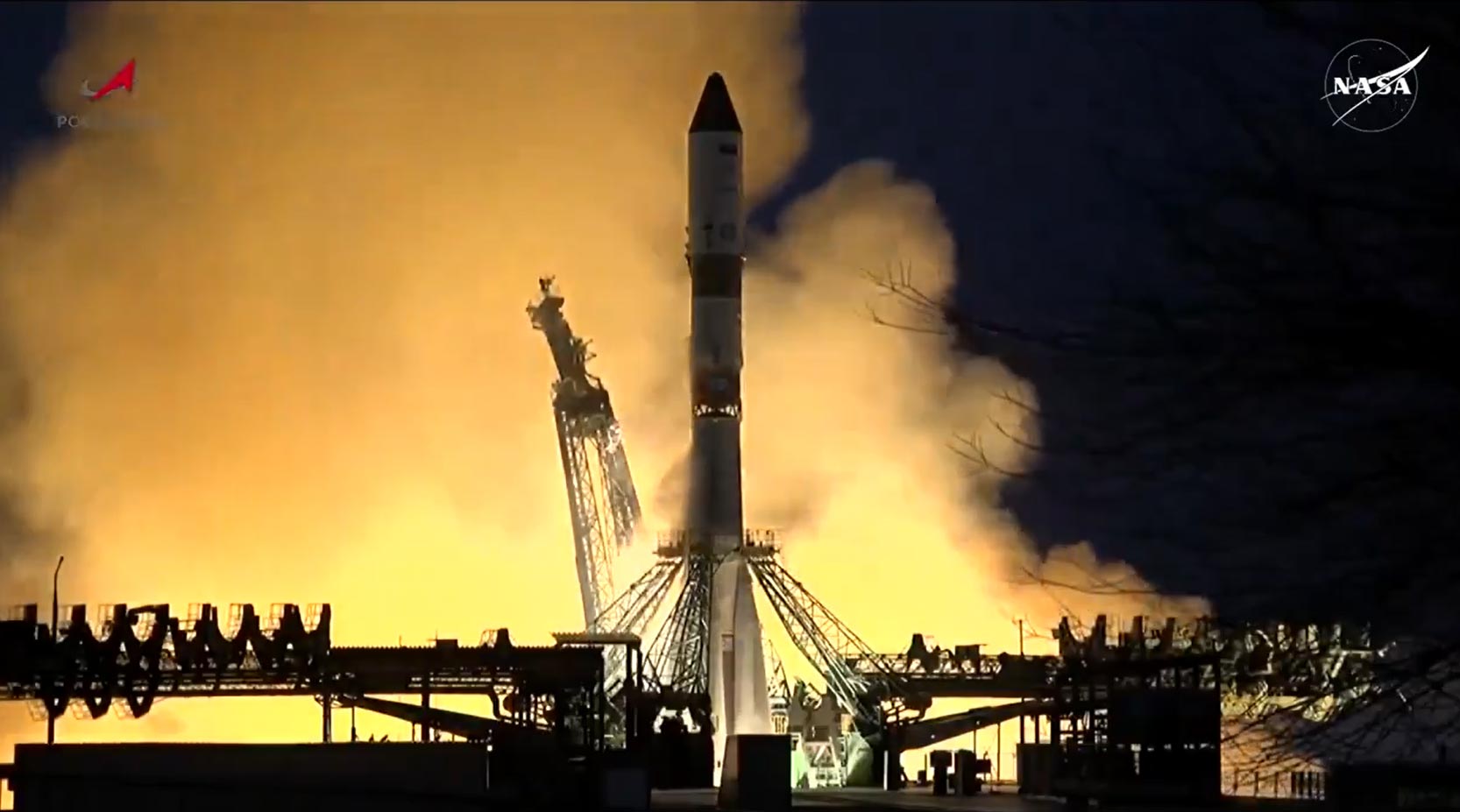
The unpiloted Roscosmos Progress 90 spacecraft is now safely in orbit, on its way to the International Space Station (ISS). It launched at 7:22 a.m. EST (5:22 p.m. Baikonur time) on Thursday, November 21, aboard a Soyuz rocket from the Baikonur Cosmodrome in Kazakhstan.
The spacecraft is set to complete a two-day journey in orbit before automatically docking at the ISS. It will attach to the Poisk module’s space-facing port at 9:36 a.m. EST on Saturday, November 23.
NASA’s will begin live coverage of rendezvous and docking at 8:45 a.m. on NASA+ and the NASA’s website.
The spacecraft will deliver about three tons of food, fuel, and supplies to the space station.
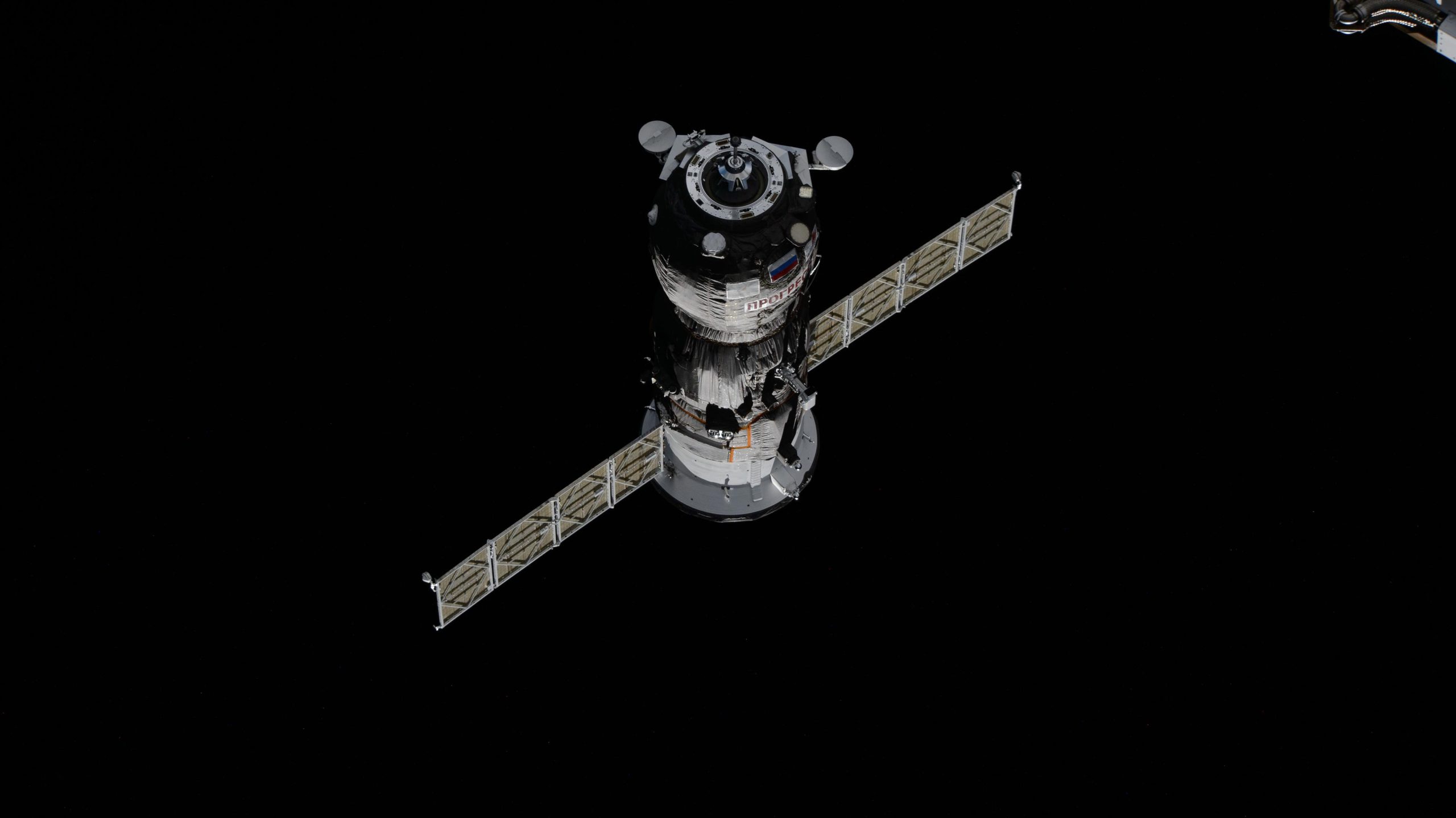
The Roscosmos Progress spacecraft is an uncrewed cargo vehicle designed to deliver essential supplies to the ISS. Developed by the Russian space agency Roscosmos, it has been a reliable workhorse for resupply missions since its first flight in 1978. Built on the design of the crewed Soyuz spacecraft, Progress is uniquely adapted for cargo transport, carrying items such as food, fuel, scientific equipment, and spare parts.
The spacecraft consists of three sections: a pressurized cargo module for dry goods, a refueling compartment for liquid propellant, and an unpressurized instrument module housing avionics and power systems. It docks automatically to the ISS and, after unloading its cargo, is filled with waste from the station. Unlike its reusable Soyuz counterpart, Progress is disposable and burns up upon reentry into Earth’s atmosphere.
With its consistent performance and ability to handle varied missions, the Progress spacecraft remains a critical element in sustaining operations and research aboard the ISS.
Never miss a breakthrough: Join the SciTechDaily newsletter.
Follow us on Google and Google News.