
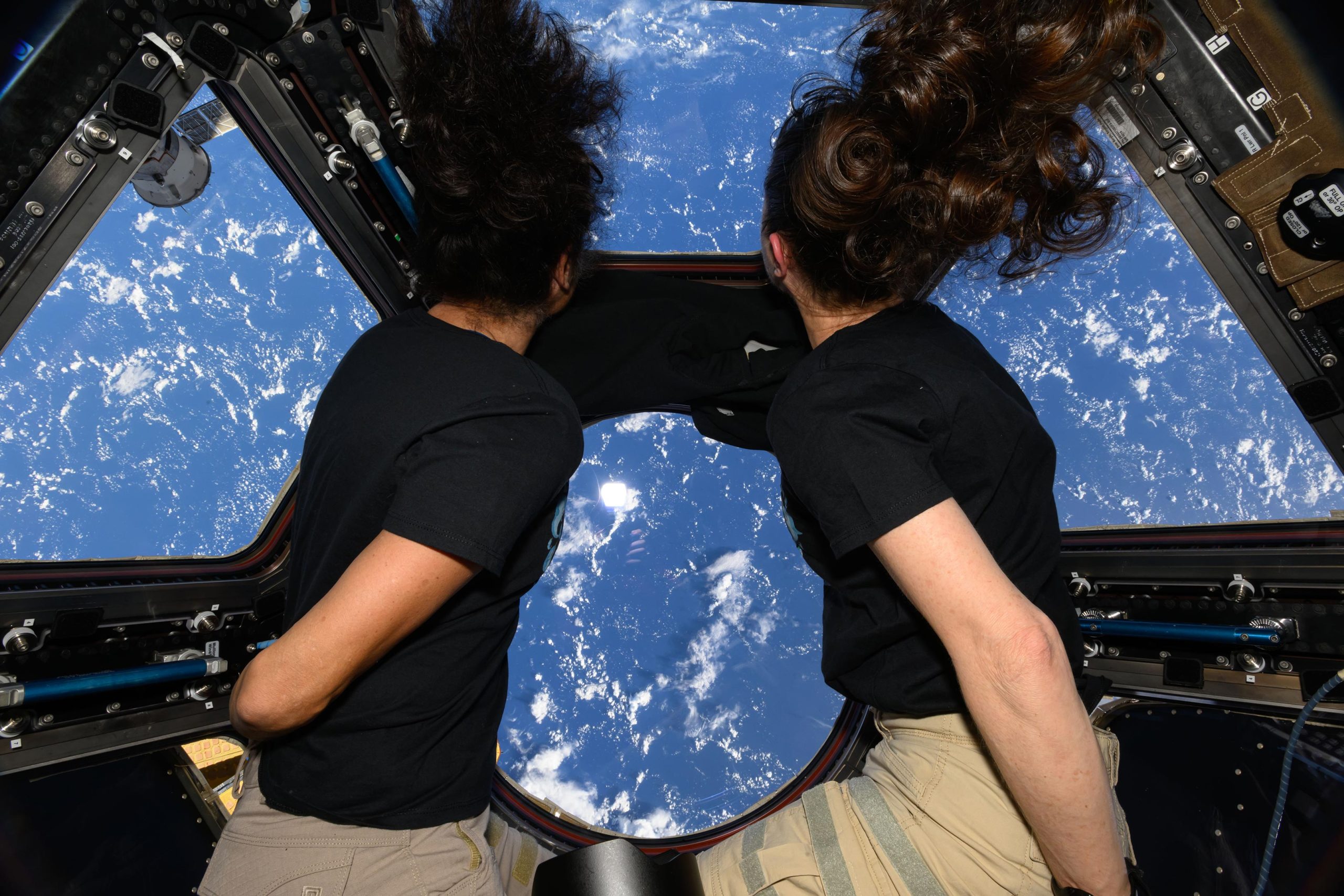
The Expedition 72 crew is busy preparing completed science experiments for their return to Earth aboard the SpaceX Dragon cargo spacecraft. Alongside packing, the International Space Station (ISS) residents have been conducting research on antibiotic-resistant bacteria and setting up equipment for space-based plant experiments.
Transferring and Loading Cargo
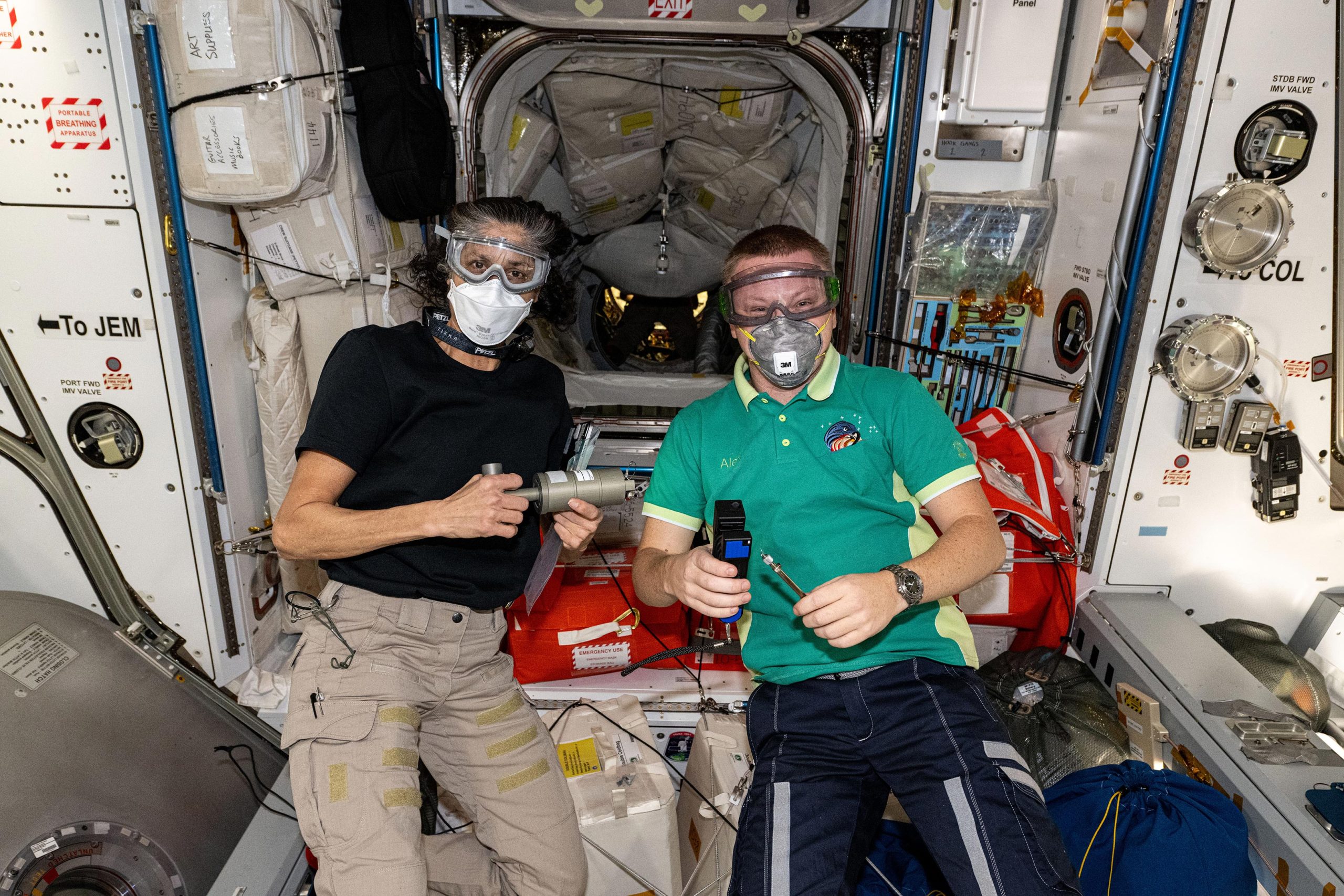
NASA’s Station Commander Suni Williams and Flight Engineer Don Pettit began their day by transferring research samples from the station’s science freezers into portable POLAR freezers. These will be placed aboard the departing Dragon spacecraft. Later, Williams teamed up with NASA Flight Engineer Nick Hague to load and securely strap down additional cargo inside Dragon, ensuring it is ready for retrieval and analysis on Earth.
Dragon is scheduled to undock from the Harmony module’s forward port at 11:05 a.m. EST on Thursday for a splashdown off the coast of Florida the following day. NASA’s live coverage of undocking and departure begins at 10:50 a.m. EST on NASA+.
Studying Antibiotic Resistance in Space
Pettit later spent the rest of his shift with NASA Flight Engineer Butch Wilmore processing bacteria samples in the Kibo and Harmony modules to understand why some pathogens are more potent in the microgravity environment. The duo was using genetic analysis techniques to identify the antibiotic resistant organisms and help researchers protect crew health on long-term space missions. Those samples will also be collected and packed inside Dragon this week for return and analysis back on Earth.
Space Botany and Satellite Deployment
Williams set up research components inside the Advanced Plant Habitat to support an upcoming experiment to understand how different water levels affect plant growth in space and the microbes that live on plants. Results may lead to improved methods for growing food on Earth and in space. Hague began installing a small satellite deployer on Kibo’s multipurpose experiment platform that will soon be placed into the vacuum of space to release a series of CubeSats.
Maintenance and Monitoring on the Roscosmos Segment
Working in the Roscosmos segment of the space station, Flight Engineer Aleksandr Gorbunov used different wavelengths to image natural and human-caused conditions on Earth and then jogged on a treadmill for a fitness evaluation. His fellow cosmonauts Alexey Ovchinin and Ivan Vagner spent their day monitoring carbon dioxide levels and servicing the atmospheric purification system in the orbital lab’s Roscosmos segment among other life support tasks.
Never miss a breakthrough: Join the SciTechDaily newsletter.
Follow us on Google and Google News.
1 Comment
I’m very curious about? I’m proud of you guys!