
Close Menu
    Facebook X (Twitter) Instagram
    SciTechDaily
    • Biology
    • Chemistry
    • Earth
    • Health
    • Physics
    • Science
    • Space
    • Technology
    Facebook X (Twitter) Pinterest YouTube RSS
    SciTechDaily
    Home»Space»SpaceX Dragon Spacecraft Docks to Space Station With New Science and Supplies
    Space

    SpaceX Dragon Spacecraft Docks to Space Station With New Science and Supplies

    By NASAMarch 23, 2024No Comments3 Mins Read
    Facebook Twitter Pinterest Telegram LinkedIn WhatsApp Email Reddit
    Share
    Facebook Twitter LinkedIn Pinterest Telegram Email Reddit
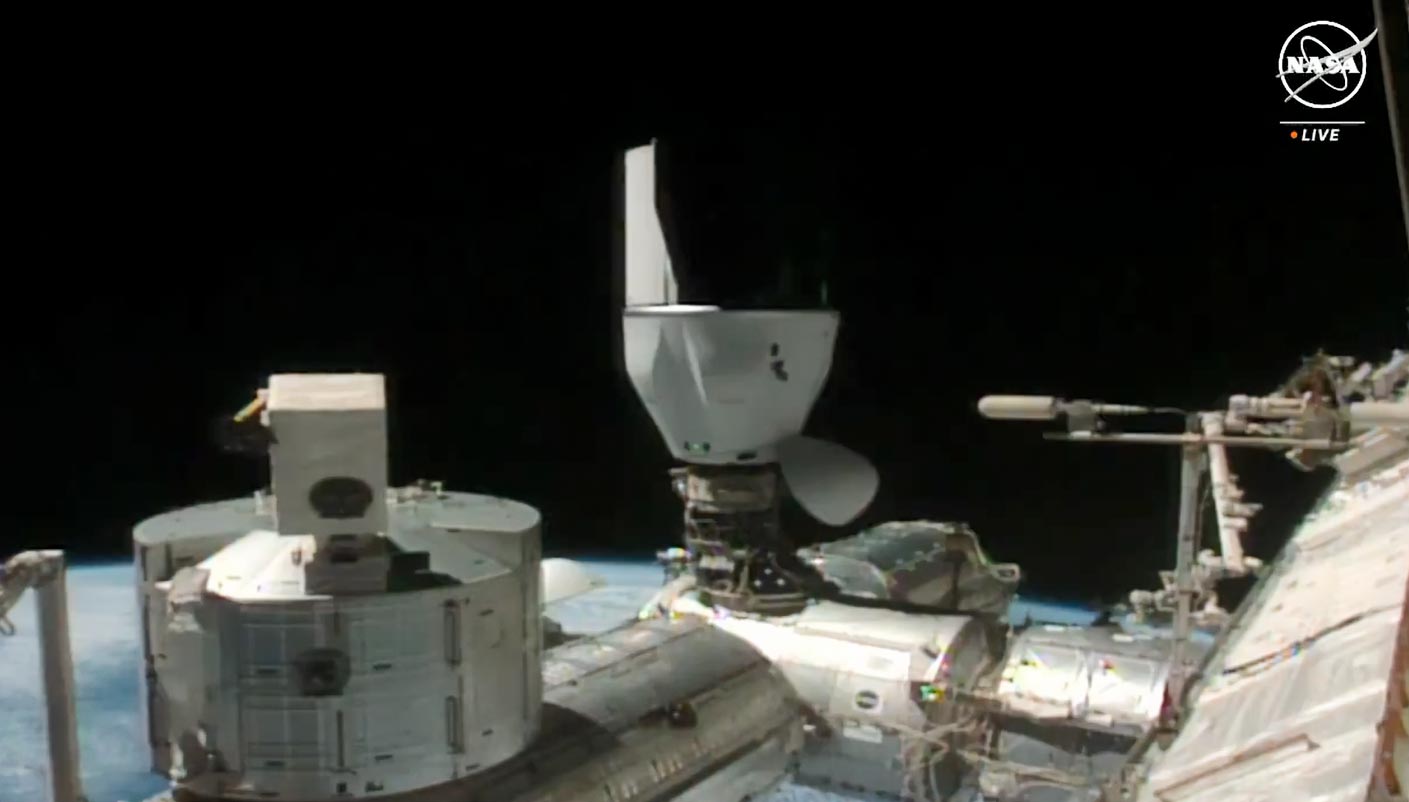
    Dragon Spacecraft Docks to Station With New Science
    The SpaceX Dragon cargo spacecraft docks to the International Space Station’s Harmony module at 7:19 a.m. EDT on Saturday, March 23. Credit: NASA TV

    While the International Space Station (ISS) was traveling more than 262 miles over the South Atlantic Ocean, a SpaceX Dragon cargo spacecraft autonomously docked to station’s Harmony module at 7:19 a.m. EDT on March 23, with NASA astronauts Loral O’Hara and Michael Barratt monitoring operations from the station.

    The Dragon launched on SpaceX’s 30th contracted commercial resupply mission for NASA at 4:55 p.m. EDT, March 21, from Space Launch Complex 40 at Cape Canaveral Space Force Station in Florida. After Dragon spends about one month attached to the space station, the spacecraft will return to Earth with cargo and research.

    Among the science experiments Dragon is delivering to the space station are:
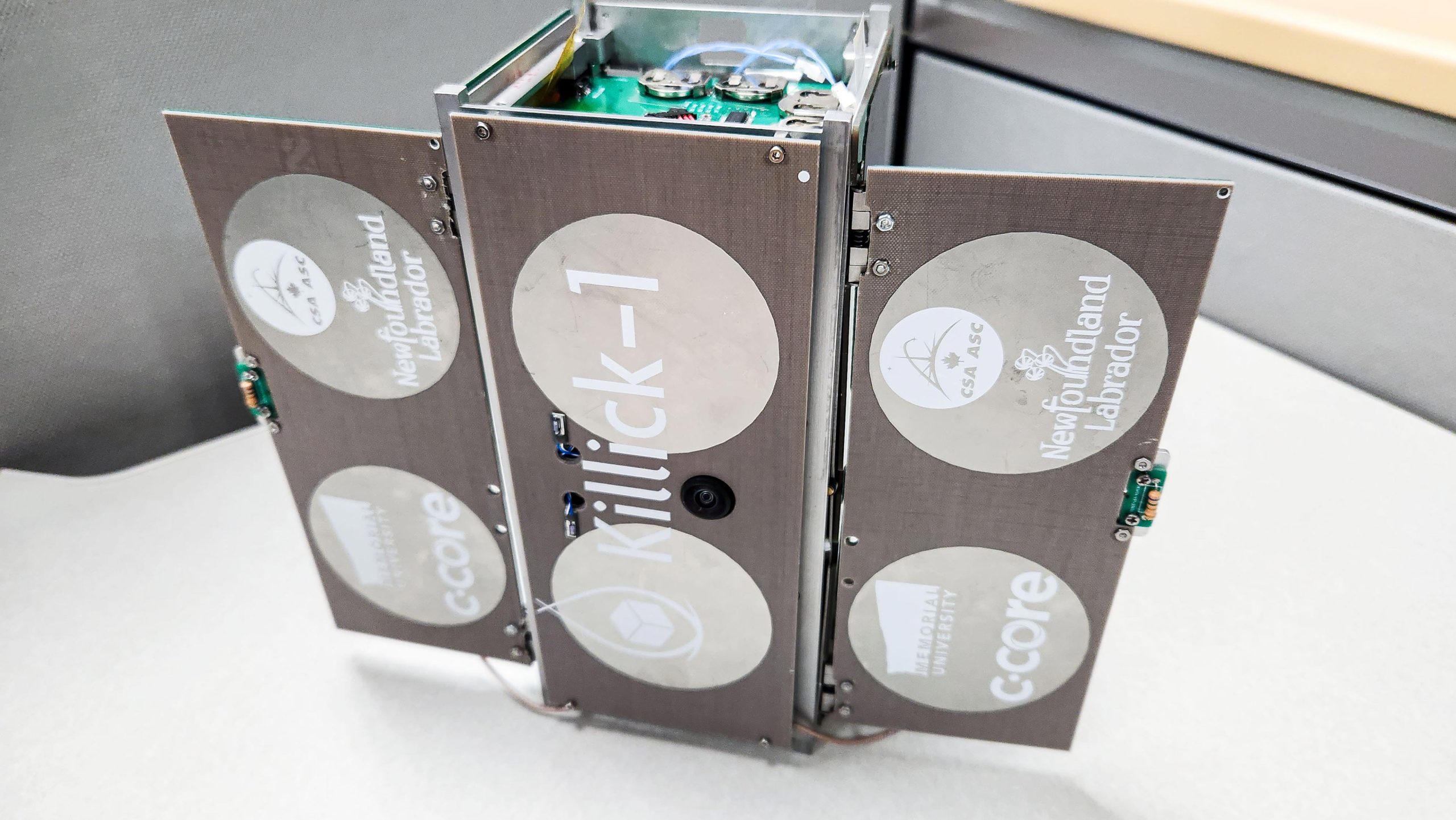
    KILLICK-1 CubeSat
    Fully assembled Nanoracks-Killick-1 CubeSat with its Global Navigation Satellite System Reflectometry (GNSS-R) antenna deployed. Nanoracks-Killick-1 measures sea ice using GNSS-R. Potential applications of GNSS-R include providing data for weather and climate models and improving understanding of ocean phenomena such as surface winds and storm surge. Credit: C-CORE and Memorial University.

    Monitoring Sea Ice Thickness and Wave Height

    (Nanoracks-Killick-1) is a CubeSat that measures sea ice parameters using Global Navigation Satellite System (GNSS) reflectometry or reflected signals. This monitoring system could contribute to a better understanding of important ocean phenomena and improved weather and climate models.
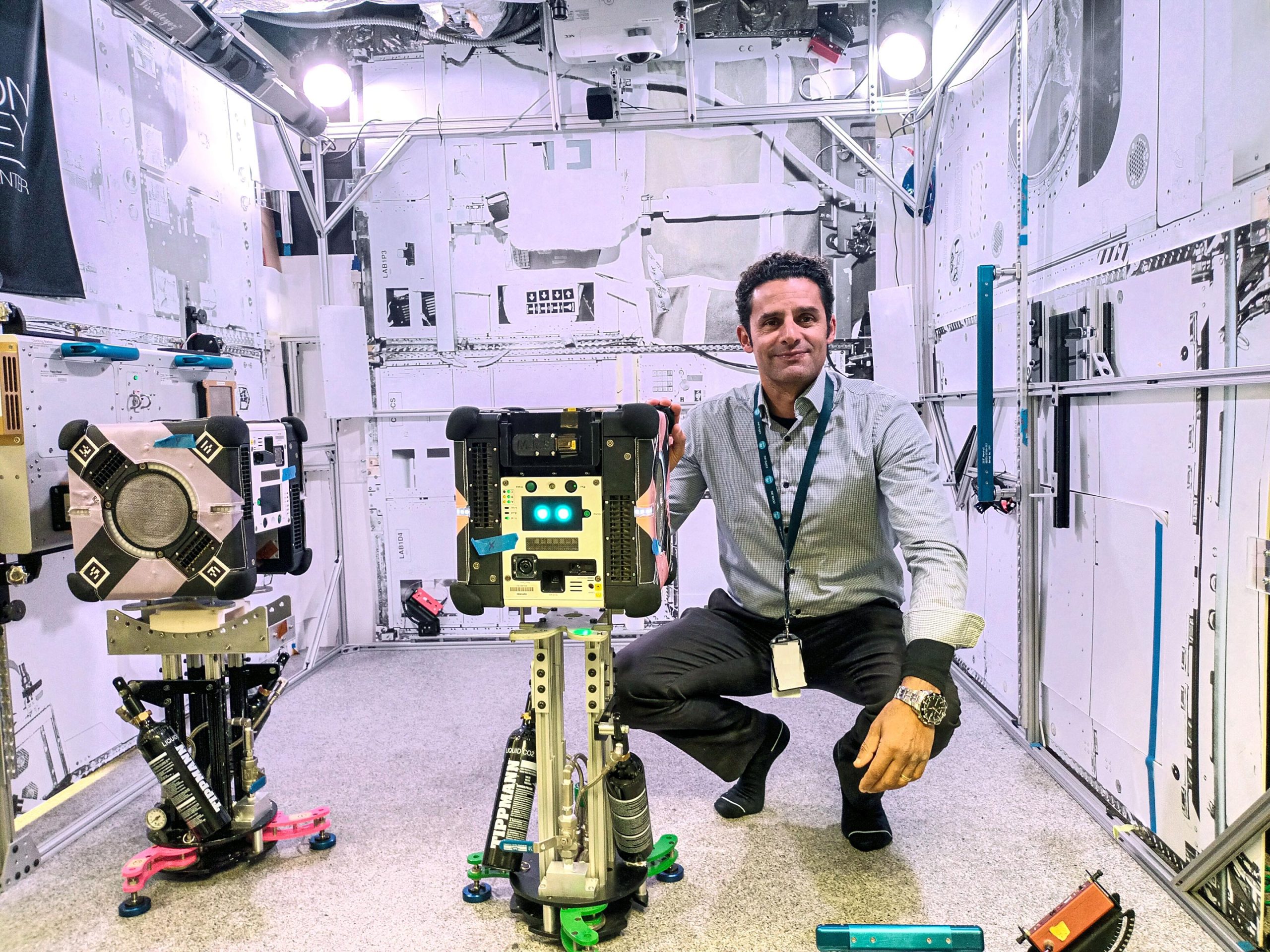
    Marc Elmouttie With the MRS Hardware and Astrobee Robot
    CSIRO Project Lead Marc Elmouttie with the MRS hardware and Astrobee robot ready for final pre-flight testing. Credit: NASA

    New Sensors for ASTROBEE

    The Multi-resolution Scanner (MRS) Payload for the Astrobee (Multi-Resolution Scanning) tests a new set of sensors to support automated 3D sensing, mapping, and situational awareness functions. These systems could support future Gateway and Lunar surface missions by providing automated defect detection, automated and remote maintenance, and autonomous vehicle operations.
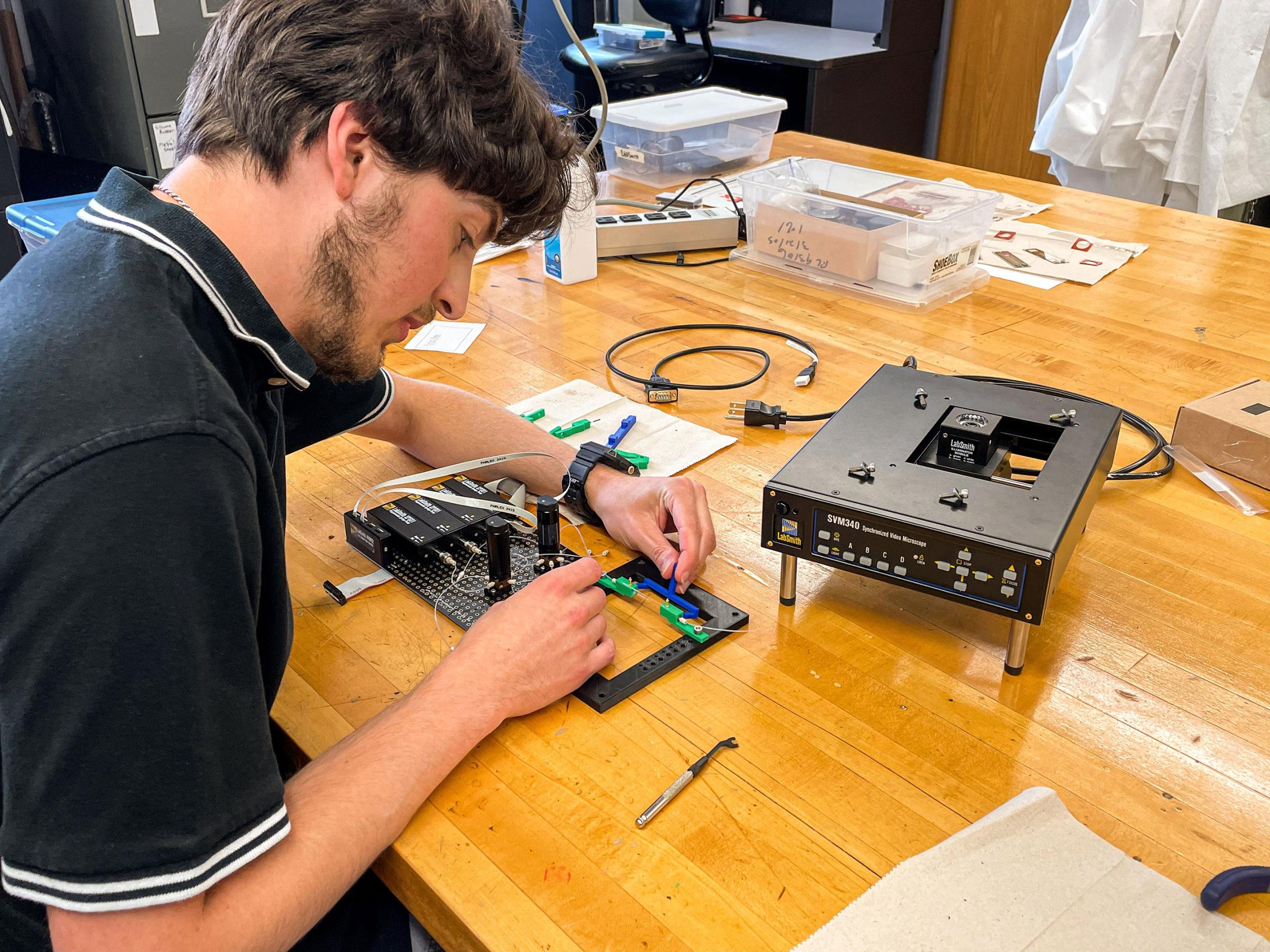
    Nano Particle Haloing Suspension Hardware
    A capstone student assembles the microscope and fluid breadboard for the Nano Particle Haloing Suspension payload. This payload tests the controlled assembly of nanoparticles in a solution of zirconia and titanium-dioxide-coated silica. Effective demonstration could lead to applications in an enhanced solar cell generation technology known as quantum-dot solar synthesis. Credit: University of Louisville

    Improving Efficiency of Quantum-Dot Solar Cells

    The Nano Particle Haloing Suspension payload tests the controlled assembly of nanoparticles in a liquid solution. A process called nanoparticle haloing uses charged nanoparticles to enable precise particle arrangements that improve the efficiency of quantum-dot synthesized solar cells. Conducting these processes in microgravity provides insight into the relationship between shape, charge, concentration, and interaction of particles.
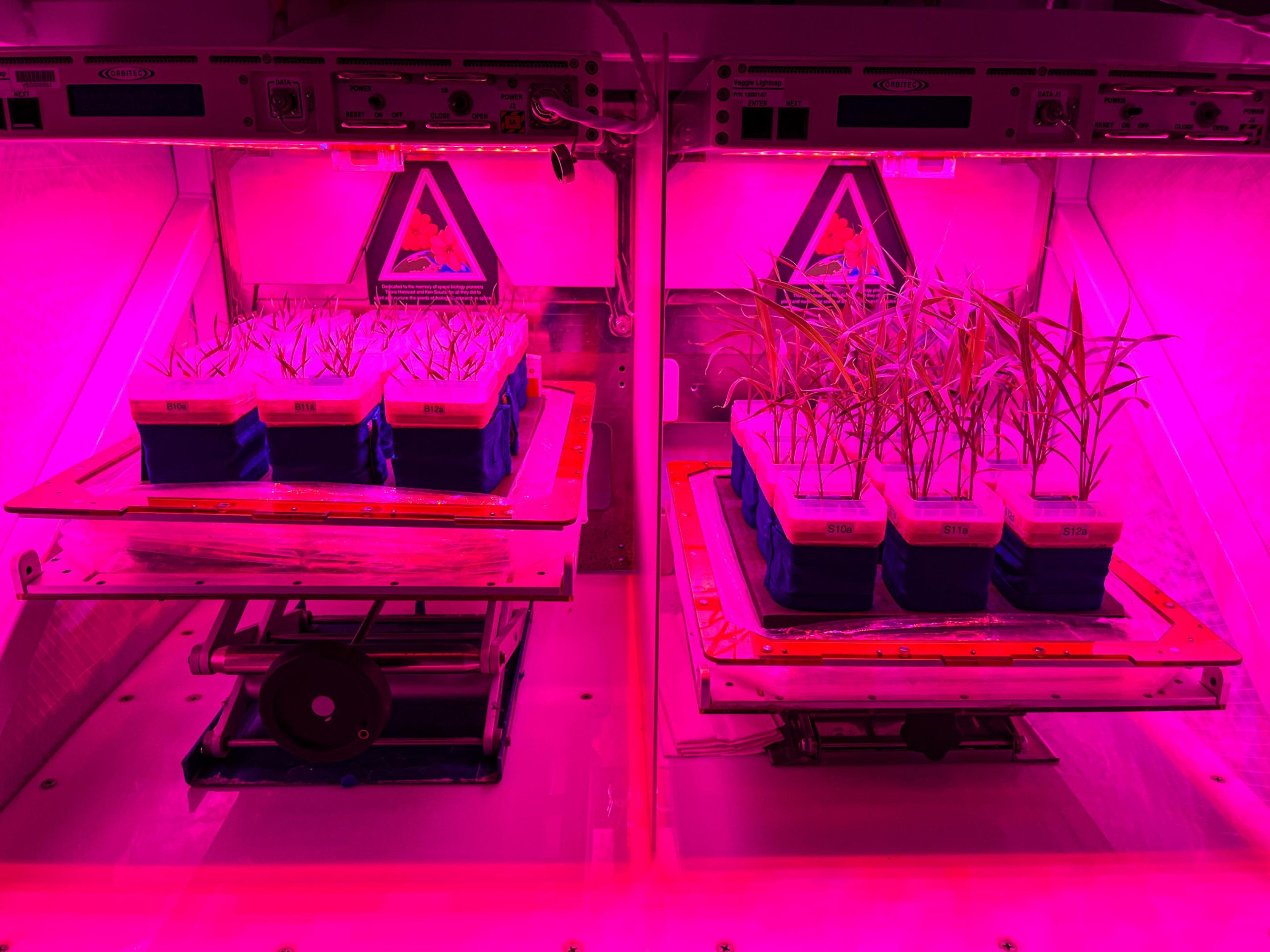
    APEX-09 C4 Space investigation
    Brachypodium and Setaria were grown in the Plant Growth Systems (PGS) and tested under International Space Station environmental conditions using the Veggie units at NASA’s Kennedy Space Center during the APEX-09 Experiment Verification Test. Credit: Pubudu Handakumbura

    Observing Photosynthesis in Space

    Advanced Plant Experiment-09 (APEX-09), also known as C4 Photosynthesis in Space, observes carbon dioxide capture and mechanisms in two types of grasses. Researchers hope to learn more about photosynthesis and plant metabolism changes overall in space. Knowledge gained could support development of bioregenerative life support systems on future missions.

    These are just a few of the hundreds of investigations currently being conducted aboard the orbiting laboratory in the areas of biology and biotechnology, physical sciences, and Earth and space science. Advances in these areas will help keep astronauts healthy during long-duration space travel and demonstrate technologies for future human and robotic exploration beyond low-Earth orbit to the Moon through NASA’s Artemis missions and eventually Mars.

    Never miss a breakthrough: Join the SciTechDaily newsletter.
    Follow us on Google and Google News.

    International Space Station NASA SpaceX
    Share. Facebook Twitter Pinterest LinkedIn Email Reddit

    Related Articles

    New Beginnings in Space As Astronauts Step Into Their Zero-Gravity Home

    NASA’s Crew-9 Returns After 286-Day Mission With a Spectacular Splashdown in the Gulf of America

    NASA’s SpaceX Crew-9 Splashes Down Off Coast of Florida

    SpaceX Dragon Undocks With NASA Crew-9 Members for Return to Earth

    Liftoff! NASA’s SpaceX Crew-10 Blasts Off From Kennedy Space Center [Video]

    Rocket Ready: NASA’s SpaceX Crew-10 Set for Liftoff

    NASA’s SpaceX Crew-10 Was Moments From Liftoff – Then a Last-Minute Malfunction Shut It Down

    NASA’s SpaceX Crew-10: Four Astronauts, a 17,500 MPH Rocket, and 200+ Experiments

    No Treadmill, No Problem – NASA’s Space Workout Experiment Could Change Fitness Forever

    Leave A Reply Cancel Reply

    • Facebook
    • Twitter
    • Pinterest
    • YouTube

    Don't Miss a Discovery

    Subscribe for the Latest in Science & Tech!

    Trending News

    Scientists Discover Stem Cells That Could Regrow Teeth and Bone

    Early Cannabis Use May Stall Key Brain Skills in Teens

    Popular Vitamin D Supplement Has “Previously Unknown” Negative Effect, Study Finds

    Study Reveals Malaria’s Hidden Role in Human Evolution

    The Hidden Risk of Taking Breaks From Weight-Loss Drugs Like Ozempic

    Scientists Warn That This Common Pet Fish Can Wreck Entire Ecosystems

    Scientists Make Breakthrough in Turning Plastic Trash Into Clean Fuel Using Sunlight

    This Popular Supplement May Interfere With Cancer Treatment, Scientists Warn

    Follow SciTechDaily
    • Facebook
    • Twitter
    • YouTube
    • Pinterest
    • Newsletter
    • RSS
    SciTech News
    • Biology News
    • Chemistry News
    • Earth News
    • Health News
    • Physics News
    • Science News
    • Space News
    • Technology News
    Recent Posts
    • This Robot Could Explore Mars 3x Faster Than Today’s Rovers
    • Scientists Just Built a Quantum Battery That Charges Almost Instantly
    • Researchers Unveil Groundbreaking Sustainable Solution to Vitamin B12 Deficiency
    • Scientists Identify Immune Protein That Could Mimic Anti-Aging Effects of Calorie Restriction
    • This Tiny Creature Survived a World of Dinosaurs and Changed What Came Next
    Copyright © 1998 - 2026 SciTechDaily. All Rights Reserved.
    • Science News
    • About
    • Contact
    • Editorial Board
    • Privacy Policy
    • Terms of Use

    Type above and press Enter to search. Press Esc to cancel.