
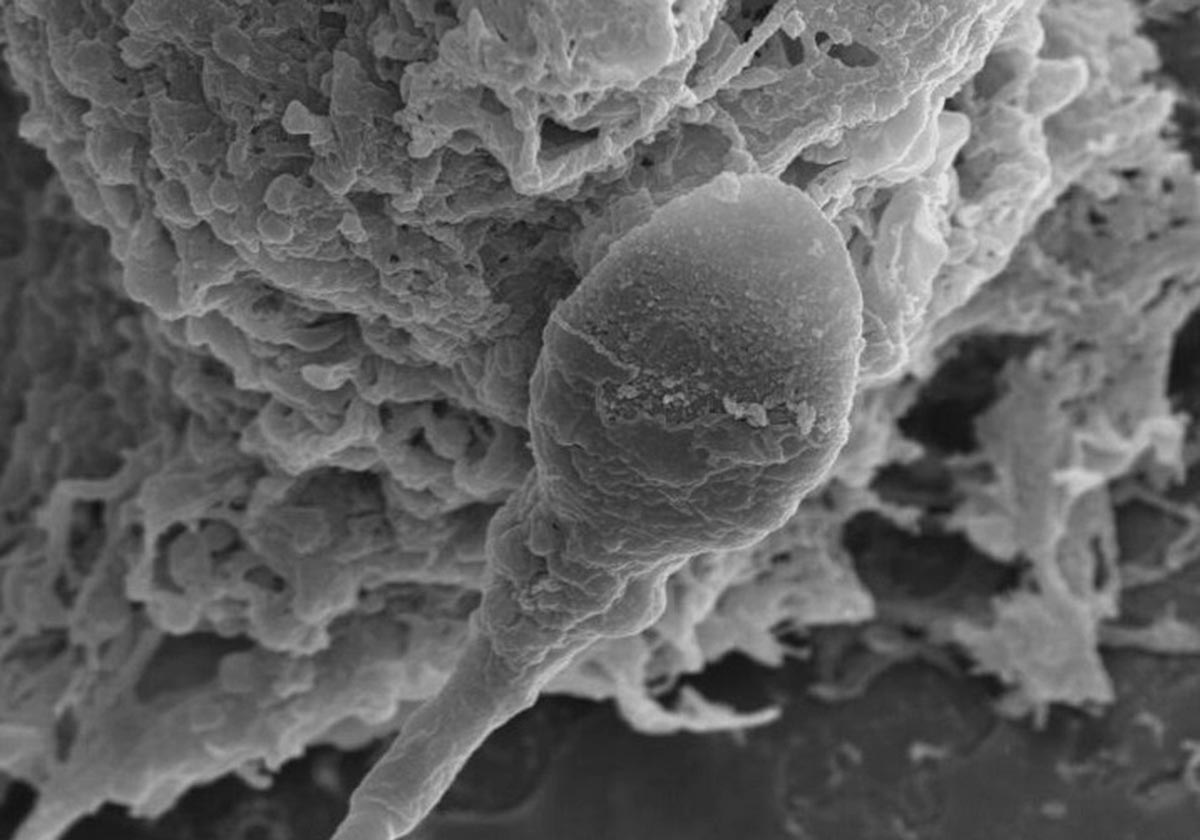
Having a baby in space may be far more complicated than expected, as new research shows sperm struggle to find their way in microgravity.
Starting a family beyond Earth could be more complicated than expected. New research from Adelaide University shows that sperm have a harder time finding their way in low gravity, suggesting that gravity plays an important role in successful reproduction.
Scientists from the Robinson Research Institute, the School of Biomedicine, and the Freemasons Centre for Male Health and Wellbeing explored how space-like conditions affect sperm navigation, fertilization, and early embryo development.
To test this, sperm from three mammal species, including humans, were placed in a 3D clinostat machine created by Dr. Giles Kirby at Firefly Biotech. This device simulates zero gravity by continuously rotating cells, leaving them disoriented. The sperm were then guided through a maze designed to replicate the female reproductive tract.
“This is the first time we have been able to show that gravity is an important factor in sperm’s ability to navigate through a channel like the reproductive tract,” said senior author Dr. Nicole McPherson from Adelaide University’s Robinson Research Institute.
“We observed a significant reduction in the number of sperm that were able to successfully find their way through the chamber maze in microgravity conditions compared to normal gravity.
“This was experienced right across all models, despite no changes to the way sperm physically move. This indicates that their loss of direction was not due to a change in motility but other elements.”
Hormone May Help Guide Sperm in Space
Researchers found that adding the hormone progesterone, which plays a key role in establishing pregnancy, improved navigation in human sperm under simulated microgravity conditions.
“We believe this is because progesterone is also released from the egg and can help guide sperm to the site of fertilization, but this warrants further exploration as a potential solution,” said Dr. McPherson.
Fertilization Rates Drop in Microgravity
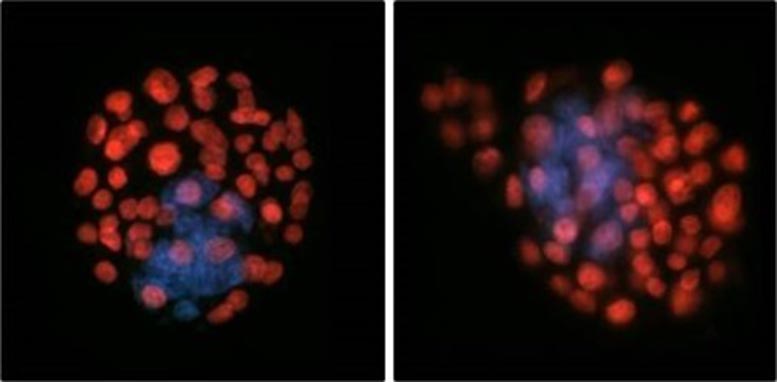
The team also examined how microgravity exposure during fertilization affects embryo development in animal models.
They found that after four hours in simulated zero gravity, the number of successfully fertilized mouse eggs dropped by 30 per cent compared to normal Earth conditions.
“We observed reduced fertilization rates during four-to-six hours of exposure to microgravity. Prolonged exposure appeared to be even more detrimental, resulting in development delays and, in some cases, reduced cells that go on to form the fetus in the earliest stages of embryo formation,” said Dr. McPherson.
“These insights show how complex reproductive success in space is and the critical need for more research across all early stages of development.”
Why Gravity Matters for Reproduction
Earlier studies have examined how sperm move in space, but none have tested their ability to navigate through a reproductive channel under controlled conditions like this.
The findings were published today (March 26) in Communications Biology.
This research was carried out in collaboration with Adelaide University’s Andy Thomas Centre for Space Resources, which focuses on the challenges of long-term space exploration and living beyond Earth.
“As we progress toward becoming a spacefaring or multi-planetary species, understanding how microgravity affects the earliest stages of reproduction is critical,” said Associate Professor John Culton, Director of the Andy Thomas Centre for Space Resources.
What Comes Next for Space Reproduction
Researchers are now moving into the next phase, studying how different gravity levels, such as those on the Moon, Mars, and in artificial gravity systems, influence sperm navigation and early embryo development.
A major question is whether these changes happen gradually as gravity decreases or if there is a threshold where effects suddenly appear, creating an “all or nothing” response.
Understanding this will be key for planning reproduction in future Moon and Mars settlements and for designing artificial gravity systems that support healthy development.
“In our most recent study, many healthy embryos were still able to form even when fertilized under these conditions. This gives us hope that reproducing in space may one day be possible,” said Dr. McPherson.
Reference: “Simulated microgravity alters sperm navigation, fertilization and embryo development in mammals” by Hannah E. Lyons, Victoria Nikitaras, Bridget M. Arman, Stephen M. McIlfatrick, Mark B. Nottle, Macarena B. Gonzalez and Nicole O. McPherson, 26 March 2026, Communications Biology.
DOI: 10.1038/s42003-026-09734-4
Never miss a breakthrough: Join the SciTechDaily newsletter.
Follow us on Google and Google News.
3 Comments
This is certainly one reason for a space program
*escape*
Now find out how to make it stop reproduce in conditions of gravity