

Close Menu
    Facebook X (Twitter) Instagram
    SciTechDaily
    • Biology
    • Chemistry
    • Earth
    • Health
    • Physics
    • Science
    • Space
    • Technology
    Facebook X (Twitter) Pinterest YouTube RSS
    SciTechDaily
    Home»Biology»Researchers Show Sperm Production Has Health Implications
    Biology

    Researchers Show Sperm Production Has Health Implications

    By Monash UniversityJanuary 30, 2012No Comments3 Mins Read
    Facebook Twitter Pinterest Telegram LinkedIn WhatsApp Email Reddit
    Share
    Facebook Twitter LinkedIn Pinterest Telegram Email Reddit
    Sperm Cells Swimming Illustration
    A new study finds that sperm production is more biologically taxing than previously thought, with significant health implications.

    According to Dr. Damian Dowling of Monash University’s School of Biological Sciences and Professor Leigh Simmons of the University of Western Australia, reproduction may be more biologically taxing than previously thought. In their published research, they used the Australian cricket to prove the trade-off between sperm quality and immunity. When given a choice of female crickets to mate with, males produced high-quality sperm more often when housed with sexually mature females, which in turn made them more likely to succumb to a bacterial infection.

    A new study shows the production of sperm is more biologically taxing than previously thought, and expending energy on it has significant health implications.
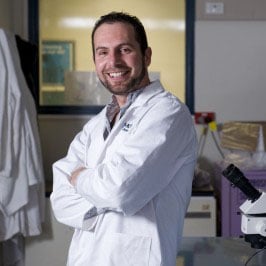
    Dr. Damian Dowling of Monash University's School of Biological Sciences
    Dr. Damian Dowling of Monash University’s School of Biological Sciences. Credit: Monash University

    In research published in the journal PLoS ONE, Dr. Damian Dowling of Monash University’s School of Biological Sciences and Professor Leigh Simmons of the University of Western Australia have investigated the trade-off between sperm quality and immunity.

    The researchers used the Australian cricket, Teleogryllus oceanicus to prove that the production of quality sperm is expensive and males are strategic about investing energy in the biological process.

    Dr. Dowling said investigations into life history trade-offs — investment in reproduction versus future reproduction and survival prospects — have historically focused on females.

    “This study challenges the traditional view that sex, and sperm production, come cheaply to males. It is typically thought that females must invest heavily into reproduction, whereas males can freely produce millions of high-quality, tiny sperm on demand, with few costs,” Dr. Dowling said.

    “Here we show that the costs are in fact large, and these costs dictate how much effort a male will devote into any given sexual encounter.”

    The crickets were housed either with sexually immature females, sexually mature females incapable of reproduction, or sexually mature females capable of reproduction. Sperm quality was measured twice and immune function once during the experiment.

    Dr. Dowling said the male crickets were more likely to produce high-quality sperm when housed with sexually mature females with whom they could mate, indicating a strategic investment of energy.

    The researchers also found that the production of quality sperm appeared to have a negative effect on the crickets’ immune systems.

    “Males that invested heavily in their sperm paid the price of being more likely to succumb to a bacterial infection. And we are not talking about STDs here — we are talking about how increased investment into the quality of the ejaculate corresponds with general reductions in immune function,” Dr. Dowling said.

    Reference: “Ejaculate Economics: Testing the Effects of Male Sexual History on the Trade-Off between Sperm and Immune Function in Australian Crickets” by Damian K. Dowling and Leigh W. Simmons, 11 January 2012, PLoS ONE.
    DOI: 10.1371/journal.pone.0030172

    Never miss a breakthrough: Join the SciTechDaily newsletter.
    Follow us on Google and Google News.

    Immunity Monash University Reproduction Sperm
    Share. Facebook Twitter Pinterest LinkedIn Email Reddit

    Related Articles

    Sperm Get Lost in Space and Scientists Finally Know Why

    The Hidden Danger in Protein Supplements: How a Gym Lifestyle Can Affect Male Fertility

    New Insights Into Infertility – Scientists Solve Century-Old Sperm Mystery

    Scientists Shed New Light on Mysteries Associated With Infertility

    Scientists Discover That a Mysterious Type of Fat Reprograms the Memory of Innate Immune Cells

    Scientists Discover Genetic Secret of Virgin Birth

    Mosquitoes No More? New Research Could Help Control Infectious Pests

    Lens-Free System Shows Spiraling Swimming Pattern of Human Sperm

    Researchers Study Regulatory Gene’s Role in Sperm Quality Control

    Leave A Reply Cancel Reply

    • Facebook
    • Twitter
    • Pinterest
    • YouTube

    Don't Miss a Discovery

    Subscribe for the Latest in Science & Tech!

    Trending News

    The 4,000-Year-Old City That Defied History’s Rules on Wealth and Power

    The World’s Biggest Population Fear Has Flipped – and It Could Change Everything

    This “Fake” Pill Improved Memory and Physical Performance in Just 3 Weeks

    Scientists Say Frequent Ejaculation May Improve Sperm Quality and Fertility

    Scientists Have Found “The Heaven Sword” After Years of Looking

    Can Time Flow in Reverse? A Quantum Breakthrough Challenges Our Assumptions

    Hidden Alzheimer’s Biomarker Could Change How Doctors Prescribe Hormone Therapy

    Koalas Nearly Vanished 100,000 Years Ago – Long Before Humans Arrived

    Follow SciTechDaily
    • Facebook
    • Twitter
    • YouTube
    • Pinterest
    • Newsletter
    • RSS
    SciTech News
    • Biology News
    • Chemistry News
    • Earth News
    • Health News
    • Physics News
    • Science News
    • Space News
    • Technology News
    Recent Posts
    • 17,000 Brain Scans Reveal Surprising Ethnic Differences in Alzheimer’s Biology
    • New Autism Treatment Strategy Restores Key Brain Receptor Function
    • Younger Generations Are Aging Faster – and It May Be Fueling a Surge in Cancer
    • Scientists Turn Ordinary Sunlight Into UV Light in Major Energy Breakthrough
    • New Discovery Could Unlock Quantum Computers the Size of a Coin
    Copyright © 1998 - 2026 SciTechDaily. All Rights Reserved.
    • Science News
    • About
    • Contact
    • Editorial Board
    • Privacy Policy
    • Terms of Use

    Type above and press Enter to search. Press Esc to cancel.