
Close Menu
    Facebook X (Twitter) Instagram
    SciTechDaily
    • Biology
    • Chemistry
    • Earth
    • Health
    • Physics
    • Science
    • Space
    • Technology
    Facebook X (Twitter) Pinterest YouTube RSS
    SciTechDaily
    Home»Biology»Lab-Made Mouse Oocytes Produce Fertile and Viable Offspring
    Biology

    Lab-Made Mouse Oocytes Produce Fertile and Viable Offspring

    By SciTechDailyOctober 8, 2012No Comments3 Mins Read
    Facebook Twitter Pinterest Telegram LinkedIn WhatsApp Email Reddit
    Share
    Facebook Twitter LinkedIn Pinterest Telegram Email Reddit
    viable-mice-pups
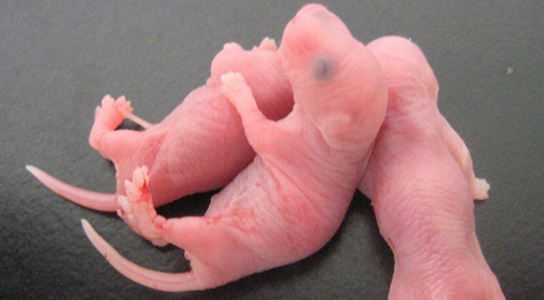
    Baby mice born with viable sperm created from stem cells of mice.

    Japanese scientists have been able to coax mouse stem cells into becoming viable eggs that were able to produce healthy offspring. This will provide a powerful tool to study the basic elements of mammalian development and infertility.

    The researchers published their findings in the journal Science. Scientists have been trying to make sex cells from embryonic stem cells and pluripotent cells for years. Stem-cell scientists have derived many types of cells from stem-cell precursors, but have struggled with sex cells, which have more complex developmental programs because of the way that they divide. Most cells in the body undergo mitosis, in which both sets of chromosomes are copied, but sex cells are produced by meiosis, which results in cells containing only a single copy of each chromosome.
    mice-offspring-stem-cell
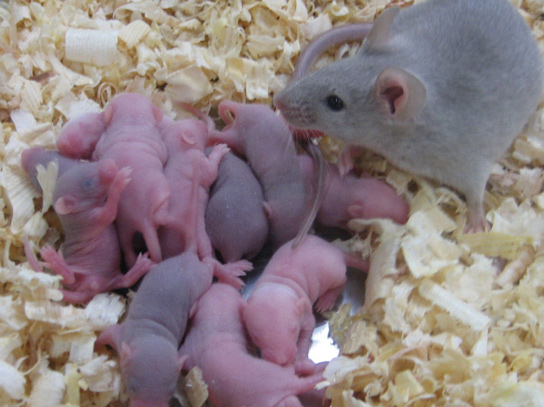
    Mouse pups created using lab-made eggs went on to be fully fertile themselves.

    Last year, the team from Mitinori Saitou’s lab at Kyoto University in Japan, was able to use mouse stem cells to make sperm. Sperm cells are some of the simpler cells in the body, whereas oocytes are much more complex.

    Saitou and his colleagues started with two cell types, mouse embryonic stem cells and induced pluripotent stem cells, which can be derived from adult cells. They used a mixture of signaling molecules to transform the stem cells first into epiblast cells and then into primordial germ cells (PGCs), which are both egg precursors. Male PGCs could be directly injected into infertile mice to mature into sperm; the female version required more coaxing.

    The scientists then isolated embryonic ovary tissue that did not contain sex cells and added their own PGCs to the dish. The mixture spontaneously formed ovary-like structures, which were eventually transplanted into female mice. After four weeks, the PGCs had matured into oocytes. They were fertilized and transplanted into foster mothers and the produced offspring grew up to be fertile themselves.

    PGCs are scarce and difficult to isolate in mice, so researchers know little about their regulation, states Saitou. As PGCs develop into sperm or egg cells, certain genes are silenced in a process called genomic imprinting. Little is known about how it starts or how genes are selected for silencing.

    The exact details of meiosis are also poorly understood, especially in oocytes. Oocytes remain dormant from the point they are formed in the female embryo until the host organism starts ovulating.

    The group is now trying to make PGCs from human cells, which could prove to be difficult because of the difference between human and mice stem cells. There are also practical and ethical implications that will limit the researchers’ ability to obtain human ovary tissue.

    Reference: “Offspring from Oocytes Derived from in Vitro Primordial Germ Cell–like Cells in Mice” by Katsuhiko Hayashi, Sugako Ogushi, Kazuki Kurimoto, So Shimamoto, Hiroshi Ohta and Mitinori Saitou, 4 October 2012, Science.
    DOI: 10.1126/science.1226889

    Never miss a breakthrough: Join the SciTechDaily newsletter.
    Follow us on Google and Google News.

    Developmental Biology Eggs Mice Reproduction Reproductive Biology Stem Cells
    Share. Facebook Twitter Pinterest LinkedIn Email Reddit

    Related Articles

    Cracking the Code of Life: Scientists Reveal How Egg Cells Prepare for Creation

    Scientists Shed New Light on Mysteries Associated With Infertility

    Scientists Discover Genetic Secret of Virgin Birth

    Scientists Grow “Synthetic” Embryo With Brain and Beating Heart – Without Eggs or Sperm

    Scientists Grow “Synthetic” Mouse Embryo – With Brain and Beating Heart – From Stem Cells

    Human Heart Precursor Cells Regenerate Decellularized Mouse Heart

    Steps That Enable Human Stem Cells to Develop Into Egg Cells

    Stem Cells Discovered in Ovaries May Yield More Eggs

    Human Stem Cells Transplanted Into Mouse Brains

    Leave A Reply Cancel Reply

    • Facebook
    • Twitter
    • Pinterest
    • YouTube

    Don't Miss a Discovery

    Subscribe for the Latest in Science & Tech!

    Trending News

    Popular Sugar-Free Sweetener Linked to Liver Disease, Study Warns

    What Is Hantavirus? The Deadly Disease Raising Alarm Worldwide

    Scientists Just Discovered How the Universe Builds Monster Black Holes

    Scientists Unveil New Treatment Strategy That Could Outsmart Cancer

    A Simple Vitamin May Hold the Key to Treating Rare Genetic Diseases

    Scientists Think the Real Fountain of Youth May Be Hiding in Your Gut

    Ravens Don’t Follow Wolves, They Predict Them

    This Common Knee Surgery May Be Doing More Harm Than Good

    Follow SciTechDaily
    • Facebook
    • Twitter
    • YouTube
    • Pinterest
    • Newsletter
    • RSS
    SciTech News
    • Biology News
    • Chemistry News
    • Earth News
    • Health News
    • Physics News
    • Science News
    • Space News
    • Technology News
    Recent Posts
    • A Strange Quantum Effect May Explain One of Biology’s Greatest Mysteries
    • NASA’s Psyche Spacecraft Is About To Fly Shockingly Close to Mars
    • This Mars Rock Refused To Let Go of NASA’s Curiosity Rover
    • James Webb Telescope Reveals the Universe’s Hidden Cosmic Web in Stunning Detail
    • Scientists Build a Living AI Device Using Real Brain Cells
    Copyright © 1998 - 2026 SciTechDaily. All Rights Reserved.
    • Science News
    • About
    • Contact
    • Editorial Board
    • Privacy Policy
    • Terms of Use

    Type above and press Enter to search. Press Esc to cancel.