
Close Menu
    Facebook X (Twitter) Instagram
    SciTechDaily
    • Biology
    • Chemistry
    • Earth
    • Health
    • Physics
    • Science
    • Space
    • Technology
    Facebook X (Twitter) Pinterest YouTube RSS
    SciTechDaily
    Home»Space»Spiral Snapshot Hides an Astronomical Monstrosity
    Space

    Spiral Snapshot Hides an Astronomical Monstrosity

    By ESA/HubbleApril 10, 2022No Comments2 Mins Read
    Facebook Twitter Pinterest Telegram LinkedIn WhatsApp Email Reddit
    Share
    Facebook Twitter LinkedIn Pinterest Telegram Email Reddit
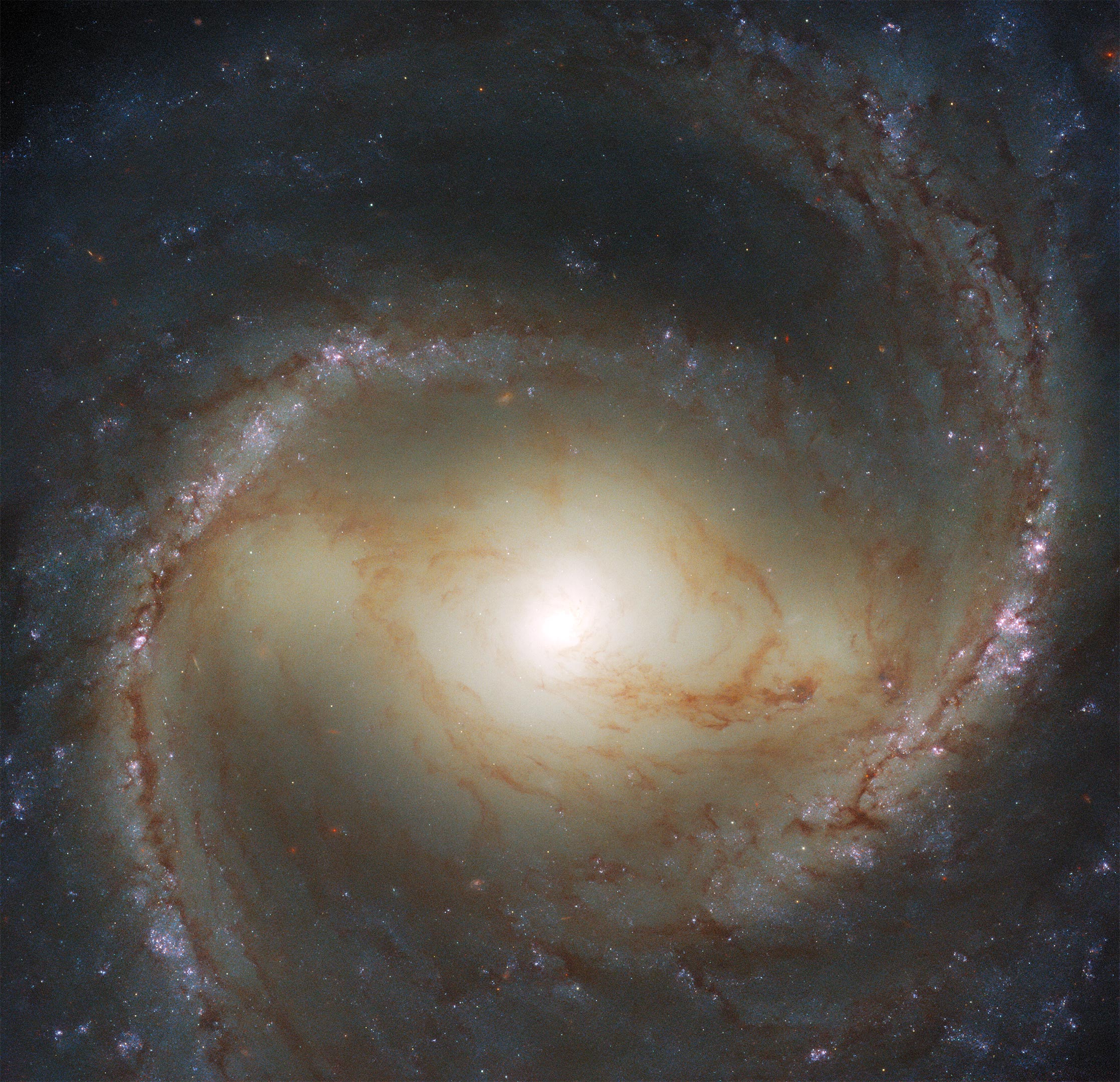
    Spiral Galaxy M91
    Hubble Space Telescope image of spiral galaxy M91. Credit: ESA/Hubble & NASA, J. Lee and the PHANGS-HST Team

    The Hubble Space Telescope’s Wide Field Camera 3 captured a stunning image of the barred spiral galaxy M91, located 55 million light-years away in the constellation Coma Berenices. Hidden within its prominent central bar is a supermassive black hole, estimated to weigh between 9.6 and 38 million times the mass of the Sun.

    The spiral galaxy M91 fills the frame of this Wide Field Camera 3 (WFC3) observation from the Hubble Space Telescope. M91 lies approximately 55 million light-years from Earth in the constellation Coma Berenices and — as is evident in this image — is a barred spiral galaxy. While M91’s prominent bar makes for a spectacular galactic portrait, it also hides an astronomical monstrosity. Like our own galaxy, M91 contains a supermassive black hole at its center. A 2009 study using archival Hubble data found that this central black hole weighs somewhere between 9.6 and 38 million times as much as the Sun.

    While archival NASA/ESA Hubble data allowed astronomers to weigh M91’s central black hole, more recent observations have had other scientific aims. This observation is part of an effort to build a treasure trove of astronomical data exploring the connections between young stars and the clouds of cold gas in which they form. To do this, astronomers used Hubble to obtain ultraviolet and visible observations of galaxies already seen at radio wavelengths by the ground-based Atacama Large Millimeter/submillimeter Array (ALMA).

    Observing time with Hubble is a highly valued, and much sought-after, resource for astronomers. To obtain data from the telescope, astronomers first have to write a proposal detailing what they want to observe and highlighting the scientific importance of their observations. These proposals are then anonymized and judged on their scientific merit by a variety of astronomical experts. This process is incredibly competitive: following Hubble’s latest call for proposals, only around 13% of the proposals were awarded observing time.

    Are you interested in finding out what Hubble is observing right now? You can follow the space telescope’s observations in real time at this link.

    Never miss a breakthrough: Join the SciTechDaily newsletter.
    Follow us on Google and Google News.

    Astronomy Black Hole European Space Agency Hubble Space Telescope NASA Popular
    Share. Facebook Twitter Pinterest LinkedIn Email Reddit

    Related Articles

    OwO What’s This? Astronomers Study Galactic Bulge for Clues to Black Hole Mystery

    Star Torn Apart and Devoured by Ravenous Supermassive Black Hole

    Hubble Views Spiral Galaxy NGC 1097

    Hubble and VLA View Elliptical Galaxy Hercules A

    Hubble Views Abell 2261, An Elliptical Galaxy With an Unusually Large Core

    New XDF Image, The Deepest-Ever View of the Universe

    Hubble Zooms in on the Center of M4

    Hubble Image of Peculiar Galaxy Pair Arp 116

    Researchers Discover First Intermediate-Mass Black Hole

    Leave A Reply Cancel Reply

    • Facebook
    • Twitter
    • Pinterest
    • YouTube

    Don't Miss a Discovery

    Subscribe for the Latest in Science & Tech!

    Trending News

    5 Simple Ways To Remember More and Forget Less

    The Atomic Gap That Could Cost the Semiconductor Industry Billions

    Researchers Finally Solve 50-Year-Old Blood Group Mystery

    Scientists Discover “Molecular Switch” That Fuels Alzheimer’s Brain Inflammation

    Trees Emit Tiny Lightning Flashes During Storms and Scientists Finally Prove It

    Pomegranate Compound Could Help Protect Against Heart Disease

    Your Blood Test Might Already Show Alzheimer’s Risk

    Scientists Were Wrong About This Strange “Rule-Breaking” Particle

    Follow SciTechDaily
    • Facebook
    • Twitter
    • YouTube
    • Pinterest
    • Newsletter
    • RSS
    SciTech News
    • Biology News
    • Chemistry News
    • Earth News
    • Health News
    • Physics News
    • Science News
    • Space News
    • Technology News
    Recent Posts
    • This Strange Quantum “Dance” Could Rewrite Superconductivity
    • Scientists Make Breakthrough in Turning Plastic Trash Into Clean Fuel Using Sunlight
    • Scientists Complete Largest 3D Map of the Universe to Probe Dark Energy
    • Hidden Parasite Found in Popular Portuguese Lake Raises Health Concerns
    • This Simple Trick Can Boost Your Workout Endurance by 20%
    Copyright © 1998 - 2026 SciTechDaily. All Rights Reserved.
    • Science News
    • About
    • Contact
    • Editorial Board
    • Privacy Policy
    • Terms of Use

    Type above and press Enter to search. Press Esc to cancel.