
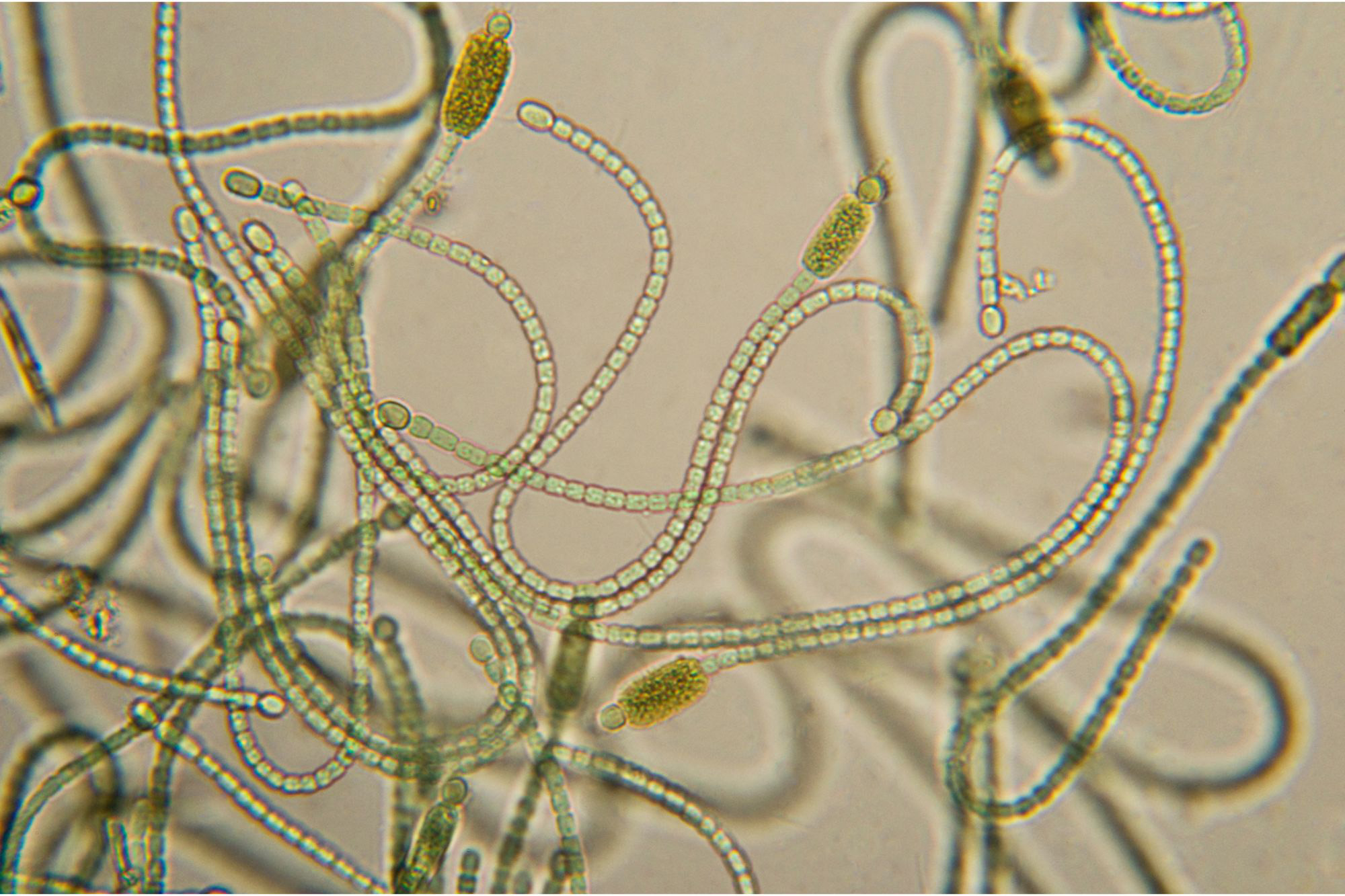
Stanford researchers have identified multiple forms of a ubiquitous enzyme in microbes that flourish in low-oxygen regions along the coasts of Central and South America.
Stanford researchers have discovered a fascinating genetic anomaly in a type of microbe that could significantly influence ocean carbon storage. These microbes, commonly called blue-green algae or cyanobacteria, have two different forms of a ubiquitous enzyme that rarely appear together in the same organism.
“This is one of those great examples of science where you go out looking for one thing, but you end up finding something else that’s even better,” said Anne Dekas, an assistant professor of Earth system science at the Stanford Doerr School of Sustainability and senior author of the Nov. 25 study in Proceedings of the National Academy of Sciences.
Billions of years ago, long before plants arrived on the scene, cyanobacteria invented oxygenic photosynthesis. In the process of producing food from carbon dioxide and sunlight, the widespread microbes released oxygen into the air, making our planet’s atmosphere hospitable to the array of life on Earth today. “Cyanobacteria are arguably the most important life form on Earth,” said Dekas. “They oxygenated the atmosphere of Earth and created a biological revolution.”
Special cyanobacteria
Like plants, cyanobacteria use an enzyme called ribulose bisphosphate carboxylase, or RuBisCo, to convert carbon dioxide into biomass. One of the most abundant proteins in nature, RuBisCo comes in several forms: The most common type, known as form I RuBisCo, often uses a structure called a carboxysome to selectively react with carbon dioxide but not oxygen, allowing photosynthesis to proceed efficiently. Organisms with a less common type of the enzyme, known as form II, lack a carboxysome and can effectively build biomass from carbon dioxide in environments where oxygen is scarce.
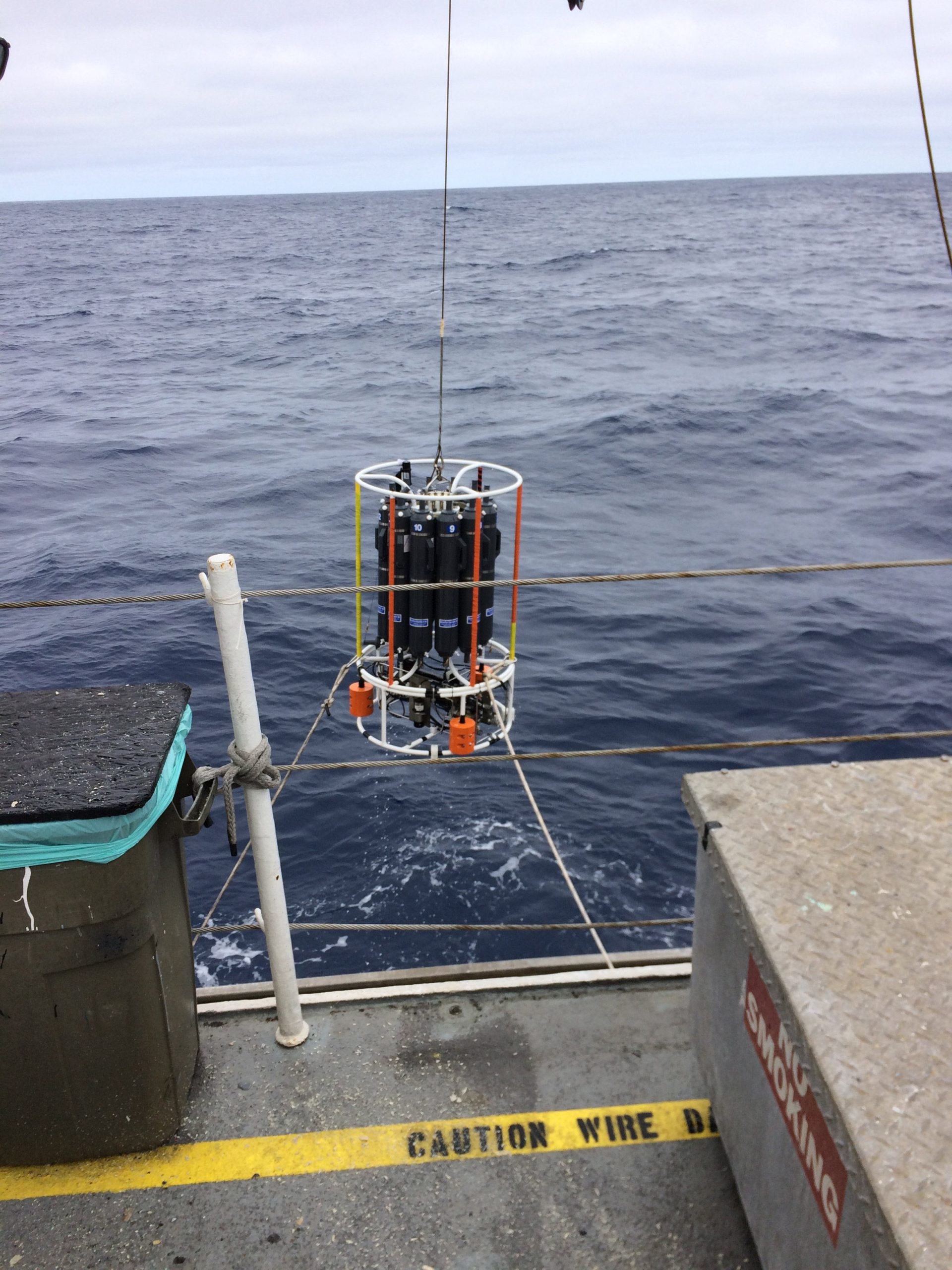
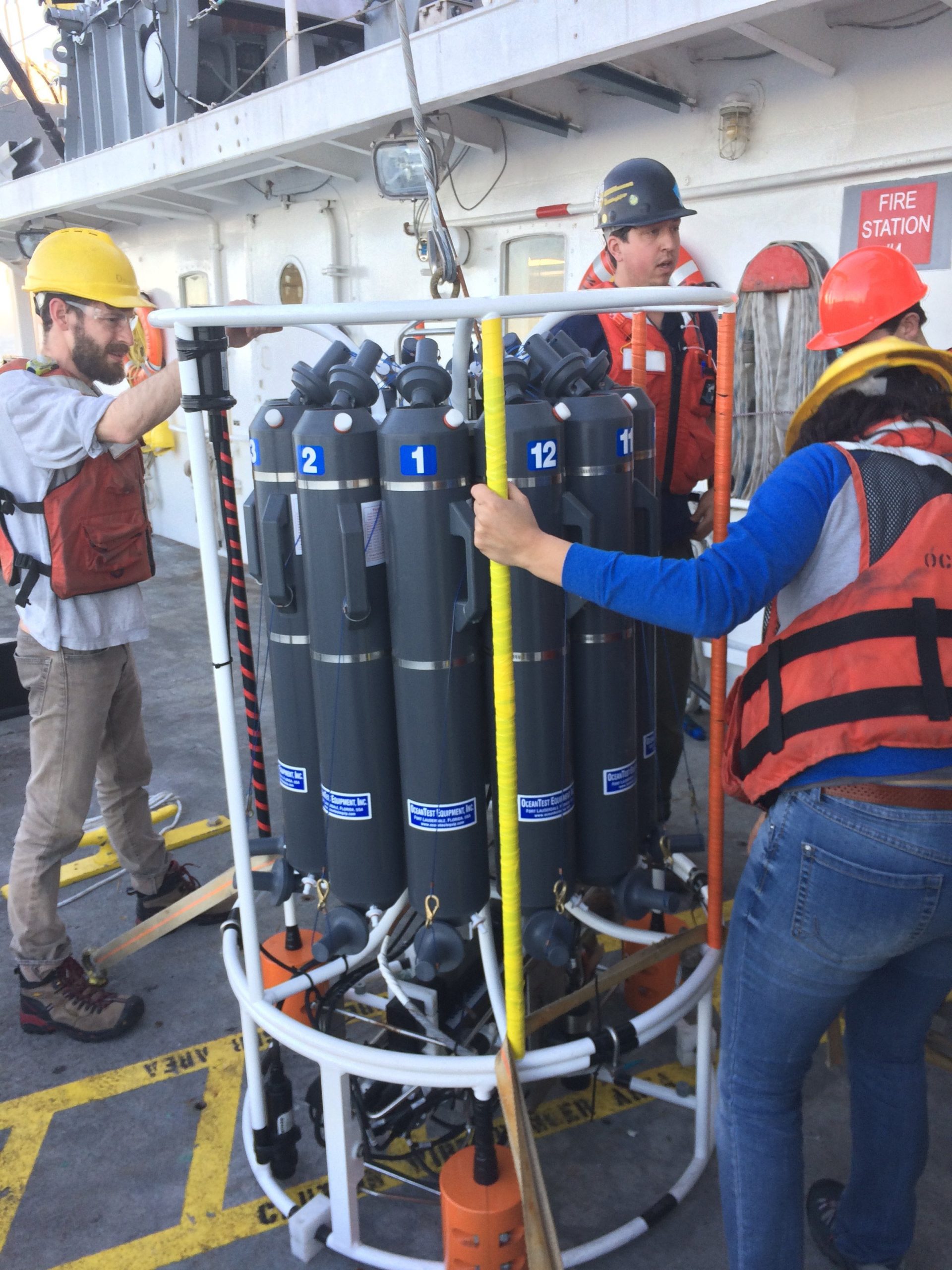
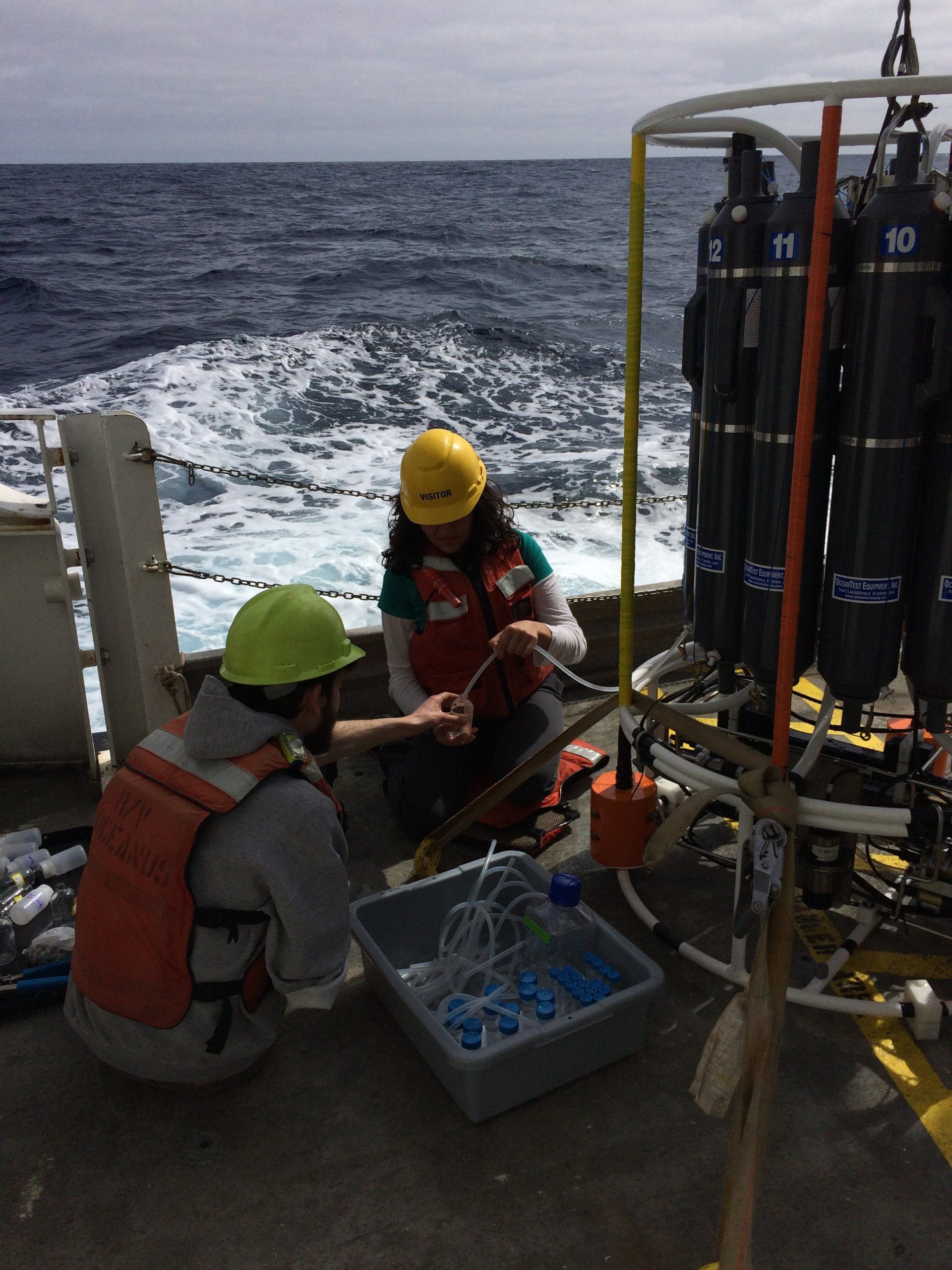
Usually, organisms have only one form of RuBisCo, said lead author Alex Jaffe, a postdoctoral scholar in Earth system science. So he was surprised when he happened upon an exception to that rule while studying carbon fixation in ocean microbes. Jaffe was analyzing DNA from seawater samples collected from deep waters off the coasts of Central and South America when he noticed that some shallow water DNA samples had accidentally slipped in. He discovered that cyanobacteria in these samples seemed to have genes for both RuBisCo forms. “My initial reaction was this is probably wrong,” said Jaffe.
Further research confirmed that both forms of the enzyme were present and actively used for photosynthesis in the cyanobacteria from shallow water, although additional testing will be required to understand how cyanobacteria use the two forms. “By having two versions,” said Jaffe, “it might allow you to remove more carbon dioxide from the water than if you only had one of them, or potentially to do it a little bit more efficiently.”
Efficiency might be key to survival where the samples originated, in an oxygen minimum zone about 50 to 150 meters below the surface, where oxygen and light are both in short supply. “It’s very hard to live there,” said Dekas. “For a photosynthetic organism, when you have low light, you have little energy.”
Carbon storage and extra-efficient crops
The findings could help scientists anticipate how the ocean’s capacity to sequester carbon may shift as climate change expands low-oxygen zones. The revelation that some cyanobacteria have both forms of RuBisCo suggests they may store carbon more efficiently than previously understood and could proliferate along with expanding oxygen minimum zones.
If two RuBisCos are in fact better than one, the finding could also lead to more efficient crop production. For decades, researchers have tried to engineer form I RuBisCo to enable crops that grow more with less fertilizer and water. “We’re looking forward to continuing to think about this with people who work on the plant engineering side to see whether it might yield some fruit, literally and metaphorically,” said Jaffe.
The findings gave Jaffe a new appreciation for life’s ability to adapt to challenging environments. “These genes, despite being central to organisms’ metabolism, can actually be quite flexible and can be reconfigured and shuffled in ways that we didn’t expect,” he said.
Reference: “Cyanobacteria from marine oxygen-deficient zones encode both form I and form II Rubiscos” by Alexander L. Jaffe, Kaitlin Harrison, Renée Z. Wang, Leah J. Taylor-Kearney, Navami Jain, Noam Prywes, Patrick M. Shih, Jodi Young, Gabrielle Rocap and Anne E. Dekas, 25 November 2024, Proceedings of the National Academy of Sciences.
DOI: 10.1073/pnas.2418345121
This research was funded by the Stanford Science Fellows program, the National Science Foundation, and the Simons Foundation.
Never miss a breakthrough: Join the SciTechDaily newsletter.
Follow us on Google and Google News.
1 Comment
The presence of two different Rubisco enzymes with different molecular weight subunits has bern known for a longtime. Jordan and Ogden 1981, Nature, 291, pg 513.