
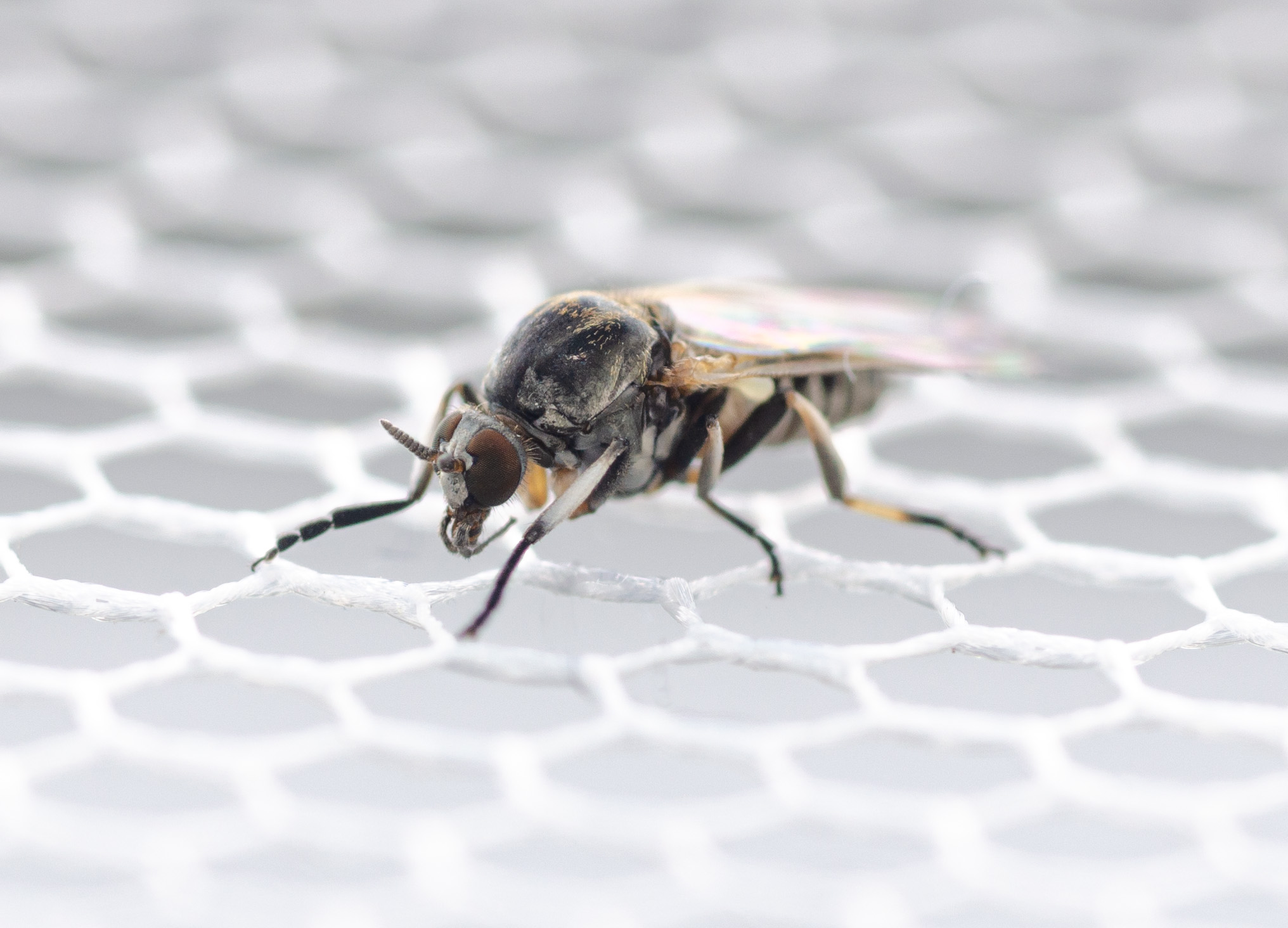
The suitability of habitats for these medically relevant insects has been modeled across four federal states.
At just six millimeters long, black flies (Simuliidae) might seem as harmless as house flies, but their bites can be very unpleasant. Similar to mosquitoes, the females of these insects that are able to fly need a blood meal to produce eggs. Known as “pool feeders,” they use their sharp “teeth” to scratch the skin of the host and then ingest the resulting drop of blood.
“The anticoagulant and anesthetic substances introduced into the wound by mosquitoes can trigger serious allergic reactions or lead to secondary bacterial infections,” states Prof. Dr. Sven Klimpel from the Senckenberg Biodiversity and Climate Research Centre, Goethe University Frankfurt, the LOEWE Centre for Translational Biodiversity Genomics (TBG), and the Fraunhofer IME Giessen.
Klimpel continues: “Black flies are also vector-competent, meaning they are able to transmit pathogens that cause infectious diseases through their bites.” One of the most well-known diseases transmitted by black flies is onchocerciasis, also known as “river blindness,” caused by the nematode Onchocerca volvulus, which is native to Africa. According to the World Health Organization, more than 1.15 million people worldwide have already lost their sight as a result of the disease.
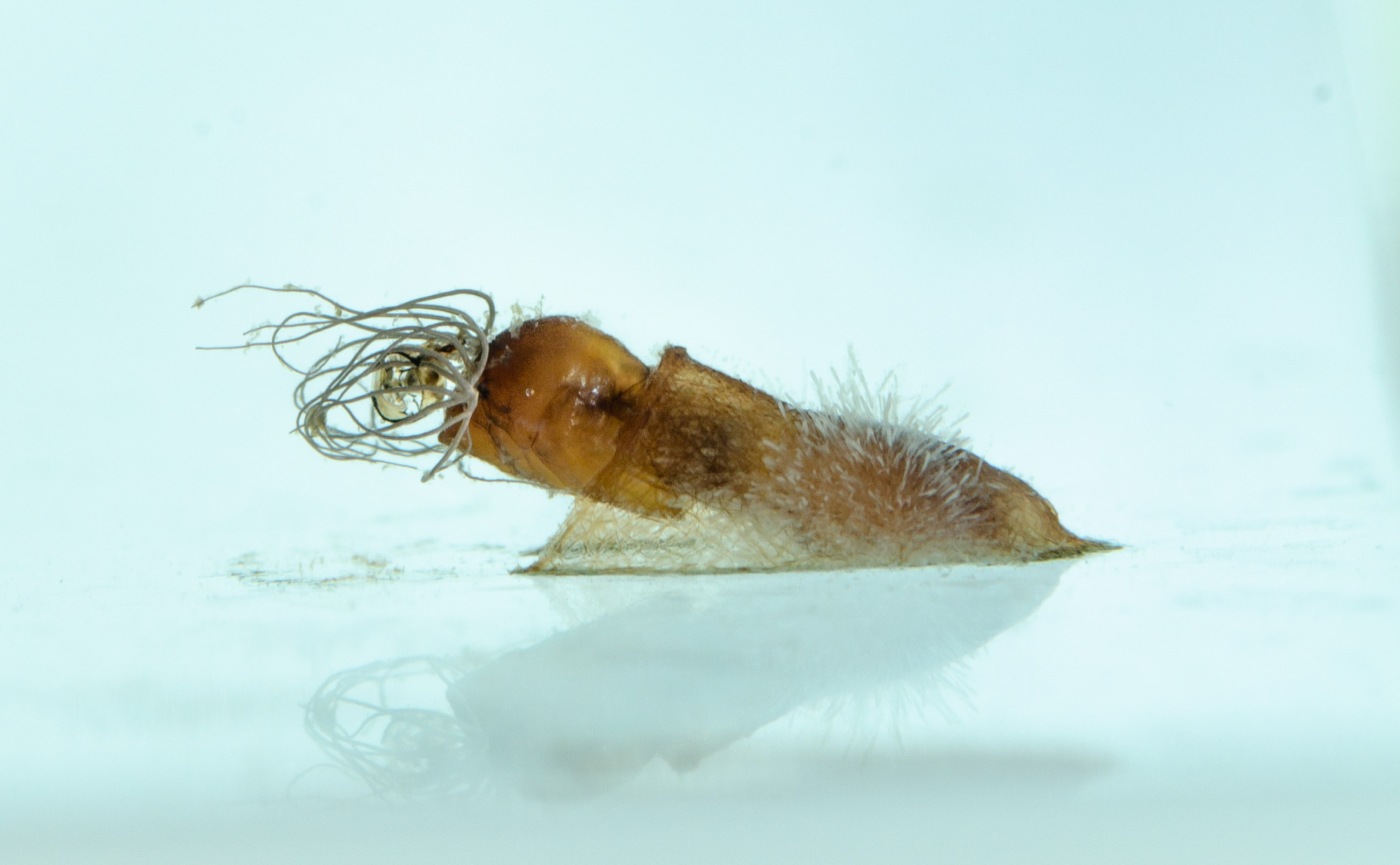
Black flies can be found on all continents except Antarctica. Over 2,000 black fly species are known worldwide, in Germany 57 of them. According to Sarah Cunze, from Goethe University Frankfurt and the first author of the study, almost all black fly species (98%) require a blood meal before laying their eggs. “In our study, we were able to categorize the 12 most common species into three biogeographical groups,” explains Cunze, adding that “these groups are a) montane species living upper reaches of watercourses, b) species with broad niches and thus widely distributed across different landscapes, and c) lowland species.” These results are based on a valid data set comprising 1,526 records of black fly larvae in the four federal states of Hesse, North Rhine-Westphalia, Rhineland-Palatinate and Saxony and provide valuable insights of the distributional patters of these species.
Climate Change and Its Impact on Black Fly Populations
In their study, the researchers deduce different trends in population development for the three groups under the ongoing climate and land-use change: While the montane group is considered to be at risk due to increasing temperatures and growing chemical pollution of water bodies, the other species are characterized by a broad niche or higher tolerance to anthropogenic changes. Consequently, the black fly species of veterinary and human medical relevance, which predominantly belong to the third group, could be promoted by the ongoing anthropogenic change and be subject to positive population trends.
“Medically relevant species are characterized by particularly aggressive biting behavior against mammals and humans and often occur in very high numbers. These observed mass occurrences are the result of synchronized hatching of the aquatic larvae,” explains Cunze. Neighboring countries like Poland have responded to this mass occurrence by keeping livestock only indoors or letting them out to graze only at night during these outbreaks. “The expected future rise in temperature could reduce development times and thus lead to more generations per year – resulting in a more frequent occurrence of black flies overall,” adds Cunze.
In further studies, the team would like to support its findings with empirical research and use laboratory tests to clarify the extent to which the simuliid species are vector-competent, – i.e. capable of transmitting certain pathogens – under the conditions currently prevailing in Europe. “The trends for medically relevant black fly species derived from the findings of our study are an example of how global changes can promote vector-borne infectious diseases. Our modelling approaches and results will help us to structure monitoring and prevention programs for vector-competent species more efficiently and to provide predictions about future developments,” concludes Klimpel.
Reference: “Ecologically and medically important black flies of the genus Simulium: Identification of biogeographical groups according to similar larval niches” by Sarah Cunze, Jonas Jourdan and Sven Klimpel, 28 January 2024, Science of The Total Environment.
DOI: 10.1016/j.scitotenv.2024.170454
Never miss a breakthrough: Join the SciTechDaily newsletter.
Follow us on Google and Google News.