Close Menu
    Facebook X (Twitter) Instagram
    SciTechDaily
    • Biology
    • Chemistry
    • Earth
    • Health
    • Physics
    • Science
    • Space
    • Technology
    Facebook X (Twitter) Pinterest YouTube RSS
    SciTechDaily
    Home»Space»Stellar Devastation on a Massive Scale: Black Holes Destroy Thousands of Stars To Fuel Growth
    Space

    Stellar Devastation on a Massive Scale: Black Holes Destroy Thousands of Stars To Fuel Growth

    By NASA's Chandra X-ray ObservatoryApril 21, 20223 Comments5 Mins Read
    Facebook Twitter Pinterest Telegram LinkedIn WhatsApp Email Reddit
    Share
    Facebook Twitter LinkedIn Pinterest Telegram Email Reddit
    Star Destroying Black Hole
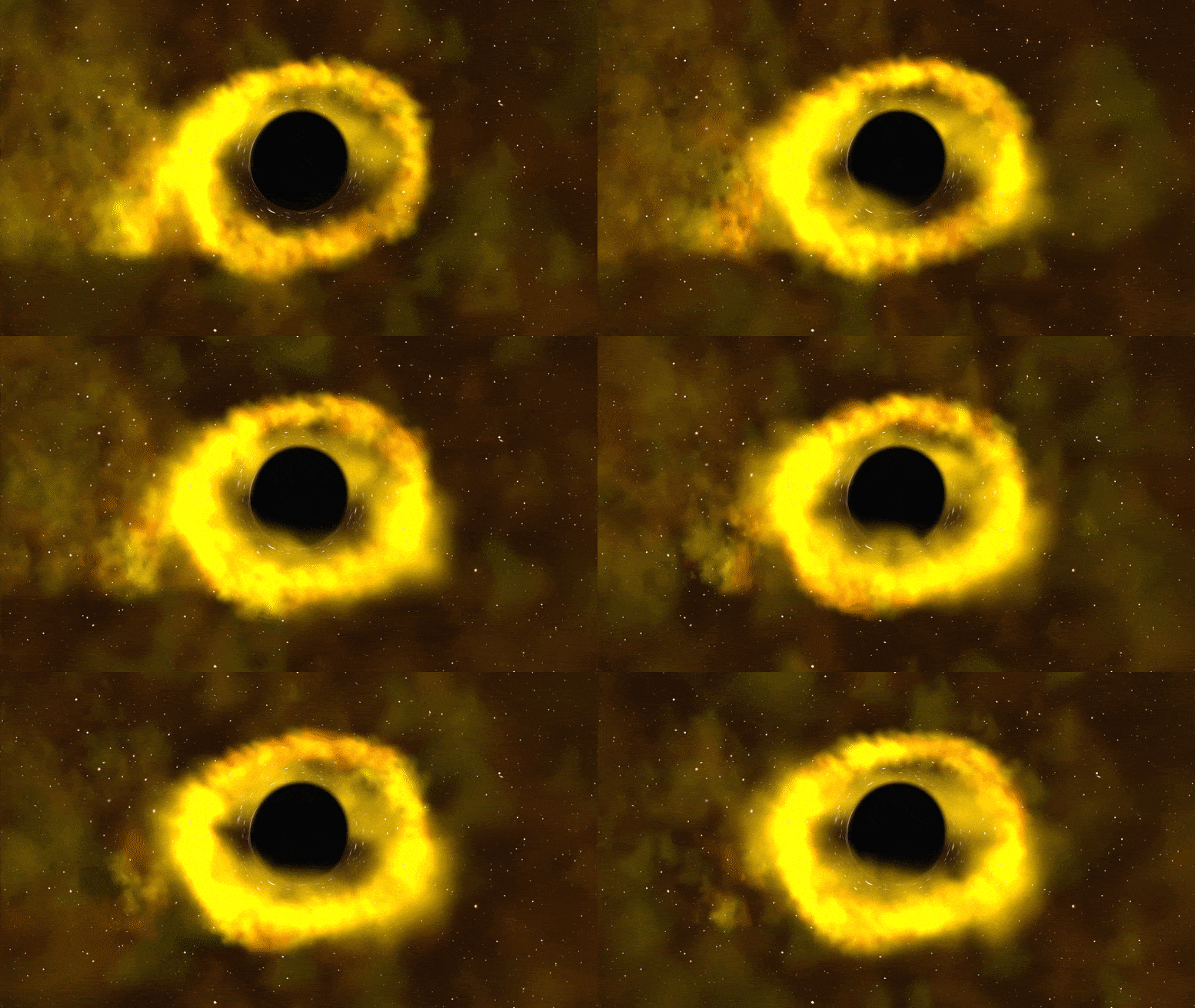
    When a star strays too close to a black hole, intense tides break it apart into a stream of gas. This artist’s animation shows some of these remains surrounding the black hole as a disk of debris. Credit: NASA’s Goddard Space Flight Center
    • Astronomers have found evidence for the destruction of thousands of stars in multiple galaxies, using NASA’s Chandra X-ray Observatory.
    • Growing black holes within dense stellar clusters are thought to be responsible for this large-scale devastation.
    • This process could account for “intermediate mass black holes” through the runaway growth of stellar-mass black holes.
    • The new study involved the observations of over a hundred galaxies with Chandra.

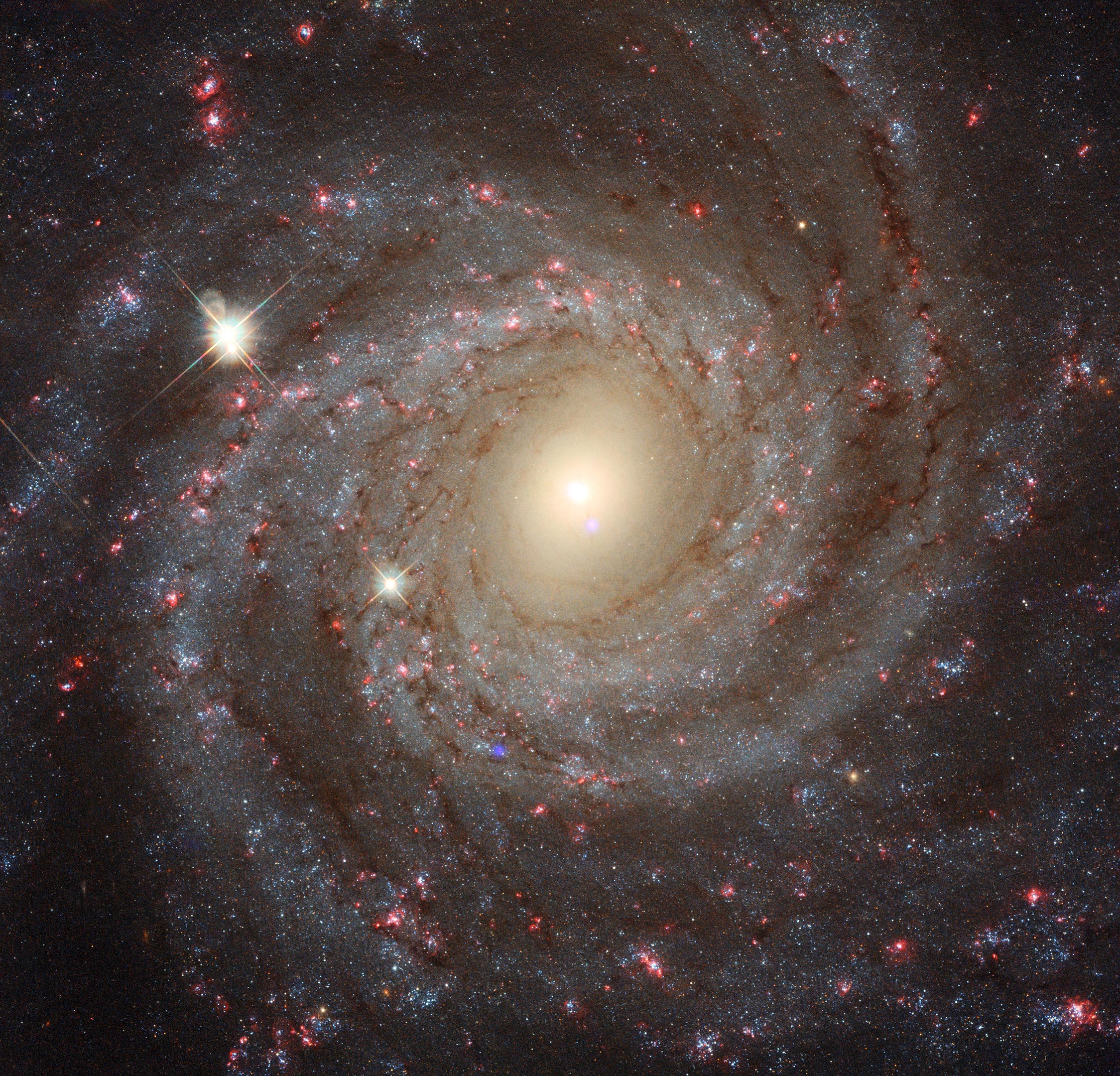
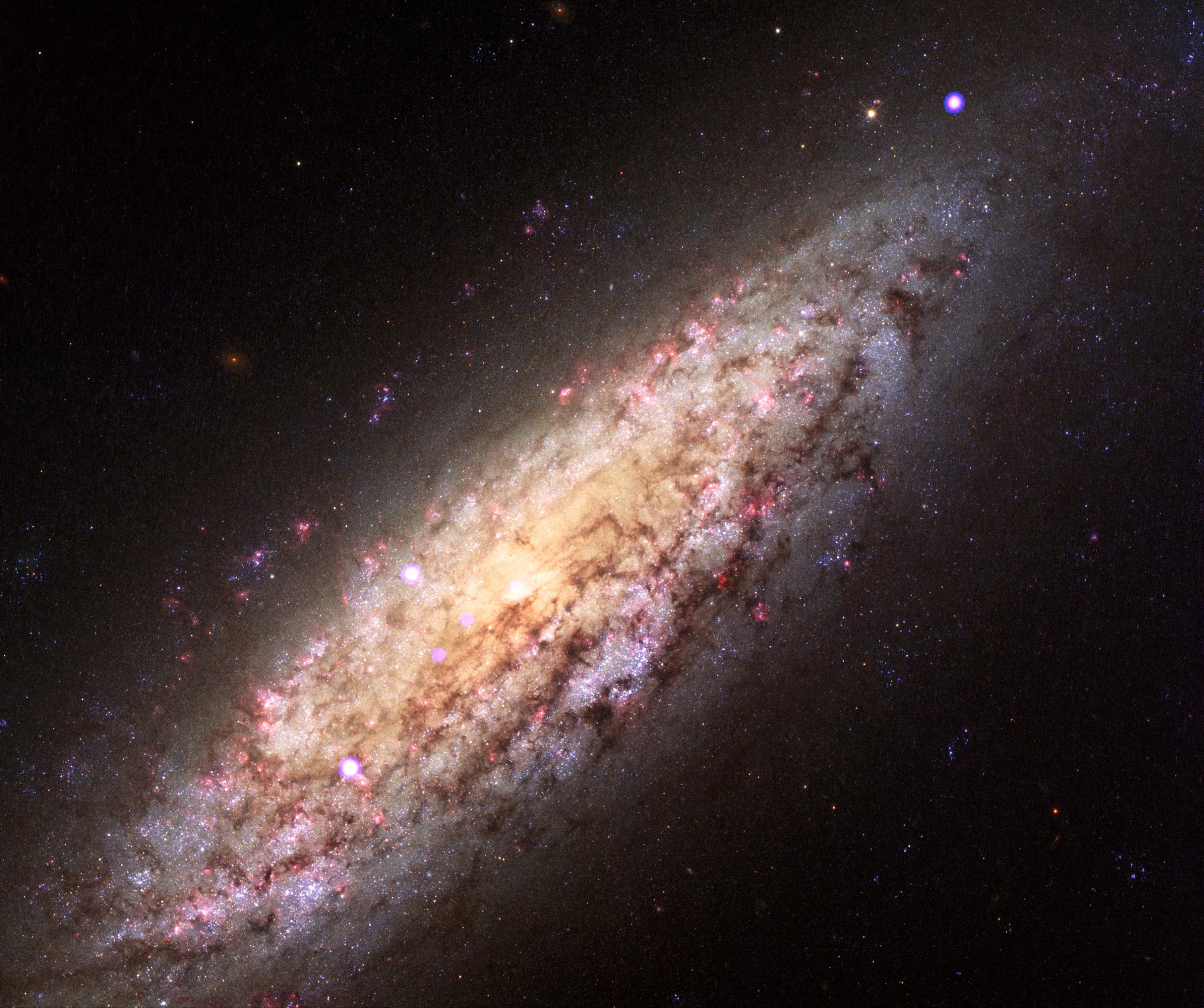
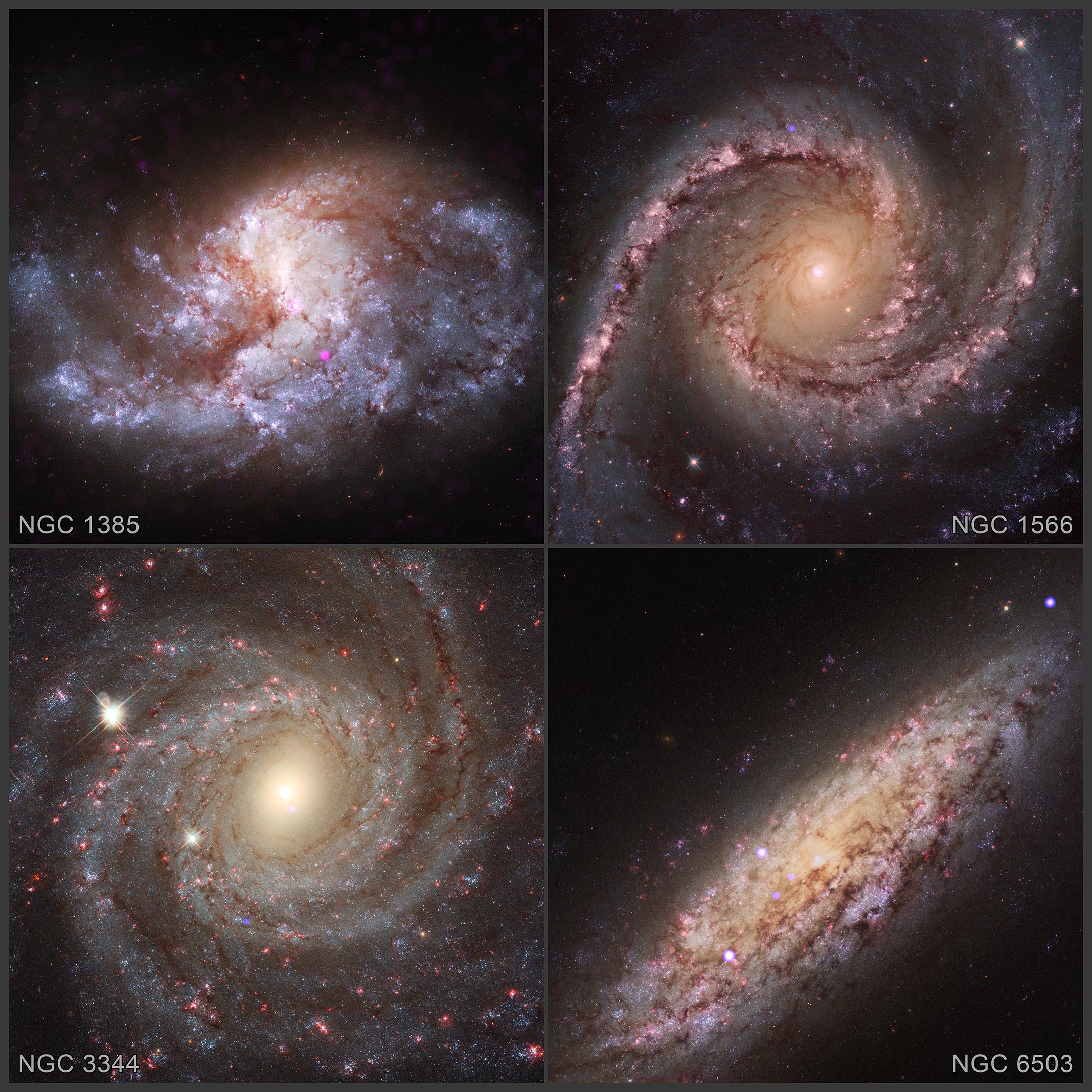
    A new survey of over 100 galaxies by NASA’s Chandra X-ray Observatory has uncovered signs that black holes are demolishing thousands of stars in a quest to pack on weight. The four galaxies shown in the graphic below are among 29 galaxies in the sample that showed evidence for growing black holes near their centers. X-rays from Chandra (blue) have been overlaid on optical images from NASA’s Hubble Space Telescope of the galaxies NGC 1385, NGC 1566, NGC 3344, and NGC 6503. The boxes that appear in the image at the bottom of this article show the location of the burgeoning black holes.
    Black Holes Raze Thousands of Stars to Fuel Growth
    These four galaxies are part of a large survey of more than 100 galaxies conducted by Chandra that looked for evidence of growing black holes. A new study uncovered evidence that stellar-mass black holes in these dense environments are ripping apart multiple stars, and then using their debris to fuel their growth. The Chandra results provide one pathway for the creation of “intermediate mass black holes,” a class that are bigger than the stellar-mass variety but smaller than supermassive black holes. For each of these galaxies, Chandra data are shown with optical images from the Hubble Space Telescope. Credit: X-ray: NASA/CXC/Washington State Univ./V. Baldassare et al.; Optical: NASA/ESA/STScI

    These new results point to a relatively violent path for at least some of these black holes to reach their present size — stellar destruction on a scale that has rarely if ever been seen before.

    Astronomers have made detailed studies of two distinct classes of black holes. The smaller variety are “stellar-mass” black holes that typically weigh 5 to 30 times the mass of the Sun. On the other end of the spectrum are the supermassive black holes that live in the middle of most large galaxies, which weigh millions or even billions of solar masses. In recent years, there has also been evidence that an in-between class called “intermediate-mass black holes” (IMBHs) exists. The new study with Chandra could explain how such IMBHs are made through the runaway growth of stellar-mass black holes.
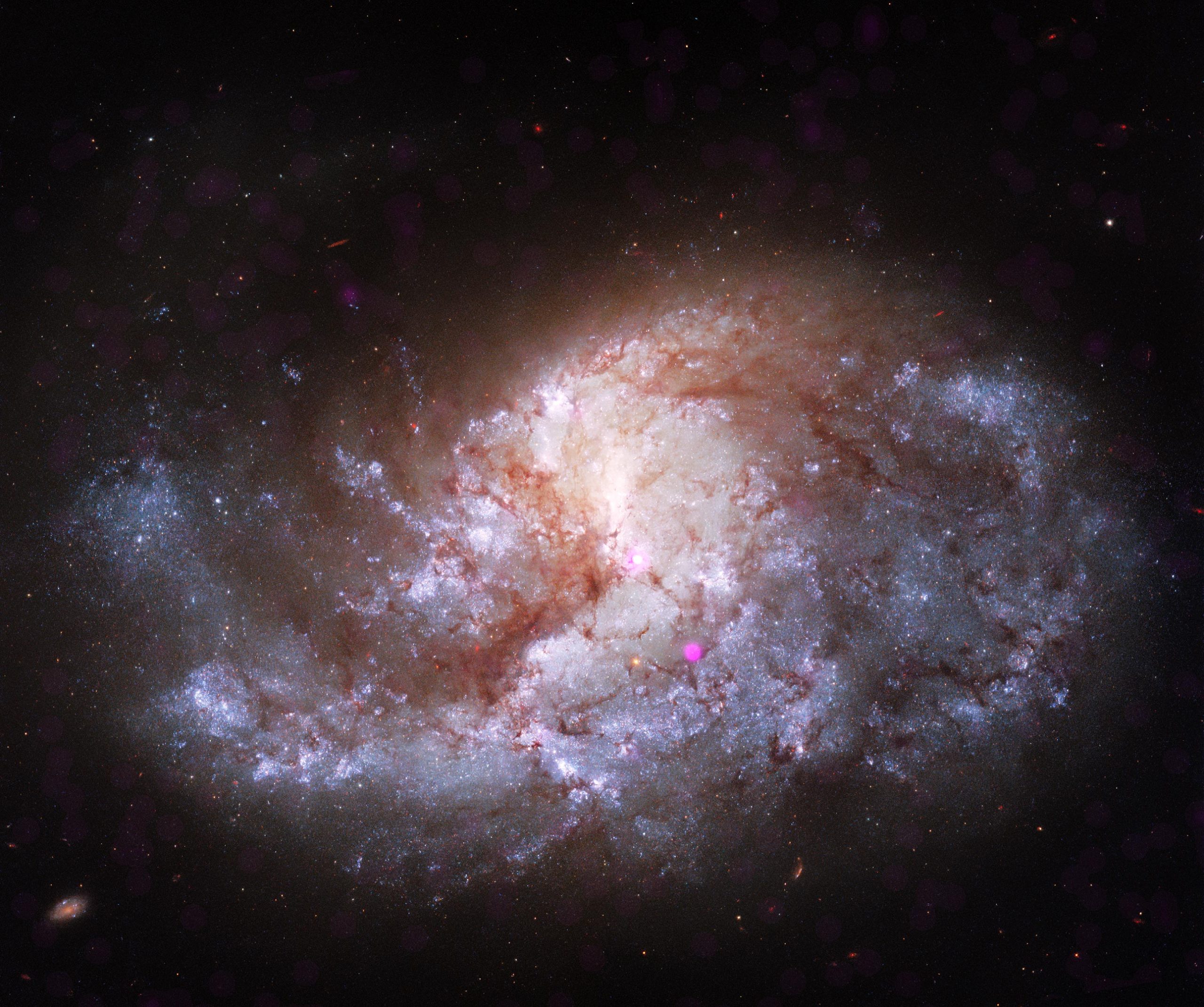
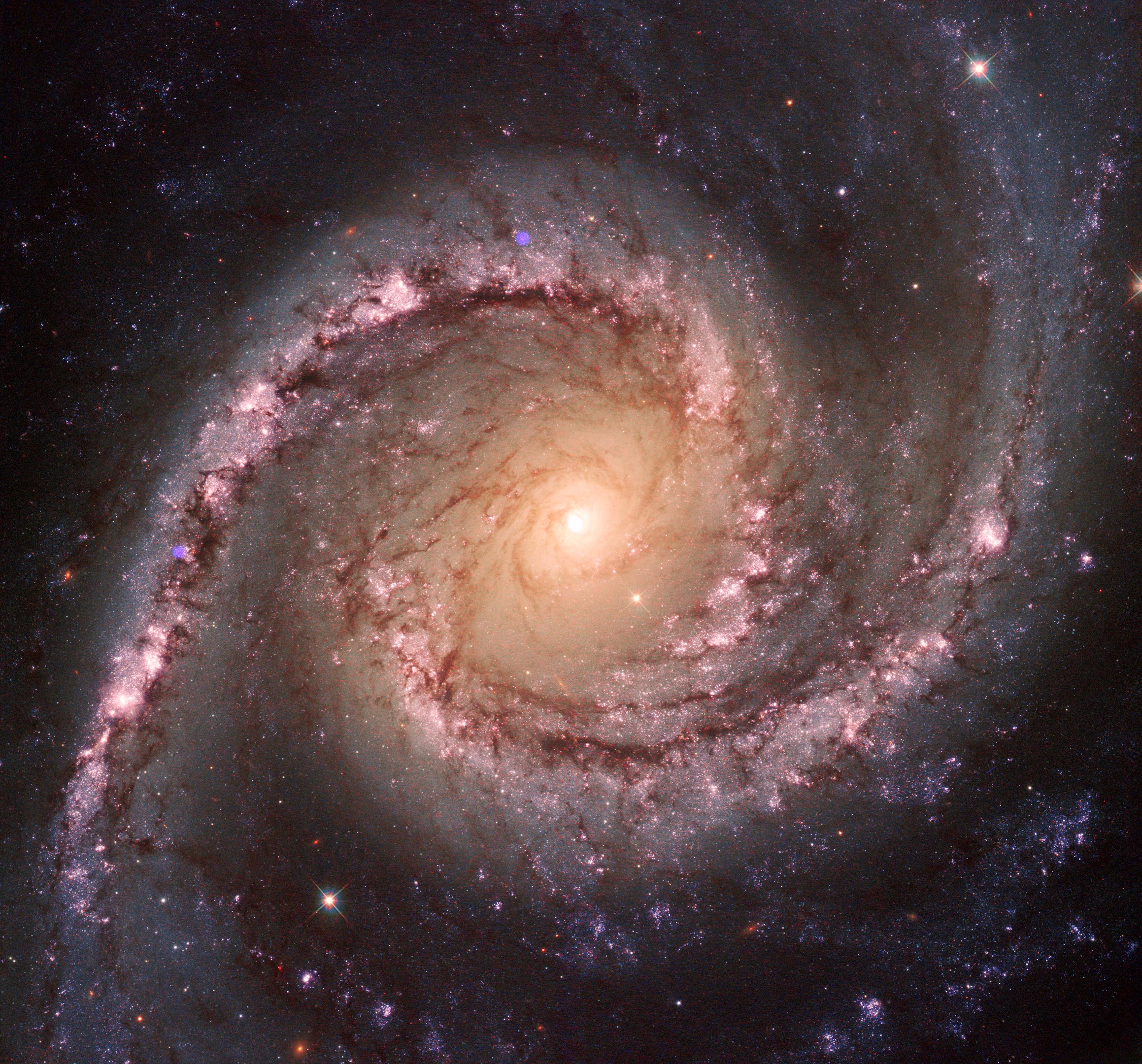
    NGC 1385 Composite
    NGC 1385 Composite. Credit: X-ray: NASA/CXC/Washington State Univ./V. Baldassare et al.; Optical: NASA/ESA/STScI
    NGC 1566 Composite
    NGC 1566 Composite. Credit: X-ray: NASA/CXC/Washington State Univ./V. Baldassare et al.; Optical: NASA/ESA/STScI
    NGC 3344 Composite
    NGC 3344 Composite. Credit: X-ray: NASA/CXC/Washington State Univ./V. Baldassare et al.; Optical: NASA/ESA/STScI
    NGC 6503 Composite
    NGC 6503 Composite. Credit: X-ray: NASA/CXC/Washington State Univ./V. Baldassare et al.; Optical: NASA/ESA/STScI

    One key to making IMBHs may be their environment. This latest research looked at very dense clusters of stars in the centers of galaxies. With stars in such close proximity, many stars will pass within the gravitational pull of black holes in the centers of the clusters. Theoretical work by the team implies that if the density of stars in a cluster — the number packed into a given volume — is above a threshold value, a stellar-mass black hole at the center of the cluster will undergo rapid growth as it pulls in, shreds and ingests the abundant neighboring stars in close proximity.

    Of the clusters in the new Chandra study, the ones with density above this threshold had about twice as many growing black holes as the ones below the density threshold. The density threshold depends also on how quickly the stars in the clusters are moving.

    The process suggested by the latest Chandra study can occur at any time in the universe’s history, implying that intermediate-mass black holes can form billions of years after the Big Bang, right up to the present day.
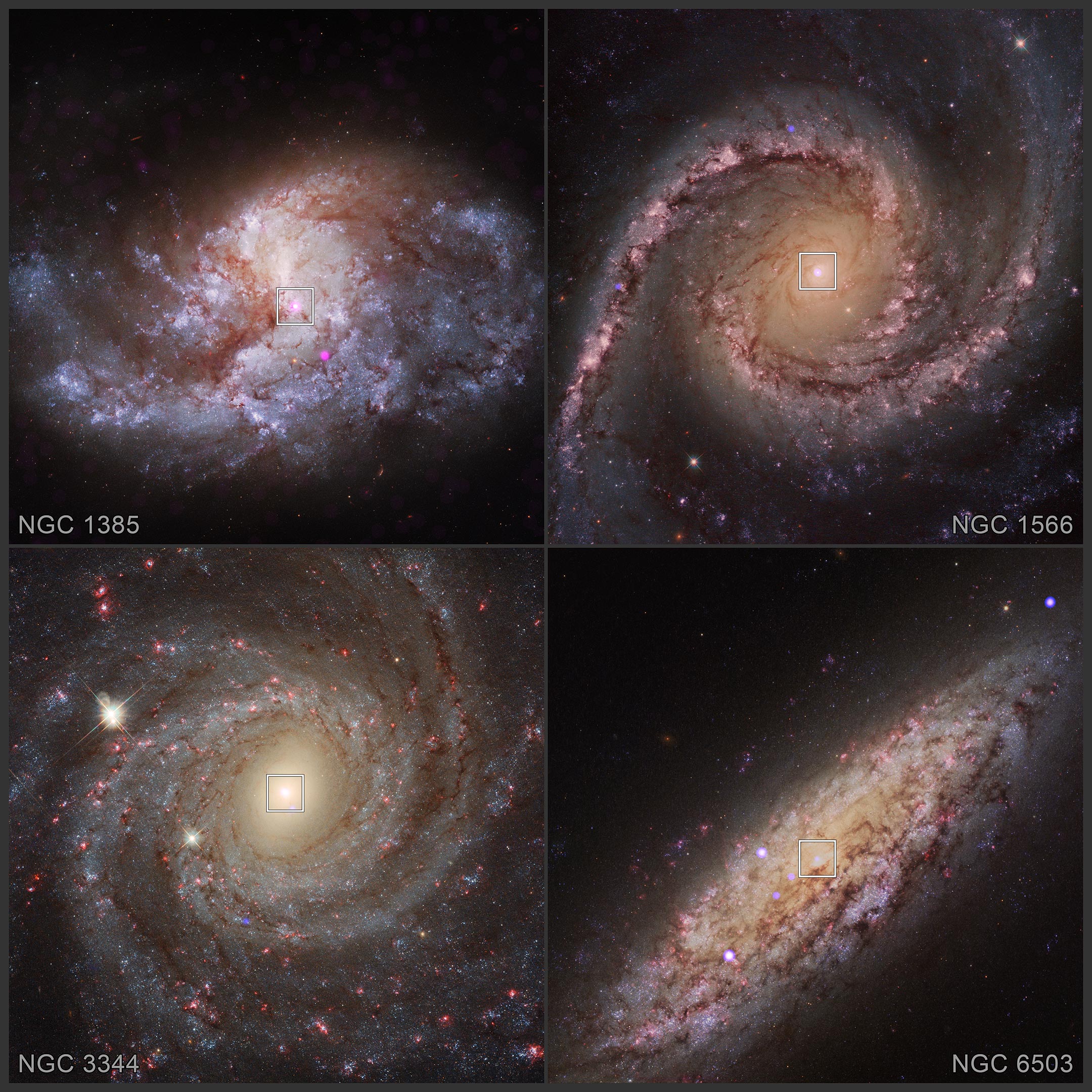
    Black Holes Raze Thousands of Stars to Fuel Growth Labeled
    Credit: X-ray: NASA/CXC/Washington State Univ./V. Baldassare et al.; Optical: NASA/ESA/STScI

    Read Black Holes Devour Thousands of Stars To Fuel Growth, for more on this study.

    A paper describing these results was accepted and appears in The Astrophysical Journal. The authors of the study are Vivienne Baldassare (Washington State University), Nicolas C. Stone (Hebrew University in Jerusalem, Israel), Adi Foord (Stanford University), Elena Gallo (University of Michigan), and Jeremiah Ostriker (Princeton University).

    Reference: “Massive black hole formation in dense stellar environments: Enhanced X-ray detection rates in high velocity dispersion nuclear star clusters” by Vivienne F. Baldassare, Nicholas C. Stone, Adi Foord, Elena Gallo and Jeremiah P. Ostriker, 14 April 2022, The Astrophysical Journal.
    DOI: 10.3847/1538-4357/ac5f51
    arXiv:2203.02517

    NASA’s Marshall Space Flight Center manages the Chandra program. The Smithsonian Astrophysical Observatory’s Chandra X-ray Center controls science operations from Cambridge, Massachusetts, and flight operations from Burlington, Massachusetts.

    Never miss a breakthrough: Join the SciTechDaily newsletter.
    Follow us on Google and Google News.

    Astronomy Astrophysics Black Hole Chandra X-ray Observatory Popular
    Share. Facebook Twitter Pinterest LinkedIn Email Reddit

    Related Articles

    Hear What a Black Hole Sounds Like – New NASA Black Hole Sonifications With a Remix

    Feasting Black Holes Caught in Galactic Spiderweb

    “Mini” Monster Black Hole Discovery May Provide Clues to Astonishing Supermassive Growth

    Astronomers Spy Quartet of Enormous Cavities From Giant Black Holes

    Astronomers Use “X-Ray Magnifying Glass” To Enhance View of Distant Black Holes

    Astronomers Spot Unusual, Enormous Rings Around a Black Hole

    World’s Most Powerful Telescopes Unite in Unprecedented Observations of Famous Black Hole

    Massive X-ray Jet – Extending for 160,000 Light-Years – Spied From Supermassive Black Hole in Early Universe

    Deepening Astronomical Mystery: On the Hunt for a Missing Giant Black Hole

    3 Comments

    1. Me on April 22, 2022 4:38 pm

      This is absolutely outrageous behavior and needs to be stopped immediately!

      Reply
    2. Liz Browne on April 24, 2022 12:22 am

      It would be nice to have a timescale with your video. I am guessing it has a timescale of thousands to millions of years

      Reply
    3. Dean on April 24, 2022 6:15 am

      It appears there are no ” Black Hole ” police anywhere in the universe. Monitoring these rogue bullies.

      Reply
    Leave A Reply Cancel Reply

    • Facebook
    • Twitter
    • Pinterest
    • YouTube

    Don't Miss a Discovery

    Subscribe for the Latest in Science & Tech!

    Trending News

    AI Could Detect Early Signs of Alzheimer’s in Under a Minute – Far Before Traditional Tests

    What if Dark Matter Has Two Forms? Bold New Hypothesis Could Explain a Cosmic Mystery

    This Metal Melts in Your Hand – and Scientists Just Discovered Something Strange

    Beef vs. Chicken: Surprising Results From New Prediabetes Study

    Alzheimer’s Breakthrough: Scientists Discover Key Protein May Prevent Toxic Protein Clumps in the Brain

    Quantum Reality Gets Stranger: Physicists Put a Lump of Metal in Two Places at Once

    Scientists May Have Found the Key to Jupiter and Saturn’s Moon Mystery

    Scientists Uncover Brain Changes That Link Pain to Depression

    Follow SciTechDaily
    • Facebook
    • Twitter
    • YouTube
    • Pinterest
    • Newsletter
    • RSS
    SciTech News
    • Biology News
    • Chemistry News
    • Earth News
    • Health News
    • Physics News
    • Science News
    • Space News
    • Technology News
    Recent Posts
    • A Medieval Japanese Diary Just Helped Scientists Detect a Dangerous Solar Event
    • Humans Returned to Britain 500 Years Earlier Than Scientists Thought
    • 250-Million-Year-Old Egg Solves One of Evolution’s Biggest Mysteries
    • Living With Roommates Might Be Changing Your Gut Microbiome Without You Knowing
    • Simple and Cheap Blood Test Could Detect Cancer and Other Diseases Before Symptoms Appear
    Copyright © 1998 - 2026 SciTechDaily. All Rights Reserved.
    • Science News
    • About
    • Contact
    • Editorial Board
    • Privacy Policy
    • Terms of Use

    Type above and press Enter to search. Press Esc to cancel.