

A recent earthquake in New Jersey displayed unusual seismic activity and shaking patterns, impacting areas much farther than expected. Research indicates it happened on an unmapped fault, challenging existing models of earthquake risk in the region.
On April 5th, 2024, a magnitude 4.8 earthquake struck northern New Jersey’s Tewksbury township, triggering widespread alarm. Although the region occasionally experiences small tremors, this was the largest since 1884, when an earthquake of approximately magnitude 5 struck under the seabed off Brooklyn.
According to existing models, the earthquake should have caused substantial damage at its epicenter, yet it remained largely unscathed. In contrast, relatively distant New York City shook much harder than expected, resulting in minor damages. Outsize shaking extended all the way to Virginia and Maine. A recent study suggests why this happened, challenging existing assumptions about regional earthquake hazards.
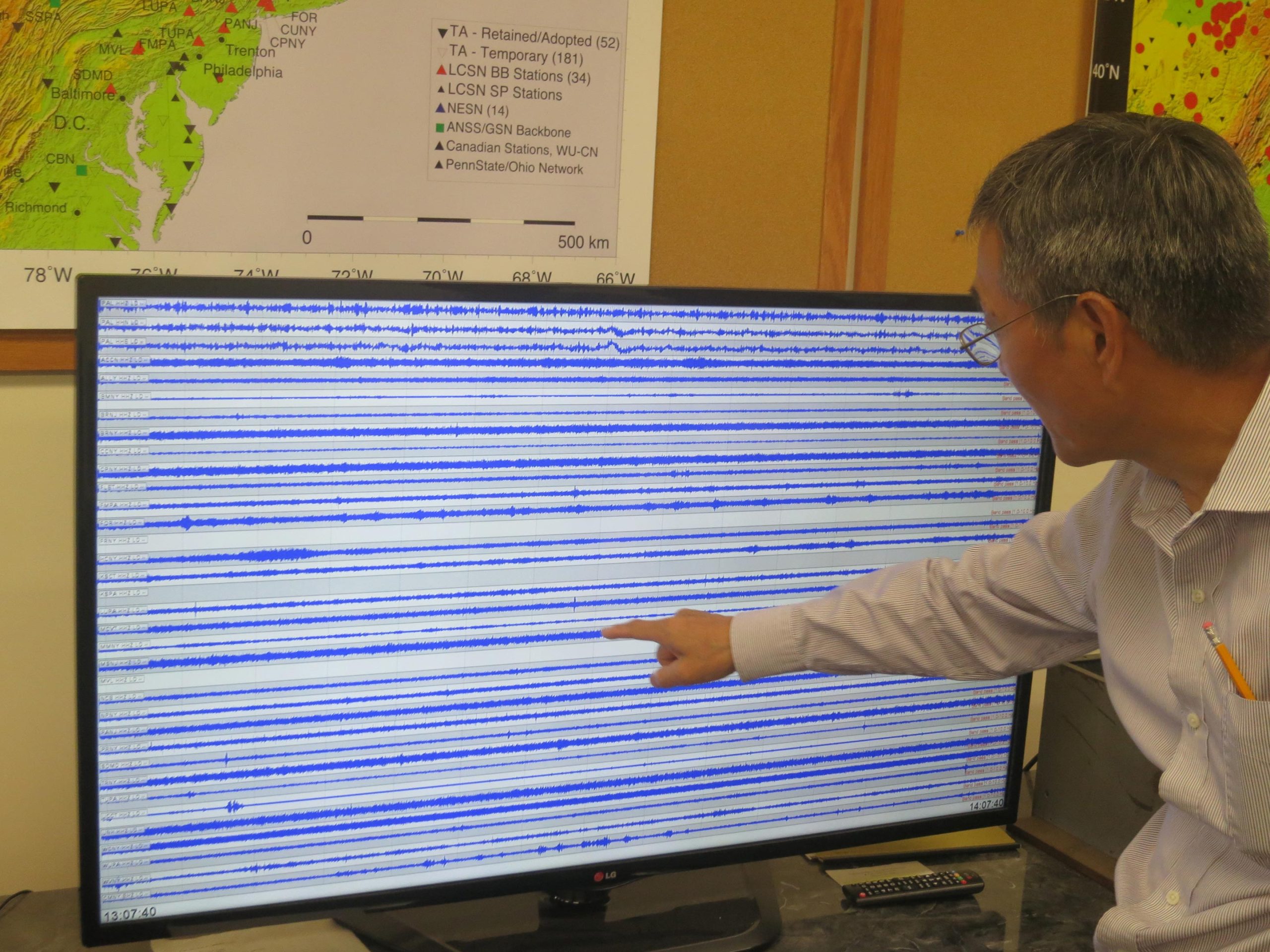
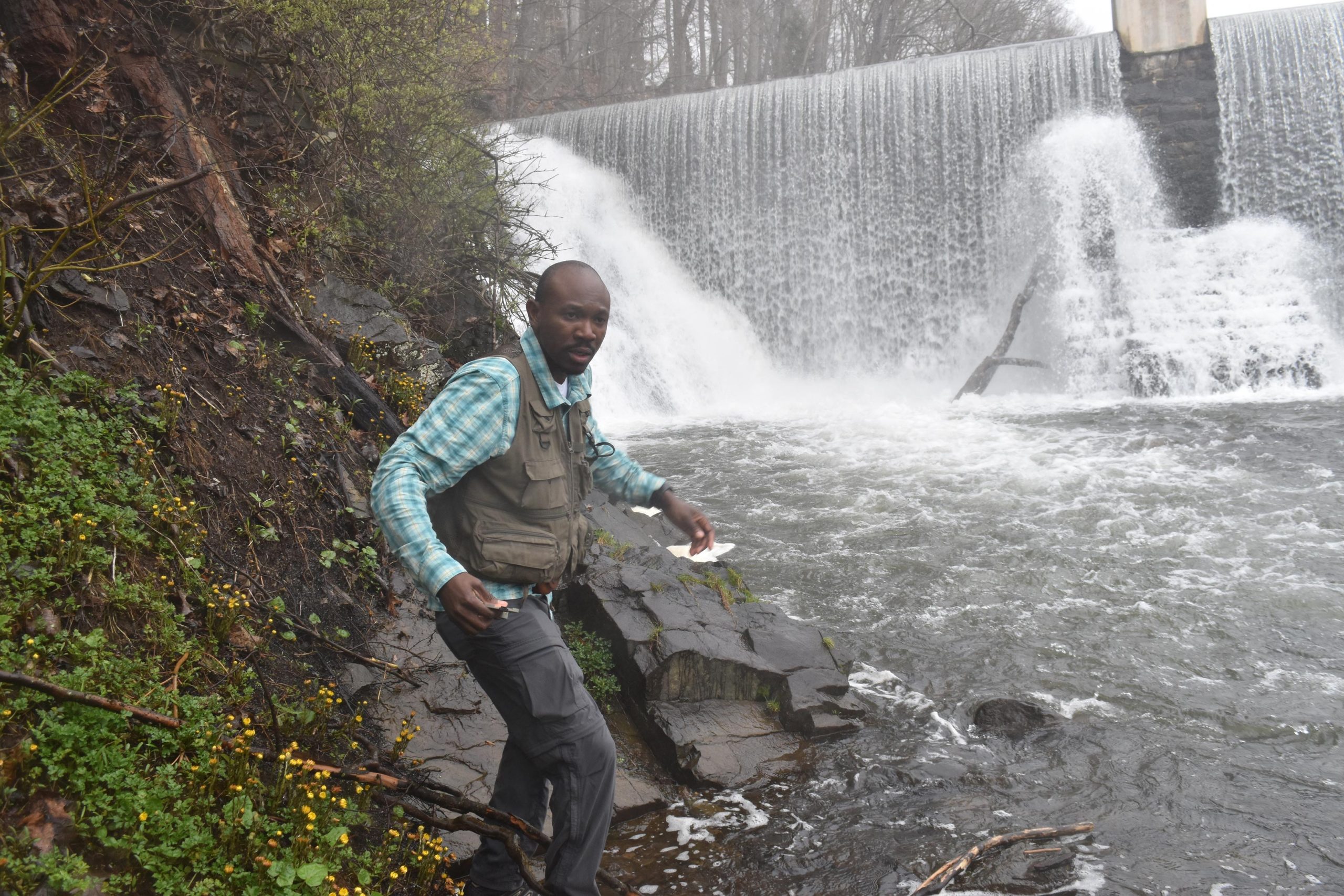
“There was some peculiar behavior,” said study coauthor Won-Young Kim of the Columbia Climate School’s Lamont-Doherty Earth Observatory
While 4.8 is not a major quake in global terms, people in the highly populous U.S. Northeast are not used to anything that big. The U.S. Geological Survey (USGS) estimates it was felt by some 42 million people; a USGS online portal that crowd-sources first-person reports of shaking received nearly 184,000 entries―the most ever from any U.S. quake, according to a companion paper about the event. Both papers were recently published in the journal The Seismic Record.
Surprising Findings at the Epicenter
Hours after the quake, Kim and colleagues headed to the epicenter to survey the situation. “We expected some property damage―chimneys knocked down, walls cracked or plaster fallen, but there were no obvious signs,” said Kim. “We talked to police officers, but they were not very excited about it. Like nothing happened. It was a surprising response for a magnitude 4.8 earthquake.”
The surface motion generated by earthquakes is measured on the Modified Mercalli Intensity Scale. Based on the magnitude, the quake’s depth (a fairly shallow 5 kilometers, or 2.9 miles), and area geology, existing models posit that a 10-kilometer area around the epicenter should have seen intensity VII shaking on this scale, described as “very strong.” Most well-designed and built structures would probably get off without much damage, but others of lesser design or materials could collapse, especially unreinforced masonry walls and chimneys.
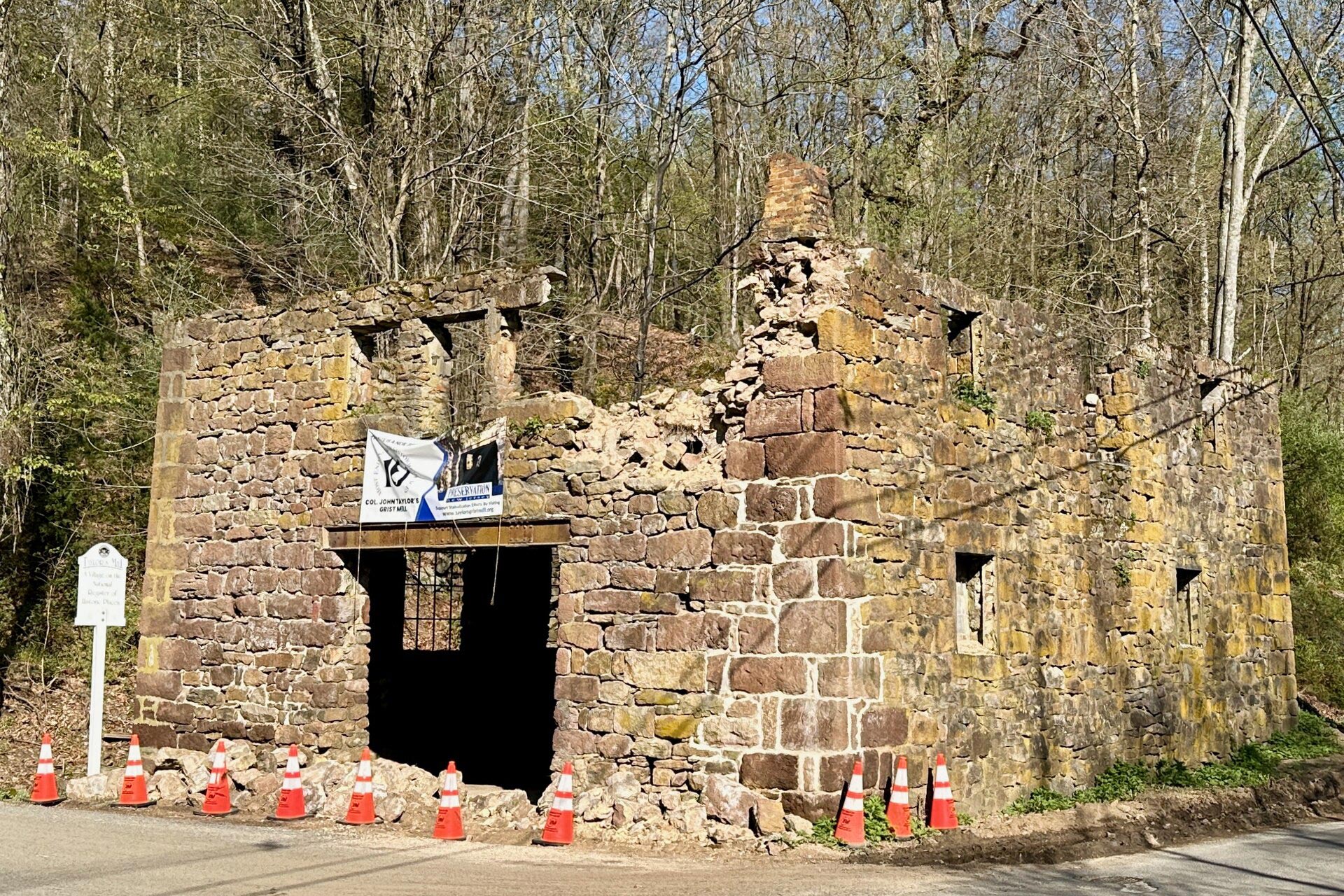
However, no one at or around the epicenter reported intensity VII shaking or anything close to it. Damage was limited to minor cracking in some drywall and a few items knocked off shelves. The only exception: an already crumbling grist mill built in the 1760s of unreinforced stone, and already largely a wreck. About 3.5 miles from the epicenter, part of the mill’s facade toppled.

Assessing Regional Earthquake Patterns
Usually, earthquake shaking fades out in a more or less symmetrical bull’s eye pattern from the source. But that did not happen either; stronger-than-expected shaking extended far out, mainly to the northeast, and to a lesser extent other directions.
In Newark, N.J., some 20 miles from the epicenter, three row houses were partly toppled, and dozens of people had to be evacuated. Residents of New York City, 40 or 50 miles away, reported intensity IV motion, with sustained vibrations of windows, doors, and walls. More than 150 buildings reported minor damage, mainly superficial cracks in masonry.
However, inspectors ordered two Bronx buildings to erect protective sidewalk sheds when cracks appeared in their facades, and a Brooklyn public school had to close its gym for repairs because of vertical step-shaped cracks along an interior wall. Gas and water lines developed leaks as far off as the lower Hudson Valley, and on Long Island, the front of someone’s Jeep slumped into a suddenly opened sinkhole. Even people in parts of New Hampshire, some 280 miles away, reported intensity III shaking, similar to a big truck passing by.
Geological Insights and Fault Analysis
To understand what happened, Kim and colleagues at South Korea’s Seoul National University analyzed so-called Lg waves. These are a type of low-frequency wave of energy that bounces back and forth between the Earth’s surface and the Moho―the boundary between the Earth’s crust and the mantle, which in this area lies about 35 kilometers down. The analysis suggested that the quake occurred on a previously unmapped fault that runs south to north. The fault is not vertical but rather dips eastward into the Earth at about a 45-degree angle.
According to the analysis, the movement was rapid and complex―a circular combination of the two sides of the fault sliding horizontally against each other (known as strike-slip motion) and one side also shoving itself up and over the other (known as a thrust). Once the rupture started, it spread horizontally to the north. Usually much of the energy from such a quake takes the path of least resistance―that is, straight up, to the surface, where pressure on the rock is the least. That is what makes the epicenter the most dangerous place to be.
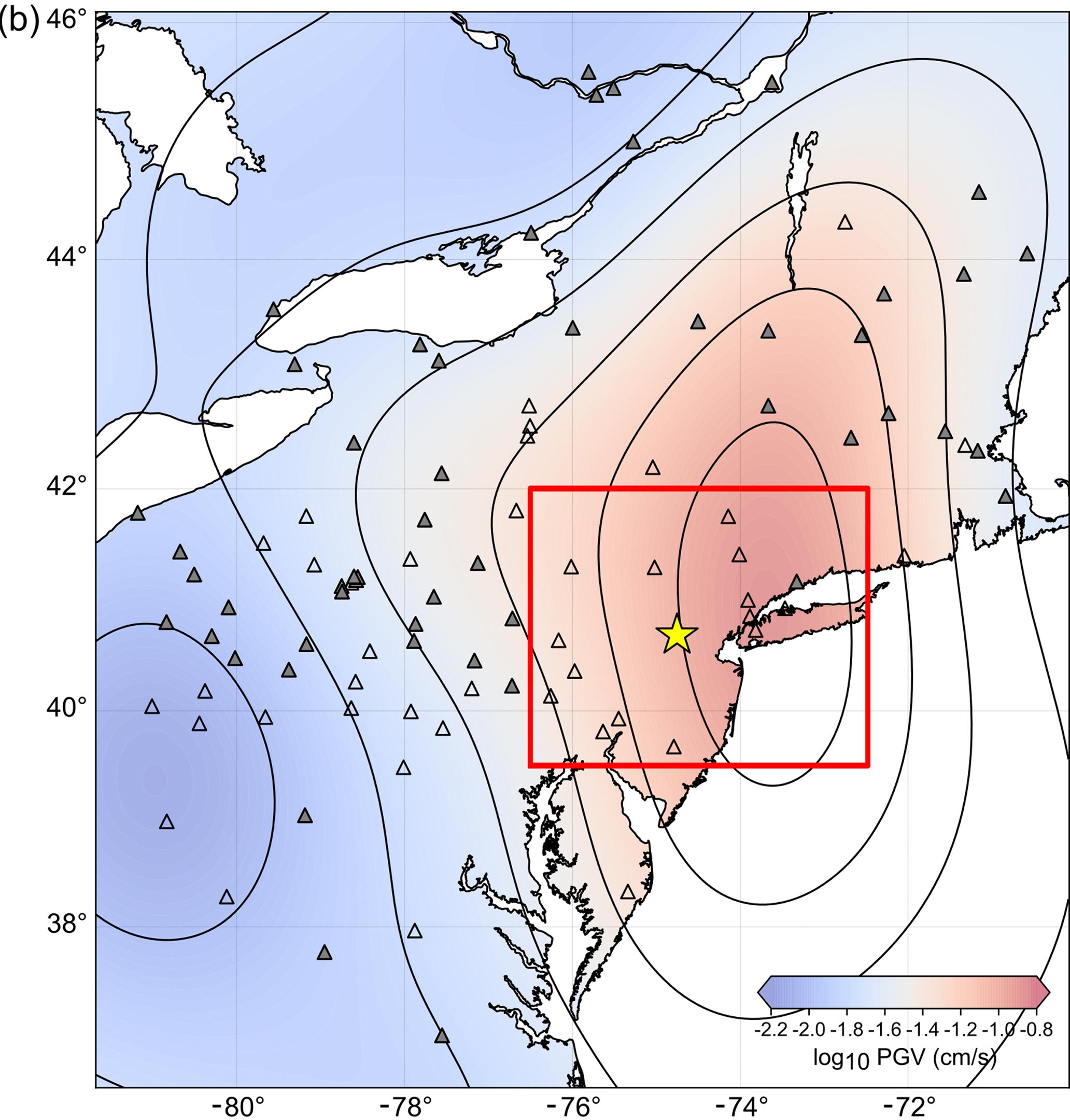
That was not the case here, the researchers say. Instead, much of the energy headed downward, along the fault’s dip, and continued until it hit the Moho. Then it bounced back up, emerging among other places under New York City, which was right in the way. Then the wave bounced back down and re-emerged further away in New England, somewhat weaker, and so on, until it petered out. The long-distance echoes were likely strengthened by the fact that most rocks underlying this region are hard and dense, and conduct energy efficiently, like the ringing of a bell.
Historical Perspective on Seismic Activity
The area from Philadelphia to southwestern Connecticut has seen some 500 known quakes from the 1600s to the present, but many others have almost certainly gone unnoted before modern seismic instruments came along. Most are so faint that few, if any, people feel them, and the vast majority of other quakes have been harmless. However, the threat could be greater than previously thought, according to an earlier paper led by Lamont-Doherty seismologist Lynn Sykes.
Long-Term Seismic Risks Reassessed
These quakes are not caused by ongoing movements of giant tectonic plates like those in much more hazardous places like California. Rather, they emanate from ancient fault zones dating as far back as 200 million years, when what is now Europe tore away from what is now North America, cracking up the subsurface with massive earthquakes. Some of these crumbly zones are still settling and readjusting themselves, and occasionally parts of them move with a jolt.
Based on the short historical record, earthquakes the size of April’s or slightly larger occur roughly every 100 years. But based on the sizes of known faults and other calculations, Sykes et al. have suggested that the area could see a magnitude 6 every 700 years, and a magnitude 7 every 3,400 years. The magnitude scale is exponential, so a magnitude 6 is 10 times more powerful than a 5, while a magnitude 7 is 100 times more powerful than a 5. No one knows if such quakes have occurred in human time or could, but if one did, it would be catastrophic.
Ongoing Research and Future Implications
The April 5 quake has brought about a spurt of new research. In cooperation with the USGS and other researchers, Kim helped place a temporary network of dozens of seismometers near the epicenter to monitor aftershocks, which continued for weeks. These signals are being used to better map various details of the quake and the area’s faults.
Lamont-Doherty structural geologist Folarin Kolawole and colleagues have been mapping numerous bedrock fractures near the epicenter caused by past earthquakes of indeterminate ages. These could well be millions of years old, says Kolawole, but they could also point to current, unmapped zones of weakness lurking below.
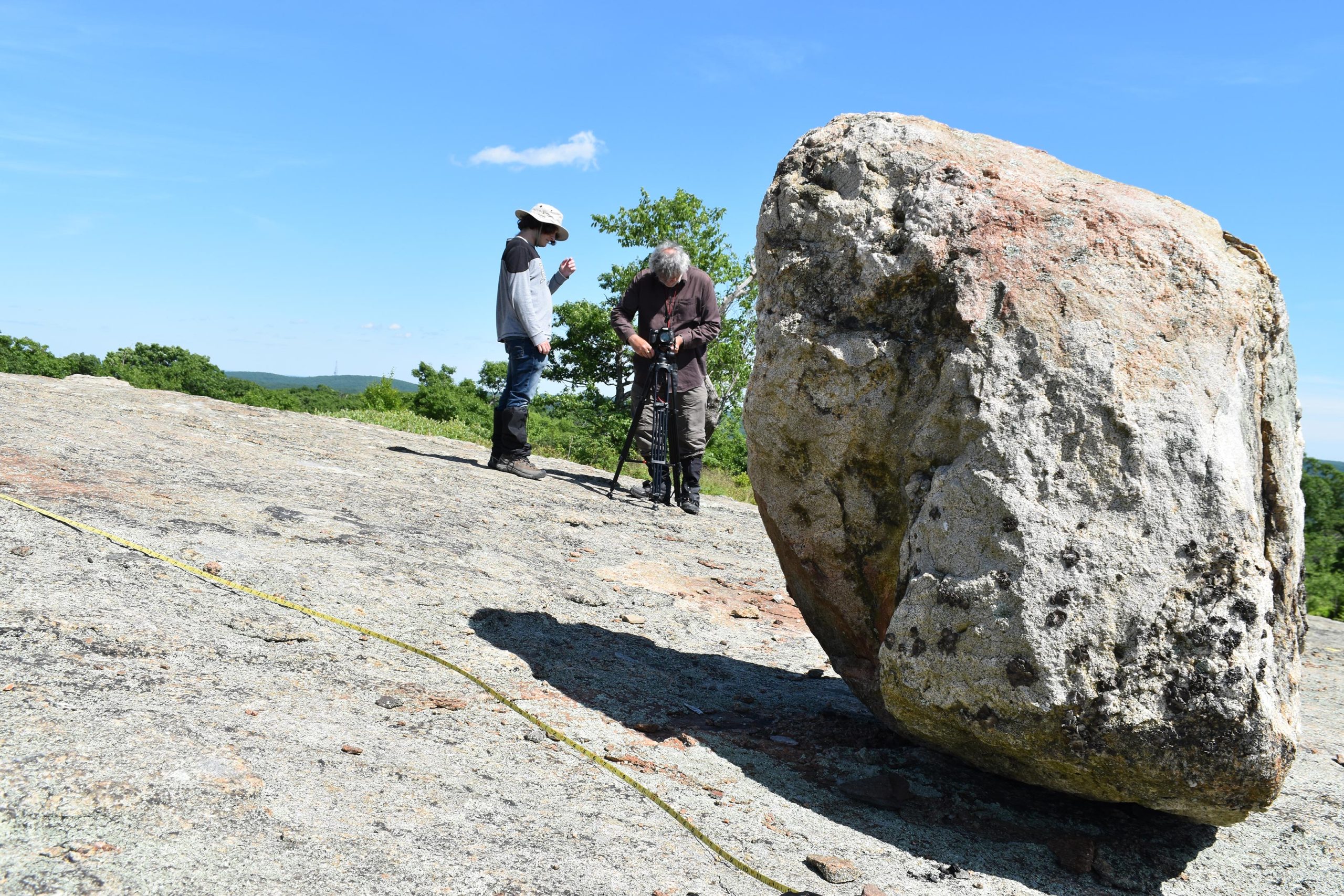
Meanwhile, Lamont-Doherty geologist William Menke is working to document possible prehistoric quakes in the more recent past. New York’s Harriman State Park, just over the border from New Jersey, is littered with giant boulders dropped onto the surface when glaciers from the last ice age melted, some 15,000 to 20,000 years ago. Many are precariously balanced in their original positions. Menke’s hypothesis: if he can calculate the earthquake force that would be required to tip the boulders over, he can rule out an earthquake of that size, at least for that time period.
Kim said the new study suggests the need to re-evaluate how shaking from any future sizable quake may be distributed across the region. “Some that are not even that big could maybe focus energy toward population centers. If [the April] earthquake was just a little stronger, or a little closer to New York City, the effect would be much greater,” he said. “We need to understand this phenomenon and its implications for ground motion prediction.”
Reference: “Rupture Model of the 5 April 2024 Tewksbury, New Jersey, Earthquake Based on Regional Lg‐Wave Data” by Sangwoo Han, Won‐Young Kim, Jun Yong Park, Min‐Seong Seo and YoungHee Kim, 18 September 2024, The Seismic Record.
DOI: 10.1785/0320240020
Never miss a breakthrough: Join the SciTechDaily newsletter.
Follow us on Google and Google News.
8 Comments
No damage? The guy standing next to the waterfall was in my backyard. Approximately $3400 to fix my slate roof. Almost 100 aftershocks sending slate down into the lawn.
I don’t think that your damage was part of any conspiracy. Could it be that maybe it wasn’t reported to the right people and never made it to the USGS? I’m sure there is a lot of damage they might not know about it. That’s why these surveys are done. Sometimes a tremor is just a tremor.
Just shows how much they DON’T tell us.
Sorry that happened to you.
“They” can’t tell us what “they” don’t (yet) know.
That’s a shame, glad no one was hurt. Slate makes for a beautiful, durable historic roof, but it sure is expensive to fix. If it had been normal type shaking with a lot more local damage, repair work tends to take longer and cost even more. Fortunately big shakes are rare so with luck it won’t happen to you again.
I liked the article, but I am glad you posted. It sure doesn’t feel right when your own serious problem gets dismissed by a scientist as ‘no obvious signs”. Your roof damage is damage, even one roof shows there was local impact
I’m upstate and the map shows quake energy radiated up the Hudson valley towards Lake Champlain. wonder if our local ancient faults are fixing to shake next??
Who wrote this? Does he know anything about sentence structure or syntax? It’s one of the most poorly written articles I’ve read in a long time.
The gentleman making remarks about sentence structure should go find something else to complain about.
Could the drone drama be due to us trying to map the new NY/NJ fault line? Could the orbs/plasmoids reported with the drones be precursor to a large earthquake? As in drones trying to map the new found fault line following the path of the earthquake lights?