
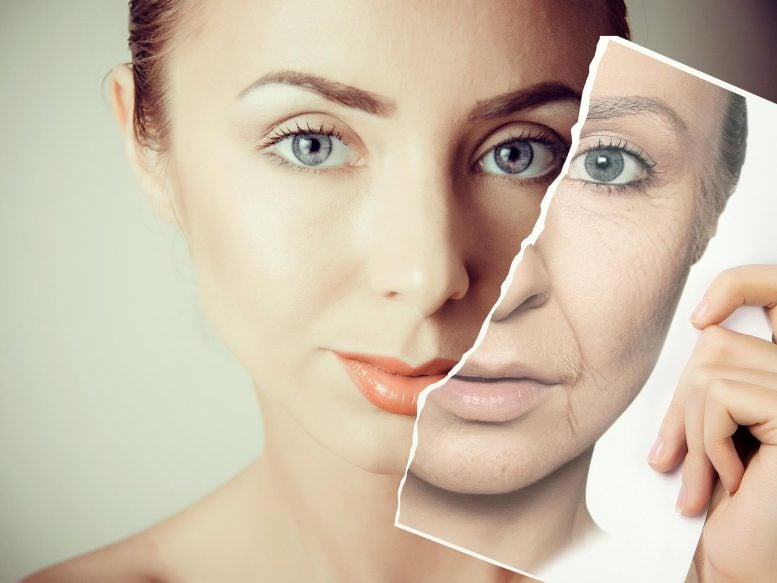
Traumatic life events and everyday stress prematurely weaken body’s mix of immune cells.
It is widely recognized that as people start getting up in the years, their immune system weakens. A stark example is the ongoing COVID-19 pandemic, where the elderly face a much higher mortality rate than the young.
This process of gradual deterioration of the immune system brought on by natural age advancement is called immunosenescence. Yet you may know people that are quite elderly, but in great health, or vice versa, someone who is relatively young, but still prone to infections. What could account for differences in immune system strength in people that are the same age?
Stress — in the form of traumatic events, job strain, everyday stressors, and discrimination — accelerates aging of the immune system, potentially increasing a person’s risk of cancer, cardiovascular disease, and illness from infections such as COVID-19, according to a new University of Southern California (USC) study.
The research, published yesterday (June 13, 2022) in the Proceedings of the National Academy of Sciences, could help explain disparities in age-related health, including the unequal toll of the pandemic, and identify possible points for intervention.
“As the world’s population of older adults increases, understanding disparities in age-related health is essential. Age-related changes in the immune system play a critical role in declining health,” said lead study author Eric Klopack, a postdoctoral scholar in the USC Leonard Davis School of Gerontology. “This study helps clarify mechanisms involved in accelerated immune aging.”
As people age, the immune system naturally begins a dramatic downgrade, a condition called immunosenescence. With advanced age, a person’s immune profile weakens, and includes too many worn-out white blood cells circulating and too few fresh, “naive” white blood cells ready to take on new invaders.
Potential Problems Relating to Stress and the Immune System
Immune aging is associated not only with cancer, but with cardiovascular disease, increased risk of pneumonia, reduced efficacy of vaccines, and organ system aging.
But what accounts for drastic health differences in same-age adults? USC researchers decided to see if they could tease out a connection between lifetime exposure to stress — a known contributor to poor health — and declining vigor in the immune system.
“Age-related changes in the immune system play a critical role in declining health.” Eric Klopack
They queried and cross-referenced enormous data sets from University of Michigan’s Health and Retirement Study, a national longitudinal study of the economic, health, marital, family status, and public and private support systems of older Americans.
To measure exposure to various types of social stress, the researchers analyzed responses from a national sample of 5,744 adults over the age of 50. They answered a questionnaire designed to assess respondents’ experiences with social stress, including stressful life events, chronic stress, everyday discrimination, and lifetime discrimination.
Blood samples from the participants were then analyzed through flow cytometry, a lab technique that counts and classifies blood cells as they pass one by one in a narrow stream in front of a laser.
As expected, people with higher stress scores had older-seeming immune profiles, with lower percentages of fresh disease fighters and higher percentages of worn-out white blood cells. The association between stressful life events and fewer ready-to-respond, or naive, T cells remained strong even after controlling for education, smoking, drinking, BMI, and race or ethnicity.
Some sources of stress may be impossible to control, but the researchers say there may be a workaround.
T-cells — a critical component of immunity — mature in a gland called the thymus, which sits just in front of and above the heart. As people age, the tissue in their thymus shrinks and is replaced by fatty tissue, resulting in reduced production of immune cells. Past research suggests that this process is accelerated by lifestyle factors like poor diet and low exercise, which are both associated with social stress.
“In this study, after statistically controlling for poor diet and low exercise, the connection between stress and accelerated immune aging wasn’t as strong,” said Klopack. “What this means is people who experience more stress tend to have poorer diet and exercise habits, partly explaining why they have more accelerated immune aging.”
Stress and the Immune System: Impact of Diet and Exercise
Improving diet and exercise behaviors in older adults may help offset the immune aging associated with stress.
Additionally, cytomegalovirus (CMV) may be a target for intervention. CMV is a common, usually asymptomatic virus in humans and is known to have a strong effect on accelerating immune aging. Like shingles or cold sores, CMV is dormant most of the time but can flare up, especially when a person is experiencing high stress.
In this study, statistically controlling for CMV positivity also reduced the connection between stress and accelerated immune aging. Therefore, widespread CMV vaccination could be a relatively simple and potentially powerful intervention that could reduce the immune aging effects of stress, the researchers said.
Reference: “Social stressors associated with age-related T lymphocyte percentages in older US adults: Evidence from the US Health and Retirement Study” by Eric T. Klopack, Eileen M. Crimmins, Steve W. Cole, Teresa E. Seeman and Judith E. Carroll, 13 June 2022, Proceedings of the National Academy of Sciences.
DOI: 10.1073/pnas.2202780119
In addition to Klopack, other authors include Eileen Crimmins, a University Professor and the AARP Chair in Gerontology at the USC Leonard Davis School; and Steve Cole and Teresa Seeman of UCLA.
The study was supported by grants from the National Institute on Aging (P30AG017265, U01AG009740).
Never miss a breakthrough: Join the SciTechDaily newsletter.
Follow us on Google and Google News.
3 Comments
In such a crazy misconstrued world, it is nice to see the silver linings of what we could have had- and yet still. Breakthroughs such as this are all keys to unlocking the human potential, and I surmise we’ll see a sincere use case for this once the affects of the current are brought to light.
If stress killed I would have been dead by 45. Trust me. I now lead a nice peaceful life and would recommend everyone take care of themselves because the people who make you crazy will find other people to annoy when you shut them out.
This is a scientific study that throws in “discrimination?” Seriously? Last time I looked, life is stressful. So let’s not fuzz up social research with, discrimination.