
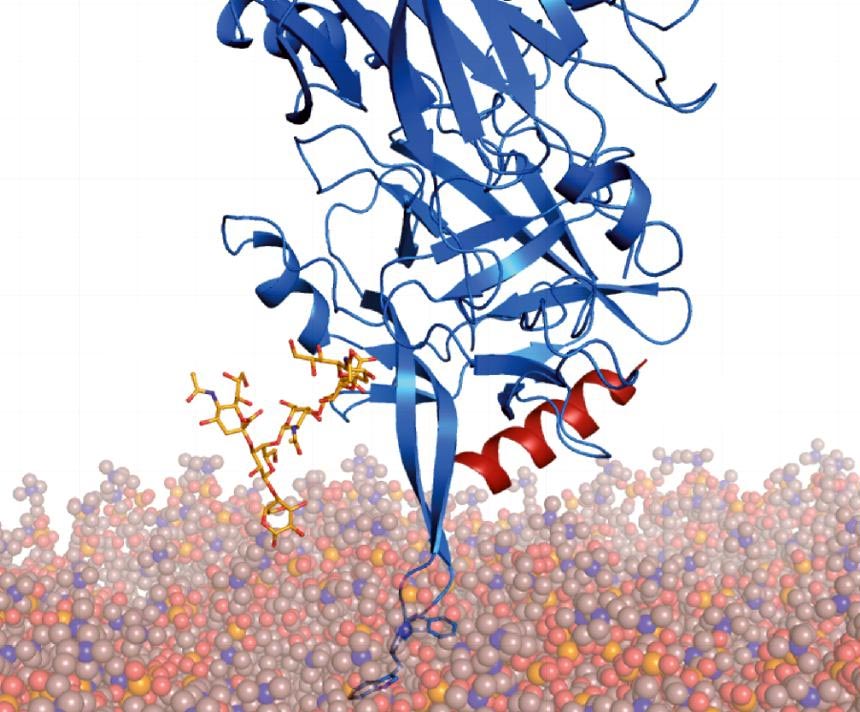
Engineered botox is more potent and safer in animal study using mice.
Botulinum toxin (BoNT) is used for a range of applications from treating chronic pain to reducing the appearance of wrinkles, but when injected it can diffuse into the surrounding tissue and give rise to adverse effects. A new study publishing today (March 17, 2020) in the open-access journal PLOS Biology by Linxiang Yin and Min Dong of Boston Children’s Hospital, USA and colleagues shows that a subtle modification of an FDA-approved form of BoNT enhances binding to the nerve cells and improves the drug’s potency and safety.
Botulinum toxin (BoNT) is produced by the Clostridium botulinum bacterium in seven serotypes, BoNT/A through G. All work in a similar way: after attaching to nerves near their junction with muscles (the neuromuscular junction), a portion of the toxin crosses the nerve’s membrane to prevent the release of neurotransmitter and thereby paralyze the muscle. A commercial form of BoNT/A is approved for the clinical treatment of various forms of muscle overactivity as well as cosmetic reduction of wrinkles, while a commercial form of BoNT/B is approved for a movement disorder called cervical dystonia.
BoNTs have two sites that recognize two separate receptors at the nerve terminal. Previous work has shown that several BoNTs including BoNT/B have an extended loop along the amino acid chain between the two receptor binding sites. Structural modeling suggested that if this loop contains hydrophobic (oily) amino acids it could interact with lipids in the nerve cell membrane, providing a third point of attachment and so increasing binding efficiency. These hydrophobic amino acids are present in the loop of several BoNTs, but not in BoNT/B.
Because potency is increased and adverse effects decreased by stronger binding, the authors investigated whether adding hydrophobic amino acids to this lipid-binding loop in BoNT/B might improve the binding of the toxin to the nerve terminal. They showed that replacing just two amino acids in the loop with hydrophobic tryptophans did, in fact, enhance binding in vitro. They then produced a new BoNT/B containing this mutation plus a pair of mutations that had been previously shown to enhance binding to one of the two BoNT/B receptors, and demonstrated that this engineered toxin was more potent than the approved form of BoNT/B in a standard mouse paralysis assay. In addition, the new toxin caused less reduction in body weight, an effect consistent with a reduction in the diffusion of the toxin away from the injection site.
“Our study shows that the changes introduced into BoNT/B can increase the therapeutic potential of the toxin and reduce adverse effects,” Dong said. “Engineering the botulinum toxins in this way may provide a new avenue for improving safety and clinical benefit from these drugs.”
Reference: “Characterization of a membrane binding loop leads to engineering botulinum neurotoxin B with improved therapeutic efficacy” by Linxiang Yin, Geoffrey Masuyer, Sicai Zhang, Jie Zhang, Shin-Ichiro Miyashita, David Burgin, Laura Lovelock, Shu-Fen Coker, Tian-min Fu, Pål Stenmark and Min Dong, 17 March 2020, PLOS Biology.
DOI: 10.1371/journal.pbio.3000618
This study was partially supported by National Institute of Health (NIH) grants (R01NS080833, R01AI132387, R01AI139087, and R21NS106159 to MD) and sponsored research funding from Ipsen Inc. MD acknowledges the support of the NIH-funded Harvard Digestive Disease Center (P30DK034854), Boston Children’s Hospital Intellectual and Developmental Disabilities Research Center (P30HD18655), and Harvard Center for Glycoscience. MD holds the Investigator in the Pathogenesis of Infectious Disease award from the Burroughs Wellcome Fund. PS acknowledges support from the Swedish Research Council (2014-5667), the Wenner-Gren Foundation, and the Swedish Cancer Society. The funders had no role in study design, data collection and analysis, decision to publish, or preparation of the manuscript.
The authors of this study have the following competing interests: A patent application on enhancing botulinum neurotoxin binding to neurons via modulating LBLs has been filed by Boston Children’s Hospital, with SZ, PS, and MD as inventors. The project was partly funded by an industry-sponsored research grant from Ipsen, and DB, LL, and SC are employees of Ipsen Inc.
Never miss a breakthrough: Join the SciTechDaily newsletter.
Follow us on Google and Google News.
2 Comments
Great post, thanks for sharing !!!
This research may be great news for me as a sufferer of cervical dystonia.