
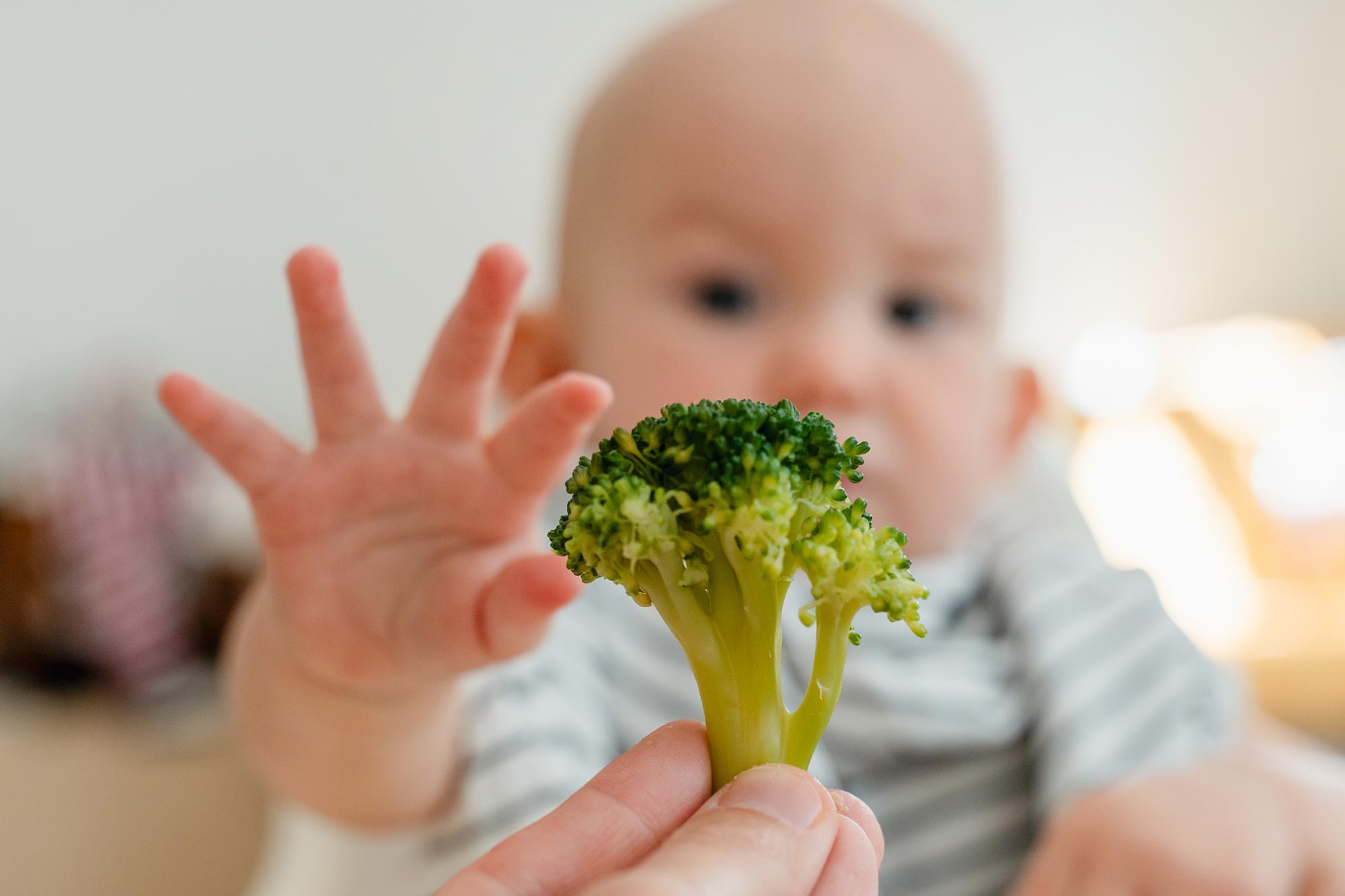
Research on nearly 1.2 million infants shows vegan and vegetarian diets can support normal growth in the first two years of life.
As more families adopt plant-based eating habits, many parents and pediatricians have wondered whether avoiding animal products might affect a baby’s rapid physical development.
A major study led by researchers at Ben Gurion University of the Negev (BGU) in collaboration with the Nutrition Division of the Israeli Ministry of Health offers reassuring evidence. Published in JAMA Network Open, the findings show that by age two, children raised in vegan and vegetarian households grow at nearly the same rate as children who eat omnivorous diets.
To reach these conclusions, the team examined ten years of national health records (2014–2023) collected by the Israeli Ministry of Health, which monitors about 70% of children nationwide. Drawing on this large-scale dataset, the researchers, led by Kerem Avital, MPH, and Prof. Danit R. Shahar, PhD, of BGU, were able to move beyond small studies and provide evidence based on an entire population.
Population-Level Data From Israel
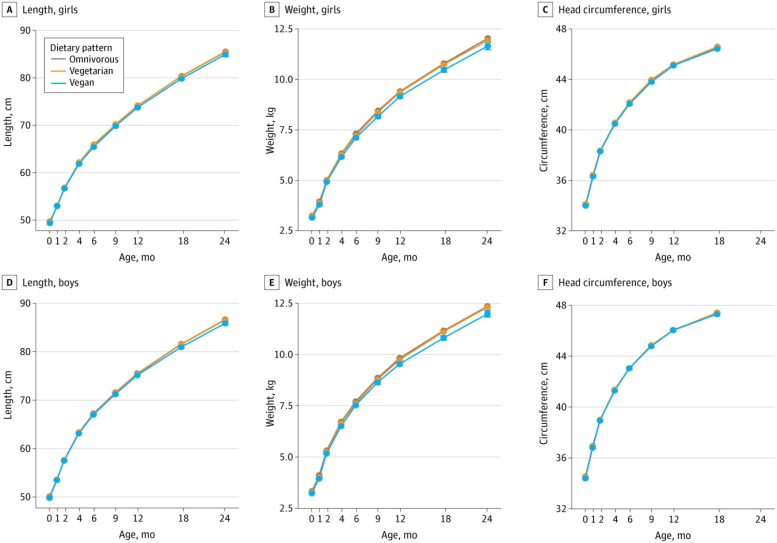
The analysis highlighted several important patterns in early childhood growth. Across measures such as weight, length, and head circumference, infants from vegan families developed in close alignment with their omnivorous peers. Average differences were small and not considered clinically meaningful (WHO z-score < 0.2), and they became even smaller after accounting for birth weight.
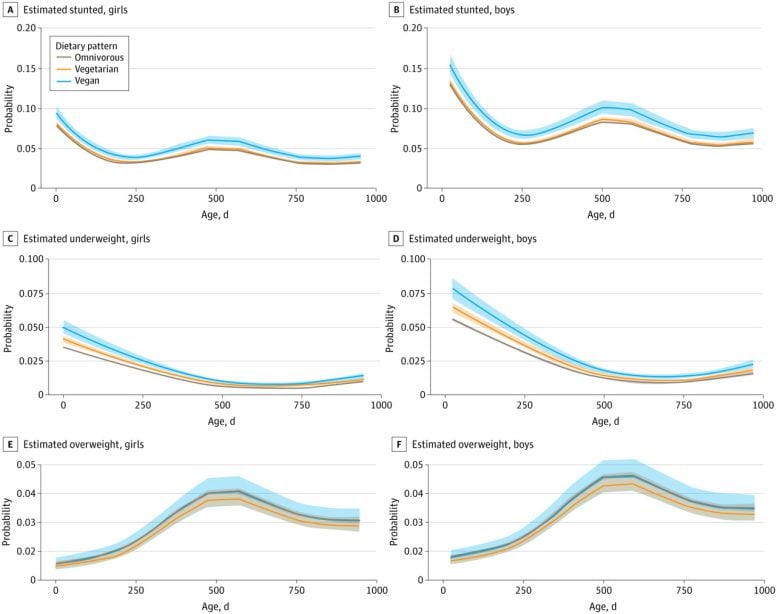
During the first 60 days of life, babies in vegan households were somewhat more likely to be underweight (adjusted odds ratio 1.37). However, this gap narrowed over time and was no longer statistically significant by 24 months.
Early Weight Differences Fade by Age Two
By the age of two, stunting rates were low in every dietary group, measured at 3.1% among omnivores, 3.4% among vegetarians, and 3.9% among vegans. Researchers found no statistically significant differences in the likelihood of stunting between the groups. They also stressed that careful dietary planning and access to nutritional counseling during pregnancy and infancy are essential for supporting healthy development.
“In the context of developed countries, these findings are highly reassuring,” said Kerem Avital, lead researcher and PhD candidate at Ben-Gurion University. “The data suggest that with the proper environment, plant-based diets do not compromise the fundamental physical development of infants.”
As plant-based diets gain mainstream acceptance around the world, this research from BGU offers evidence to guide public health recommendations and nutritional advice for families raising the next generation.
Reference: “Growth Trajectories in Infants From Families With Plant-Based or Omnivorous Dietary Patterns” by Kerem Avital, Naomi Fliss-Isakov, Danit R. Shahar, Moran Blaychfeld-Magnazi, Sivan Ben-Avraham, Sigal Tepper and Uri Hamiel, 5 February 2026, JAMA Network Open.
DOI: 10.1001/jamanetworkopen.2025.57798
Never miss a breakthrough: Join the SciTechDaily newsletter.
Follow us on Google and Google News.
14 Comments
The article seems to be in contrast to the displayed data. When looking at underweight and stunted children there seems to be a significantly higher risk for vegan babies. The article also mentioned that when taking the birth weight into account the difference gets smaller, so that means to me: there is a significantly higher risk that babies are born too small, when the parents are vegan.
Another thing which was completely neglected is what the babies actually ate. I had vegan neighbours who ate themselves vegan, but their dog and their baby were on omnivore diets, as they assumed, just like some other literature, that there could be a negative impact on the development of the baby… Also it seems the dimension of bottled fed vs breast fed is not mentioned. For breastfeeding babies I expect the difference could be larger than for bottle fed babies.
I think the overall conclusion should be that there is a higher risk for being smaller and underdeveloped, when growing up in a vegetarian or vegan household, but most babies will not show any negative effects. That is quite what literature tells about vegetarian and especially vegans for quite a while: If they eat a balanced diet, they are as healthy as omnivores on balanced dients, but there is a risk for lacking some nutrients like B12 when being on such a diet, which should be actively managed.
I agree, they didn’t account for nearly enough confounding factors. They also really only have 1 year of data because babies primarily drink breast milk and formula until around 1. Which, even with a vegan mother, is still going to provide a lot of extra nutrients they won’t get once they start only eating food. We need a study that tracks the kids until they’re teenagers.
Test
Our baby has been vegan since conception and at 9 months is in the top 90 percent for height and weight. He is so chiseled already!!
Meat is literally the healthiest thing you can give your baby.
It is the only food which contains all essential amino acids that enable you to form digestible proteins.
This article could hurt a lot of children…
Sad that this is your conclusion after reading all the data. Soy has all the aminos BTW, and so do companion plant-based foods. There really is no reason to eat meat at all.
Do not agree at all. Soy is a highly processed food and should not take the place of healthy meat for a growing child.
Soy is not a processed food, rather it is a bean.
Now correct for socioeconomic status.
The authors neglected to study intellectual development. This is at least as important as physical development.
Has this been studied also?
So is there downside to giving babies meat or milk? The vegan and vegetarian were smaller but also slighty rounder so their strength to weight ratio was lower.
I would like to see longer study and studies to try and find optimal diets rather than simply trying to justify universal vegan diets for humans, small changes in strengthvand intelligence compound with age.
Older studies with animals given milk longer when young produced smarter stronger adults.
Vegan raised, 45 year old speaking here. I did include vegetarian foods for about 10 years but went back to a complete vegan diet after encountering digestive issues with dairy. I grew well, excelled in school, graduated from university with a graduate degree and honors and met all the childhood markers along the way. I adjusted well socially and I have had a great life, of course with learning curves along the way, as we all do. My 2 younger brothers have also accomplished this and more. We are all normal, generally healthy humans and we have many friends who were raised very similar to us and are also accomplished adults today.
I also presently work with pregnant mothers and children until age 5, as a nutritionist. Whichever diet parents choose, the important factor is education/guidance to make wholesome decisions.
Animal foods are not necessary in the human diet, it is a choice. We all must choose wisely.
As a registered to psychotherapist (RP) in training, with 4 nephews I have helped care for- the oldest was raised vegan for the first 5 years of their life. The effects have resulted in plausible mental development delays, and behavioral issues as well as ARFID due to the restrictive nature of the diet in relation to the broader food spectrum. While head circumference, length and weight may be comparable – these are superficial metrics at best.
Could you please explain the evidence that proves that the vegan child to whom you refer would not have had the developmental delays and behaviour issues etc. if he had been fed an omnivorous diet? As I’m sure you are aware, there are lots of omnivorous children born of omnivorous parents who have many such issues. Many of whom are in the same families as other children who do not have issues. I have a few children within my own extended family who have developmental and/or behavioural issues and who have siblings who do not have the same challenges. All are omnivores by the way.