
Close Menu
    Facebook X (Twitter) Instagram
    SciTechDaily
    • Biology
    • Chemistry
    • Earth
    • Health
    • Physics
    • Science
    • Space
    • Technology
    Facebook X (Twitter) Pinterest YouTube RSS
    SciTechDaily
    Home»Biology»Study Shows How Quickly New Fat Cells Are Created
    Biology

    Study Shows How Quickly New Fat Cells Are Created

    By Bill Hathaway, Yale UniversityMarch 3, 2015No Comments2 Mins Read
    Facebook Twitter Pinterest Telegram LinkedIn WhatsApp Email Reddit
    Share
    Facebook Twitter LinkedIn Pinterest Telegram Email Reddit
    Yale Study Shows How Created Quickly New Fat Cells Are Created
    Yale researchers reveal the rapid formation and persistence of fat cells, which hampers many diets.

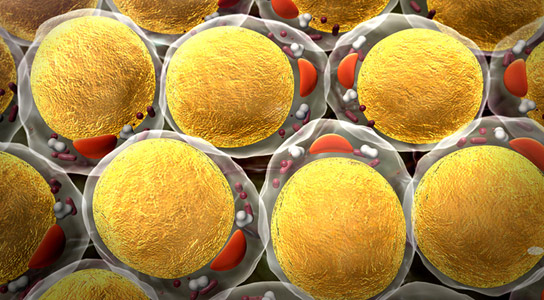
    New research from Yale University looks at the creation and expansion of white fat cells, and how these fat cells are created.

    Once fat cells form, they might shrink during weight loss, but they do not disappear, a fact that has derailed many a diet. Yale researchers in the March 2 issue of the journal Nature Cell Biology describe how — and just how quickly — those fat cells are created in the first place.

    Young mice fed an obesity-inducing diet fail to produce fat cells if they lack a key pathway involved in the sensing of nutrients, the study showed. In addition the new study also revealed that fat cell production starts within a day of starting a high-fat diet.

    “In studying what happens before these animals become obese, we found that this fat-producing response occurs unbelievably quickly,” said Matthew Rodeheffer, assistant professor of comparative medicine and of molecular, cellular, and developmental biology, and senior author of the paper.

    Weight gain is caused by the creation and expansion of white fat cells, or adipose tissue. Dieting can shrink fat cells but not eliminate them, which is why people can gain weight back so quickly. The Yale team found that the activation of a nutrient signaling pathway called PI3-kinase/AKT-2 was necessary to produce fat precursor cells, which in turn produce adipose tissue. Normal mice began producing these precursor cells within 24 hours of starting a high-fat diet.

    Rodeheffer stressed that this pathway has other key functions, such as glucose regulation, and probably cannot be safely targeted in people.

    “However, it may be possible to inhibit the generation of more fat cells in obesity and increase our understanding of how dietary changes drive increased fat mass,” he said.

    Primary funding for the work was provided by the National Institutes of Health.

    Other Yale authors are Elise Jeffery, Christopher D. Church, Brandon Holtrup, and Laura Colman.

    Reference: “Rapid depot-specific activation of adipocyte precursor cells at the onset of obesity” by Elise Jeffery, Christopher D. Church, Brandon Holtrup, Laura Colman and Matthew S. Rodeheffer, 2 March 2015, Nature Cell Biology.
    DOI: 10.1038/ncb3122

    Never miss a breakthrough: Join the SciTechDaily newsletter.
    Follow us on Google and Google News.

    Developmental Biology Fat Molecular Biology Yale University
    Share. Facebook Twitter Pinterest LinkedIn Email Reddit

    Related Articles

    Yale Researchers Track How Cells Repair Rips in DNA

    Drug-Resistant EGFR May Have “Achilles Heel”

    Yale and Columbia Biologists Shed New Light on Cell Division

    Researchers Identify Molecular Factors that Push the Domino of Life into Motion

    A Closer Look at the Antifreeze Protein That Allows Siberian Beetles to Survive

    Yale Researchers Identify Cells That Morph Into Body Fat

    Understanding How Cells Package Fat

    Atomic Level Splicing Further Establishes RNA’s Chemical and Structural Complexity

    New Design Makes Previously Inaccessible Proteins Vulnerable to Drugs

    Leave A Reply Cancel Reply

    • Facebook
    • Twitter
    • Pinterest
    • YouTube

    Don't Miss a Discovery

    Subscribe for the Latest in Science & Tech!

    Trending News

    Popular Sugar-Free Sweetener Linked to Liver Disease, Study Warns

    What Is Hantavirus? The Deadly Disease Raising Alarm Worldwide

    Scientists Just Discovered How the Universe Builds Monster Black Holes

    Scientists Unveil New Treatment Strategy That Could Outsmart Cancer

    A Simple Vitamin May Hold the Key to Treating Rare Genetic Diseases

    Scientists Think the Real Fountain of Youth May Be Hiding in Your Gut

    Ravens Don’t Follow Wolves, They Predict Them

    This Common Knee Surgery May Be Doing More Harm Than Good

    Follow SciTechDaily
    • Facebook
    • Twitter
    • YouTube
    • Pinterest
    • Newsletter
    • RSS
    SciTech News
    • Biology News
    • Chemistry News
    • Earth News
    • Health News
    • Physics News
    • Science News
    • Space News
    • Technology News
    Recent Posts
    • Why Are So Many New Fathers Dying? Scientists Say the U.S. Has a Dangerous Blind Spot
    • Scientists Identify Simple Supplement That Greatly Reduces Alzheimer’s Damage
    • You May Have a Dangerous Type of Cholesterol Even if Your Tests Look Normal
    • Study Reveals Dangerous Flaw in AI Symptom Checkers
    • New MRI Breakthrough Captures Stunningly Clear Images of the Eye and Brain
    Copyright © 1998 - 2026 SciTechDaily. All Rights Reserved.
    • Science News
    • About
    • Contact
    • Editorial Board
    • Privacy Policy
    • Terms of Use

    Type above and press Enter to search. Press Esc to cancel.