
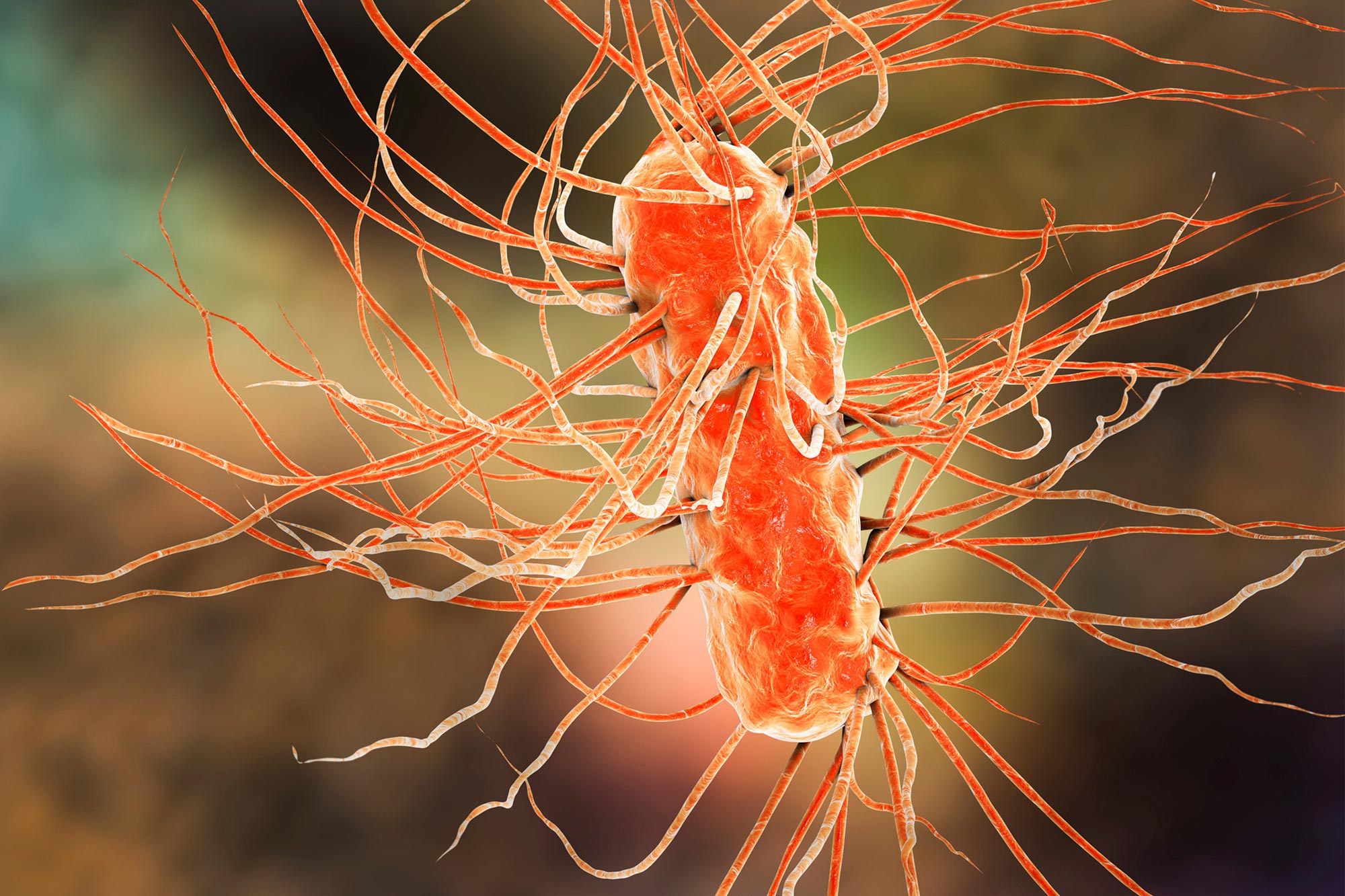
Scientists have innovated a polymer-coated bacterium that enhances its catalytic efficiency and sustainability in industrial applications.
This new “super-powered” bacterium, designed to be more robust and reusable, aims to minimize the environmental and resource burdens associated with bacterial production in industries like pharmaceuticals.
Bacteria’s Role in Industry
Bacteria play a crucial role in the chemical and pharmaceutical industries, helping create products as diverse as beer, facial creams, biodiesel, and fertilizer. In the pharmaceutical sector, bacteria are essential for producing life-saving substances like insulin and penicillin.
While bacteria-driven production has revolutionized medicine and industry, it comes with significant challenges. The process requires substantial energy and often involves harsh solvents. Additionally, bacteria used in production have limited lifespans and must be frequently replaced, increasing costs and environmental impact.
Enhancing Bacterial Durability and Efficiency
Changzhu Wu, a chemist and associate professor at the Department of Physics, Chemistry, and Pharmacy at the University of Southern Denmark, aims to make industrial bacteria tougher and more efficient. His research focuses on reducing the energy, time, and chemicals needed to sustain bacteria while making them reusable, allowing them to work longer before replacement is necessary.
His latest innovation introduces a type of “super-powered” bacterium and is published today (December 11) in Nature Catalysis.
“We took a common industrial bacterium, E. coli, and essentially gave it a ‘Superman cape’ to enhance its catalysis capabilities. This reduces energy use and makes the production process more sustainable,” Changzhu Wu explains.
E. coli in Industrial Applications
While E. coli is often associated with foodborne illness, it is widely used in the pharmaceutical industry to produce essential medicines like insulin and growth hormone through various chemical reactions.
The industry uses vast quantities of E. coli, and replacing them takes a toll on the environment, energy, and time due to factors like high temperatures, extreme pH levels, UV radiation, and exposure to solvents.
In developing his “Superman cape,” Changzhu Wu sought a material that could envelop the bacteria while still allowing them to interact with their environment to carry out the desired complex chemical reactions.
The Polymer Solution
The solution: a polymer coating that integrates with the bacterial cell membrane. Polymers are large molecules made up of billions of identical units called monomers.
“We essentially grafted an E. coli bacterium’s cell membrane with polymers, achieving two important outcomes: First, the bacteria became stronger and more efficient, and could carry out complex chemical reactions more quickly. Second, the bacteria became more protected, allowing for multiple uses. So, it’s a kind of ‘Superman bacterium’ that is more sustainable,” explains Changzhu Wu.
Reference: “Engineering living cells with polymers for recyclable photoenzymatic catalysis” by Jian Ning, Zhiyong Sun, René Hübner, Henrik Karring, Morten Frendø Ebbesen, Mathias Dimde and Changzhu Wu, 11 December 2024, Nature Catalysis.
DOI: 10.1038/s41929-024-01259-5
Never miss a breakthrough: Join the SciTechDaily newsletter.
Follow us on Google and Google News.