
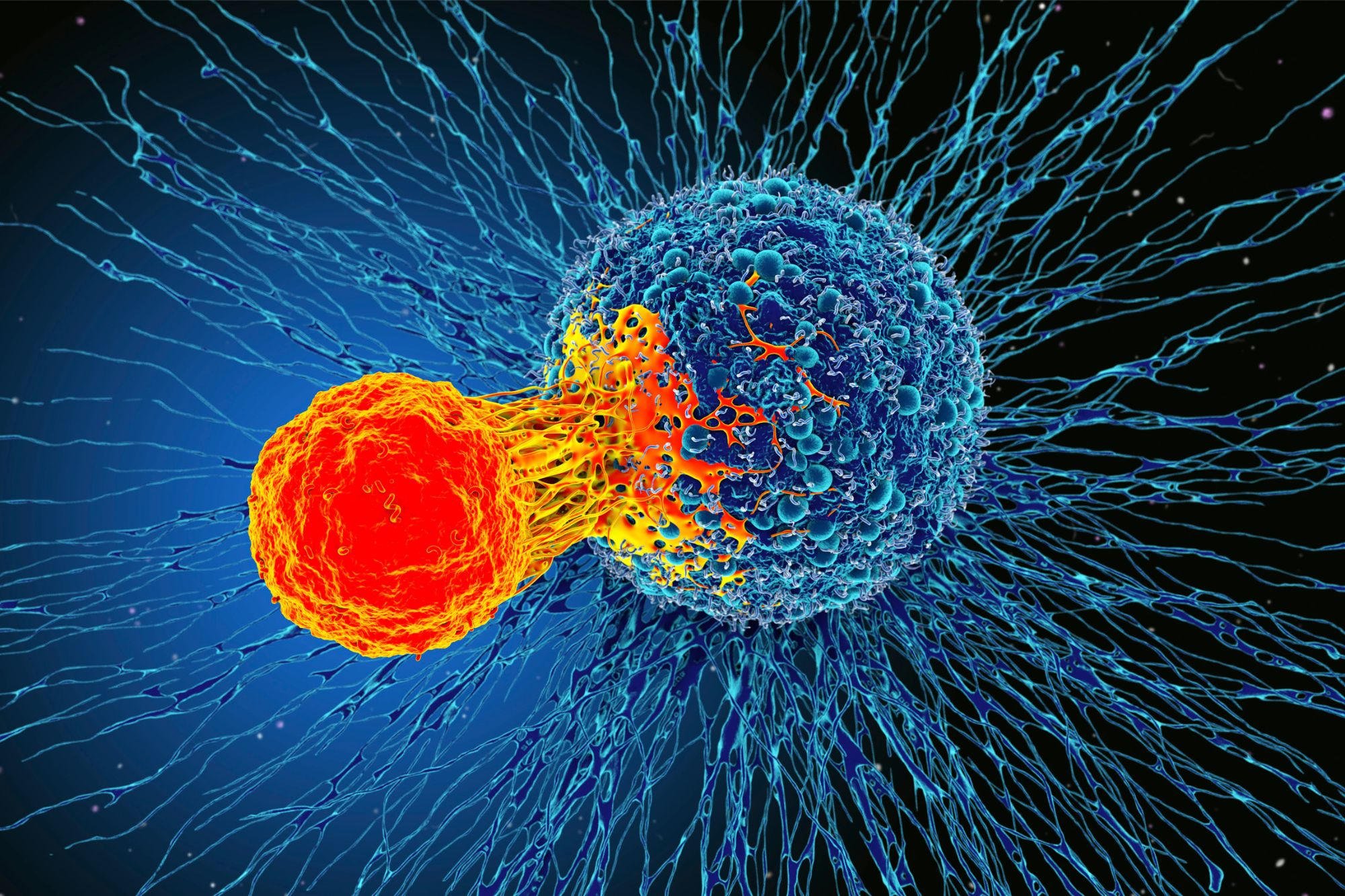
Scientists have supercharged CAR-T therapy, making it more powerful against elusive cancer cells that usually escape detection.
This innovation, called ALA-CART, helps the immune system better recognize and destroy resistant cancers. The new design not only improves treatment success but also promises fewer side effects.
A Powerful Upgrade to CAR-T Therapy
Researchers at the University of Colorado Anschutz Medical Campus have developed an enhanced version of CAR-T cell therapy designed to improve effectiveness and longevity, particularly against cancer cells that were previously difficult to detect and eliminate.
Their findings were published today (March 10) in Cancer Cell.
“This next-generation approach, called ALA-CART (adjunctive LAT-activating CAR-T cells), optimizes CAR-T cells to more effectively eliminate cancer cells, including those that have been able to hide from traditional CAR-T cells,” said Catherine Danis, PhD, lead author and postdoctoral fellow at the University of Colorado School of Medicine.
Overcoming Cancer’s Sneaky Defenses
CAR-T therapy works by extracting a patient’s T-cells, genetically modifying them to recognize and attack cancer cells, and reinfusing them into the body. However, some cancer cells can escape detection, leading to treatment failure and relapse. To overcome this, researchers used human T-cells and leukemia cells in specialized mouse models to develop ALA-CART, which showed promising results against acute lymphocytic leukemia (ALL) that had resisted standard CAR-T treatment.
“ALA-CART improves the ability of CAR-T cells to detect and attack resistant cancer cells more effectively. This could lead to longer lasting results, even when other treatments have failed,” said M. Eric Kohler, MD, PhD, corresponding author and member at the University of Colorado Cancer Center. “It also shows signs it could reduce side effects that often accompany traditional therapies.”
A New Blueprint for CAR-T Success
Kohler said the same CAR-T cell therapies have been used for more than a decade.
“When you look back, it’s easy to see how revolutionary CAR-T cells have been. But, for many patients, this therapy isn’t enough. And stepping back you realize that we have been driving these CAR-T cells with the same basic design for the last 15 years,” said Kohler.
“When we began this project, we wanted to understand why this design allowed certain leukemia cells to escape therapy. Once we understood that, we knew how to design our ALA-CART cells. What was surprising is that we didn’t just fix the problem of leukemia cells escaping, we improved multiple aspects of the ALA-CART cells, and we’re hopeful this will translate into improved outcomes for patients in the future.”
What’s Next for ALA-CART?
The next step is advancing ALA-CART into clinical trials to assess its safety and efficacy in human patients. Danis said they hope to begin that phase within the next two years.
In the meantime, the researchers are also testing the treatment on other types of cancers including acute myeloid leukemia, multiple myeloma, and solid tumors.
“This marks a major shift in cancer immunotherapy, offering a groundbreaking innovation that could eventually improve survival and quality of life for patients with some of the most difficult-to-treat cancers,” Danis said.
Reference: “Restoration of LAT activity improves CAR T cell sensitivity and persistence in response to antigen-low acute lymphoblastic leukemia” by Catherine Pham-Danis, Amanda J. Novak, Etienne Danis, Samantha M. McClellan, Lillie Leach, Michael C. Yarnell, Christopher C. Ebmeier, Sarah K. Tasian and M. Eric Kohler, 10 March 2025, Cancer Cell.
DOI: 10.1016/j.ccell.2025.02.008
Never miss a breakthrough: Join the SciTechDaily newsletter.
Follow us on Google and Google News.
2 Comments
hi
Make extra profit every week… This is a great part-time job for everyone… Best part about it is that you can work from your home and earn from 100-2000 Dollars each week … Start today and have your first payment at the end of the week.
Copy Here…..