
Sponges are among the oldest creatures on Earth and play an essential role in many underwater ecosystems. New research finds that sponges ‘sneeze’ to clear their water channels. With each sneeze, the sponge releases a type of mucus that is eaten by other animals.
The study was conducted by Niklas Kornder of the University of Amsterdam (UvA) and colleagues, the results were published today (August 10, 2022) in the scientific journal Current Biology.
Fossil evidence shows sponges date back over 650 million years ago, making them among the oldest animals on the planet. They may appear at first to be simple creatures, but sponges fulfill a key role in many underwater ecosystems. They feed by pumping water through a network of in and outflow channels in their bodies, filtering up to thousands of liters of seawater every day. By perfecting this process, the sponge is able to feed on dissolved organic matter, a food source that is inaccessible to most other sea creatures.
Surprising Behavior
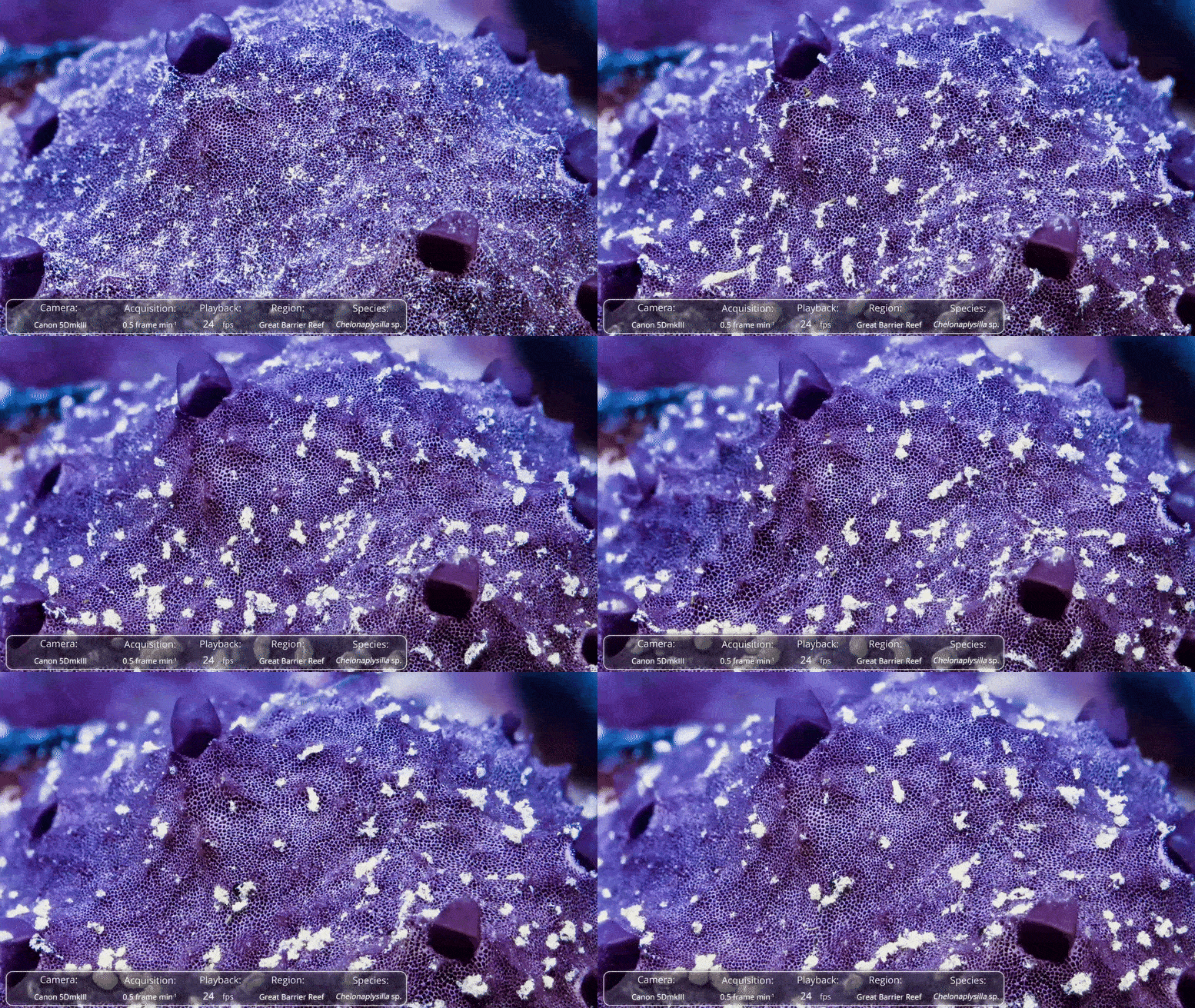
After feeding on the dissolved organic matter, the sponge produces a mucus-like waste carrier. “It was expected that the waste is released with the outflowing water through their outflow pores,” Kornder explains. To study this theory, the scientists took specimens of purple tube sponges and placed them in an aquarium to collect the mucus. They also placed a camera to film a time-lapse of the sponge surface.
When analyzing the video footage the researchers were very surprised, Kornder shares: “Every three to eight hours, sponges contracted and then relaxed their surface tissues. At first, we thought our focus was temporarily off, but quickly realized the animals were ‘sneezing.’”
https://youtu.be/EiC7OJ2JL3E
Time-lapse footage of the Indo-Pacific sponge Chelonaplysilla sp. Credit: Current Biology/Kornder et al
The footage revealed that with each sneeze the collected mucus is released and the sponge is left with a clean surface. Although sponge sneezing has been described before, it was generally thought of as a way for the sponge to regulate water flow. The time-lapses also showed that the mucus was continuously streamed out of the inflow openings, not the outflow openings, and slowly transported along distinct paths towards central collection points on the surfaces of the sponges.
While diving in the Caribbean oceans the scientists saw many small critters feeding off the energy-rich mucus on the sponges. This shows directly how the sponge benefits the entire ecosystem by using the energy from the dissolved organic matter in the water and turning it into a source of food to enter the food chain.
A Long Sneeze
“A sponge sneeze is not exactly the same as a human sneeze, because such a sneeze lasts around half an hour,” says Kornder. “But they are indeed comparable, because, for both sponges and humans, sneezing is a mechanism to get rid of waste.”
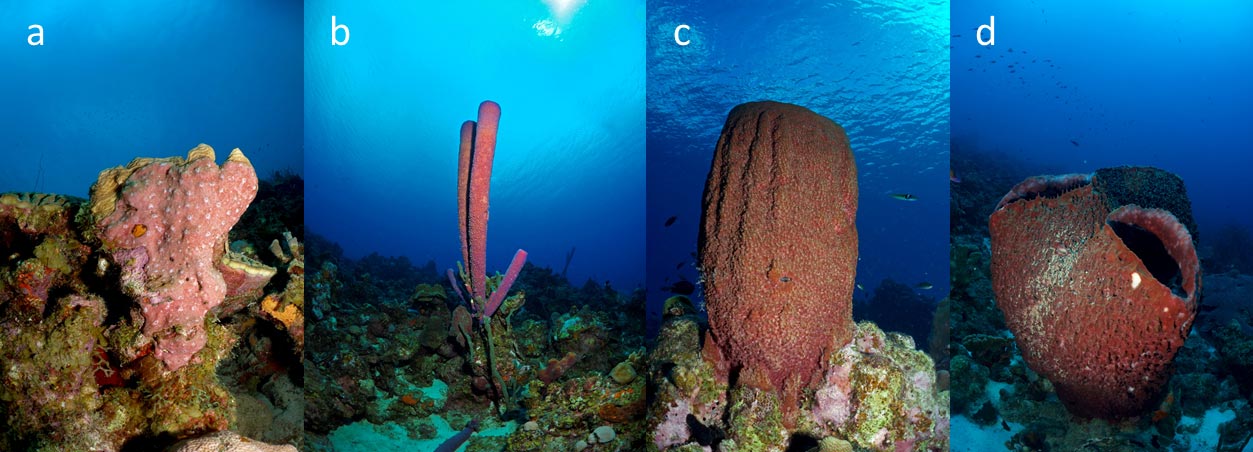
Time-lapse footage of the massive tube sponge Aplysina. Credit: Current Biology/Kornder et al
These types of behaviors show the incredible flexibility of sponges to adapt to their environment that have allowed them to thrive for over 650 million years. The team plans to continue studying sponge sneezing.
“By combining electron microscopy with histological studies we want to investigate the underlying mechanism,” Kornder says. They will also include more sponge species.
Reference: “Sponges sneeze mucus to shed particulate waste from their seawater inlet pores” by Niklas A. Kornder, Yuki Esser, Daniel Stoupin, Sally P. Leys, Benjamin Mueller, Mark J.A. Vermeij, Jef Huisman and Jasper M. de Goeij, 10 August 2022, Current Biology.
DOI: 10.1016/j.cub.2022.07.017
Never miss a breakthrough: Join the SciTechDaily newsletter.
Follow us on Google and Google News.