
Close Menu
    Facebook X (Twitter) Instagram
    SciTechDaily
    • Biology
    • Chemistry
    • Earth
    • Health
    • Physics
    • Science
    • Space
    • Technology
    Facebook X (Twitter) Pinterest YouTube RSS
    SciTechDaily
    Home»Space»Team Chosen To Extract Oxygen From the Surface of the Moon
    Space

    Team Chosen To Extract Oxygen From the Surface of the Moon

    By European Space Agency (ESA)March 9, 20222 Comments5 Mins Read
    Facebook Twitter Pinterest Telegram LinkedIn WhatsApp Email Reddit
    Share
    Facebook Twitter LinkedIn Pinterest Telegram Email Reddit
    European Large Logistics Lander Landing
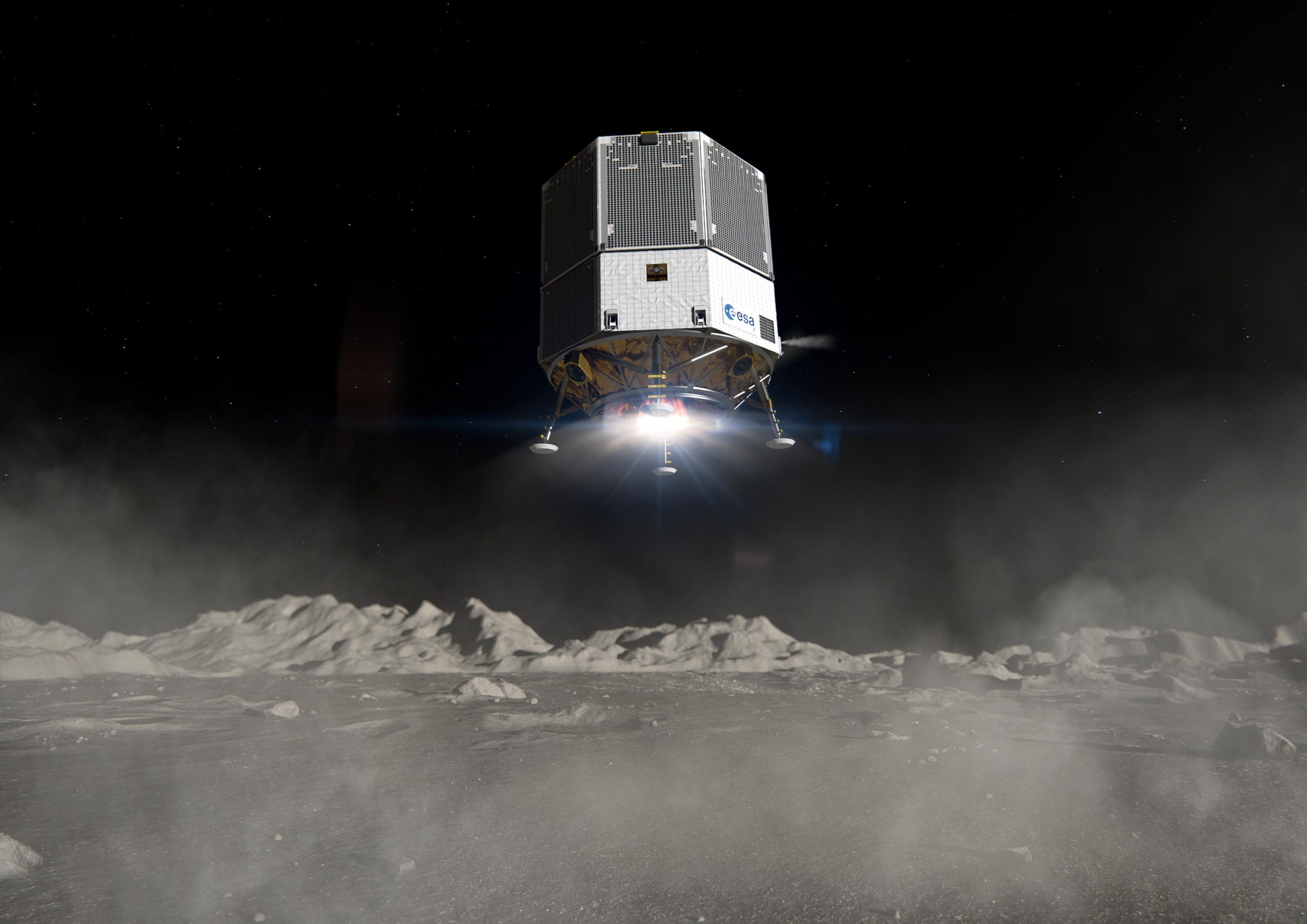
    This image shows the cargo configuration of the European Large Logistics Lander, delivering supplies and even rovers or robots to the Moon’s surface for astronauts as part of NASA’s Artemis program. Credit: ESA/ATG-Medialab

    Following a competition, ESA has selected the industrial team that will design and build the first experimental payload to extract oxygen from the surface of the Moon. The winning consortium, led by Thales Alenia Space in the UK, has been tasked with producing a small piece of equipment that will evaluate the prospect of building larger lunar plants to extract propellant for spacecraft and breathable air for astronauts – as well as metallic raw materials for equipment.

    The compact payload will need to extract 50-100 grams (1.8-3.5 ounces) of oxygen from lunar regolith – targeting 70% extraction of all available oxygen within the sample – while delivering precision measurements of performance and ánd gas concentrations. And it will have to do all this in a hurry, within a 10 day period – running on the solar power available within a single fortnight-long lunar day, before the coming of the pitch-black, freezing lunar night.
    Lunar Lander Collecting Sample on Moon
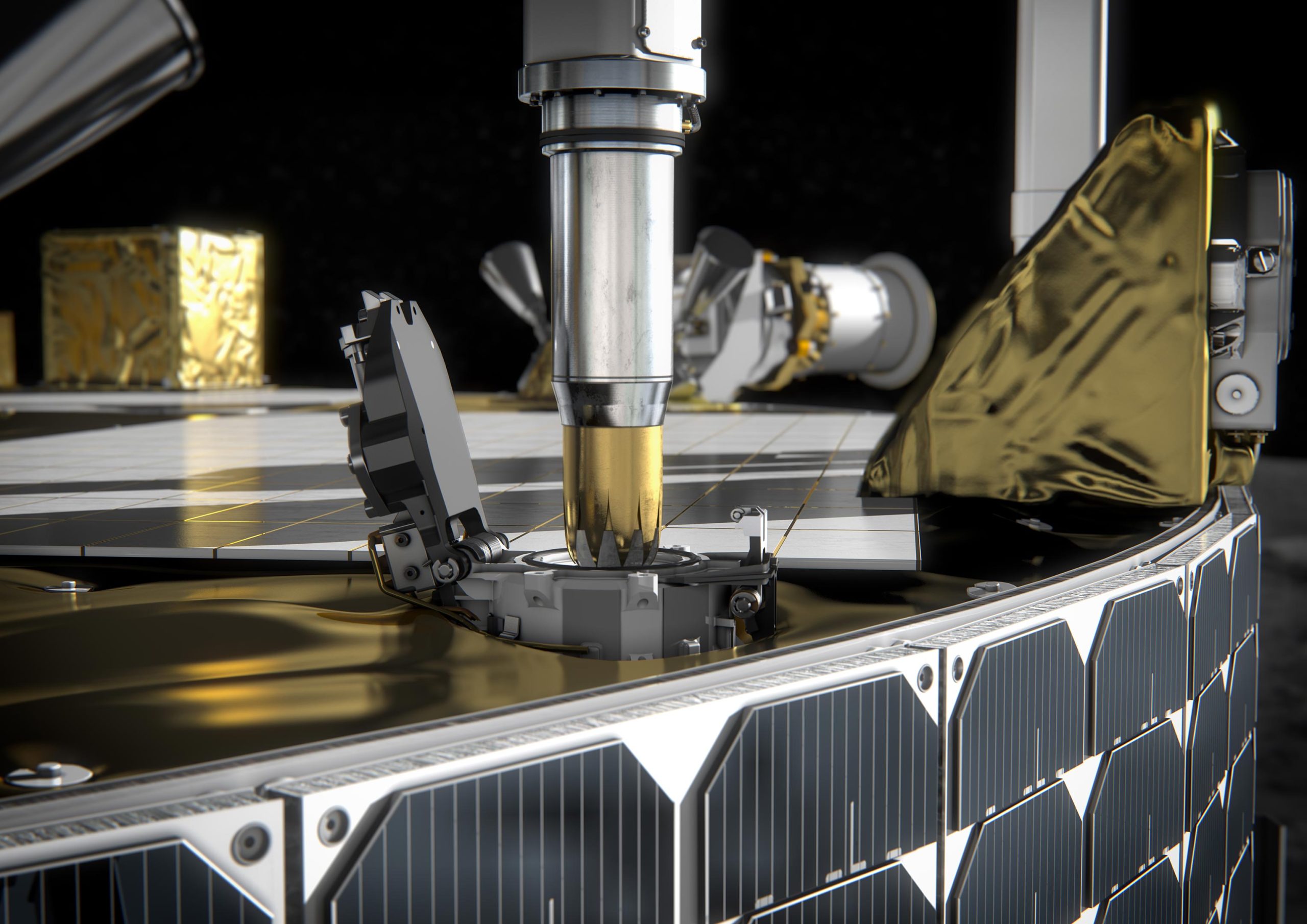
    An artist’s impression of Lunar Lander collecting a sample on the moon. One task for Lunar Lander’s scientific instruments will be to investigate Moon dust. A robotic arm will retrieve samples for closer inspection under an onboard microscope. Images and data will be sent back to Earth for further analysis. Credit: ESA

    ESA’s Directorate of Human and Robotic Exploration selected the Thales-led team made up of AVS, Metalysis, Open University, and Redwire Space Europe following a detailed study last year, evaluating three rival designs. The process followed a new approach to selecting system concepts.

    “Employing a challenge approach let us evaluate the competing payload concepts on a precise, side-by-side basis,” comments David Binns, Systems Engineer from ESA’s state-of-the-art Concurrent Design Facility (CDF). “Now we’re looking forward to working with the winning consortium to make their design a practical reality.

    In-Situ Resource Utilization Test Process

    A consortium, led by Thales Alenia Space in the UK, has been tasked with producing a small piece of equipment that will evaluate the prospect of building larger lunar plants to extract propellant for spacecraft and breathable air for astronauts – as well as metallic raw materials for equipment. The compact payload will need to extract 50-100 grams of oxygen from lunar regolith – targeting 70% extraction of all available oxygen within the sample – while delivering precision measurements of performance and gas concentrations. And it will have to do all this in a hurry, within a 10 day period – running on the solar power available within a single fortnight-long lunar day, before the coming of the pitch-black, freezing lunar night. To do so requires a complex set of deeds, overcoming dust from the landing site. The demonstrator will have to land, undergo commissioning, acquire sample material, and load it into the demonstrator which then produces oxygen from it. Credit: ESA

    “The payload needs to be compact, low power, and able to fly on a range of potential lunar landers, including ESA’s own European Large Logistics Lander, EL3. Being able to extract oxygen from moonrock, along with useable metals, will be a game changer for lunar exploration, allowing the international explorers set to return to the Moon to ‘live off the land’ without being dependent on long and expensive terrestrial supply lines.”
    Oxygen and Metal From Lunar Regolith
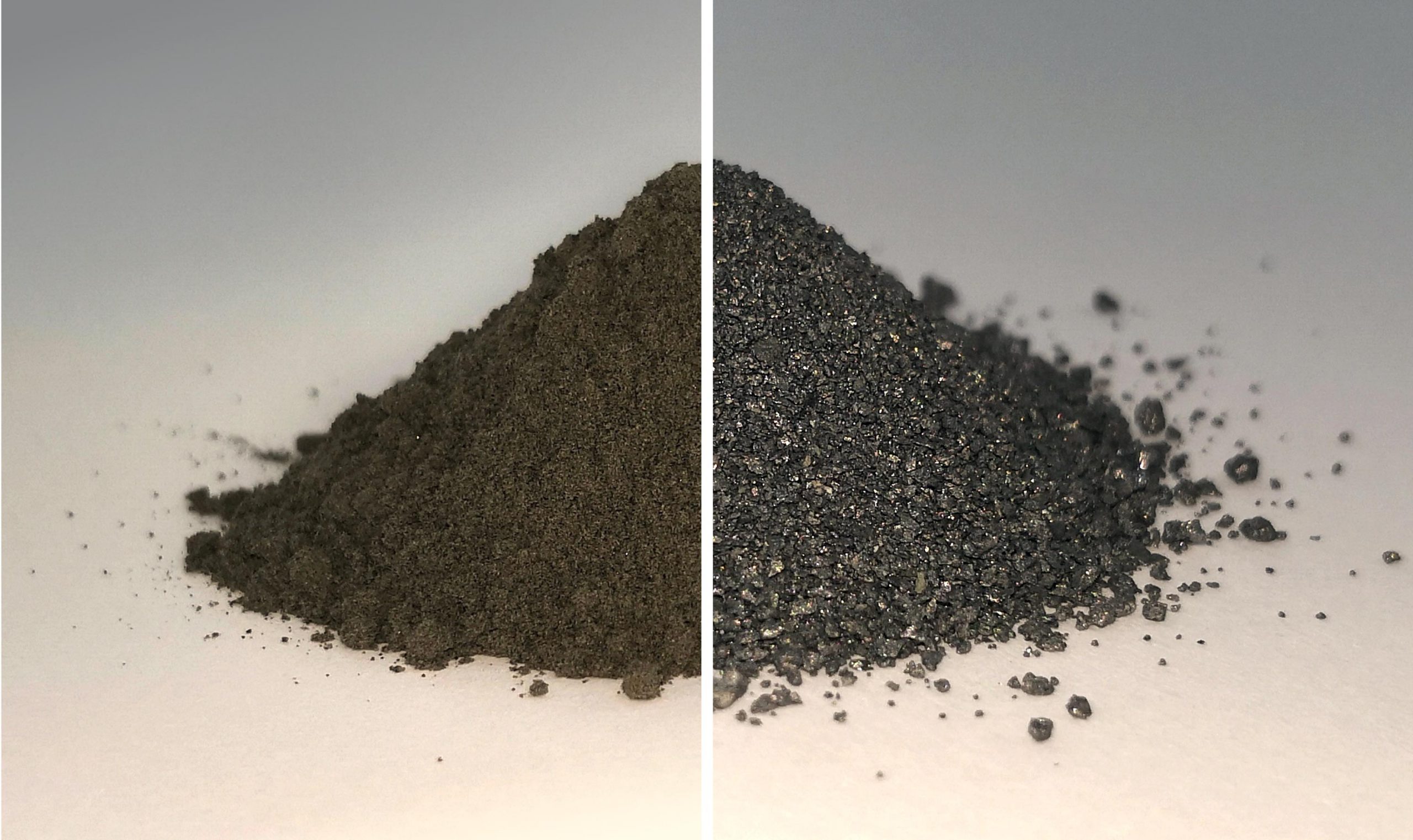
    On the left side of this before and after image is a pile of simulated lunar soil, or regolith; on the right is the same pile after essentially all the oxygen has been extracted from it, leaving a mixture of metal alloys. Both the oxygen and metal could be used in future by settlers on the Moon. Credit: Beth Lomax – University of Glasgow

    Giorgio Magistrati, Studies and Technologies Team Leader at ESA’s ExPeRT (Exploration Preparation, Research and Technology) initiative adds: “The time is right to begin work on realizing this In-Situ Resource Utilisation demonstrator, the first step in our larger ISRU implementation strategy. Once the technology is proven using this initial payload, our approach will culminate in a full-scale ISRU plant in place on the Moon in the early part of the following decade.”
    Making Oxygen Out of Moondust
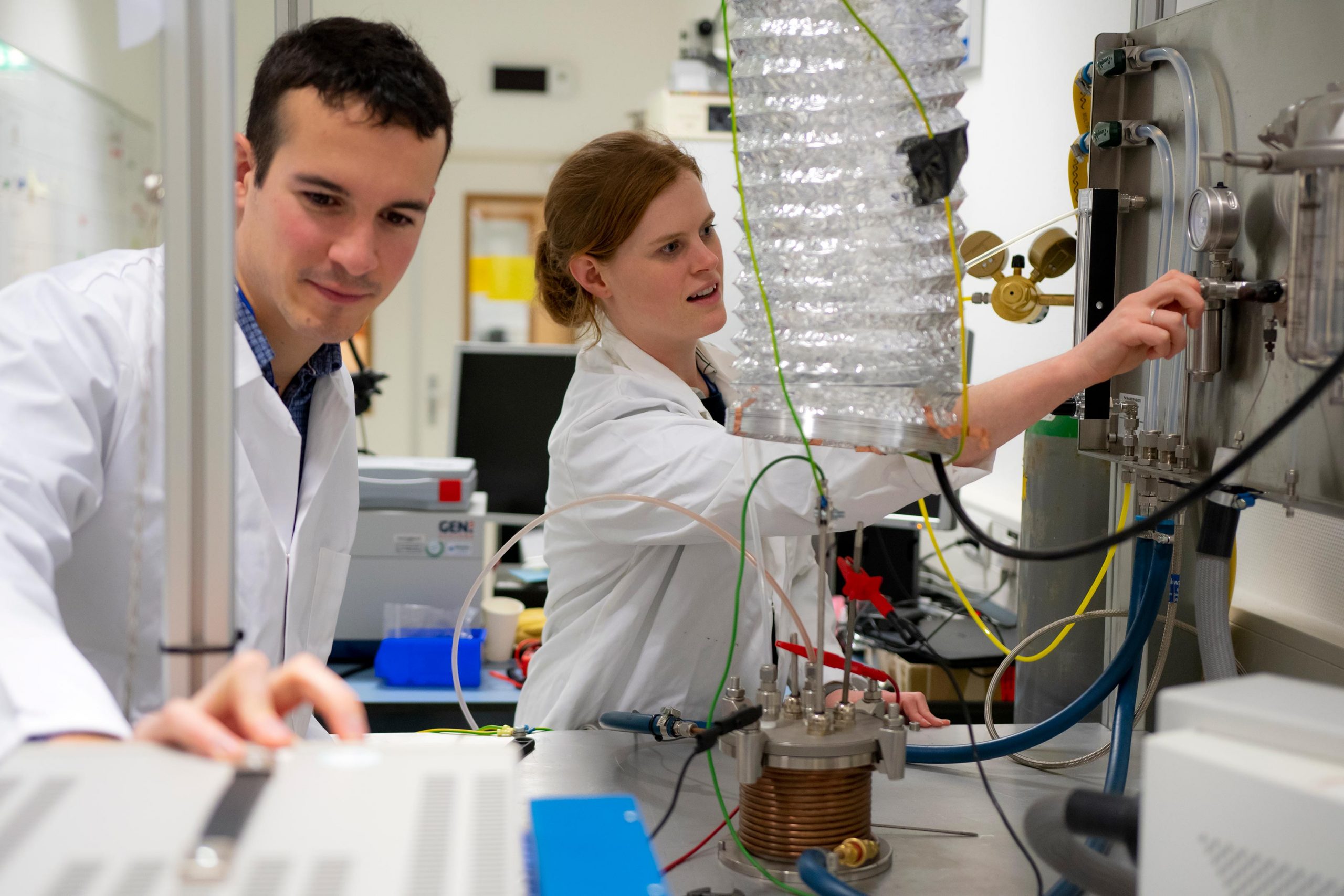
    ESA research fellow Alexandre Meurisse and Beth Lomax of the University of Glasgow producing oxygen and metal out of simulated moondust inside ESA’s Materials and Electrical Components Laboratory. Credit: ESA–A. Conigili

    The underlying concept has already been proven. Samples returned from the lunar surface confirm that lunar regolith is made up of 40–45% percent oxygen by weight, its single most abundant element. The difficulty is that this oxygen is bound up chemically as oxides in the form of minerals or glass, so is unavailable for immediate use.

     However, a prototype oxygen plant has been set up in ESTEC’s Materials and Electrical Components Laboratory. This plant employs an electrolysis-based process to separate simulated lunar regolith into metals and oxygen, key basic resources for long-term sustainable space missions.

    Never miss a breakthrough: Join the SciTechDaily newsletter.
    Follow us on Google and Google News.

    European Space Agency Moon Oxygen
    Share. Facebook Twitter Pinterest LinkedIn Email Reddit

    Related Articles

    Superoxides for Oxygen Farming on the Moon and Mars

    Mining the Moon: Preparing a Lunar Drill and Sample Analysis Package

    NELIOTA Project Views Flashes of Light Across the Surface of the Moon

    Moon Bricks Will Pave the Way for Human Space Exploration

    Can Lunar Dust Jeopardise Human Health?

    Moon Village – How to Build a Permanent Base Station on the Moon

    New Mosiac of the Moon’s South Pole

    Weather Satellite Captures Image of “Blue” Moon

    Researchers Discover Oxygen Molecules in Dione’s Exosphere

    2 Comments

    1. Robi Jackson on March 10, 2022 4:00 am

      so what pollution will they being creating with this process; meaning we’ll be able exist there, but stuff up its environment – pollution may be considered ok where no life is or can affected, nonetheless it still is pollution with unknown inclinations for the future

      Reply
    2. nora guadalajara on March 30, 2022 8:46 am

      Robi Jackson, EXACTLY!

      Reply
    Leave A Reply Cancel Reply

    • Facebook
    • Twitter
    • Pinterest
    • YouTube

    Don't Miss a Discovery

    Subscribe for the Latest in Science & Tech!

    Trending News

    Millions Take These IBS Drugs, But a New Study Finds Serious Risks

    Scientists Unlock Hidden Secrets of 2,300-Year-Old Mummies Using Cutting-Edge CT Scanner

    Bread Might Be Making You Gain Weight Even Without Eating More Calories

    Scientists Discover Massive Magma Reservoir Beneath Tuscany

    Europe’s Most Active Volcano Just Got Stranger – Here’s Why Scientists Are Rethinking It

    Alzheimer’s Symptoms May Start Outside the Brain, Study Finds

    Millions Take This Popular Supplement – Scientists Discover a Concerning Link to Heart Failure

    The Universe Is Expanding Too Fast and Scientists Can’t Explain Why

    Follow SciTechDaily
    • Facebook
    • Twitter
    • YouTube
    • Pinterest
    • Newsletter
    • RSS
    SciTech News
    • Biology News
    • Chemistry News
    • Earth News
    • Health News
    • Physics News
    • Science News
    • Space News
    • Technology News
    Recent Posts
    • Simple Blood Test May Predict Alzheimer’s Years Before Brain Scans Show Signs
    • Scientists Say Adding This Unusual Seafood to Your Diet Could Reverse Signs of Aging
    • U.S. Waste Holds $5.7 Billion Worth of Crop Nutrients
    • Scientists Say a Hidden Structure May Exist Inside Earth’s Core
    • Doctors Surprised by the Power of a Simple Drug Against Colon Cancer
    Copyright © 1998 - 2026 SciTechDaily. All Rights Reserved.
    • Science News
    • About
    • Contact
    • Editorial Board
    • Privacy Policy
    • Terms of Use

    Type above and press Enter to search. Press Esc to cancel.