
Close Menu
    Facebook X (Twitter) Instagram
    SciTechDaily
    • Biology
    • Chemistry
    • Earth
    • Health
    • Physics
    • Science
    • Space
    • Technology
    Facebook X (Twitter) Pinterest YouTube RSS
    SciTechDaily
    Home»Space»Terzan 1, Take 2: Hubble Captures a Dazzling Globular Cluster
    Space

    Terzan 1, Take 2: Hubble Captures a Dazzling Globular Cluster

    By ESA/HubbleOctober 9, 2022No Comments2 Mins Read
    Facebook Twitter Pinterest Telegram LinkedIn WhatsApp Email Reddit
    Share
    Facebook Twitter LinkedIn Pinterest Telegram Email Reddit
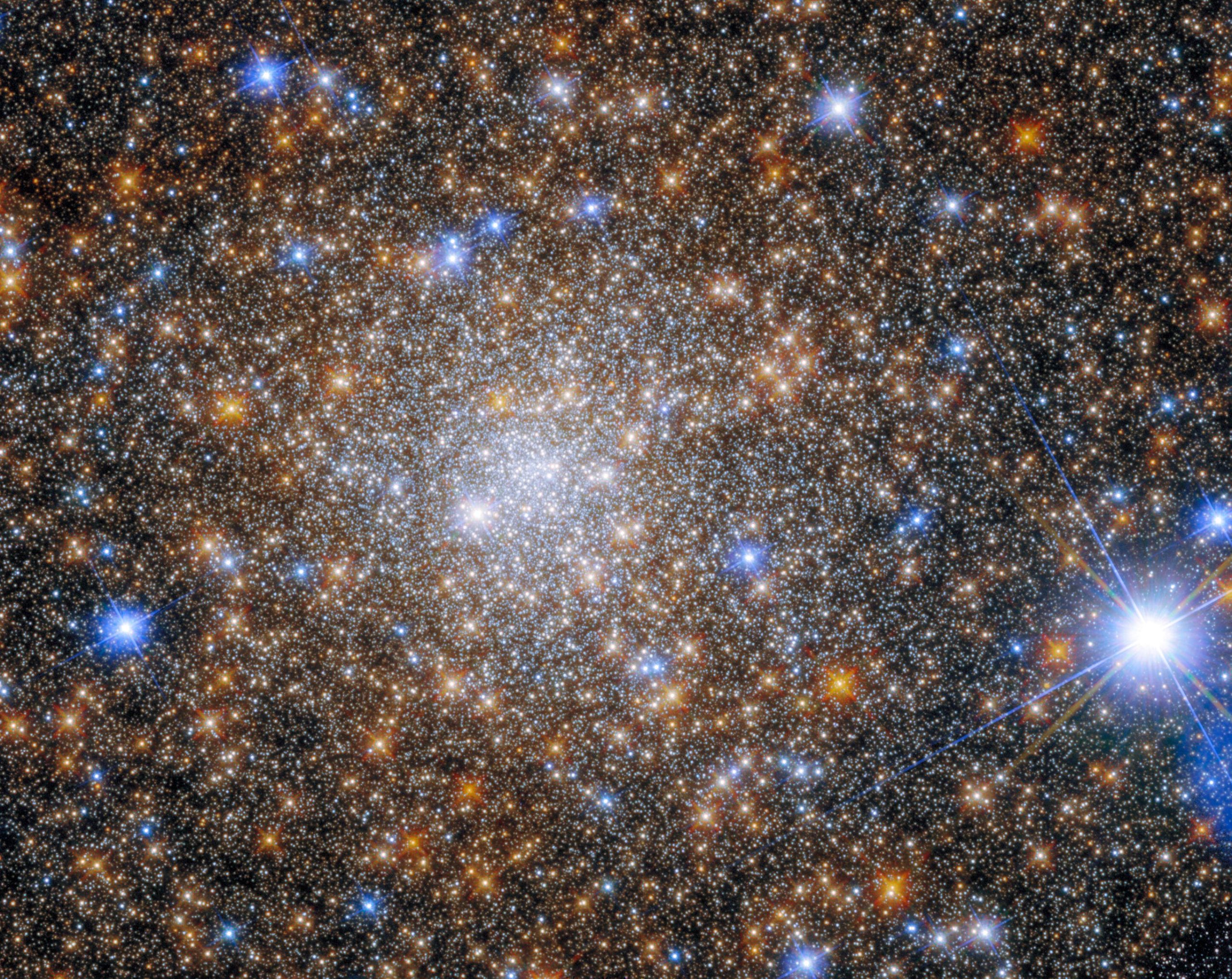
    Hubble Terzan 1 Globular Cluster
    Hubble Space Telescope image of Terzan 1, a globular cluster that lies about 22,000 light-years from Earth in the constellation Scorpius. Credit: ESA/Hubble & NASA, R. Cohen

    Terzan 1 is a globular cluster located around 22,000 light-years away from Earth in the constellation Scorpius. It is one of 11 globular clusters that were discovered by the Turkish-Armenian astronomer Agop Terzan between 1966 and 1971. This is a time period when he was working in France, based mostly at Lyon Observatory.

    Somewhat confusingly, the 11 Terzan globular clusters are numbered from Terzan 1 to Terzan 12. This is due to a mistake Terzan made in 1971, when he rediscovered Terzan 5 — a cluster he had already discovered and reported back in 1968 — and named it Terzan 11. He published its discovery alongside those of Terzan 9, 10, and 12. He quickly realized his error, and attempted to have Terzan 12 renamed as Terzan 11. Unfortunately, he did not make it clear that Terzan 5 and Terzan 11 were one and the same, although another astronomer, Ivan Robert King, did publish a note to try and clear up the confusion. These days, most papers recognize the original Terzan 5 and Terzan 12, and accept the oddity that there is no Terzan 11. However, over the past few decades, there have been instances of confusion in the scientific literature.
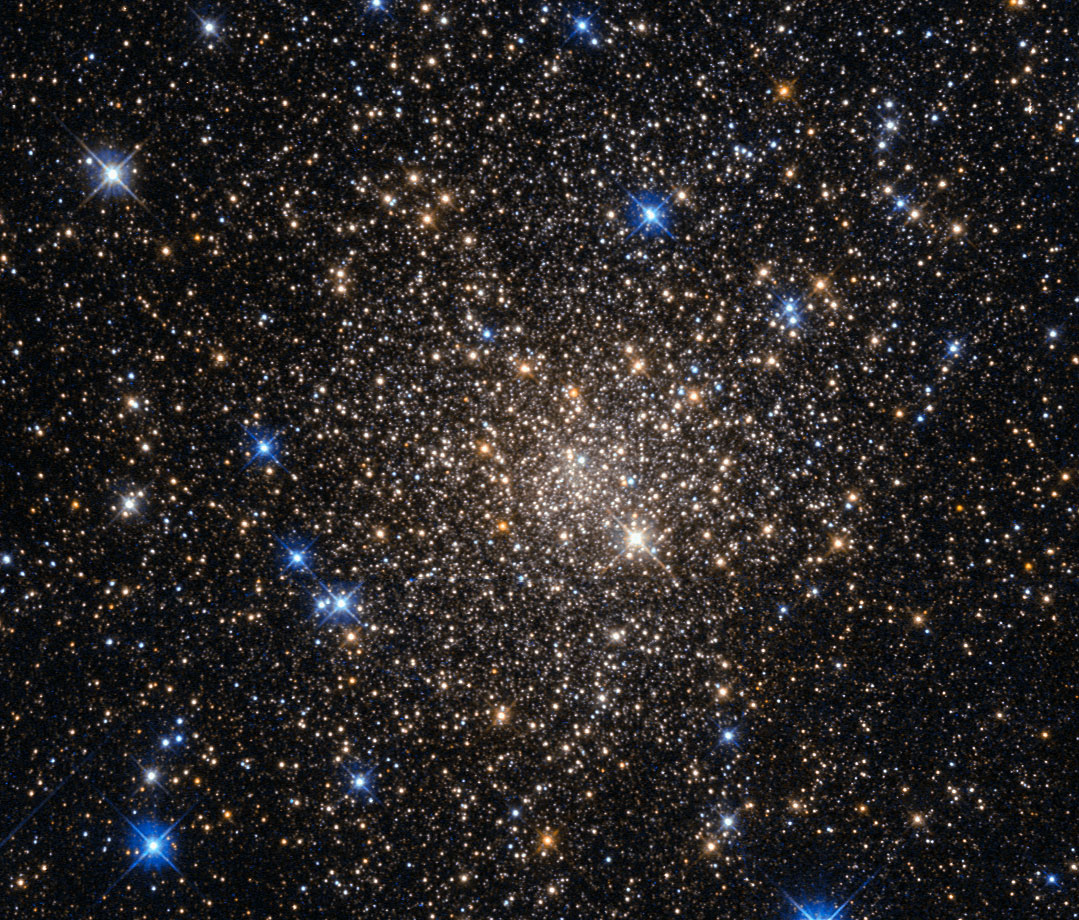
    Hubble Image of Globular Cluster Terzan 1
    Hubble Space Telescope image of Terzan 1 captured by the Wide Field Planetary Camera 2. Credit: NASA & ESA, Acknowledgment: Judy Schmidt (Geckzilla)

    Terzan 1 is not a new target for Hubble — an image of the cluster was released back in 2015 (see image above), taken by Hubble’s Wide Field Planetary Camera 2 (WFPC2). That instrument was replaced by the Wide Field Camera 3 (WFC3) during the 2009 Hubble servicing mission. WFC3 has both superior resolving power and a wider field of view than WFPC2, and the improvement is obvious in this fantastically detailed image.

    Never miss a breakthrough: Join the SciTechDaily newsletter.
    Follow us on Google and Google News.

    Astronomy European Space Agency Hubble Space Telescope
    Share. Facebook Twitter Pinterest LinkedIn Email Reddit

    Related Articles

    A Diamond Necklace of Cosmic Proportions

    Hubble Snaps a Stunning Close-Up of a Magnificent Spiral Galaxy

    Extraordinary Hubble Image: Light Bends From the Beyond

    Hubble Space Telescope Sees Volcanic Activity Reforming the Atmosphere on a Rocky Exoplanet

    Hubble Spies a Luminous Heart With Dark Tendrils

    Spectacular Return to the Veil Nebula

    Hubble Spots a Peculiar Sight: Unusual Spiral Galaxy With a Heavy Arm

    A Flash of Life: Hubble Spies an Unusual Planetary Nebula

    Through the Cosmic Clouds: Hubble Spots a Beautiful Stellar Nursery

    Leave A Reply Cancel Reply

    • Facebook
    • Twitter
    • Pinterest
    • YouTube

    Don't Miss a Discovery

    Subscribe for the Latest in Science & Tech!

    Trending News

    Wasp Colonies Explode Into Violence After Losing Their Queen

    Scientists Create “Living Plastic” That Self-Destructs in Just Six Days

    Your Blood May Carry a 700-Million-Year-Old Secret

    Scientists Discover Some “Zombie Cells” May Actually Help You Live Longer

    Earth May Be Seeding Venus With Life, According to New Research

    What Scientists Found Inside a 117-Year-Old Woman Reveals New Clues to Long Life

    Scientists Discover Mysterious Creature Living in the Great Salt Lake – and It Exists Nowhere Else on Earth

    It’s Alive? Surprising Discovery Changes What We Know About Fog

    Follow SciTechDaily
    • Facebook
    • Twitter
    • YouTube
    • Pinterest
    • Newsletter
    • RSS
    SciTech News
    • Biology News
    • Chemistry News
    • Earth News
    • Health News
    • Physics News
    • Science News
    • Space News
    • Technology News
    Recent Posts
    • A Psychologist Explains Why 40% of People Are Avoiding the News
    • Scientists Discover Alzheimer’s-Linked Proteion’s Surprising Role in Making Memories Last
    • Vitamin D Drug Shows Surprising Promise Against One of the Deadliest Cancers
    • Scientists Crack Major Ammonia Problem With a Platinum Catalyst Breakthrough
    • MIT Engineers Solve a Major Lidar Problem That Has Stumped Researchers for Years
    Copyright © 1998 - 2026 SciTechDaily. All Rights Reserved.
    • Science News
    • About
    • Contact
    • Editorial Board
    • Privacy Policy
    • Terms of Use

    Type above and press Enter to search. Press Esc to cancel.