

Researchers at have developed a new method to enhance the electro-optic properties of aluminum scandium nitride, promising significant advances in light modulation and quantum technologies.
By manipulating the atomic structure and exploiting strain, they’ve achieved a performance that could surpass current materials used in nonlinear optics, marking a major leap forward in integrated photonics.
Electro-Optic Innovation
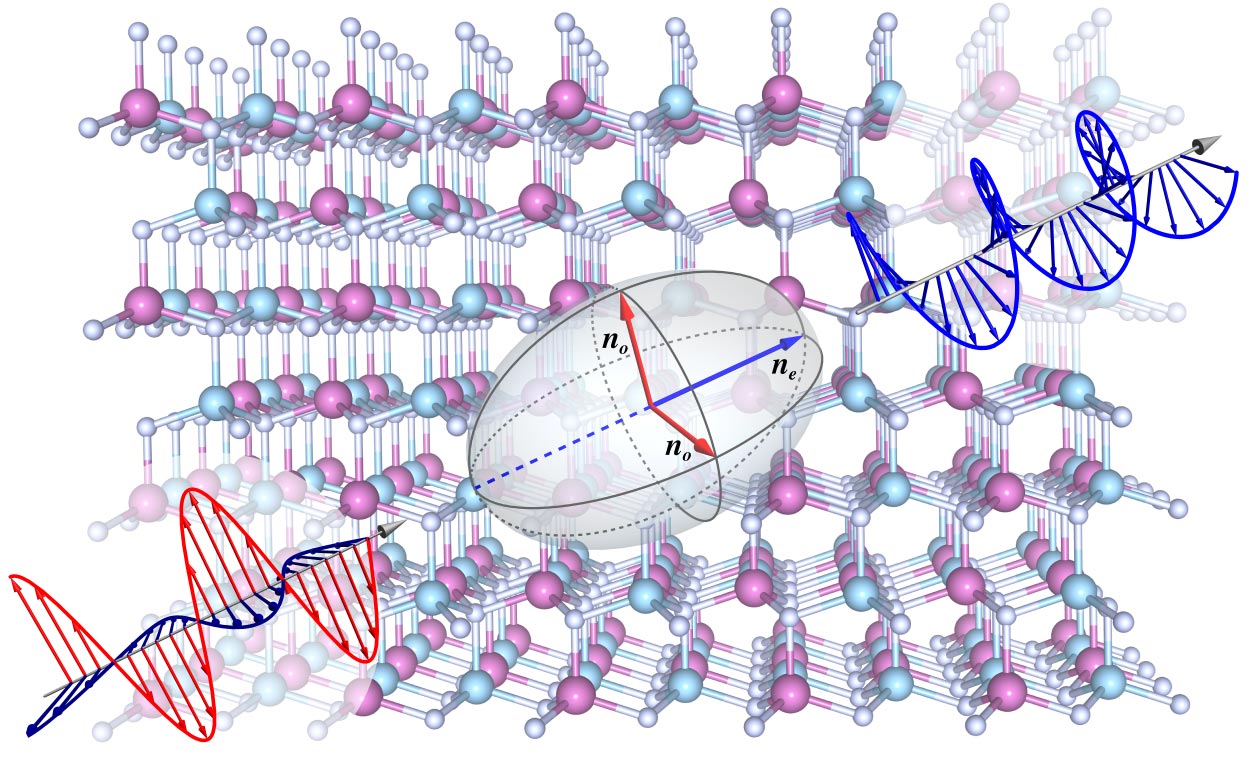
The ability to control light using electric fields, known as the electro-optic effect, is essential for technologies ranging from integrated photonics to quantum information science. This effect enables key applications like light modulation and frequency conversion, which rely on nonlinear optical materials — materials that allow light waves to be adjusted by electric fields.
Advancements in Nonlinear Optical Materials
Conventional nonlinear optical materials such as lithium niobate have large electro-optic responses but are hard to integrate with silicon devices. In the search for silicon-compatible materials, aluminum scandium nitride (AlScN), which had already been flagged as an excellent piezoelectric — referring to a material’s ability to generate electricity when pressure is applied, or to deform when an electric field is applied — has come to the fore. However, better control of its properties and means to enhance its electro-optic coefficients are still required.
Breakthroughs in Material Science
Researchers in Chris Van de Walle’s computational materials group at the University of California, Santa Barbara have now uncovered ways to achieve these goals. Their study, published as the cover article in the January 27 issue of Applied Physics Letters, explains how adjusting the material’s atomic structure and composition can boost its performance. Strong electro-optic response requires a large concentration of scandium — but the specific arrangement of the scandium atoms within the AlN crystal lattice matters.
“By using cutting-edge atomistic modeling, we found that placing scandium atoms in a regular array along a specific crystal axis greatly boosts the electro-optic performance,” explained Haochen Wang, the Ph.D. student who spearheaded the calculations.

Exploring Superlattice Structures for Enhanced Performance
This finding inspired the researchers to investigate so-called superlattice structures, in which atomically thin layers of ScN and AlN are alternately deposited, an approach that can be experimentally implemented using sophisticated growth techniques. They found that precisely oriented layer structures do indeed offer significant enhancements in electro-optic properties.
Intriguingly, the scientists also realized that strain can be exploited to tune the properties close to the “Goldilocks” point, where the largest electro-optic enhancements are obtained. Strain can result from externally applied stress, or it can be built into the material through carefully designed microstructures, now a routine approach in silicon technology. Careful strain tuning could yield an electro-optic effect in AlScN that is up to an order of magnitude greater than in lithium niobate, the current go-to material.
“We are excited about the potential of AlScN to push the boundaries of nonlinear optics,” said Van de Walle. “Equally importantly, the insights reaped from this study will allow us to systematically investigate other so-called heterostructural alloys that may feature even better performance.”
Reference: “Towards higher electro-optic response in AlScN” by Haochen Wang, Sai Mu and Chris G. Van de Walle, 27 January 2025, Applied Physics Letters.
DOI: 10.1063/5.0244434
The research was supported by the Army Research Office and by SUPREME, a Semiconductor Research Corporation program sponsored by the Defense Advanced Research Projects Agency.
Never miss a breakthrough: Join the SciTechDaily newsletter.
Follow us on Google and Google News.