
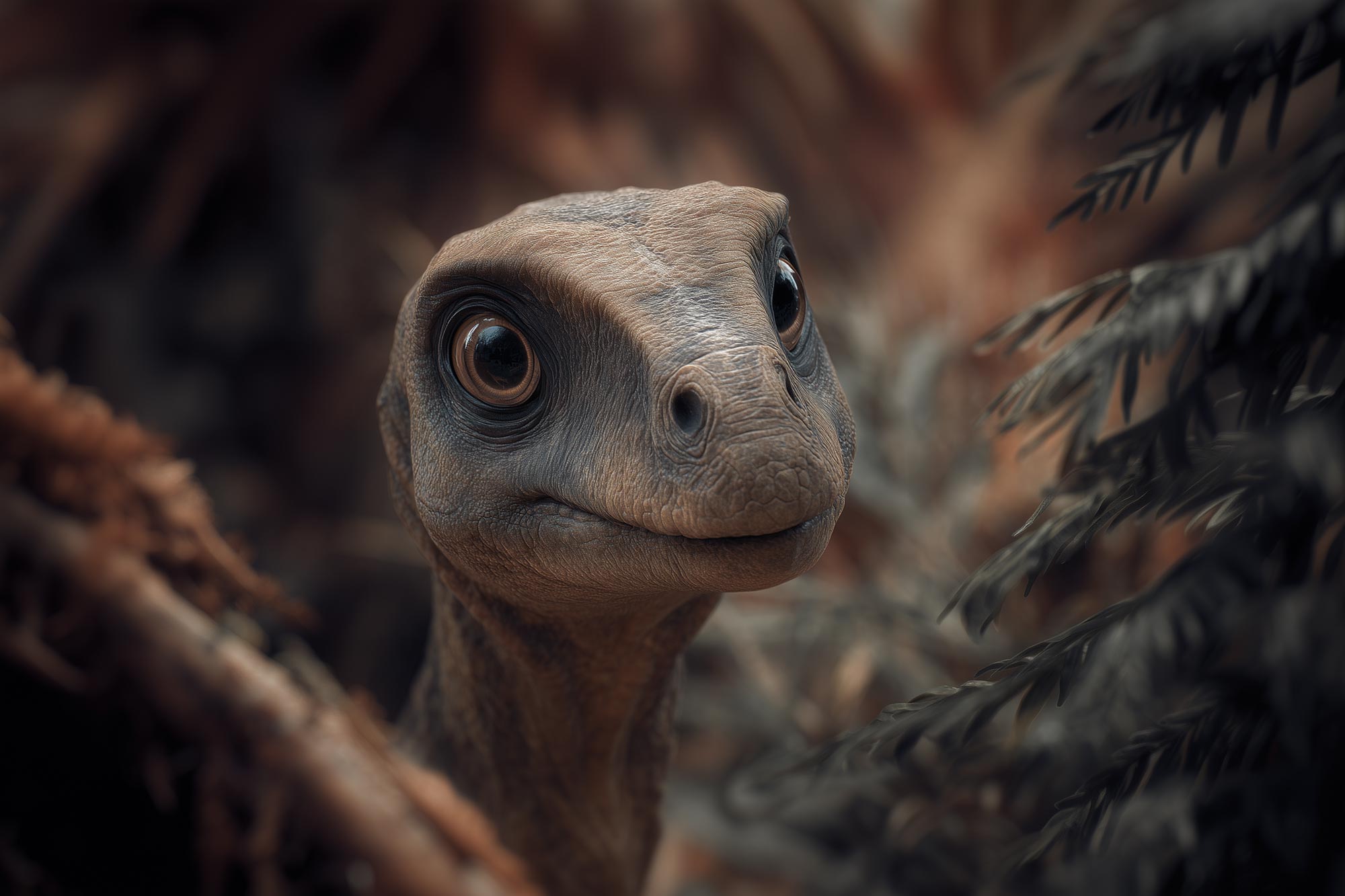
Baby sauropods were the fast food of the Late Jurassic, feeding multiple predators and propping up the entire ecosystem. Their vulnerability may even explain why later giants like T. rex evolved to become far deadlier hunters.
A new study led by a UCL (University College London) researcher suggests that baby and very young sauropods played a major role in sustaining predators during the Late Jurassic. Sauropods were long necked, long tailed plant eaters that grew into the largest animals ever to walk on land, but their offspring were small, vulnerable, and abundant.
The research was published in the New Mexico Museum of Natural History and Science Bulletin and draws on fossil evidence dating back about 150 million years. These fossils come from the Morrison Formation[1] in the United States and were used to reconstruct a detailed food web showing how animals and plants were connected through feeding relationships.
Vulnerable Young in a Dangerous World
The researchers found that newly hatched and juvenile sauropods were especially important prey. These young dinosaurs were largely defenseless and appear to have been left on their own, making them an easy target for several species of meat-eating dinosaurs.
Lead author Dr. Cassius Morrison of UCL Earth Sciences explained why this imbalance existed. He said: “Adult sauropods such as the Diplodocus and Brachiosaurus were longer than a blue whale. When they walked the earth would shake. Their eggs, though, were just a foot wide, and once hatched, their offspring would take many years to grow.
“Size alone would make it difficult for sauropods to look after their eggs without destroying them, and evidence suggests that, much like baby turtles today, young sauropods were not looked after by their parents.
“Life was cheap in this ecosystem, and the lives of predators such as the Allosaurus were likely fueled by the consumption of these baby sauropods.”
Fossils From a Jurassic Snapshot
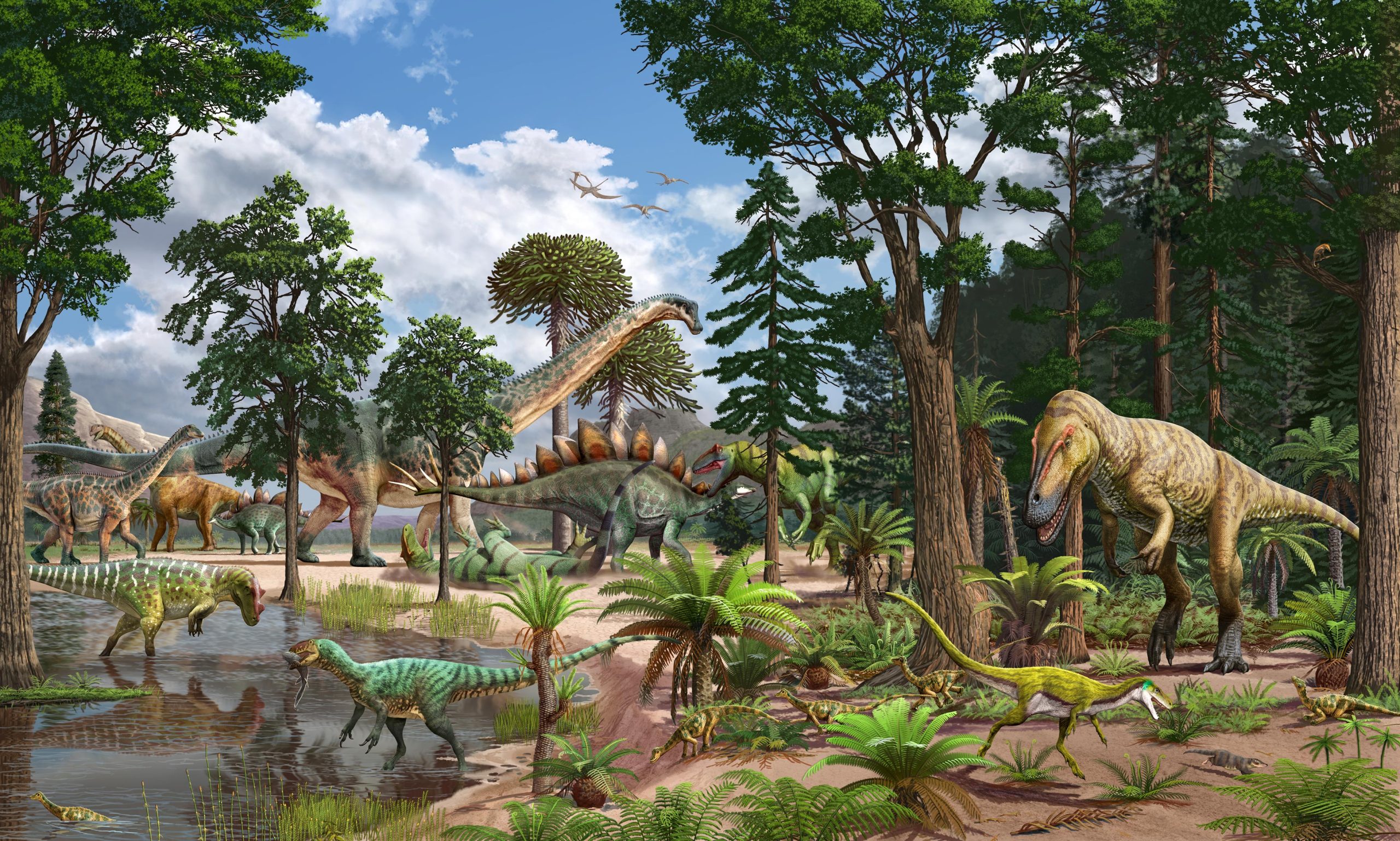
Much of the data came from a single site, the Dry Mesa Dinosaur Quarry in Colorado. This location preserves an unusually rich collection of dinosaur fossils deposited over a period of up to about 10,000 years. The quarry includes remains from at least six sauropod species (among them a Diplodocus, Brachiosaurus, and Apatosaurus), providing a rare snapshot of a living ecosystem.
To figure out who ate whom, the team combined several lines of evidence. These included dinosaur body size, patterns of tooth wear, chemical signatures such as isotopes preserved in fossils, and in rare cases fossilized stomach contents that recorded an animal’s last meal.
Using this information, the researchers reconstructed the Jurassic food web at a level of detail rarely achieved for dinosaurs. They relied on software commonly used to study modern ecosystems to map all the potential feeding links among dinosaurs, other animals, and plants.
Why Sauropods Dominated the Ecosystem
The analysis showed that sauropods were central to this ecosystem. They had far more connections to both plants and predators than other major plant-eating dinosaurs, such as the ornithischians (plant eaters such as the armored Stegosaurus, which were more dangerous prey).
Dr. Morrison said, “Sauropods had a dramatic impact on their ecosystem. Our study allows us to measure and quantify the role they had for the first time.
“Reconstructing food webs means we can more easily compare dinosaur ecosystems across different periods. It helps us to understand evolutionary pressures and why dinosaurs might have evolved in the way they did.”
From Easy Prey to Fearsome Hunters
The team also looked at how these patterns changed over time. About 70 million years later, during the age of Tyrannosaurus Rex, fewer sauropods were available as easy prey. This shift may have pushed predators to evolve new traits, including stronger bite force, larger body size, and improved vision. These adaptations allowed T. Rex to hunt larger and more dangerous animals, such as a Triceratops armed with three large horns.
Co-author William Hart of Hofstra University noted that earlier predators may have lived under very different conditions. He said: “The apex predators of the Late Jurassic, such as the Allosaurus or the Torvosaurus, may have had an easier time acquiring food compared to the T. Rex millions of years later.
“Some Allosaurus fossils show signs of quite horrific injuries – for instance, caused by the spiked tail of a Stegosaurus – that had healed, and some that hadn’t. But an abundance of easy prey in the form of young sauropods may have allowed injured allosaurs to survive.”
Notes
- The Morrison Formation is a prominent sequence of Upper Jurassic sedimentary rock (approx. 156–147 million years old) spanning 1.5 million square kilometers across the western United States. Known as North America’s most fertile source of dinosaur fossils, it contains massive deposits of mudstone, sandstone, and limestone from ancient rivers and floodplains.
The study involved researchers from institutions in the UK, the United States, Canada, and the Netherlands.
Never miss a breakthrough: Join the SciTechDaily newsletter.
Follow us on Google and Google News.
2 Comments
Too big to care for their young?
How else could a dinosaur perform a healthcare abortion?