
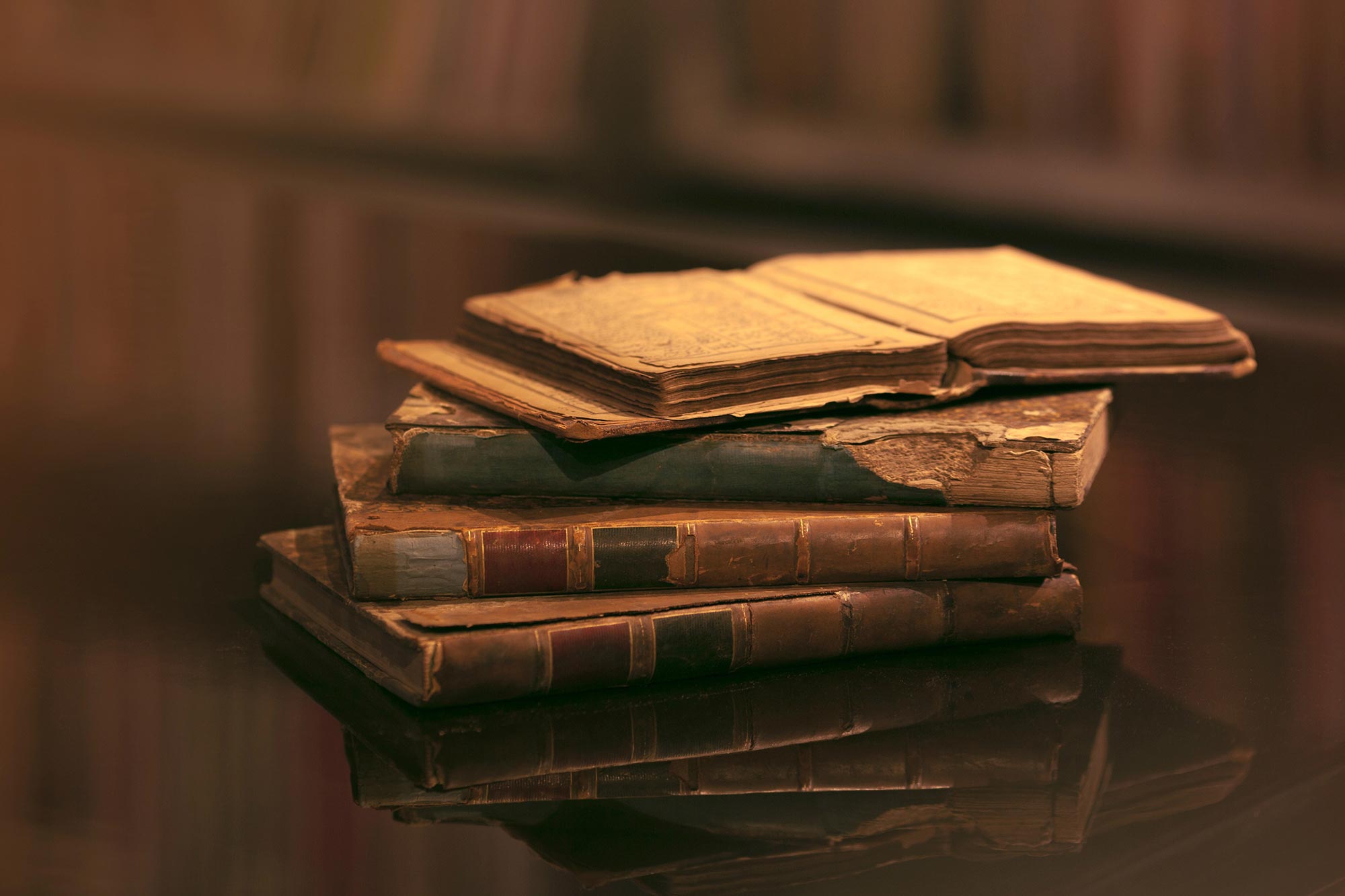
Victorian-era books with brightly colored covers may look charming but are often laced with dangerous dyes containing heavy metals such as lead and chromium.
Researchers at Lipscomb University used advanced spectroscopic techniques to analyze these books and found that handling them could pose significant health risks. Their findings have prompted safety measures like sealing untested books in plastic and removing dangerous ones from circulation, aiming to raise awareness and encourage safer handling practices.
Victorian Era Poisonous Books
If you come across brightly colored, cloth-bound books from the Victorian era, you might want to handle them gently, or even steer clear altogether. Some of their attractive hues come from dyes that could pose a health risk to readers, collectors, or librarians. The latest research on these poisonous books used three techniques — including one that hasn’t previously been applied to books — to assess dangerous dyes in a university collection and found some volumes may be unsafe to handle.
The researchers will present their results at the fall meeting of the American Chemical Society (ACS). ACS Fall 2024 is a hybrid meeting being held virtually and in person August 18-22; it features about 10,000 presentations on a range of science topics.
Research and Risks of Toxic Dyes
“These old books with toxic dyes may be in universities, public libraries, and private collections,” says Abigail Hoermann, an undergraduate studying chemistry at Lipscomb University. Users can be put at risk if pigments from the cloth covers rub onto their hands or become airborne and are inhaled. “So, we want to find a way to make it easy for everyone to be able to find what their exposure is to these books, and how to safely store them.” Hoermann, recent graduate Jafer Aljorani, and undergraduate Leila Ais have been conducting the study with Joseph Weinstein-Webb, an assistant chemistry professor at Lipscomb.
The study began after Lipscomb librarians Jan Cohu and Michaela Rutledge approached the university’s chemistry department to test brilliantly colored 19th- and early-20th-century fabric-covered books from the school’s Beaman Library. Weinstein-Webb was intrigued to hear about how the Winterthur Museum, Garden & Library had previously examined its own 19th-century books for the presence of an arsenic compound known as copper acetoarsenite. This emerald-green pigment was used in Victorian-era wallpaper, garments and — as Winterthur found out — in cloth book covers. This discovery led to the launch of the Poison Book Project, a crowdsourced research effort that uses X-ray fluorescence (XRF), Raman spectroscopy, and other techniques to reveal toxic pigments in books around the world. Weinstein-Webb and the Lipscomb students he recruited launched their own investigation in 2022.
Techniques and Discoveries in Poisonous Pigments
For the Lipscomb book project, the team used three spectroscopic techniques:
- XRF to qualitatively check whether arsenic or other heavy metals were present in any of the book covers.
- Inductively coupled plasma optical emission spectroscopy (ICP-OES) to determine the concentration of those metals.
- X-ray diffraction (XRD) to identify the pigment molecules that contain those metals.
Although XRD has been previously used to examine paintings and wallpaper, this is the first time it has been used to check for poison in books, Ais says. The XRD testing is being done in collaboration with Janet Macdonald at Vanderbilt University.
Recently, the researchers used XRF data to show that lead and chromium were present in some of the Lipscomb books. To quantify the amounts, they snipped samples roughly the size of a small paperclip from the cloth covers and then dissolved them in nitric acid. Their analysis by ICP-OES showed that lead and chromium were both present at high levels in some samples. Subsequent XRD testing indicated that in some instances these heavy metals were in the form of lead(II) chromate, one of the compounds that contributes to the chrome yellow pigment favored by Vincent van Gogh in his sunflower paintings.
However, there was far more lead than chromium in the book covers, which is somewhat mystifying, since lead(II) chromate contains equal amounts of lead and chromium. The researchers speculate that the dyes used to color the books contain other lead-based pigments that lack chromium, such as lead(II) oxide or lead(II) sulfide. The team is working to identify those other compounds in the yellow pigments.
Implications and Actions on Handling Poisonous Books
Weinstein-Webb and the students also wanted to find out whether the levels of heavy metals in the Lipscomb books could be harmful to librarians who might handle them. For some of the book covers, the researchers discovered metal concentrations above acceptable limits for chronic exposure, according to standards set by the Centers for Disease Control and Prevention (CDC). In the dissolved sample from the most contaminated cover, the lead concentration was more than twice the CDC limit, and the chromium concentration was almost six times the limit. Chronic exposure to inhaled lead or chromium could lead to health effects such as cancer, lung damage, or fertility issues.
“I find it fascinating to know what previous generations thought was safe, and then we learn, oh, actually, that might not have been a great idea to use these brilliant dyes,” Weinstein-Webb says.
The findings led the Lipscomb library to seal colorful 19th-century books that have not yet been tested in plastic zip-close bags for handling and storage. Meanwhile, books confirmed to contain dangerous dyes have also been sealed in bags and removed from public circulation.
Once the researchers have done some more testing, they plan to contribute their results to the Poison Book Project and to help spread awareness on safe handling, conservation, and storage of these books among librarians and collectors.
They also hope others will follow their lead and begin using XRD, because it doesn’t require investigators to cut samples from books. “Moving forward,” says Hoermann, “we want libraries to be able to test their collections without destroying them.”
Meeting: ACS Fall 2024
The research was supported by funds from Lipscomb University’s chemistry department.
Never miss a breakthrough: Join the SciTechDaily newsletter.
Follow us on Google and Google News.
2 Comments
Considering that libraries are often plagued with book worms, maybe the poisons should stay.
Has anyone tested old playing cards, which many people collect?
The black on them will often have been lamp black, and who knows what else in the colours, which were often added later by stencil.