
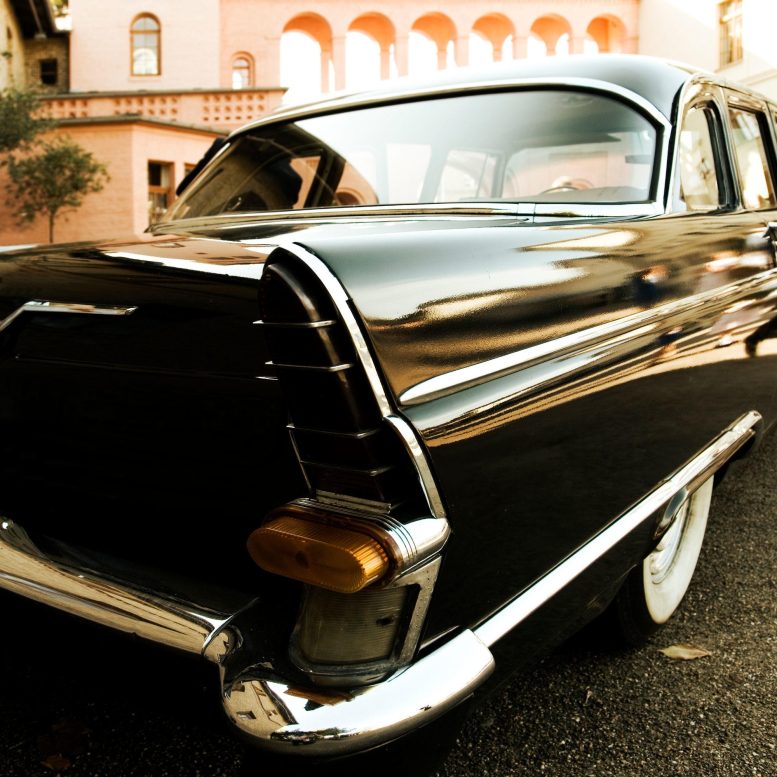
Researchers found that attachment fosters retention but limits use of prized items, leading to less sustainable consumption.
Custom sneakers, vintage dishware, and limited-edition cars are all examples of products that owners may consider special and irreplaceable, leading to strong feelings of attachment.
From a sustainability perspective, designers have traditionally viewed attachment as positive, as it leads people to retain products they care about for longer periods, reducing consumption and waste sent to landfills.
Paradox of Attachment
New Cornell University research provides a more nuanced understanding, showing that product attachment can also unintentionally encourage less sustainable behavior. To prevent damage or loss, people may limit the use of their most prized possessions – preserving shoes in a box, dishes as decorations, or a car in storage – and buy additional, less meaningful goods for practical daily purposes.
“The goal has been to get people to hold on to products longer, which was seen as inherently more sustainable,” said Michael Kowalski, a doctoral researcher in the field of human-centered design with a background as an industrial product designer. “But that’s not always the case if people aren’t actually using these things.”
Kowalski is the lead author of a recent article published in the International Journal of Design. Co-author Jay Yoon, assistant professor in the Department of Human Centered Design in the College of Human Ecology, and director of the Meta Design and Technology Lab, is the adviser to the research.
The research seeks to inform designers about the multiple factors driving product attachment and which could be tapped to encourage a product’s active use for as long as possible – consistent with sustainability goals – and avoid continued redundant consumption.
That’s important because Americans, on average, now throw out seven times more durable goods (meant to last at least three years) than they did in 1960, according to the research. Meanwhile, the average new U.S. home, the main location where these increasing numbers of products are used, stored, or thrown away, has grown by 1,000 square feet over the past 40 years.
“Perceived irreplaceability as a factor of attachment has been designers’ gold standard, but it turns out addressing it does not guarantee a product’s impact is going to be sustainable, if people are so attached to it that they don’t dare to use it, instead storing it away,” Yoon said. “We need to give more attention to other factors in this relationship.”
Kowalski began to explore those factors after designing and building a wooden dining table for a family member. As referenced in the research article’s title, her seemingly paradoxical response upon receiving the completed piece was, “I love it, I’ll never use it.”
Seeking to better understand that outcome, Kowalski interviewed individuals of varying demographics in their homes about the products they felt attached to and why, and which of those items they actually used or didn’t use. The more than 100 objects discussed included a dresser admired for its craftsmanship, bowls that had belonged to grandparents, and a stuffed animal invested with childhood memories.
Two cars illustrated how attachment could inspire either active or passive product use. One owner adored a car – nicknamed Stella – that was reliable and capable in extreme weather, providing the joy of adventure-filled driving experiences. Another similarly loved a special-edition convertible that they stored in a garage and drove rarely, using other cars for daily transportation.
Factors Driving Product Attachment and Use
Kowalski and Yoon identified seven key factors influencing product attachment, including aesthetic qualities, durability, performance, and the memories and emotions invoked. Through an online survey of more than 220 participants, they further analyzed how those factors differently affect attachment and long-term usage.
Perceptions of irreplaceability, they determined, did the most to foster product attachment, yet also led to less sustainable behaviors. Products that were durable, resistant to obsolescence, and pleasing got more use, while those associated with meaningful memories and sentimental emotions got less.
The researchers said the findings highlight opportunities for designers to prioritize products that people both want to keep and engage with – because they are well made, enjoyable, and age gracefully. On the other hand, products valued as unique and irreplaceable may inadvertently promote less sustainable consumption. That means designs emphasizing limited releases, personalization, and beautiful-but-scarce materials should be considered with caution.
“Creating a sense that something is one-of-a-kind increases attachment but decreases actual use of a product,” Kowalski said. “Designers need to be mindful of consumers’ psychological and emotional experience in addition to their practical needs to promote sustainable consumption in the long run.”
Reference: “I Love It, I’ll Never Use It: Exploring Factors of Product Attachment and Their Effects on Sustainable Product Usage Behavior” by Michael C. Kowalski and JungKyoon Yoon, 31 December 2022, International Journal of Design.
DOI: 10.57698/v16i3.03
The study was funded by the National Science Foundation and the Department of Human Centered Design.
Never miss a breakthrough: Join the SciTechDaily newsletter.
Follow us on Google and Google News.
2 Comments
The dark side of the alternative is that without the irrational attachment, things of artistic, historic, or sentimental value may end up in landfills in 3 years and increase the problem of disposal. We would live in a world where everything would be new instead of being in millions or mini-museums.
Moreso products are designed to fail early so you have to buy replacements these days, things don’t last long enough to keep longer!