
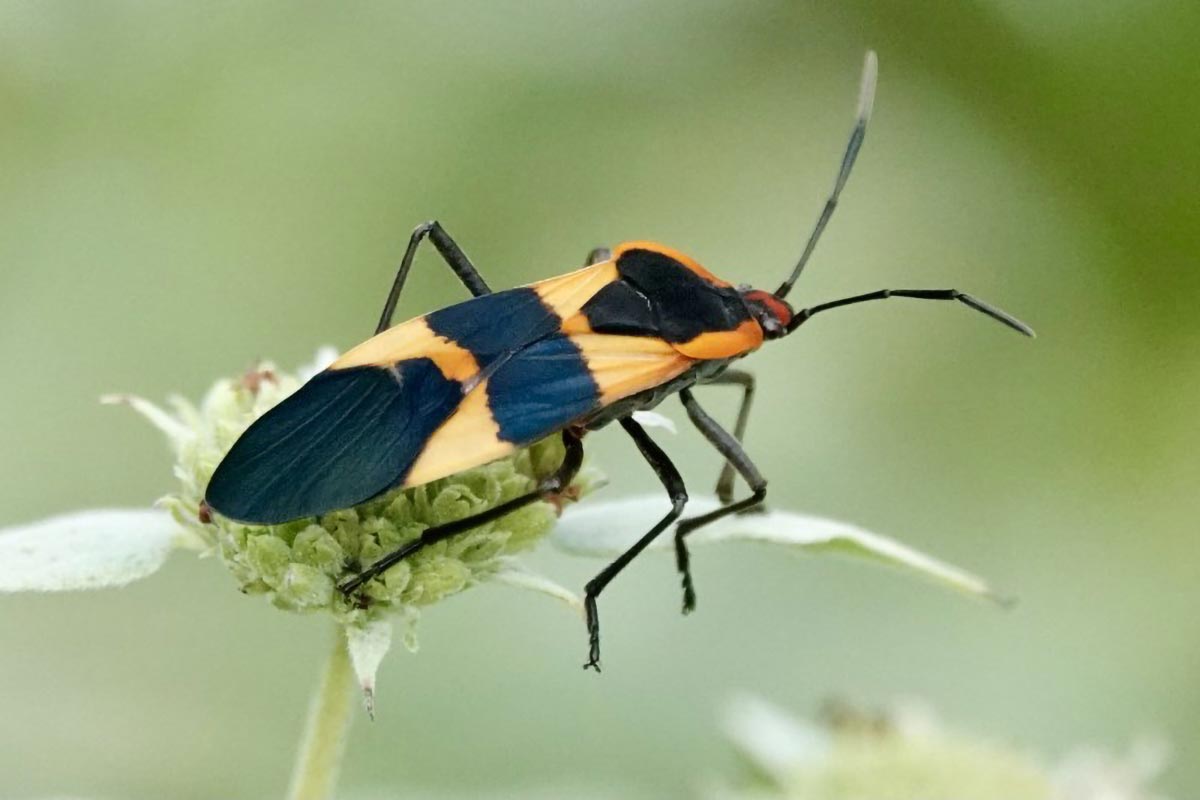
A new paper highlights over 500 interconnected factors contributing to the global decline of insect populations.
Insects are vanishing at a concerning pace across the globe, and scientists are striving to understand why. While agricultural intensification is often cited as the primary cause, new research from Binghamton University, State University of New York, reveals a far more complex picture involving numerous, interconnected factors.
Interest in insect decline has grown rapidly since a groundbreaking 2017 study reported a staggering 75% drop in insect populations over less than 30 years. This alarming figure has sparked a wave of scientific investigations, each exploring potential causes behind the phenomenon.
To gain a comprehensive view of the scientific consensus, researchers at Binghamton University examined more than 175 scientific review papers. These reviews encompassed over 500 hypotheses regarding the drivers of insect decline. Using this information, they created an interconnected network of 3,000 possible links, including everything from beekeeping to urban sprawl.
“It’s really hard to talk to everybody about what everyone thinks. And so instead of getting 600 people into a room, we decided to take an approach where we read every paper that’s either a review or a meta-analysis,” said Christopher Halsch, a post-doctoral researcher at Binghamton and lead author of the paper. “The idea was to read them and extract what people say are ‘causal pathways’. For example, agriculture leads to pollution, which leads to insect population decline. Then we built a giant network out of them to see which ideas are more often connected to each other, and which stressors are most often seen as the root causes.”
Examining the massive list of possible links, the most cited driver for insect decline was found to be agricultural intensification, via issues like land-use change and insecticides.
Interconnected and Overlooked Threats
But it’s more complicated than ranking drivers, as systems are interconnected and impact one another. For example, climate might be a driver for insect decline, but there are individual drivers under the umbrella of climate, like extreme precipitation, fire, and temperature, which themselves can impact other drivers. It’s a highly connected and synergistic network.
And still, many ideas are overlooked. The International Union for the Conservation of Nature, for example, has a list of all the potential threats to consider in insect conservation. But huge portions of that list never made an appearance in recent insect decline literature.
“None of the papers mentioned natural disasters,” said Assistant Professor of Biological Sciences Eliza Grames, who was part of a recent study showing a 20% loss of butterflies in the U.S. “No papers looked at human intrusions and disturbance, or the effects of war on insects, or railroads. So there are these big areas that we know in general are threats to biodiversity, but the insect decline literature is really just focused on a few big stressors, as opposed to getting into the more specific ones, which are a lot more mechanistic.”
Research Bias and the Focus on Pollinators
The researchers identified biases in recent literature, most notably those generated from a focus on “popular” and “charismatic” insects like bees and butterflies, despite them being in the vast minority of insect biodiversity.
“Because people have focused so much on pollinators like bees and butterflies, we are limited in identifying conservation actions that benefit other insects,” said Grames.
“Bees are agriculturally important and people care about them. So there is a lot of research priority towards funding research on bees,” added Halsch. “So you get this kind of feedback: if you prioritize research on bees, you learn more about bees.”
The researchers noted that insect conservation will require managing not just individual drivers but addressing systems from a multi-pronged approach.
“One of the important points we’re trying to make in the paper is that conservation actions overly biased towards certain insects or certain stressors will likely be negative for many other insects,” said Halsch. “If we focus too much on bees and butterflies and their conservation, we will miss a lot of other species, most of them in fact.”
Reference: “Meta-synthesis reveals interconnections among apparent drivers of insect biodiversity loss” by Christopher A Halsch, Chris S Elphick, Christie A Bahlai, Matthew L Forister, David L Wagner, Jessica L Ware and Eliza M Grames, 22 April 2025, BioScience.
DOI: 10.1093/biosci/biaf034
Never miss a breakthrough: Join the SciTechDaily newsletter.
Follow us on Google and Google News.
6 Comments
If only that included the mosquitoes…
Your rambling article never mentioned agricultural pesticides . As the insects plummet so do the birds the feed !
I cannot believe that cell towers aren’t mentioned ONCE!! This is the cause! Anyone who has lived for half a decade can see this clear as day!! Cell towers 5G etc etc are destroying our natural world Anything vibrational including humanity is being disrupted
Population control would help a lot. There are too many humans !
If you are right, maybe population control should start with you and your family
You must consider the whole part played by electricity in nature.Human beings cannot go on developing in the same way in an athmosphere permeated on all sides by electric currents and radiations.It has an influence an ifluence on the whole development of man.This life of man in the midst of electricty,notably radiant,will presently effect them in such a way they will no longer be able to understand the news wich the receive so rapidly.The effect is to damp down the intelligence. Such effects are already seen today.Even today you can notice how people understand the things that comes to themwith far greater difficultythan they did a few decades ago.Rudolf Steiner 1924