

Banana production is in jeopardy due to rising global temperatures, with many regions in Latin America and the Caribbean projected to become too hot for sustainable farming by 2080.
As a multi-billion-dollar industry crucial to global food supply and economies, this decline threatens both livelihoods and accessibility. Socioeconomic limitations, including infrastructure and labor shortages, further hinder adaptation efforts. Researchers emphasize the need for urgent interventions, such as improved irrigation and climate-resilient banana varieties, to prevent a drastic reduction in banana availability worldwide. Without swift action, one of the world’s most beloved fruits may face an uncertain future.
Climate Change Threatens Banana Production
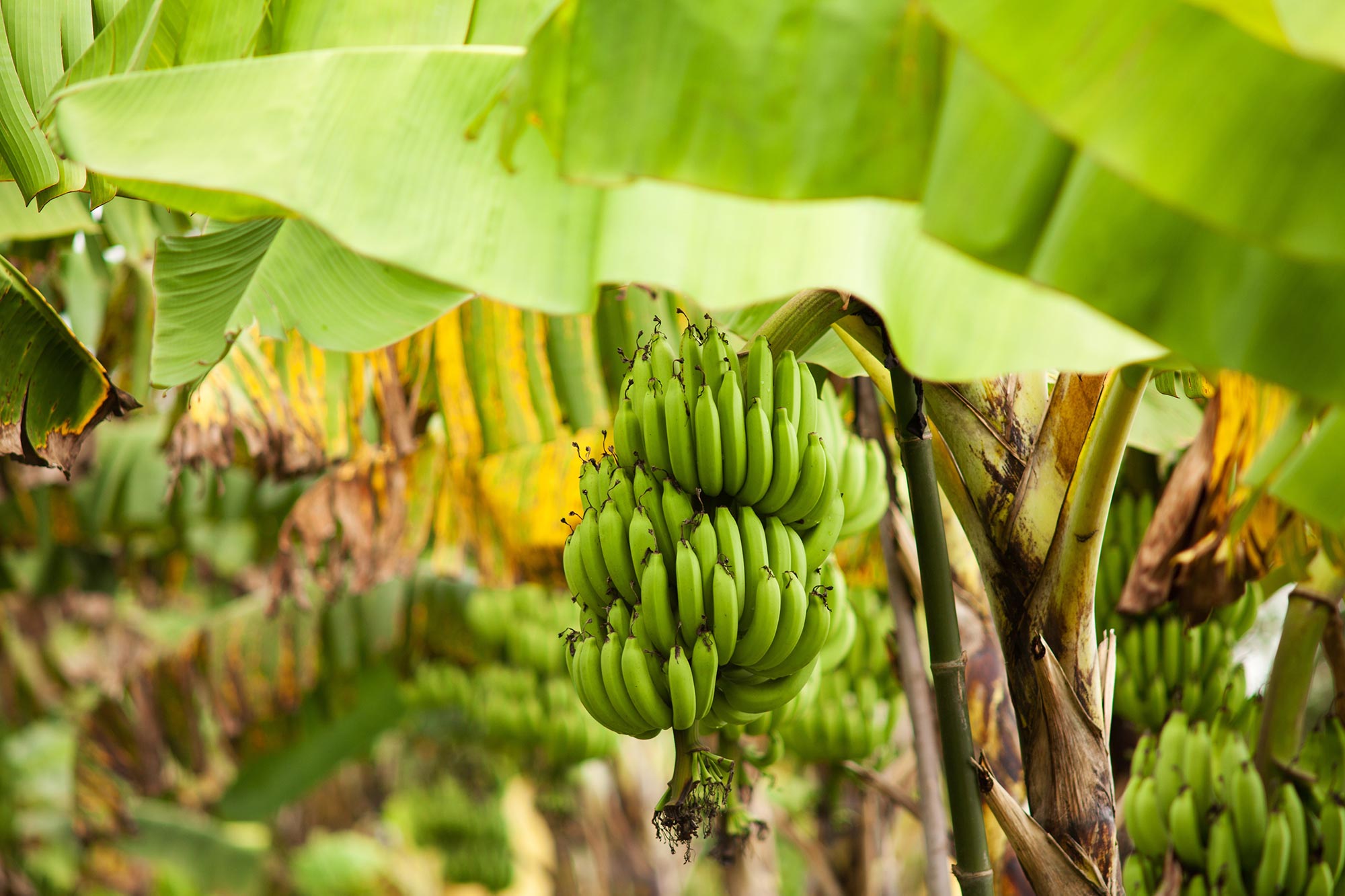
Rising temperatures are making it harder for banana producers to keep up with global demand for one of the world’s most popular fruits.
A study from the University of Exeter, published today (March 6) in Nature Food, warns that by 2080, growing bananas for export may no longer be economically viable in many parts of Latin America and the Caribbean. Climate change is driving temperatures higher, making conditions less suitable for banana cultivation.
A Multi-Billion Dollar Industry at Risk
Bananas are a vital export, generating $11 billion (£8.9 billion) annually and supporting the economies of multiple countries. However, without urgent action, 60% of current banana-growing regions could struggle to sustain production within the next 50 years.
The study also highlights major socioeconomic barriers to adaptation, including limited access to infrastructure and labor shortages. Because most banana farms are located near population centers and ports, relocating to cooler areas is not a simple solution.
A Dire Warning from Researchers
Professor Dan Bebber, who led the research, emphasized the urgency of the situation: “Our findings are a stark reminder that climate change is not just an environmental issue but a direct threat to global food security and livelihoods. Without substantial investment in adaptation, including irrigation and heat-tolerant banana varieties, the future of export banana production looks uncertain.
“Bananas are one of the world’s most important fruits, not only for consumers but for millions of workers in producing countries. It’s crucial we act now to safeguard the industry against the dual threats of climate change and emerging diseases.”
The researchers developed a new method using satellite imagery to map banana production in Latin America and the Caribbean at very high resolution and then estimated the climate under which bananas are preferentially grown. Their findings showed climate change will reduce the best areas for banana growth and yields in many important producer countries, as well as increasing worker exposure to extreme temperatures.
Which Countries Will Be Hit the Hardest?
Countries such as Colombia and Costa Rica will be the most negatively impacted as they are expected to become too hot for optimal cultivation. Ecuador and parts of Brazil are among the few areas to remain as important producers, as climate change is projected to be less severe there.
The researchers propose several adaptation strategies, including expanding irrigation infrastructure, breeding heat- and drought-tolerant banana varieties, and supporting banana producers to manage climate risks.
Collaboration for a Sustainable Future
Dr. Varun Varma of Rothamsted Research developed the remote sensing algorithms for the work and further assistance was provided by José Antonio Guzmán Alvarez of the Costa Rican organization CORBANA, who support the national banana industry.
Reference: “Socio-economic factors constrain climate change adaptation in a tropical export crop” by Varun Varma, Jonathan R. Mosedale, José Antonio Guzmán Alvarez and Daniel P. Bebber, 6 March 2025, Nature Food.
DOI: 10.1038/s43016-025-01130-1
The study was funded by the Global Food Security Program and Horizon 2020.
Never miss a breakthrough: Join the SciTechDaily newsletter.
Follow us on Google and Google News.
7 Comments
Jesus, what do we care what’s gonna happen in 2080? Even if the projections were right, and they’re never right, what’s it to us here in 2025?
What a dumb article.
Gotta keep that fear high, push that propaganda!
Exactly! Thanks.
“Climate change is driving temperatures higher, making conditions less suitable for banana cultivation.”
What is to prevent moving cultivation pole-ward, closer to the major consumer market, to places that then have the climate of Costa Rica and Ecuador today? The article doesn’t address this.
“Because most banana farms are located near population centers and ports, relocating to cooler areas is not a simple solution.”
It may not be a simple solution, but it IS a solution. It just means it will cost money, but we have decades — about two generations — to plan and build to make it happen. The article is unnecessarily pessimistic.
Diseases of bananas and citrus fruits are a greater threat because there is no certain solution, irrespective of cost. We no longer consume a variety of banana, generally considered superior to today’s commercial bananas, because we weren’t able prevail over the disease.
To make the transition to other areas is going to take decades. With raids happening here in the US now on farms how in the world will we be able to handle banana farming too? It is heavy, hard work and labor intensive. It takes the right type of soil and plenty of rain. The easiest option is to correct our course and allow regions who have perfected how to grow products in proper regions to continue their work and we do what is best in the US as we are the ones who are opting to “drill, baby drill” while others are addressing climate change far more aggressively since Biden left office & Trump doesn’t care.