
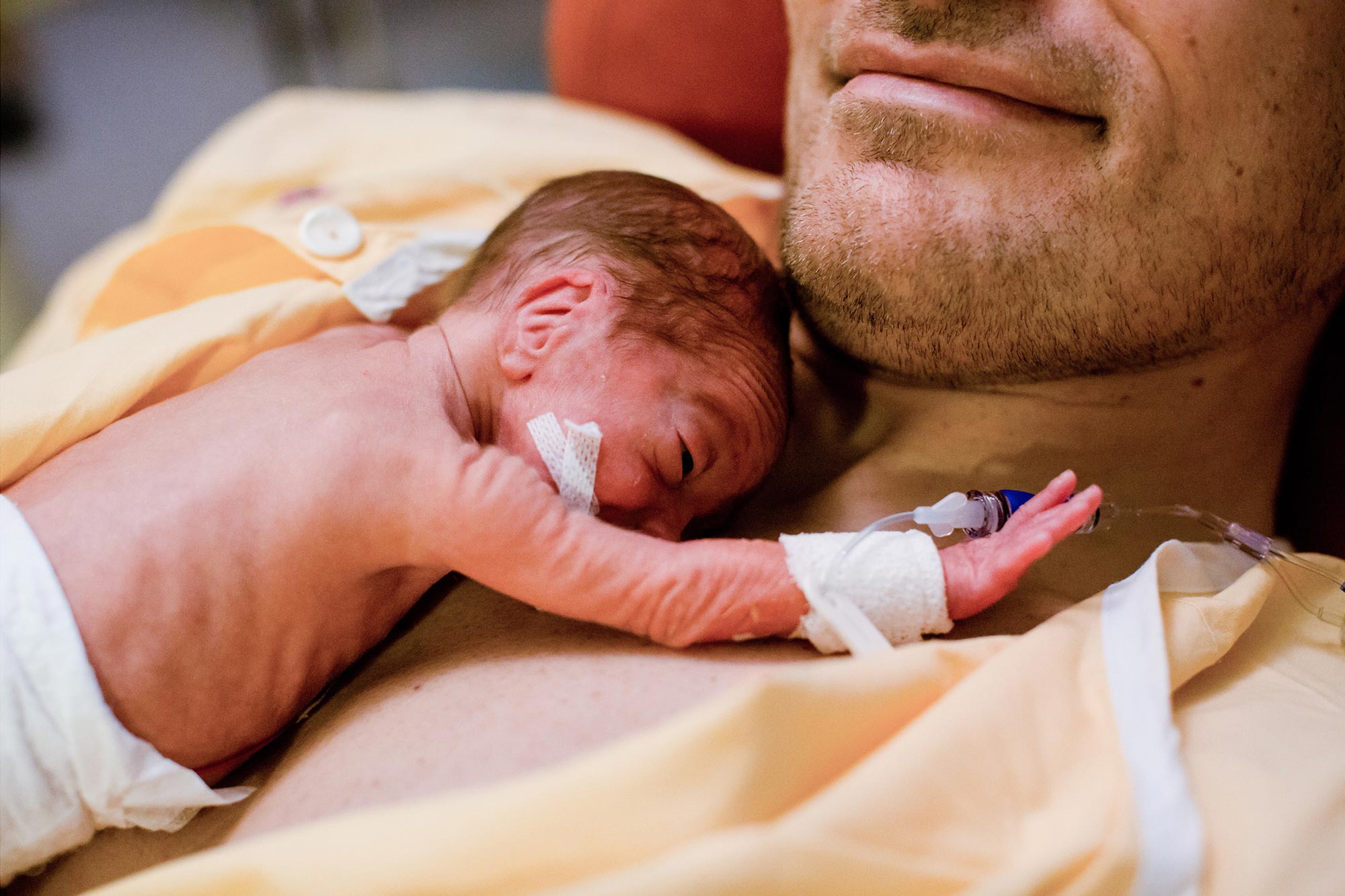
A new study has found that microplastics and nanoplastics accumulate in the placenta at much higher levels in preterm births than in full-term pregnancies.
Surprisingly, preterm placentas had absorbed these plastics at an earlier stage, suggesting that exposure may play a role in triggering premature delivery. The findings contribute to mounting concerns over plastic pollution’s impact on human health.
Microplastics and Nanoplastics: A Growing Concern
Microplastics, measuring less than 5 millimeters, and nanoplastics, which are too small to see with the naked eye, are found throughout the environment. Research has shown that plastic exposure can be harmful to both human health and the environment.
New Study Reveals Link to Preterm Birth
A new study, set to be presented today (January 30) at the Society for Maternal-Fetal Medicine’s (SMFM) annual Pregnancy Meeting, reveals that microplastics and nanoplastics are present in higher concentrations in the placentas of preterm infants compared to those born at full term.
Researchers, in collaboration with investigators from the University of New Mexico, analyzed 175 placentas using highly sensitive mass spectrometry. The study examined 100 placentas from full-term births and 75 from preterm births (before 37 weeks of pregnancy).
“Advanced technology now enables us to accurately measure microplastics in ways we haven’t been able to in the past,” says senior study author Kjersti Aagaard, MD, PhD, MSCI, a maternal-fetal subspecialist and research professor at Boston Children’s Hospital and the HCA Institute. Aagaard also serves as the medical director of the Gulf Coast Division of HCA Healthcare.
Startling Discovery: Higher Plastic Levels in Preterm Births
Researchers found that the levels of microplastics and nanoplastics were significantly higher in preterm placenta and they were at much greater levels than previously measured in human blood. This led the investigators to conclude that plastics were likely accumulating in the placenta during pregnancy, with a greater exposure and accumulation occurring in cases of preterm birth.
“The finding of higher placental concentrations among preterm births was surprising because it was counterintuitive to what you might expect if it was merely a byproduct of the length of time of the pregnancy,” says the study’s lead author Enrico R. Barrozo, PhD, an assistant professor in the Department of Obstetrics and Gynecology at Baylor College of Medicine and Texas Children’s Hospital in Houston.
“In other words, a preterm delivery not only accumulated more microplastics and nanoplastics in its placenta relative to term, but did so at an earlier time point in the pregnancy,” added Aagaard. “This hints at the possibility that the accumulation plastics could be contributing to the risk and occurrence of preterm birth. When combined with other recent research, this study adds to the growing body of evidence, ranging from heart disease to potentially stroke, that demonstrates a real risk of exposure to plastics on human health and disease.”
Meeting: 2025 Pregnancy Meeting
The abstract was published in the January 2025 issue Pregnancy, a new open-access journal and the first official journal for the Society for Maternal-Fetal Medicine.
This study was supported by NIH-NICHD (R01HD091731), NSF (#2208903), NIH LRP (NIAID-1L40AI171990-01), pilot grants from MIEHR (#P50MD015496) and CPEH (#P30ES030285), NIEHS (R01ES014639), CMBM (P20GM130422), UNM CTSC (KL2TR001448), and the Superfund Research Program (P42ES027725). Funding agencies had no role in study design, data collection, analysis, or publication.
Never miss a breakthrough: Join the SciTechDaily newsletter.
Follow us on Google and Google News.
3 Comments
Isn’t it better that little babies get used to plastic from the get go?
No. Humans don’t have the enzymes to degrade the plastic. So it accumulates in the body and eventually problems will appear. Stay away from plastic as much as you can.
Can we get a caption for the picture at the top of this article? I’m confused as to why that person has a 5 o clock shadow and is wearing a hospital gown. Are we showing a trans man who gave birth? There’s nothing wrong with that i just don’t understand why something that happens in like .1% of the situations is being presented as though it’s the most normal of expectations. Like why can’t we just reflect things as they are on society?