
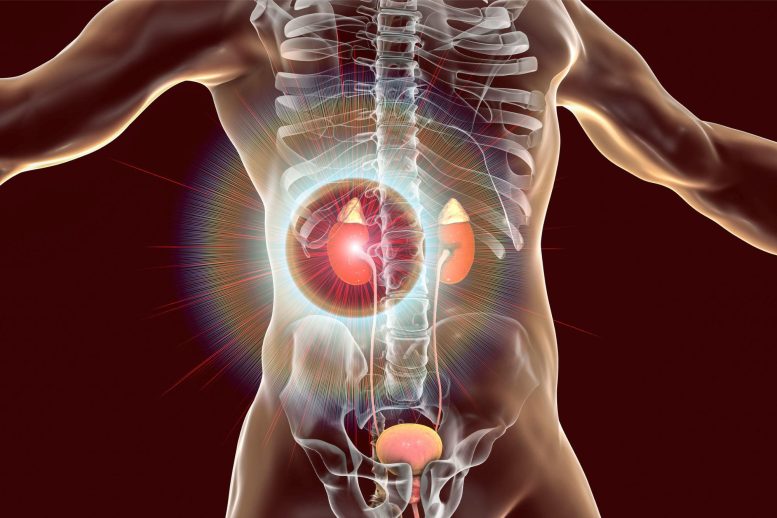
Roundup weed killer ingredient linked to a surge in mysterious kidney diseases in rural Sri Lanka.
Hard water is contaminated with glyphosate, the active compound in the herbicide Roundup, in Sri Lankan communities plagued by chronic kidney disease.
For the past couple of decades, tens of thousands of people living in rural Sri Lanka have been devastated by kidney failure due to unclear causes, also known as CKDu. Similar incidences of mysterious kidney diseases have emerged in tropical farming communities around the world.
Glyphosate Link Discovered
A massive field study of the wells supplying drinking water to the Sri Lankan communities, conducted by researchers at Duke University, has identified a possible culprit — glyphosate, the active compound in Roundup, the most widely used herbicide in the world.
The results of the study were published in Environmental Science and Technology Letters on September 13, 2023.
Roundup is a glyphosate-based herbicide used to control weeds and other pests. Because it is supposed to break down in the environment within a few days to weeks, its use is relatively under-regulated by most public health agencies. But when glyphosate encounters certain trace metal ions that make water hard — like magnesium and calcium — glyphosate-metal ion complexes can form. Those complexes can persist for up to seven years in water and 22 years in soil.
Extended Environmental Impact
“It was always thought that this chemical would break down very quickly in the environment, but it seems to stick around a lot longer than we expected when it complexes in hard water,” said Nishad Jayasundara, the Juli Plant Grainger Assistant Professor of Global Environmental Health at Duke. “We have to consider how glyphosate is interacting with these other elements, and what happens to glyphosate when you take that into your body as a complex.”
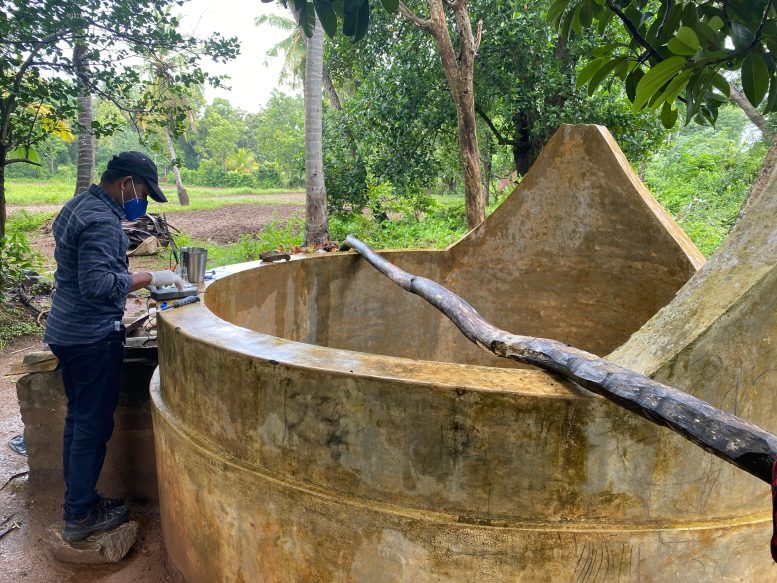
In certain agricultural areas of Sri Lanka, the high, dry climate combined with its geological formations creates the perfect conditions for hard water. It is also in these regions that CKDu has reached epidemic levels, with as many as 10% of children aged 5-11 years exhibiting signs of early onset kidney damage.
Testing the Hypothesis
Jayasundara, who is from Sri Lanka himself, believed that glyphosate may play a role in CKDu incidence because of the region’s hard water, even though Sri Lanka has banned the use of the herbicide. To test his hypothesis, Jayasundara teamed up with environmental chemist Lee Ferguson, a professor of civil and environmental engineering at Duke, and his PhD student Jake Ulrich. In collaboration with Mangala De Silva, a professor at the University of Ruhuna, Sri Lanka, the Duke team sampled more than 200 wells across four regions in Sri Lanka.
Ferguson’s lab at Duke employs high-resolution and tandem mass spectrometry to identify contaminants — even the barest trace of them — by their molecular weights. It’s a highly sensitive method of identification and quantitation that allows a broad view of the pollutants present in a water system.
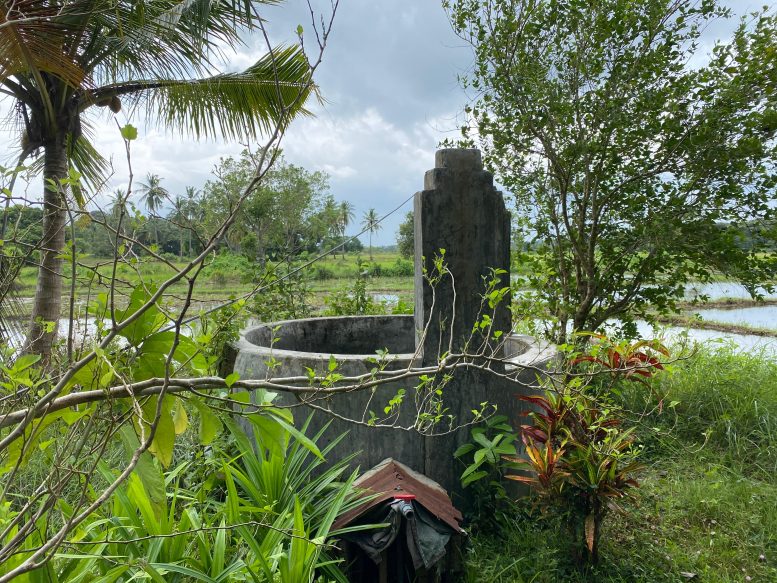
Through this technique, the researchers found significantly higher levels of the herbicide in 44% of wells within the affected areas versus just 8% of those outside it.
Additional Concerns and Future Research
“We really focused on drinking water here, but it’s possible there are other important routes of exposure—direct contact from agricultural workers spraying the pesticide, or perhaps food or dust,” said Ferguson. “I’d like to see increased study with more emphasis looking at the links among these exposure routes. It still seems like there might be things we’re missing.”
To this point, Ulrich also found elevated levels of fluoride and vanadium — both of which are linked to kidney damage — in the drinking water of almost all of the communities with high incidence of CKDu. The researchers agree that more attention must be paid to the potential contributions each of these contaminants is playing, either individually or in concert with others. But given the reasoning for their glyphosate-based hypothesis going into the study and the herbicide’s high levels of use worldwide, they also believe these results should serve as a serious warning when considering the risk of exposure to glyphosate.
Part of Ferguson’s concern, he said, is that glyphosate’s fate profile resembles a contaminant that he’s studied closer to home — per- and polyfluoroalkyl substances, or PFAS, which are also called “forever chemicals” because of their persistence in the environment.
“We think of PFAS as being a drinking water contaminant because it’s mobile and persistent. Now we’re realizing that glyphosate may also be quite persistent in hard water areas,” said Ferguson. “This gives me concerns about exposures here in the United States.”
Reference: “Glyphosate and Fluoride in High-Hardness Drinking Water Are Positively Associated with Chronic Kidney Disease of Unknown Etiology (CKDu) in Sri Lanka” by Jake C. Ulrich, Kate Hoffman, T. D. K. S. C. Gunasekara, P. M. M. A. Sandamini, Brian P. Jackson, P. Mangala C. S. De Silva, Nishad Jayasundara and P. Lee Ferguson, 13 September 2023, Environmental Science & Technology Letters.
DOI: 10.1021/acs.estlett.3c00504
This work was supported by the NIEHS (U2CES030851) and the Accelerating Higher Education Expansion and Development (AHEAD) Operation of the Ministry of Higher Education funded by the World Bank, (AHEAD DOR 02/40).
Never miss a breakthrough: Join the SciTechDaily newsletter.
Follow us on Google and Google News.