
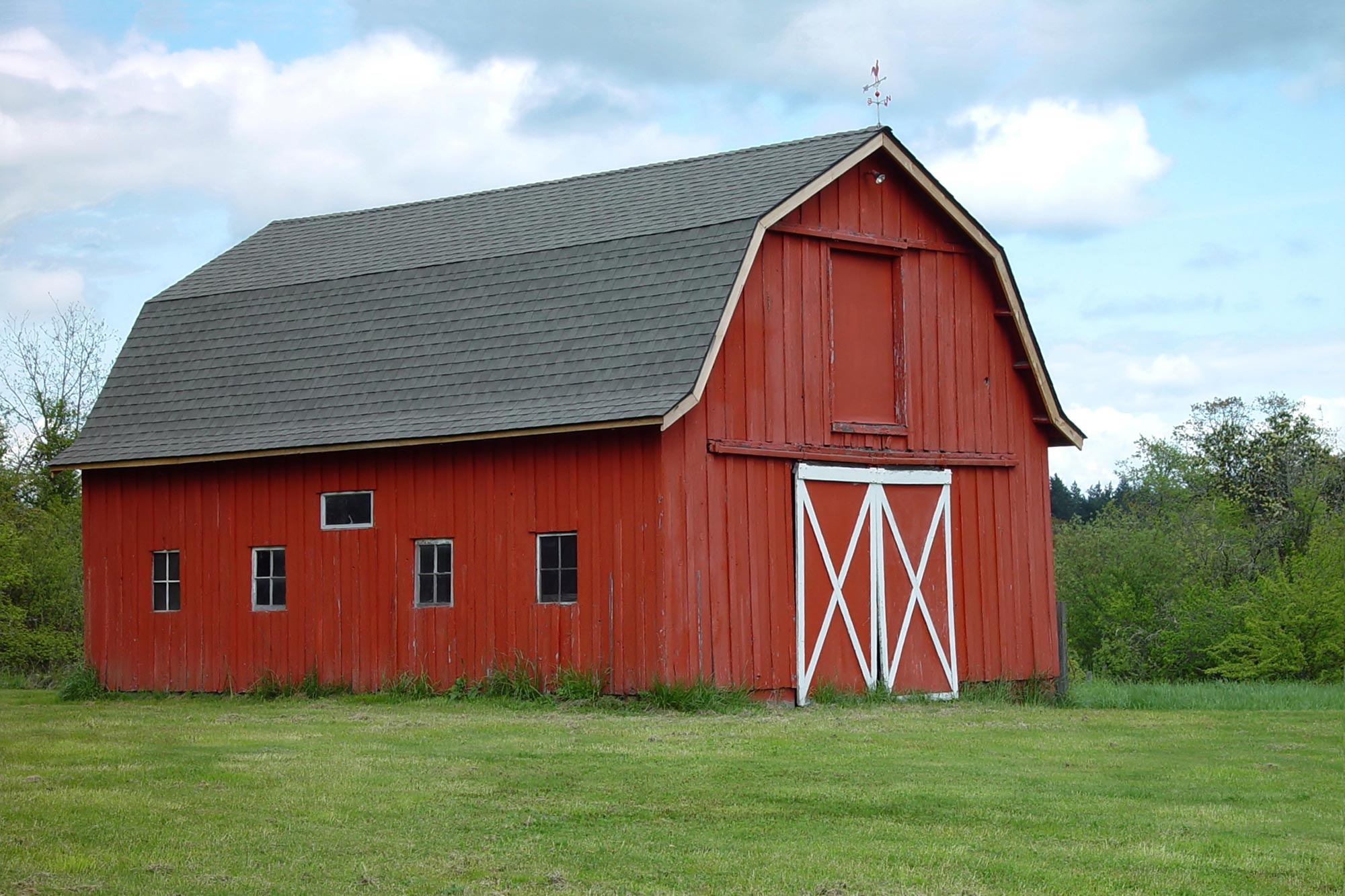
Why Are Barns Red?
Many American barns are painted red for three main reasons: it’s rooted in tradition, the color is practical, and it has a strong visual appeal.
While appearance is a big motivator for painting wooden structures, paint also serves a functional purpose by protecting wood and helping it last longer.
How Early Barns Were Built and Weathered
In the 1700s and early 1800s, family farms in the Northeastern United States often built barns with thick, vertical wooden boards. If left without paint, these boards would slowly take on a weathered, brownish-gray tone over time.
After the mid-1800s, many farmers began upgrading their barns to make them more efficient, particularly in colder months. To block drafts and keep animals warmer during winter, they started installing horizontal wooden clapboards on the exterior walls. These boards were much thinner than earlier styles, so applying paint became essential—not only for protecting the fragile wood but also for improving the barn’s appearance.
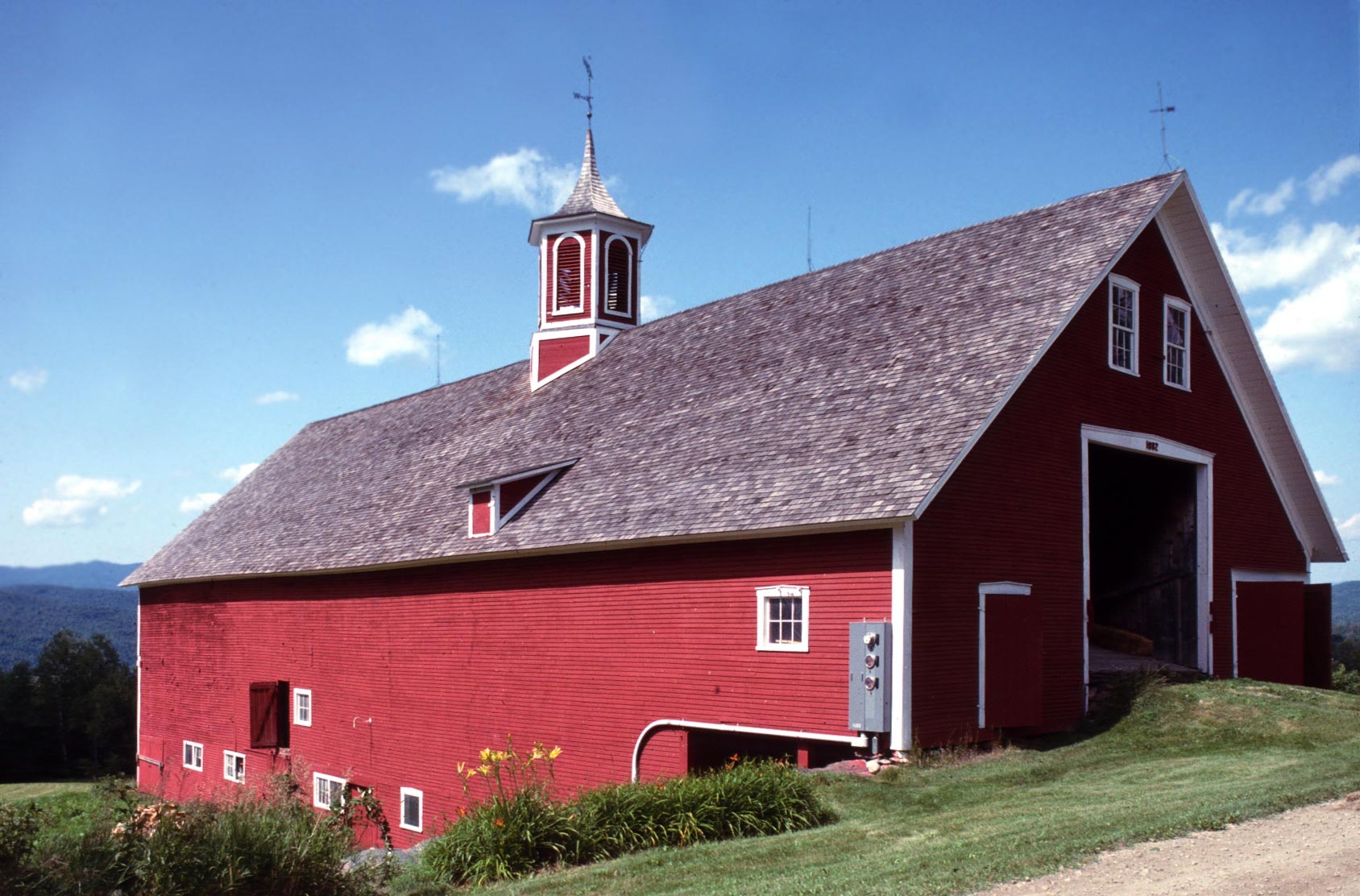
DIY Paints and the Rise of Venetian Red
In the 1800s, it was common practice for people to create their own paint by mixing dry pigments with linseed oil (made from flax seeds) and other ingredients. These pigments came in a variety of colors, but the shade most commonly seen on older American barns became known as Venetian red.
According to the 1884 edition of “Everybody’s Paint Book,” by F.B. Gardner, Venetian red was “suitable for any common work, or for brickwork and outbuildings.” The pigment bonded deeply with wooden surfaces and resisted fading under sunlight, which meant barns kept their bold color for decades.
The name “Venetian red” comes from the pigment’s early origins in natural clay deposits near Venice, Italy. These clays were rich in iron oxide, which gave the pigment its distinctive red color.
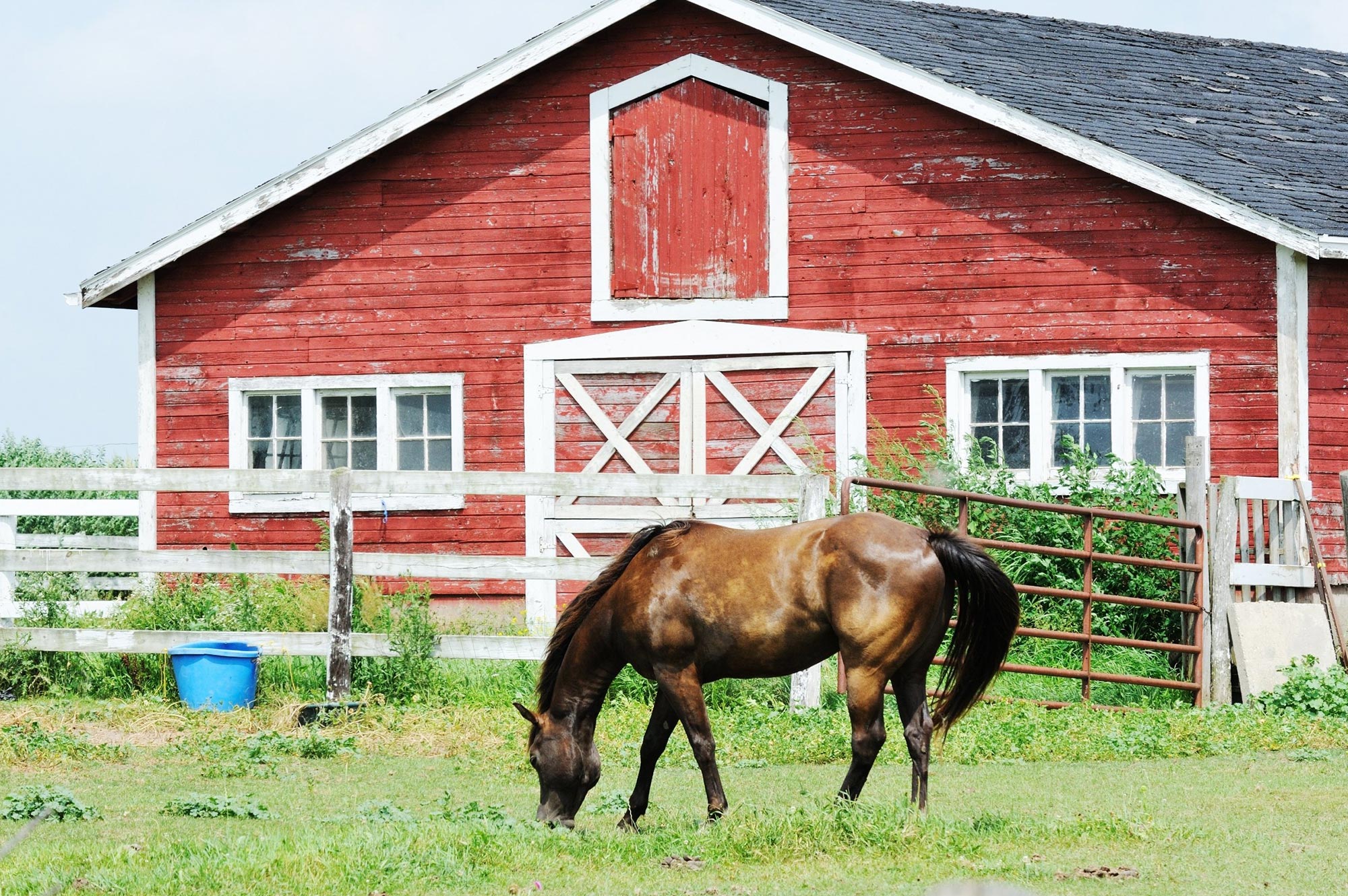
Earth Pigments Across America
However, as people discovered similar iron oxide deposits in many other locations, “Venetian red” became a generic term for light red pigments that lacked a purplish tinge. By the 1920s, such “earth pigments” used to make red paints were being dug in Georgia, Pennsylvania, Virginia, Alabama, California, Iowa, and Vermont.
By the late 1800s, in addition to red, it became fashionable to paint barns with other color schemes, especially those designed to complement the architectural styles and finishes of the owners’ houses. These included various hues of yellows, greens, and browns. Additionally, white paint was often used to paint barns and houses.
Red Paint’s Affordable Advantage
However, red paint remained popular on many farms because it was the most affordable option. In 1922, the Sears, Roebuck catalog offered red barn paint for just $1.43 per gallon, while other colors of house paints sold for at least $2.25 per gallon – nearly twice as much.
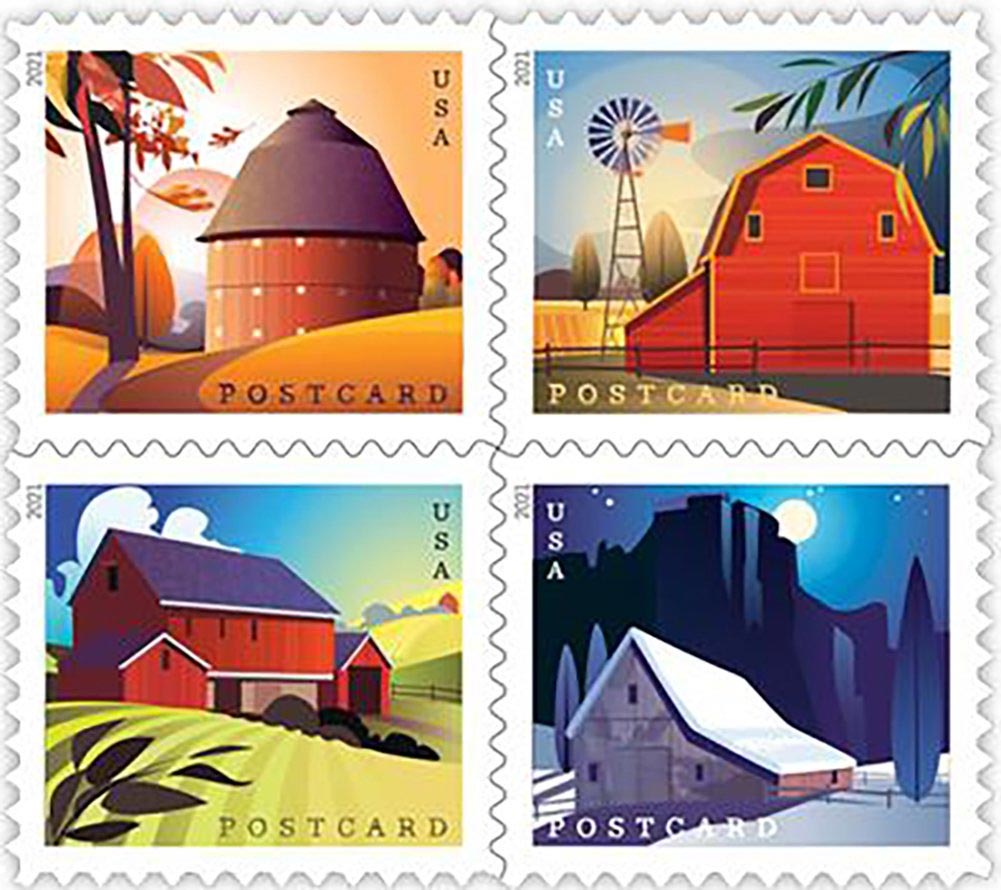
Today, many modern barns don’t resemble classic versions. Very large barns that hold hundreds of cows or pigs look more like hangars or warehouses, and may be built of metal. But the tradition of painting smaller barns red continues – so strongly that the U.S. Postal Service now celebrates them on postage stamps.
Written by Thomas Durant Visser, Professor of Historic Preservation, University of Vermont.
Adapted from an article originally published in The Conversation.
A version of this article was originally published in November 2021.
Never miss a breakthrough: Join the SciTechDaily newsletter.
Follow us on Google and Google News.
3 Comments
Did you look at the Swedish tradition of painting your house or barn with “Falu Rödfärg”, a tradition brought in to the United States by Swedish immigrants settling in Minnesota and other surrounding states, during the 1850s and onwards. The color is surprisingly similar to what you call Venetian Red, derived from the copper mining process in Falun, one the biggest European copper mines from the 17th century.
A green roof on a red barn can symbolize a bountiful harvest, as the colors often represent fertility and growth in agricultural contexts.
No mention that some red paints contained lead (Pb) oxide which prevented decay.