
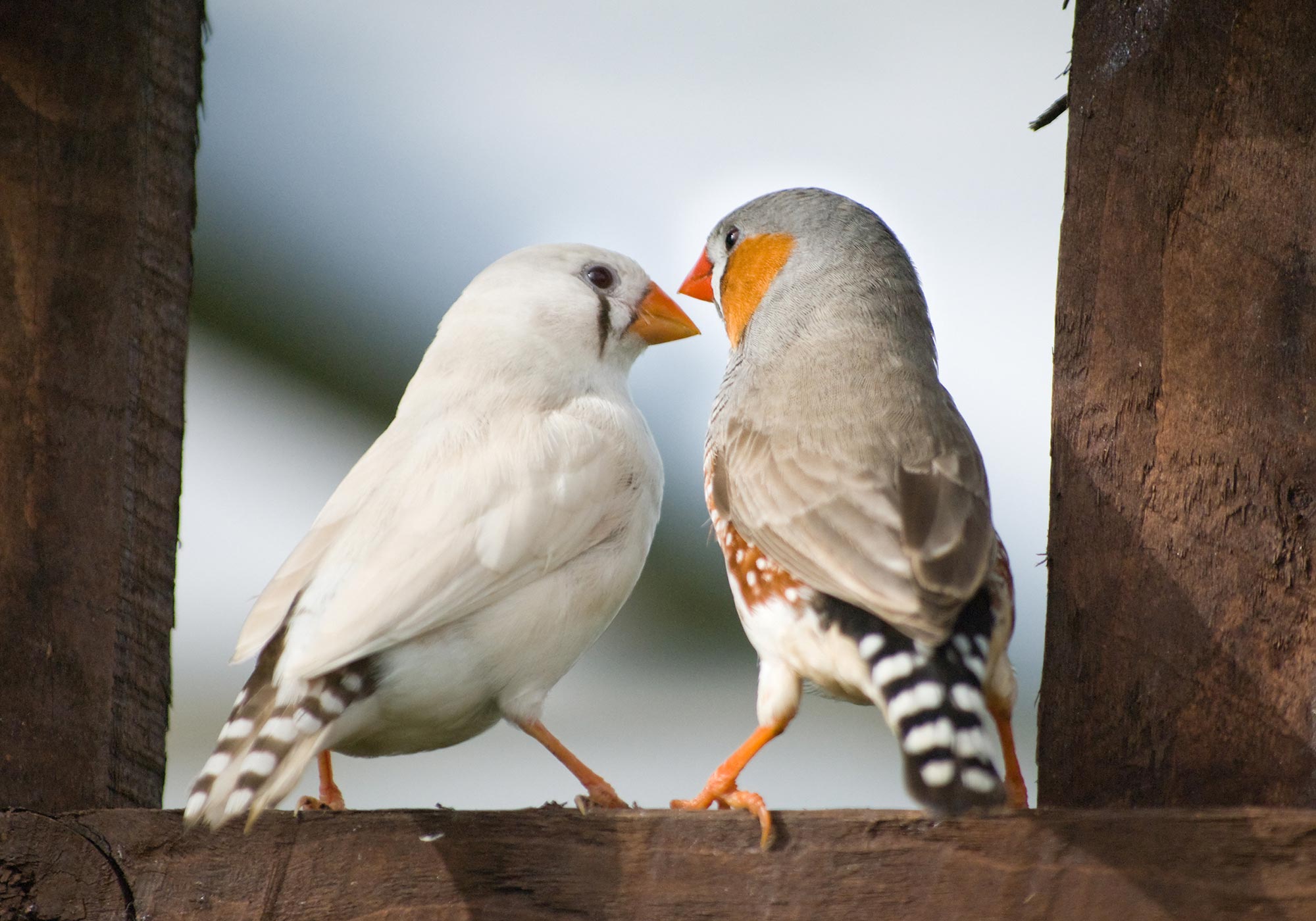
What happens to animals when their friends are stressed? Is it possible to document the spread of stress within groups of birds?
Zebra finch experiments demonstrated that stress spreads across social groups, affecting even unexposed members, resulting in altered behaviors and weakened social bonds which could impact survival and social stability.
Stress Transmission in Animal Groups
Animal habitats are undergoing rapid and extensive changes due to urbanization and climate change, exposing animals to increasing levels of stress. Despite this, little research has focused on how an individual’s stress might influence the behavior of others in their group, particularly those not directly exposed to stressors.
To address this, Hanja Brandl, a behavioral biologist from the Cluster of Excellence Collective Behaviour at the University of Konstanz, and Damien Farine, now at the Australian National University, conducted experiments with 96 zebra finches. Their goal was to explore whether and how stress responses in individual birds impact their social groups.
Over three four-week experimental sessions, some zebra finches were subjected to controlled stress-inducing disruptions. Using cameras, the researchers closely observed how these stressors influenced the behavior of the exposed birds and, more importantly, how these changes affected unexposed group members, including their social interactions and reproductive patterns. Additionally, they analyzed the stress hormone corticosterone in the birds’ tail feathers to quantify physiological stress levels.
Contagious Nature of Stress in Social Groups
“Our experiments show that stress responses can spread beyond individuals to other members of their social group, even to those who are not exposed to stress themselves,” Hanja Brandl says. “In groups where a larger proportion of birds experiences stress, we observed this effect even more strongly”. The social environment impacted both the activity and the social behavior of the zebra finches that had not experienced stress. Their response was similar to that of the zebra finches that had experienced stress.
Behavioural Changes and Social Dynamics
The researchers observed that unexposed birds in groups that had a large proportion of its members experience stress moved less. “For birds in the wild, this reduced level of activity could, for example, mean that they explore their environment less and limit their range of movement, which, in turn, means that they could have access to fewer resources,” Brandl explains.
The experiment also showed that the presence of stress-exposed group members altered the social behaviors of other group members. Individual birds that were not exposed to the stressor maintained fewer social bonds and tended to rely more heavily on existing relationships. “This means that stress in a group could impact its social cohesion. At the same time, a reduction in weak social ties would, in turn, reduce the risk of stress transmission,” Damien Farine says. Thus, stress transmission can have profound effects on both the dynamics of social groups as well as the fitness of individual members.
Reference: “Stress in the social environment: behavioural and social consequences of stress transmission in bird flocks” by Hanja B. Brandl and Damien R. Farine, 31 October 2024, Proceedings B.
DOI: 10.1098/rspb.2024.1961
The experiments were conducted by the Cluster of Excellence Collective Behaviour at the University of Konstanz where Hanja Brandl is a researcher. Damien Farine was a member of the Cluster of Excellence and a principal investigator at the Max Planck Institute of Animal Behavior during the study, and now works at the University of Zurich and the Australian National University in Canberra, Australia.
Funding for the study was provided by the Cluster of Excellence Collective Behaviour at the University of Konstanz as well as the Swiss National Science Foundation and the Max Planck Society.
Never miss a breakthrough: Join the SciTechDaily newsletter.
Follow us on Google and Google News.
1 Comment
As known long ago by the psychopathic demagogues that abound throughout human history.